


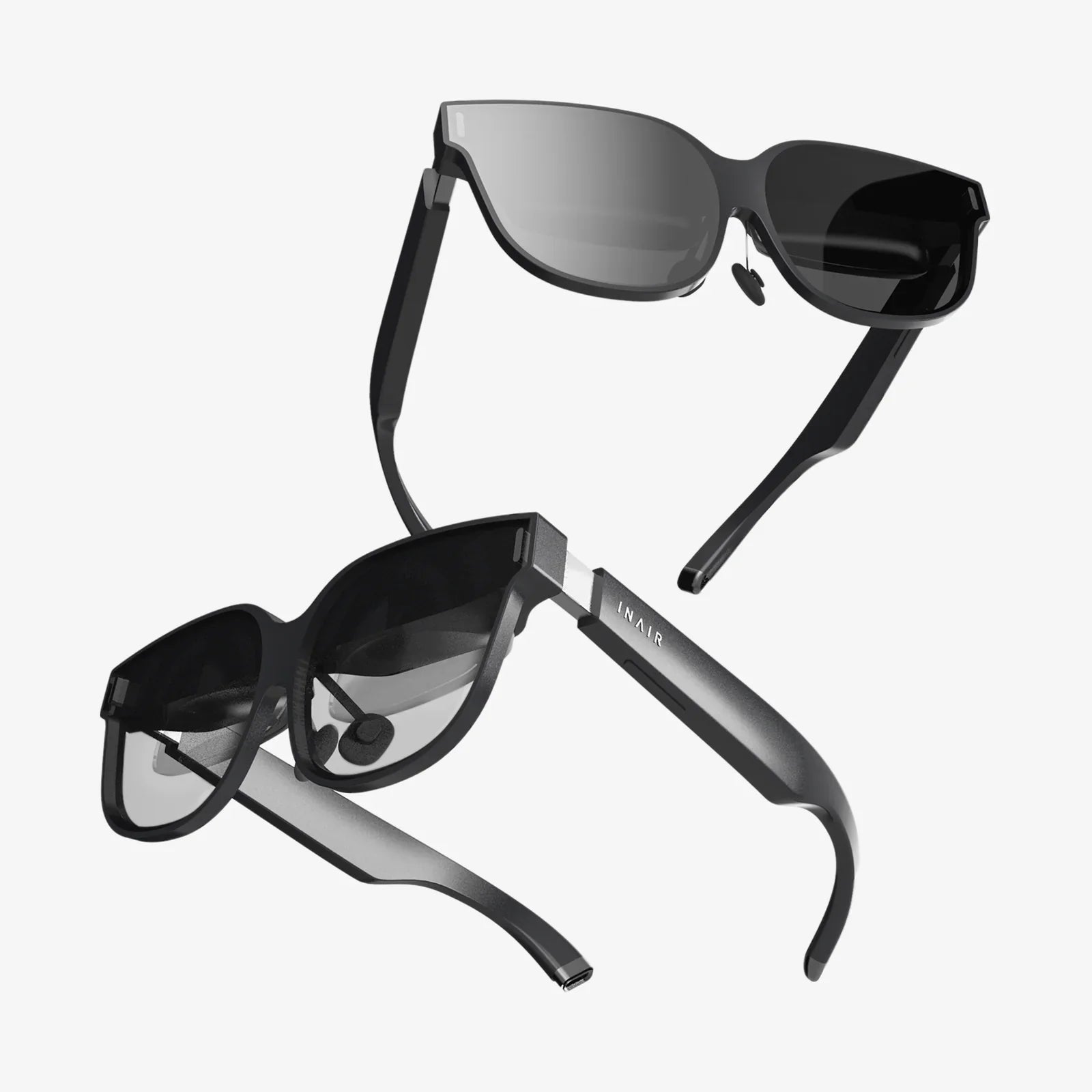
Imagine a world where your sunglasses are not just an accessory you picked from a wall of hundreds, but a unique masterpiece, conceived in the digital ether and crafted precisely for the contours of your face, the palette of your wardrobe, and the specifics of your lifestyle. This is no longer the realm of science fiction. The dawn of AI generated sunglasses is upon us, heralding a seismic shift from mass production to mass personalization, where algorithms become the designers and your preferences become the blueprint. This technological revolution is poised to redefine our relationship with eyewear, transforming it from an off-the-shelf product into a deeply personal experience.
The Algorithm as Artisan: How AI Designs Your Perfect Pair
The process begins not with a sketchpad, but with a dataset. Vast neural networks are trained on immense libraries of design history—from the classic aviators of the 1930s to the oversized frames of the 70s and the minimalist aesthetics of modern times. These systems analyze shapes, materials, colors, textures, and cultural trends, learning the intricate language of style. But the true magic happens when this generalized knowledge meets you, the individual.
Through sophisticated interfaces, users input a wealth of personal data. This can include:
- Facial Scanning: Using a smartphone camera or webcam, advanced computer vision algorithms map the unique geometry of your face. They calculate the precise distance between your temples, the height of your cheekbones, the bridge width of your nose, and the overall proportions of your features. This ensures the generated design will not only fit perfectly but will also flatter your specific bone structure, balancing and enhancing your natural appearance.
- Style Preferences: Users can engage in interactive style quizzes, upload images of their favorite outfits, or even connect their social media profiles for a holistic view of their aesthetic. The AI cross-references this information with its design database to understand your personal taste.
- Lifestyle Parameters: Do you spend your weekends sailing, requiring polarized, grippy, and durable frames? Or are you an urban commuter needing lightweight, blue-light filtering lenses for screen time? The AI factors in your daily activities to recommend lens technology, frame material, and overall durability.
Synthesizing this data, the AI doesn't just regurgitate a pre-existing design. It engages in a process of generative design, creating thousands—sometimes millions—of potential variations. It iterates upon shapes, tweaks angles, and experiments with virtual materials in a digital sandbox, evaluating each option against the user's profile. The final proposed designs are those that score highest on the criteria of fit, style, and function, often resulting in combinations a human designer might never have conceived.
Beyond Aesthetics: The Unseen Engineering of AI Optics
While style is a primary driver, the application of artificial intelligence extends far deeper into the realm of performance and protection. The sun's rays are not created equal, and optimal protection requires sophisticated optical engineering.
AI algorithms can simulate the path of light through a lens with incredible accuracy. They can model how different lens curvatures, materials, and tints will behave under various lighting conditions. This allows for the creation of lenses that are precisely tuned for specific environments:
- Geographic and Activity-Specific Tinting: An algorithm can design a gradient lens that is darker at the top for overhead sun and lighter at the bottom for reading a boat's instrument panel, perfectly suited for a sailor in the Mediterranean. Another lens could be optimized for the specific glare conditions of a snow-covered mountain or a desert landscape.
- Advanced Polarization and Blue Light Filtering: By modeling the wave properties of light, AI can optimize the polarization filter within a lens to eliminate glare more effectively from specific angles, such as the horizontal reflection off water or a highway. Similarly, it can precisely calibrate the filtering of high-energy visible blue light from digital screens without distorting color perception.
- Impact and Structural Analysis: Using principles derived from finite element analysis (a type of computational engineering simulation), AI can stress-test virtual frame designs. It can identify weak points in a proposed structure and iteratively reinforce them, suggesting material distributions that maximize strength while minimizing weight, leading to safer and more comfortable eyewear.
The Virtual Fitting Room: Trying On the Impossible
One of the most immediate and tangible benefits of AI in the sunglasses industry is the eradication of the guesswork involved in online shopping. Augmented Reality (AR) try-on technology, powered by AI, has become incredibly sophisticated. It goes far beyond simply superimposing a static image of a frame onto a photo of your face.
Modern AI-driven AR uses the facial mapping data to create a dynamic 3D model of the proposed sunglasses. It accurately simulates how the arms will bend around your ears, how the weight will distribute across your nose, and how the lenses will sit in relation to your eyebrows and cheekbones. You can turn your head, smile, and move naturally, and the virtual sunglasses move with you, providing a realistic preview of fit and appearance from every angle. This technology is the crucial bridge between the digital design conceived by the AI and the physical product that will arrive at your door, ensuring confidence in a purchase of a truly unique item.
The Sustainable Side of Synthesis
The traditional retail model for fashion and accessories is notoriously wasteful. Brands produce enormous quantities of inventory based on predicted trends, a significant portion of which often goes unsold and ends up in landfills. The model of AI generated sunglasses, made-to-order, presents a paradigm shift towards sustainability.
Because each pair is designed and produced only after an order is placed, manufacturers can operate with drastically reduced inventory. This minimizes overproduction, reduces storage needs, and cuts down on the carbon footprint associated with mass shipping bulk products around the globe before they are even sold. Furthermore, the precision of AI-driven design and manufacturing leads to less material waste during production. The algorithms can optimize the layout of frames on raw material sheets (a process called nesting) to maximize usage and minimize off-cuts. Some forward-looking companies are even exploring the use of AI to suggest designs based on the availability of recycled or sustainable materials in their supply chain at any given moment, creating a circular economy approach to style.
Challenges and Ethical Considerations on the Horizon
Despite the exciting potential, the rise of AI generated sunglasses is not without its challenges and ethical questions. A primary concern is data privacy. The process requires the collection of highly sensitive biometric data—the precise map of an individual's face. How this data is stored, used, and protected is paramount. Companies must be transparent about their data policies and implement robust security measures to prevent breaches.
There is also the question of algorithmic bias. If an AI is trained primarily on data from certain demographics or cultural styles, its "ideal" designs may inadvertently favor those groups, potentially alienating others. Ensuring diverse and inclusive training datasets is critical to preventing the perpetuation of biases and ensuring the technology serves a global audience.
Finally, the role of the human designer evolves but is not eliminated. The best applications of this technology will likely be a collaboration between human creativity and machine efficiency. The human designer sets the aesthetic goals, curates the training data, and guides the AI's creative process, acting as a curator of style rather than a sole originator. This symbiosis can push the boundaries of design further than either could achieve alone.
A New Vision for Personal Expression
The impact of AI generated sunglasses extends beyond the product itself; it signifies a broader movement in consumer culture. We are moving from an era of passive consumption, where we choose from what is available, to one of active creation, where we co-design what we desire. This empowers individuals to express their uniqueness with unprecedented specificity. Your sunglasses become a true reflection of you—not just your face, but your history, your tastes, and your aspirations, all encoded and realized through the silent, calculating power of artificial intelligence.
This technology democratizes design, making personalized, high-quality eyewear accessible to a wider audience. It challenges the very notion of trends, suggesting a future where style is increasingly individualized and less dictated by seasonal collections from major fashion houses. We are witnessing the birth of a new category of product: the truly personal object, born from data and delivered through design.
The perfect pair of sunglasses has always been a holy grail—elusive, subjective, and deeply personal. For decades, we've settled for the closest approximation found on a store shelf. But now, the search is over. The future of eyewear is not about finding; it's about creating. It's a future where you don't browse a catalog, but instead, you collaborate with an intelligent algorithm to birth a pair of sunglasses that has never existed before and exists solely for you. The question is no longer "Which pair suits me?" but "What will my pair become?" The power to define your shade, your style, and your silhouette is now literally in the palm of your hand, waiting to be designed.
Share:
iPhone 6s VR Goggles: Unlocking a Forgotten Portal to Virtual Worlds
Best Things to Do with a VR Headset: Your Ultimate Guide to Virtual Adventures