


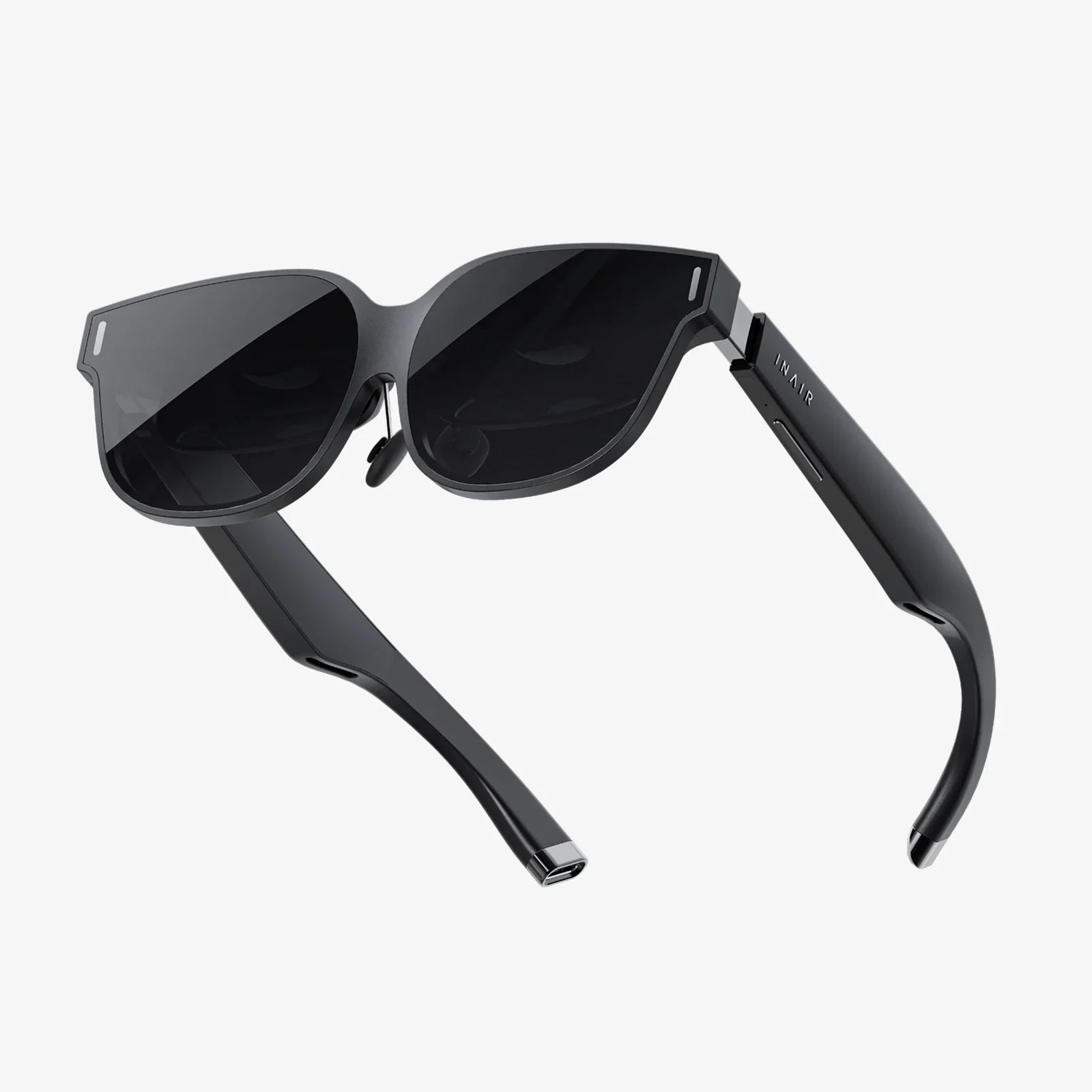
Imagine slipping a smartphone, a device you already own and cherish, into a simple headset and instantly being transported to the edge of the solar system, the front row of a concert, or the depths of the ocean. This wasn't a distant sci-fi fantasy; for millions of iPhone 6s users, it became an astonishing reality. The combination of the iPhone 6s and readily available, affordable VR goggles created a perfect storm of accessibility and capability, serving as a mass-market gateway into virtual reality. It was a democratization of the immersive experience, proving that you didn't need a high-end, tethered computer and a wallet-draining headset to take your first steps into a digital universe. This pairing, though now considered a legacy setup, represents a crucial and fascinating chapter in the story of consumer VR, one where power met practicality in the palm of your hand.
The Unlikely Hero: The Technical Prowess of the iPhone 6s
To understand why this specific combination was so successful, we must first appreciate the technical leap the iPhone 6s represented. Launched in September 2015, it was a monumental upgrade over its predecessor. At its heart was the new A9 chip, Apple's third-generation 64-bit architecture. This processor offered a staggering 70% faster CPU performance and 90% faster graphics performance compared to the A8 in the iPhone 6. For VR, this raw graphical power was non-negotiable. VR content requires rendering two high-resolution images simultaneously—one for each eye—at a consistently high frame rate to avoid latency, which is the primary culprit behind motion sickness. The A9 chip was, for its time, uniquely positioned in a mainstream device to handle this demanding task.
Beyond the processor, the display was equally critical. The iPhone 6s retained a 1334x750 resolution screen. While this may seem low by today's standards, it struck a crucial balance. Higher resolutions, while offering sharper images, placed immense strain on the GPU, often leading to dropped frames and a jarring experience. The 6s's resolution was high enough to provide a convincing sense of immersion while low enough for its GPU to drive it at a smooth, stable frame rate—a key ingredient for comfortable mobile VR. Furthermore, the phone's robust motion tracking capabilities, powered by its advanced gyroscope and accelerometer, were perfectly suited for the precise head-tracking required by VR applications. Every subtle turn, tilt, and nod of the user's head needed to be reflected instantly in the virtual world, and the iPhone 6s's sensors were more than capable of delivering this data with high fidelity and speed.
The Gateway Drug: The Rise of Affordable VR Goggles
On the other side of this equation was the hardware that physically housed the phone: the VR goggles. These were not the complex, self-contained devices we see today with built-in displays, processors, and cooling systems. Instead, they were marvels of simplicity and accessibility. The most common design was a simple headset constructed from plastic, foam, and glass or plastic lenses, often referred to as mobile VR headsets or viewers.
Their operation was elegantly straightforward. A user would open a dedicated VR app on their iPhone 6s, launch a video or experience, and then slide the phone into a compartment at the front of the headset. The headset would close, isolating the user's view to the phone's screen. The lenses inside the headset then magnified and split the screen's image, creating a stereoscopic 3D effect that filled the user's field of vision. This design philosophy meant the headset itself had no batteries, no processors, and no electronics beyond a simple button or two for interaction. This kept the cost astonishingly low, often available for a fraction of the price of a modern dedicated VR headset.
This affordability was the true genius of the model. It removed the single biggest barrier to entry for VR: cost. Suddenly, for a very small investment, anyone with a compatible smartphone—and the iPhone 6s was one of the most compatible—could experience virtual reality. It was the perfect "gateway drug" for the VR industry, hooking millions of users on the potential of immersive tech without requiring a significant financial commitment. It created an entire ecosystem of content creators and consumers overnight.
The Ecosystem: Apps, Content, and Experiencing the World
The hardware was nothing without software. The App Store became a vibrant hub for VR content specifically designed for this iPhone-and-headset combo. A plethora of apps emerged, categorizable into a few key types:
- 360-Degree Video Platforms: Apps from major players allowed users to watch immersive videos. You could stand on a mountaintop, sit in the driver's seat of a race car, or attend a music festival from home. These experiences, while passive, were profoundly effective at demonstrating the emotional power of VR.
- Interactive Games and Experiences: Developers created a range of interactive content. From simple roller coaster simulators that leveraged the phone's motion tracking to more complex puzzle games where you looked around environments to solve mysteries, these apps showcased the interactive potential of the medium.
- Educational and Travel Tools: Perhaps one of the most powerful use cases was in education and virtual tourism. Apps allowed you to take virtual field trips to museums like the Louvre, explore ancient Roman ruins in 3D, or even travel through the human bloodstream. The iPhone 6s VR setup became a window to the world—and beyond.
The primary mode of interaction was often referred to as "gaze control." Since most basic headsets lacked handheld controllers, users would navigate menus and interact with objects by simply looking at them. A reticle in the center of the view would hover over a button or object, and after staring at it for a second or two, the action would be triggered. It was a simple but remarkably intuitive system that made the experiences accessible to virtually anyone.
Limitations and the Inevitable March of Progress
Of course, this setup was not without its significant limitations, especially when viewed through the lens of today's advanced VR technology. Users of the iPhone 6s VR combo were acutely aware of these constraints.
The most notable was the "screen door effect." Because the phone's screen was magnified so greatly by the lenses, the individual pixels became visible, creating a faint grid-like pattern that looked like looking through a screen door. This could break immersion and made text difficult to read. Furthermore, the limited resolution meant the image lacked the sharpness and clarity found in modern dedicated headsets.
Another major limitation was the lack of positional tracking. The iPhone 6s's sensors were excellent at tracking the rotation of your head (rotational tracking)—you could look up, down, left, and right. However, it could not track the physical movement of your head through space (positional tracking). If you leaned forward, ducked, or moved side-to-side, the virtual world would not respond accordingly. This severely limited the sense of presence and made many more advanced VR experiences impossible on the platform.
Finally, the experience could be taxing on the phone itself. Rendering VR content is computationally intensive and generates heat. Extended VR sessions could cause the iPhone 6s to become warm to the touch and, in some cases, trigger thermal throttling, where the phone reduces its processor speed to cool down, leading to a choppier experience.
The Legacy: A Stepping Stone to the Future
Despite its limitations, the era of the iPhone 6s and mobile VR goggles left an indelible mark on the technology landscape. It served a critical purpose: it popularized and normalized virtual reality. It introduced the core concepts of immersive digital environments to a global audience on an unprecedented scale. For many, their first-ever VR experience was with their phone tucked into a plastic headset, and the sense of wonder from that moment was undeniable and powerful.
This widespread adoption demonstrated a clear consumer appetite for VR, convincing developers and large tech companies to invest billions into the research and development of the next generation of standalone and tethered headsets. The lessons learned from the mobile VR era—about user comfort, content design, and interface simplicity—directly informed the development of the more advanced systems we have today.
The iPhone 6s VR combo was the Model T of virtual reality: not the first, not the fastest, and not the most refined, but it was the one that put the technology within reach of the masses. It proved that the path to mainstream VR adoption might not be through expensive, niche hardware, but through leveraging the powerful computers we all already carry in our pockets.
While today's VR headsets offer breathtaking visuals, precise motion controls, and untethered freedom, they owe a debt to this simpler, more accessible beginning. The journey to the metaverse didn't start with a multi-thousand-dollar setup; for millions, it started with a familiar iPhone and a simple pair of goggles, a combination that opened a portal to infinite possibilities and forever changed our perception of what a smartphone could be.
That same iPhone 6s, now perhaps forgotten in a drawer, was once a ticket to the cosmos, a front-row seat to history, and a proof-of-concept for a digital future. Its legacy is a reminder that the most transformative technologies are often those that meet us where we are, transforming our existing devices into something truly magical. The next time you see an old smartphone, remember—it's not just a relic; it's a potential window to another world, waiting for the right pair of goggles to bring it back to life.
Share:
My VR Models: The Ultimate Guide to Creating, Sharing, and Monetizing Your Virtual Creations
AI Generated Sunglasses: The Future of Personalized Eyewear is Here