


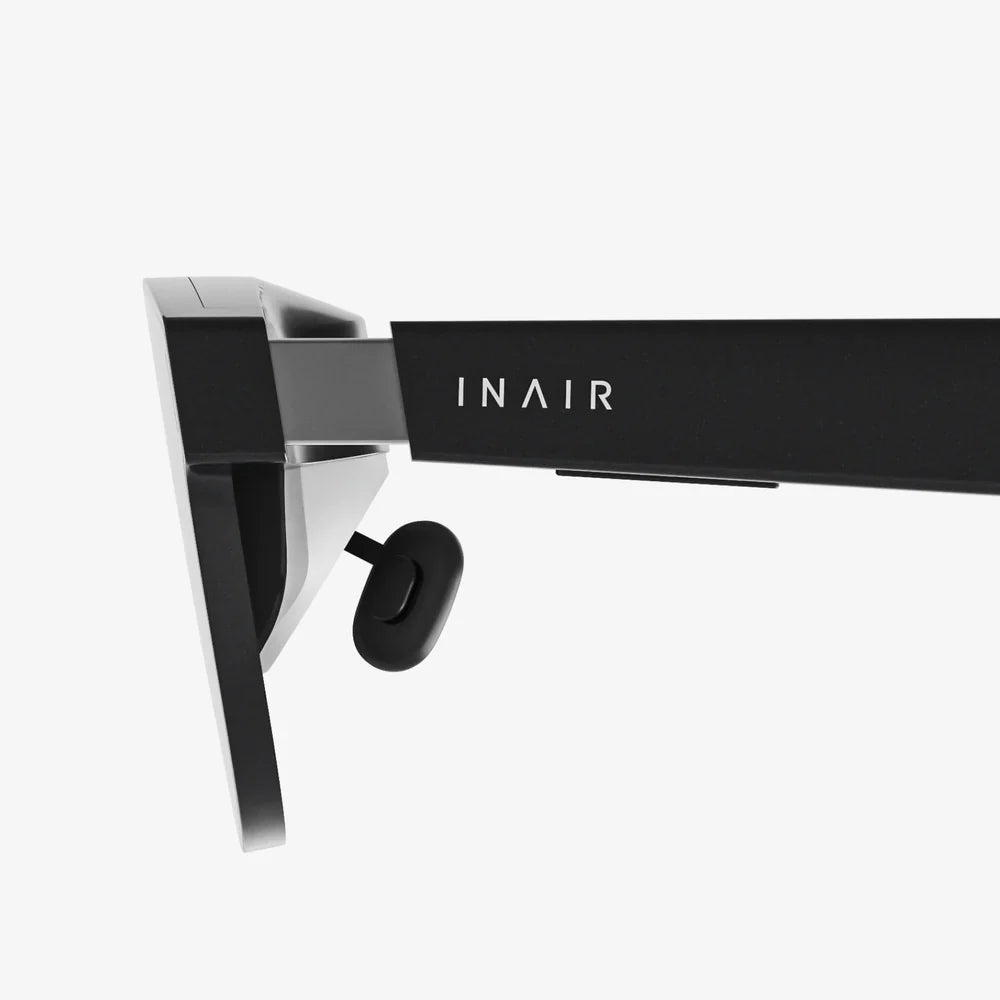
Imagine a world where information flows seamlessly into your field of vision, where language barriers dissolve before your eyes, and where the digital and physical realms are no longer separate but beautifully, intelligently intertwined. This is not a distant sci-fi fantasy; it is the promise of AI glasses in 2024, a technological leap that is finally bringing the dream of ubiquitous, useful augmented reality to the masses. This year marks a pivotal turning point, moving beyond clunky prototypes and niche applications into a era of sleek, powerful, and genuinely intelligent eyewear designed for everyday life.
The Convergence: Why 2024 is the Inflection Point
For over a decade, the concept of smart glasses has tantalized technologists and consumers alike, yet widespread adoption remained elusive. Previous iterations often suffered from a fatal combination of limited functionality, bulky design, and high cost. What makes 2024 different is not a single invention, but a powerful convergence of several critical technologies reaching maturity simultaneously.
First, and most importantly, is the staggering advancement in on-device artificial intelligence. Modern specialized processors are now capable of running complex neural networks directly on the glasses themselves. This means tasks like real-time object recognition, language translation, and scene mapping no longer require a constant, lag-inducing connection to a distant cloud server. The intelligence is built-in, making responses instantaneous and preserving user privacy.
Second, advancements in waveguide and micro-LED display technology have solved the age-old dilemma of brightness versus size. These new optical engines can project vibrant, high-resolution images onto the lenses that are clearly visible even in bright sunlight, all while being small enough to be integrated into frames that resemble traditional eyewear. The dreaded "holographic fisherman" look is finally becoming a thing of the past.
Finally, a mature ecosystem of sensors—including high-resolution cameras, depth sensors, and inertial measurement units (IMUs)—is now available in miniaturized forms. These sensors work in concert to understand the world in real-time, providing the contextual data the AI needs to be truly helpful. This trifecta of powerful AI, discreet displays, and sophisticated sensing has created the perfect storm for AI glasses to finally shine.
Beyond Novelty: Practical Applications Reshaping Industries
The true measure of any technology is its utility. The 2024 generation of AI glasses is moving beyond gimmicks to offer tangible benefits across professional and personal domains.
Revolutionizing the Workspace
In fields where hands-free access to information is critical, AI glasses are proving to be a game-changer. For a technician repairing complex machinery, a schematic can be overlaid directly onto the equipment, with step-by-step guidance highlighting specific components. A surgeon can view vital patient statistics and imaging data without ever looking away from the operating field. An architect walking through a construction site can see the building information model (BIM) superimposed onto the unfinished structure, instantly identifying discrepancies between the plan and the reality. This constant stream of contextual data dramatically reduces errors, improves efficiency, and enhances training.
The End of Language Barriers
One of the most immediately impactful features is real-time translation. Imagine conversing with someone in a language you don't speak. As they talk, subtitles appear in your field of view, translated instantly into your native tongue. Conversely, what you say can be translated into text for them to read. This technology isn't just for travelers; it's a powerful tool for global business, education, and fostering cross-cultural connections, effectively making the entire world more accessible.
Enhanced Navigation and Contextual Awareness
Navigation moves beyond a simple arrow on a phone screen. With AI glasses, directions can be painted onto the sidewalk itself, with virtual arrows guiding you turn-by-turn through a city. But it goes further. Look at a restaurant, and its ratings and menu highlights might pop up. Glance at a landmark, and a brief history materializes. This ambient, context-aware information layer turns every walk into an opportunity for discovery and learning, all without the need to stare down at a device.
Accessibility and Empowerment
Perhaps the most profound application is in accessibility. For individuals with visual impairments, AI glasses can describe scenes, read text aloud from signs and documents, identify currency, and even recognize familiar faces, providing a greater degree of independence. For those with hearing difficulties, conversations can be captioned in real-time, making social interactions smoother. This technology has the potential to empower millions of people by providing them with information in the way they need it most.
The Invisible Engine: How the AI Actually Works
The magic of these devices lies in a complex, multi-layered AI system that operates in a continuous loop of perception, processing, and projection.
- Computer Vision: The foundation is a sophisticated computer vision model. It constantly analyzes the video feed from the glasses' cameras to identify objects, people, text, and the spatial geometry of the environment. It understands what it is looking at.
- Contextual Understanding: This is where the intelligence deepens. The AI doesn't just see a "cup"; it understands you are in a kitchen, it's morning, and you likely want coffee. It cross-references what it sees with other data streams—your calendar, location, and personal preferences—to anticipate your needs.
- Generative AI Integration: The most advanced 2024 models are beginning to integrate generative AI. This allows for more natural and complex interactions. Instead of simple commands, you can have a conversation with your glasses. Ask, "How do I fix this leaky faucet?" and the AI can generate a custom set of instructions overlaid onto the faucet itself.
- Spatial Anchoring: The AI remembers where digital information is placed. You can pin a virtual note to a physical door, and it will remain there, visible only to you the next time you look, creating a persistent blend of the digital and physical worlds.
Navigating the Minefield: Privacy, Security, and the Social Contract
The potential of AI glasses is undeniably exciting, but it is accompanied by significant concerns, primarily around privacy and security. A device that records everything you see is inherently controversial.
Manufacturers are addressing this through a combination of hardware and software solutions. Many now feature a prominent "recording" LED light that cannot be disabled when the camera is active, providing a clear signal to others. Privacy-focused designs process most sensitive data directly on the device, never sending video feeds to the cloud. User control is paramount, with intuitive physical switches to disable cameras and microphones instantly.
However, technology alone cannot solve this dilemma. The widespread adoption of AI glasses demands a new social contract. Societies will need to establish norms and potentially new laws regarding recording in public and private spaces. The etiquette of wearing such devices in conversations, meetings, and social gatherings will need to be negotiated. The challenge is to harness the benefits of this always-on, contextual intelligence without creating a dystopian surveillance culture. The conversation around these issues in 2024 is as important as the technology itself.
The Road Ahead: What's Next After 2024?
The AI glasses of 2024, while revolutionary, are still just the beginning. The trajectory points toward even more profound integration into our daily lives. We can expect battery technology to improve, eventually leading to all-day battery life without bulky external packs. Display technology will continue to advance, potentially moving toward retinal projection for even sharper images. The user interface will evolve from voice commands and touchpads to more intuitive methods like subtle gesture recognition and even neural input, reading faint electrical signals from the brain to interpret intent.
Ultimately, the goal is for the technology to fade into the background. The perfect pair of AI glasses won't be a device you think about; it will be a seamless extension of your own cognition, enhancing your perception and abilities without ever getting in the way. It will be a quiet companion that helps you navigate the world, connect with others, and learn and work more effectively, all while feeling as natural and ordinary as the prescription glasses millions wear today.
The future is not on your phone screen; it's being layered directly onto the world around you. The AI glasses of 2024 are the key that unlocks this new reality, offering a glimpse into a future where our digital and physical lives are no longer in conflict but exist in a harmonious, intelligent, and empowering synthesis. The question is no longer if this technology will become mainstream, but how quickly we will adapt to and shape the incredible new possibilities it places right before our eyes.
Share:
VR Wearing Glasses: The Future of Immersive Technology and Personal Accessibility
Why Augmented Reality is the Future: Bridging Our Digital and Physical Worlds