


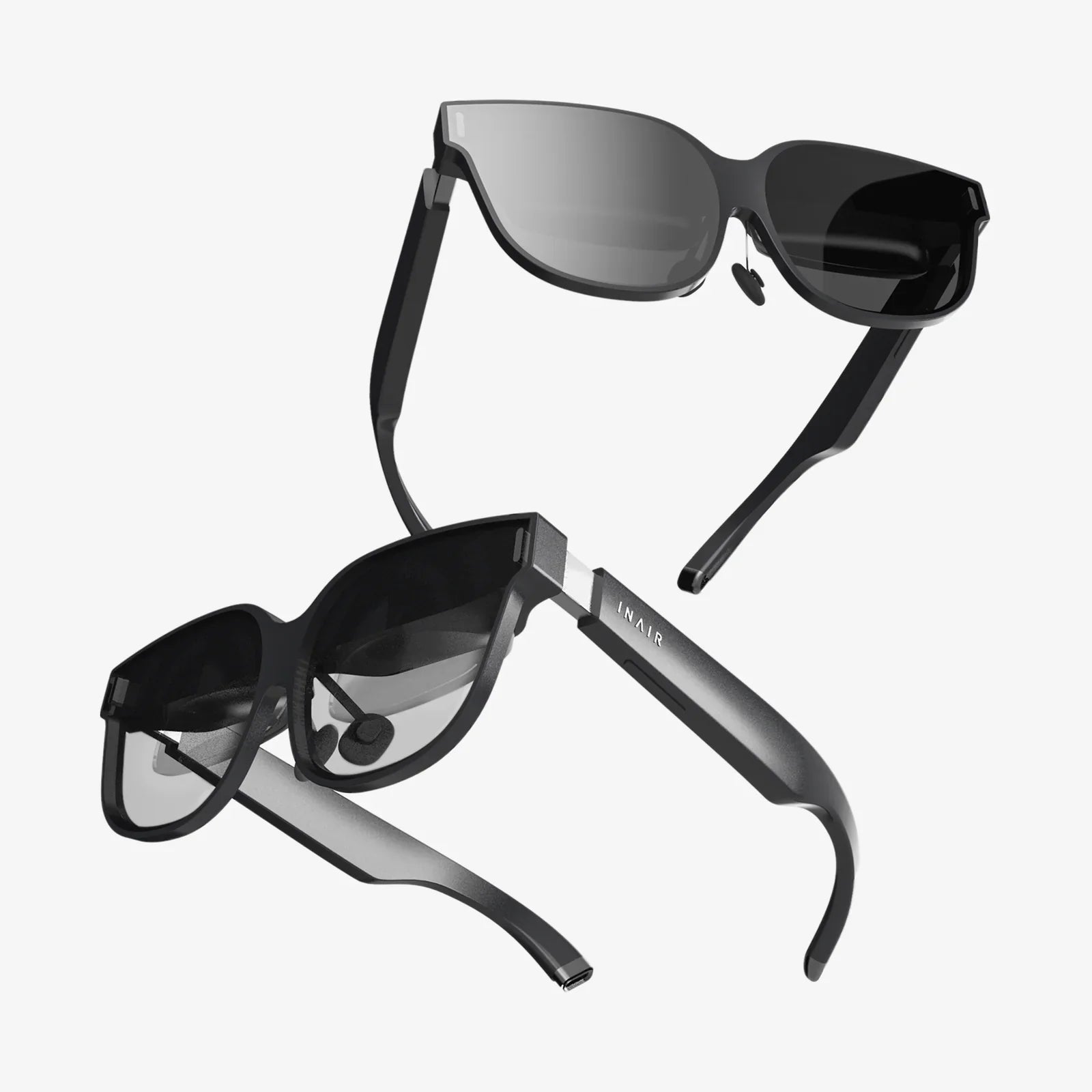
Imagine a world where information doesn't live on a screen you hold in your hand, but flows seamlessly into your field of vision, intuitively answering your questions, translating street signs in real-time, and remembering the name of that acquaintance you just bumped into at the coffee shop. This isn't a scene from a science fiction film; it's the rapidly approaching reality promised by AI glasses in 2025. We stand on the precipice of a technological revolution that will fundamentally alter our relationship with computing, moving it from a device we interact with to an intelligent layer integrated into our very perception of the world. The next generation of wearable technology is about to make the smartphone look like a cumbersome relic, and it’s happening sooner than you think.
The Architectural Leap: From Prototype to Platform
The journey to viable AI glasses has been a long one, fraught with clunky designs, limited battery life, and underwhelming functionality. The year 2025 represents a critical inflection point, not merely because of incremental improvements, but due to a confluence of several technological maturities that finally align to form a cohesive and powerful platform.
At the heart of this evolution is a shift in processing architecture. Early attempts often relied on either a underpowered onboard chip, leading to laggy and limited experiences, or a constant, bandwidth-heavy connection to a smartphone, which drained batteries and introduced latency. The AI glasses of 2025 will leverage a sophisticated hybrid approach. A purpose-built, ultra-low-power neural processing unit (NPU) will be embedded directly into the frames, handling immediate, time-sensitive tasks like always-on speech recognition, basic image sensing, and maintaining a persistent contextual awareness.
For more complex computations—such as parsing intricate visual data, running large language models for deep reasoning, or accessing vast cloud-based knowledge graphs—the glasses will seamlessly offload tasks to a paired device or directly to the cloud via robust 5G/6G mmWave connections. This split-compute model is the key to delivering powerful intelligence without sacrificing form factor or battery life. The glasses themselves will feel lightweight and comfortable for all-day wear, thanks to advanced micro-OLED displays that project high-resolution imagery directly onto the retina, eliminating the need for bulky optics and allowing for designs that resemble conventional eyewear.
Beyond Notifications: The Killer Applications of Contextual Computing
While receiving a discreet notification or controlling music playback are neat party tricks, the true potential of 2025's AI glasses lies in applications that understand context. This is the leap from augmented reality to augmented intelligence.
The Ultimate Personal Assistant
Imagine walking into a conference room. Your glasses, recognizing the location and cross-referencing your calendar, subtly display the names and roles of everyone present, refreshing in real-time as people enter. During a discussion about quarterly projections, you quietly ask, "What were our Q2 sales figures?" and the answer appears in the corner of your vision, sourced directly from the latest report. This assistant is proactive; if it detects you’re lost in a new city, it might gently highlight the correct path with a digital arrow superimposed on the sidewalk, all without you uttering a word.
Real-Time Universal Translation
Language barriers will crumble. A tourist in Tokyo can look at a restaurant menu, and the Japanese characters will be instantly overlaid with their native language. More impressively, during a conversation with someone speaking another language, the glasses will provide real-time subtitles of what the person is saying, and even translate your spoken responses back to them. This isn't just about travel; it will revolutionize global business collaboration and cultural exchange.
Enhanced Learning and Memory
For professionals and students alike, AI glasses will serve as an external cortex. A mechanic looking at a complex engine could see diagnostic data, torque specifications, and a highlighted guide for the next step in a repair manual overlaid onto the physical components. A medical student observing a surgery could see anatomical labels and vital signs displayed directly on the patient. The glasses will also act as a perfect memory aid, recording and indexing moments you choose to save (e.g., "Remember this person's face and name"), allowing you to recall details with perfect clarity later.
Accessibility Revolution
The impact on accessibility will be profound. For the visually impaired, the glasses could amplify contrast, identify and read out text, recognize currency, and describe scenes—"There's a person waving at you about ten feet away." For those with hearing impairments, real-time speech-to-text transcription of group conversations would be life-changing, making social and professional settings vastly more inclusive.
The Invisible Interface: Interacting with Your Digital Sixth Sense
A device this personal and immersive cannot rely on traditional touchscreens or keyboards. The interface paradigm for 2025's AI glasses is multi-modal and invisible.
- Voice First: Advanced natural language processing will allow for conversational, context-aware dialogue. You'll talk to your AI naturally, as if speaking to a knowledgeable companion.
- Subtle Gestures: Tiny, inward-facing cameras or inertial measurement units (IMUs) will track micro-gestures. A pinch of the fingers, a tap on the temple, or a swipe in the air could control menus, select options, or dismiss notifications without drawing attention.
- Gaze Control: The glasses will know precisely where you are looking. Simply gazing at an object or a point in space for a moment could be the trigger for more information, acting as a silent cursor.
- Contextual Defaults: The most powerful input will be silence. The AI will infer your needs based on location, time, and what you're looking at, surfacing the right information proactively without any command.
Navigating the Minefield: Privacy, Security, and the Social Contract
The potential of always-on, always-sensing glasses is inextricably linked to profound privacy concerns. A device that can see and hear everything you do represents a societal challenge as much as a technological one. The industry's success in 2025 will hinge on its ability to build trust.
Privacy by Design must be the non-negotiable foundation. This means:
- On-Device Processing: Sensitive data like live camera feeds and audio should be processed locally on the device's NPU whenever possible, with only anonymized, necessary data sent to the cloud.
- Clear User Indicators: A physical hardware shutter for the camera and a prominent, external LED light that clearly indicates when recording or active sensing is taking place are essential for transparency.
- Granular Permissions: Users must have absolute control over what data is collected and how it is used, with easy-to-understand settings for different contexts (e.g., "Work Mode," "Social Mode," "Off").
- Robust Security: These devices will hold a treasure trove of personal data, making them prime targets for hacking. End-to-end encryption and secure hardware elements are paramount.
Furthermore, a new social contract will need to be negotiated. The concept of a "digital bystander" will emerge, raising questions about consent in public spaces. Social norms will need to adapt to determine when it is and isn't appropriate to use such powerful recording and sensing technology around others.
The Road to Mainstream Adoption
For AI glasses to move beyond early adopters in 2025, several barriers must be overcome. Price points need to reach a level of accessibility, likely through various tiers of models. Battery technology, while improved, will still be a constraint, potentially solved by innovative solutions like solar-charging coatings or quick-swap battery modules. Finally, the developer ecosystem needs to be nurtured to create the rich array of applications that will make the hardware indispensable.
We can expect to see adoption begin in enterprise and vertical markets first—logistics, manufacturing, field service, and healthcare—where the productivity benefits are immediately quantifiable. This will fuel innovation, drive down costs, and prepare the market for the broader consumer rollout.
The AI glasses of 2025 are not about isolating us from the world with a digital overlay. Their true promise is to deepen our engagement with the physical world around us. They will amplify our senses, augment our intellect, and connect us to information in a more human-centric way. They represent the next logical step in the endless human quest to extend our capabilities through tools. The age of staring down at a slab of glass and metal is ending. The age of looking up and out, empowered by an intelligent companion that sees what we see and knows what we need to know, is about to begin. Get ready to see the world, quite literally, in a whole new light.
Share:
Virtual Glasses for Android: The Ultimate Guide to a New Digital Reality
Augmented Reality Maintenance and Repair: The Digital Revolution Reshaping Industry