


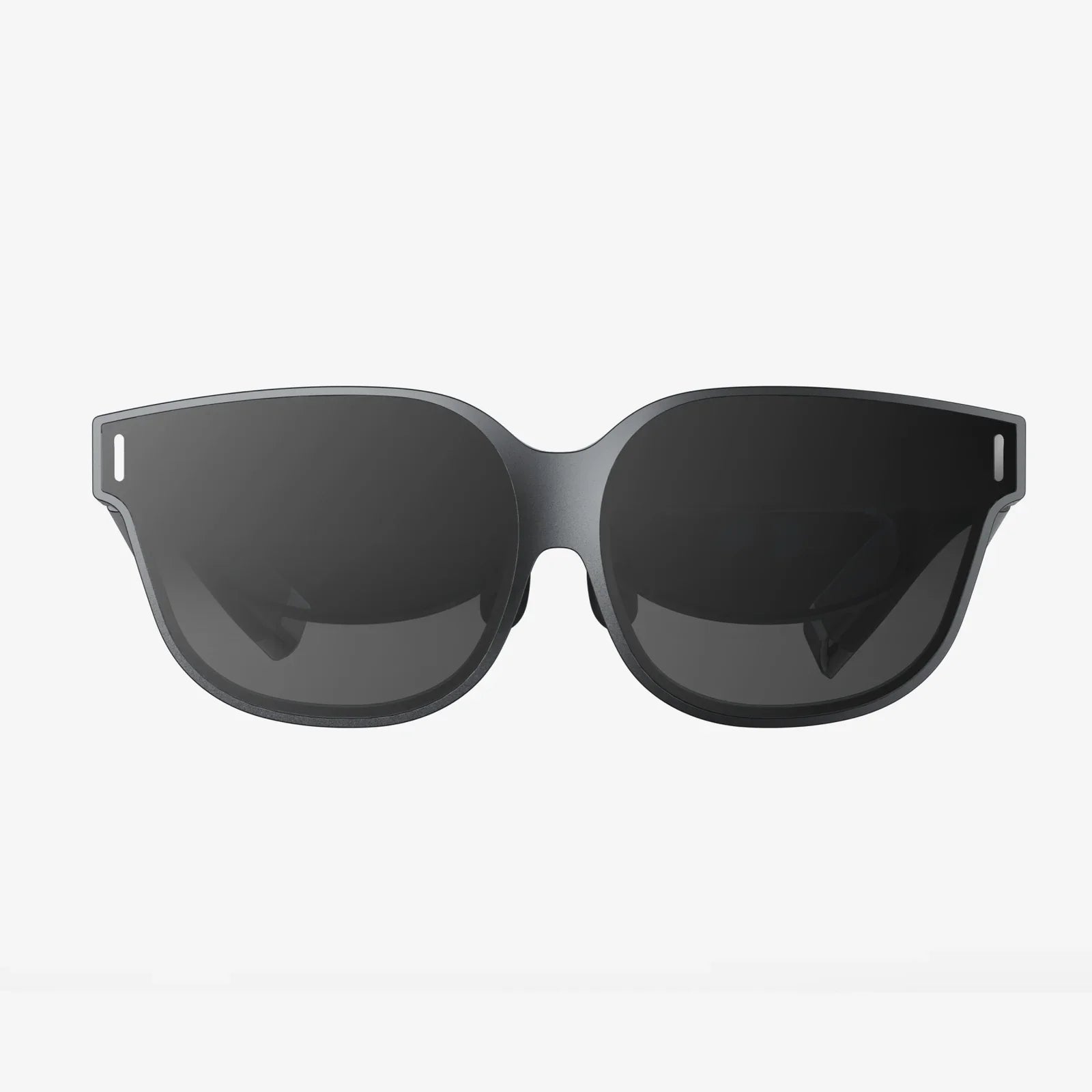
- by wangfred
AI Glasses Available Now: The Future on Your Face is Finally Here
- by wangfred
Imagine a world where information flows as seamlessly as sight itself, where the digital and physical realms converge not in your hand, but directly in your line of vision. This is no longer the stuff of science fiction; the future is literally looking you in the eye. The technological horizon has shifted, and a new category of wearable computing is emerging from the shadows of prototype labs and concept videos, landing squarely on the faces of early adopters. AI glasses available now represent a profound leap, offering a glimpse into a hands-free, augmented existence that promises to redefine how we work, navigate, communicate, and perceive the world around us. This isn't a distant promise—it's a present-day reality, and it's more accessible and powerful than you might think.
The term "smart glasses" has been around for years, often conjuring images of clunky, awkward designs with limited functionality. Today's AI glasses are a different breed entirely. They are not merely displays for notifications. At their core, they are defined by several key characteristics that separate them from their predecessors.
First and foremost is the integration of on-device artificial intelligence. Unlike earlier models that relied heavily on a constant Bluetooth connection to a smartphone for processing, many new glasses feature dedicated AI processors. This allows for low-latency, real-time analysis of visual and auditory data directly on the glasses themselves. This is crucial for tasks like instant translation, where waiting for data to travel to a phone and back would create an awkward and unusable delay. The AI can understand and respond to the world immediately, making the experience feel magical and intuitive.
Secondly, the form factor has undergone a revolution. The goal is minimalist, lightweight design that prioritizes looking like ordinary eyewear. Manufacturers have made significant strides in miniaturizing the technology, embedding tiny cameras, microphones, speakers, and sensors into frames that are virtually indistinguishable from standard glasses. This normalization of design is critical for widespread social acceptance. People are far more likely to wear technology that doesn't make them look like a cyborg prototype.
Finally, the focus has shifted from pure entertainment to practical utility. The killer apps for this generation of AI glasses are not games or flashy AR filters (though those exist), but powerful tools that solve real-world problems: breaking down language barriers, describing environments for the visually impaired, providing contextual information for professionals, and capturing life's moments without a screen.
Not all AI glasses are created equal. The current market offers a spectrum of devices, each with a different primary focus and capability set. Understanding these categories is key to identifying which type might be right for you.
This category prioritizes auditory augmentation and intelligent audio processing. They often feature open-ear speakers that deliver sound directly to your ears without blocking ambient noise, making them ideal for all-day wear. Their AI capabilities are typically voice-activated and focused on:
These models may have small cameras for limited visual AI tasks, but their strength lies in auditory intelligence and seamless audio integration.
This category leverages the camera and on-board AI to analyze the visual world and provide information directly to the user. This is where the true potential for assistive technology shines.
This category aims to project full-color, high-resolution holographic images onto transparent lenses, effectively turning the world into your canvas. This technology is still in its relative infancy for consumer devices but is rapidly advancing. These glasses promise:
While some devices are available now, this category represents the next major evolution, with significant improvements in field of view, brightness, and battery life still underway.
The magic of AI glasses is a symphony of hardware and software working in concert. Here’s a simplified breakdown of the technology inside the frame:
1. Sensing the World: Tiny, high-resolution cameras capture visual data. Beam-forming microphones capture audio, often with directional focus to isolate the voice of the person you're speaking to while dampening background noise. Other sensors like accelerometers, gyroscopes, and magnetometers track the precise movement and orientation of your head.
2. On-Device Processing: This is the brain. A specialized NPU (Neural Processing Unit) or a powerful mobile CPU handles the heavy lifting. It runs the machine learning models that perform tasks like:
3. Connectivity: While many tasks are handled on-device, a Bluetooth connection to a smartphone provides a link to the cloud for more complex queries, updating AI models, and syncing data like contacts and calendars. Some models also have built-in cellular connectivity for complete independence.
4. Output: Results are delivered through micro-speakers that sit just in front of your ears, providing a private audio experience. For AR glasses, miniature projectors (like waveguides or micro-LED arrays) beam light onto the lenses, which then reflect it into your eyes to form images that appear to exist in the world.
The applications for AI glasses extend far beyond consumer convenience. They are poised to become indispensable tools across numerous professional fields.
Healthcare: Surgeons can access patient vitals and surgical plans without looking away from the operating table. Nurses can hands-free record notes and access drug information. EMTs can receive guided instructions for complex procedures at an accident scene.
Field Service & Manufacturing: A technician repairing a complex machine can see a schematic overlaid on the equipment itself, with step-by-step instructions. A warehouse worker can see picking and packing instructions without carrying a scanner, dramatically improving efficiency.
Education & Training: Students on a field trip can look at a historical site and see a reenactment play out before them. A trainee mechanic can see animated instructions showing the exact steps to repair an engine.
Accessibility: This is perhaps the most profound impact. AI glasses are granting unprecedented independence to individuals with visual or hearing impairments, acting as a powerful sensory extension and providing contextual awareness that was previously impossible.
Of course, this new technology does not arrive without its set of challenges and valid concerns.
Privacy and the Societal Gaze: The elephant in the room is the camera. The potential for surreptitious recording is a serious social and ethical concern. Manufacturers are addressing this with clear physical indicators—like LED lights that show when the camera is active—and design choices that make the camera obvious. They also emphasize user control and transparency about data usage. The societal conversation about norms and etiquette for wearing cameras in public is just beginning.
Battery Life: Powering a computer on your face is demanding. While audio-focused glasses can often last a full day, models with more advanced visual processing and AR displays currently struggle to get beyond a few hours of active use. This remains a key area for innovation, with improvements in battery technology and power-efficient chips happening rapidly.
The Social Hurdle: Will people feel comfortable talking to someone wearing a camera? Early adopters may face curious stares or skepticism. However, as the designs become more normalized and the benefits become clearer, social acceptance is likely to grow, much as it did for Bluetooth earpieces and wearing headphones in public.
The trajectory is clear. The technology will continue to shrink, becoming even more lightweight and power-efficient. AI models will grow more sophisticated, understanding context and user intent with breathtaking accuracy. displays will become brighter, higher resolution, and eventually, indistinguishable from reality. The ultimate goal is for the technology to fade into the background—to become an invisible layer of intelligence that enhances our lives without demanding our attention.
We are moving towards a future where asking your glasses a question will be as natural as turning your head to look. Where language will no longer be a barrier to human connection. Where information and assistance are always available, not in your pocket, but in your perception. The first steps on this journey are being taken today. The devices are here, they are functional, and they are steadily improving. This isn't about replacing reality with a virtual one; it's about enriching our existing reality with a seamless flow of knowledge and capability. The age of ambient computing is dawning, and it's being built right before our eyes.
Stop imagining the future and start trying it on for size. The next time you struggle to read a menu in a dimly lit restaurant, fumble with your phone for directions while carrying groceries, or wish you could remember every word of an inspiring conversation, remember: the solution is no longer a fantasy. The tools to augment your reality, to make you smarter, more capable, and more connected to the world, are sitting on a virtual shelf waiting for you. The question is no longer if this technology will become a part of our lives, but how soon you will decide to step into this new layer of existence and see what the world really has to offer.
Share:
Concept of Augmented Reality: A Comprehensive Guide to the Digital Overlay Reshaping Our World
Should I Wear My Glasses in VR? The Ultimate Guide to Vision and Immersion