Imagine a world where digital information doesn't just live on a screen but is seamlessly woven into the fabric of your everyday life. Where directions float on the pavement before you, historical figures reenact events on the very ground they occurred, and complex repair instructions are projected directly onto the machinery you're fixing. This is not a distant sci-fi fantasy; it is the rapidly evolving and profoundly impactful concept of augmented reality, a technological revolution that is poised to redefine human interaction with both the digital and physical realms.
Defining the Digital Veil: What Exactly is Augmented Reality?
At its core, the concept of augmented reality (AR) is a technology that superimposes a computer-generated overlay—comprising images, sounds, text, and other data—onto a user's real-world view in real-time. Unlike virtual reality (VR), which creates a completely immersive, artificial digital environment that replaces the real world, AR enhances one's perception of reality by adding digital elements to it. The key differentiator is presence: VR transports you elsewhere, while AR brings digital content into your here and now. This synthesis creates a blended experience where virtual objects coexist and interact with the physical environment, often through the lens of a smartphone camera, a tablet, or, more immersively, specialized glasses or headsets.
A Journey Through Time: The Evolution of an Idea
While it feels like a product of the 21st century, the conceptual seeds of augmented reality were sown decades ago. The term itself is attributed to former Boeing researcher Thomas Caudell in 1990, but the idea predates the name. In 1968, computer scientist Ivan Sutherland, often called the "father of computer graphics," created the Sword of Damocles, a head-mounted display system so primitive and heavy it had to be suspended from the ceiling. It displayed simple wireframe graphics, but it was the first step toward a head-worn augmented world. The 1990s saw the first functional AR systems emerge in industrial and academic settings, notably for navigation and manufacturing. The true catalyst for public awareness, however, was the arrival of powerful smartphones equipped with cameras, GPS, and fast processors in the late 2000s. This convergence of mobile technology made AR accessible to millions, culminating in a global phenomenon with apps that allowed people to chase digital creatures in their local parks.
The Engine Room: How Augmented Reality Works Its Magic
The magic of AR is not magic at all but a sophisticated orchestration of hardware and software. The process typically involves three key steps: capturing, processing, and displaying.
1. Capturing the Real World
Sensors are the eyes and ears of an AR device. Cameras capture the live video feed of the user's environment. Meanwhile, a suite of other sensors springs into action. An accelerometer measures the device's orientation and movement. A gyroscope tracks rotation and angular velocity. A magnetometer (digital compass) determines cardinal direction. In more advanced systems, LiDAR (Light Detection and Ranging) scanners fire out pulses of light to measure the exact distance to surrounding objects, creating a precise 3D depth map of the environment. This sensor fusion is critical for understanding the device's position and the geometry of the space around it.
2. Processing and Alignment
The raw data from the sensors is fed to the device's processor, where the real computational heavy lifting occurs. This is where computer vision algorithms take over. Two primary methods are used for tracking and alignment:
-
Marker-based AR: This method relies on scanning a predefined visual marker, such as a QR code or a specific image. The software recognizes the unique pattern and uses it as an anchor point to position and orient the digital content. It's highly reliable and was common in early AR applications.
-
Markerless AR: This is the more advanced and now more prevalent technique. It uses the device's sensors to understand and map the environment without a predefined marker. This can be achieved through:
- Surface Detection: Identifying horizontal planes like floors and tables, or vertical planes like walls.
- Simultaneous Localization and Mapping (SLAM): This is the holy grail of environmental understanding. SLAM technology allows the device to both map an unknown environment and simultaneously track its own location within that map in real-time, enabling persistent digital objects that stay locked in place.
3. Displaying the Augmentation
Finally, the rendered digital content is composited onto the user's view of the real world. This can happen on several types of displays:
-
Smartphone and Tablet Screens: The most common entry point, using the device's screen as a viewport into the augmented world.
-
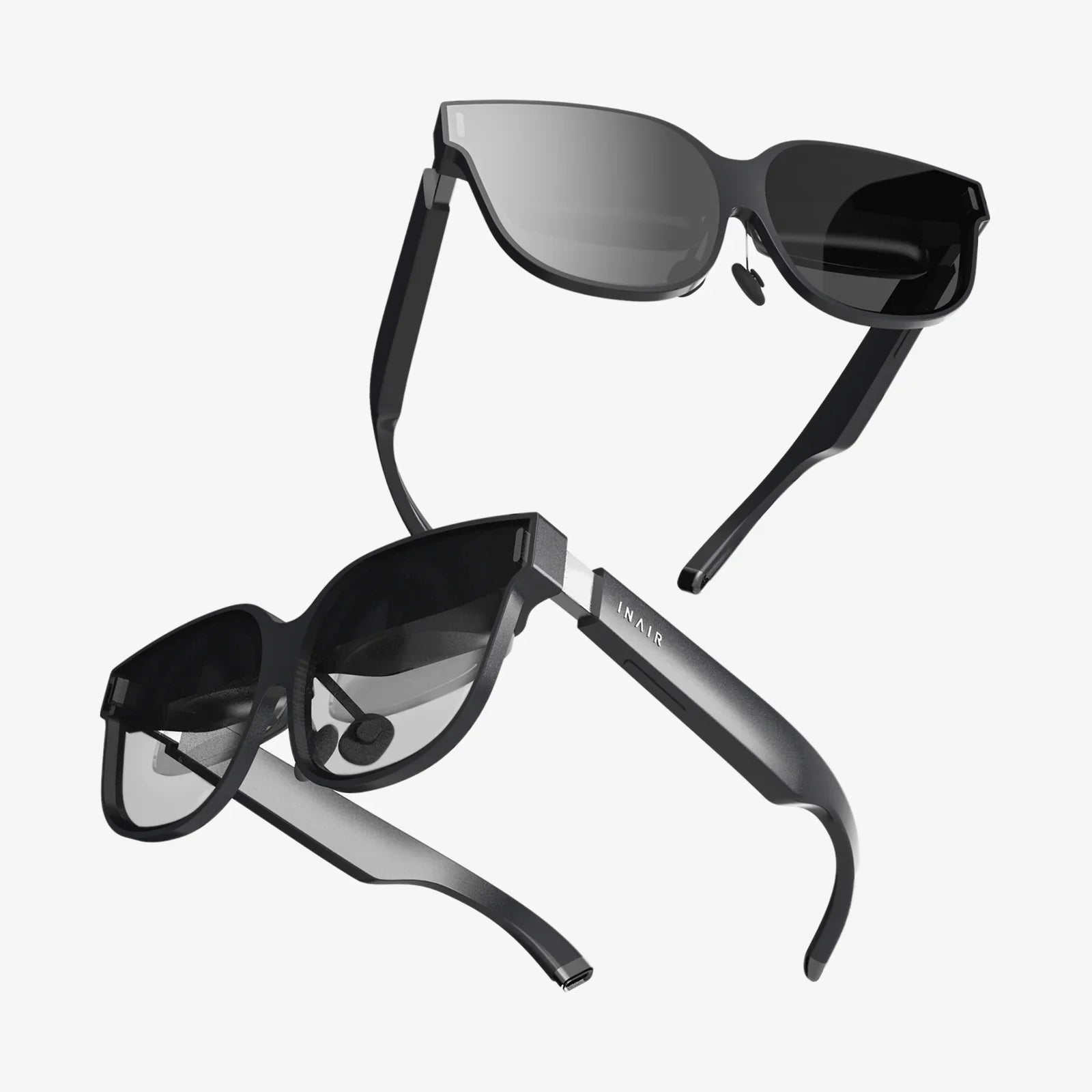
Smart Glasses: These use either optical see-through (where digital projections are bounced onto transparent lenses) or video see-through (where cameras capture the real world and screens display the combined feed) to overlay graphics directly into the user's field of vision.
-
Heads-Up Displays (HUDs): Long used in fighter jet cockpits and now in some automotive windshields, these project information directly into the line of sight.
Beyond the Gimmick: The Transformative Applications of AR
The value of AR extends far beyond entertainment and viral filters. It is solving real-world problems and enhancing capabilities across numerous sectors.
Revolutionizing Retail and E-Commerce
AR is fundamentally changing how consumers shop. The "try before you buy" dilemma for online shopping is being solved. Customers can now use their phones to see how a new sofa would look in their living room, accurately scaled and positioned. They can virtually try on watches, glasses, and makeup. This not only boosts consumer confidence and reduces return rates but also creates a more engaging and interactive shopping experience.
Empowering Industry and Manufacturing
On factory floors and in field service, AR is a powerful tool for efficiency and accuracy. Technicians wearing AR glasses can see schematics, instructions, and safety information overlaid directly on the equipment they are servicing, allowing for hands-free operation. Complex assembly tasks can be guided by digital arrows and holograms, reducing errors and training time. Designers and architects can visualize and interact with 3D prototypes at full scale before a single physical resource is spent.
Transforming Education and Training
AR brings learning to life. Instead of reading about ancient Rome, students can walk through a digitally reconstructed Colosseum on their desks. Medical students can practice procedures on detailed, interactive holograms of the human body, gaining invaluable experience without risk. This immersive, interactive form of education enhances understanding and retention, making complex subjects tangible and accessible.
Enhancing Navigation and Wayfinding
Forget looking down at a blue dot on a map. The next generation of navigation will use AR to paint directions onto the real world. arrows on the road, floating signs above destinations, and information about local businesses will appear as you look through your phone or smart glasses, creating an intuitive and context-rich guidance system for both pedestrians and drivers.
The Road Ahead: Challenges and the Future of AR
Despite its rapid progress, the widespread adoption of AR, particularly in its most immersive form, faces significant hurdles. The hardware for truly comfortable, all-day smart glasses remains a challenge, balancing battery life, processing power, heat generation, and social acceptability. There are also serious concerns around privacy and data security, as these devices constantly scan and analyze our personal spaces. The creation of a pervasive, persistent digital layer over the world also raises profound ethical questions about digital litter, advertising overload, and reality distortion.
Yet, the trajectory is clear. The concept of augmented reality is evolving toward a future of ubiquitous computing, often referred to as the "spatial web" or "metaverse." We are moving toward lightweight, stylish glasses that will become as commonplace as smartphones, offering continuous contextual information and connection. This technology will further blur the line between our digital and physical lives, transforming everything from social interaction to urban design. It promises a future where the digital world doesn't distract us from reality but enhances our ability to understand, navigate, and improve it.
The invisible layer is becoming visible, and it is set to change everything. From the way we assemble a piece of furniture to the way we learn about the universe, the concept of augmented reality is not just altering our screens; it is beginning to alter our very perception of what is real, offering a glimpse into a future where the digital and physical are forever and fascinatingly intertwined.


Share:
AR VR Could Look Like: A Glimpse into the Invisible Future
AI Glasses Available Now: The Future on Your Face is Finally Here