


- by wangfred
AR VR Could Look Like: A Glimpse into the Invisible Future
- by wangfred
Imagine a world where the digital and the physical are no longer separate realms, but a single, fluid reality. A world where information dances at your fingertips, distant experts stand beside you as holograms, and you can walk through ancient ruins that vanished millennia ago. This isn't a distant sci-fi fantasy; it's the future being built today, and it hinges on one pivotal question: what will the next generation of AR and VR look like? The answer is a breathtaking journey from the clunky headsets of today to a future where the technology itself disappears, leaving only the magic it creates.
To understand the future, we must first acknowledge the present. Current AR and VR hardware, while revolutionary, is defined by its limitations. We wear headsets that are often heavy, tethered, or possess a limited field of view. They are undeniably appliances—devices we consciously put on and take off. They separate us from our immediate environment, either by blocking it out entirely (VR) or by overlaying a digital layer that often feels like a ghostly, semi-transparent screen floating in front of our eyes (AR). This is the necessary first step, the proof-of-concept that has ignited the world's imagination. But it is merely the chrysalis stage, and the butterfly set to emerge will be almost unrecognizable.
The first major evolution will be a dramatic slimming down of form factors. We are already moving away from tethered PCs and toward self-contained, all-in-one devices. The next leap will be in materials science and optical engineering.
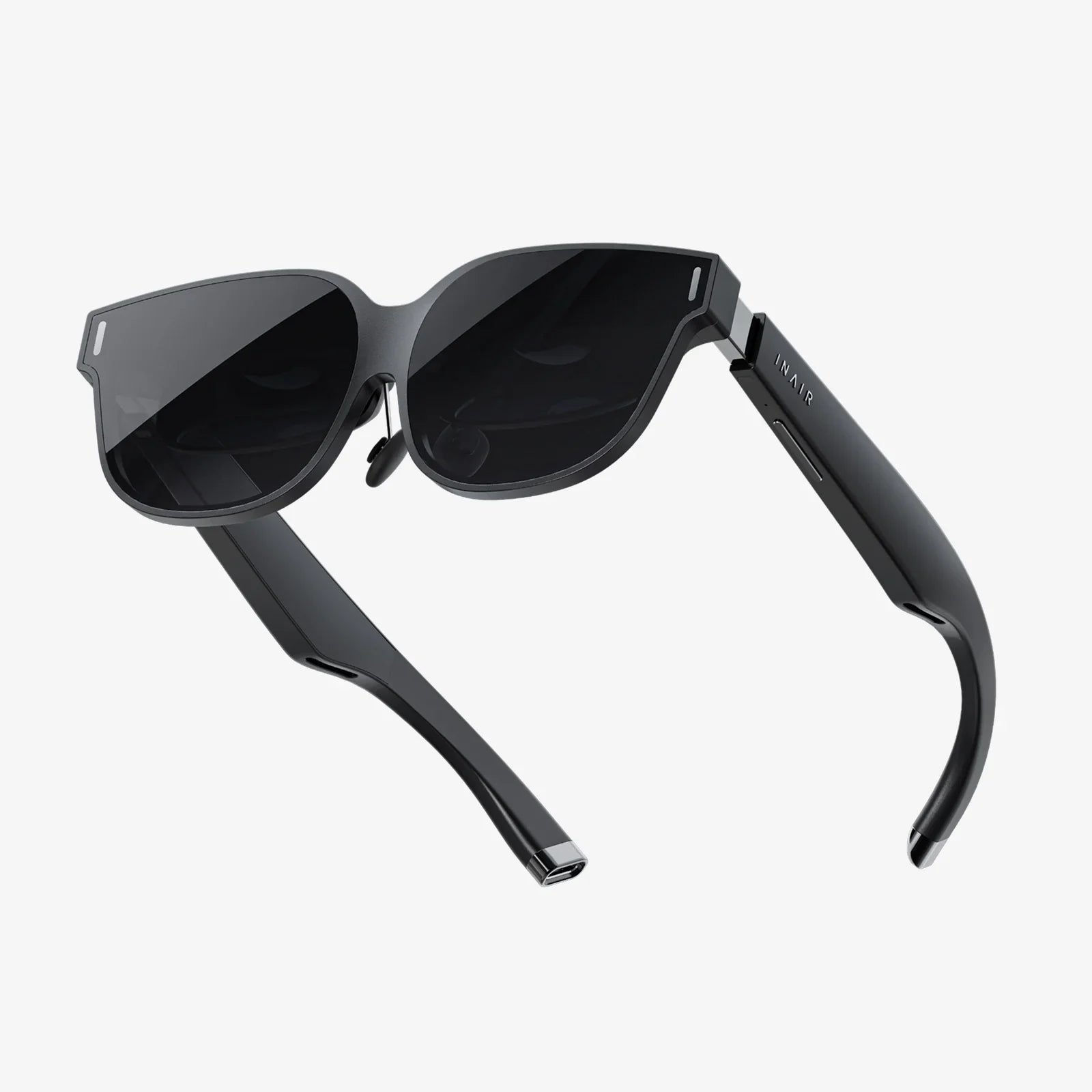
The bulky lenses and screens will give way to ultra-thin waveguide combiners. Think of these as sophisticated pieces of glass or polymer that can pipe light directly into your eyes. Coupled with incredibly bright and efficient Micro-LED displays, these optics will allow for headsets that resemble a pair of high-fashion sunglasses rather than a mining helmet. This shift is crucial for social acceptance and all-day wearability.
These future devices will know more about us and our environment. Integrated eye-tracking will not just allow for foveated rendering (drastically improving visual quality and performance) but will also read our engagement and emotional state. Subtle sensors will monitor heart rate, pupil dilation, and even brainwave patterns to understand our focus and stress levels. The device will become a contextual companion, understanding not just where you are, but how you are, tailoring information and interactions accordingly.
As the technology matures, the goal will shift from making the device smaller to making it less noticeable. The hardware will begin to fade into the background of our lives and our aesthetics.
Control will evolve from handheld controllers to gesture recognition, and eventually to direct neural input. Non-invasive electroencephalogram (EEG) sensors woven into a headband or the device itself will allow us to manipulate digital objects with our thoughts—clicking, dragging, and selecting with mere intention. This will be paired with advanced haptic feedback systems, from gloves that simulate texture and resistance to full-body suits that let you feel the virtual rain on your skin or the push of a virtual wind. The line between input and output will blur, creating a truly immersive feedback loop.
The AR/VR device will cease to be a solitary viewer and become a terminal into a persistent, shared digital layer atop our world. This is known as spatial computing. Your digital creations—notes, artwork, 3D models—will remain exactly where you left them in physical space, for you or others with permission to see later. The world itself becomes the UI. A blank wall becomes a screen, a tabletop becomes a strategy game board, and a park becomes a multiplayer gaming arena. This requires a constant, sophisticated understanding of geometry, physics, and object permanence, powered by onboard AI.
This is the ultimate destination: technology that is so seamlessly integrated into our lives and our bodies that it becomes functionally invisible.
The final step beyond glasses is to remove them altogether. The holy grail of AR is a smart contact lens—a minimally invasive, comfortable lens that projects information directly onto the retina. It would correct your vision while simultaneously granting you a full-color, high-resolution digital overlay. Coupled with discrete, advanced auditory implants or bone conduction technology that provides pristine spatial audio, the entire apparatus would be unnoticeable to anyone else. You would simply see and hear an augmented world, with no external hardware required.
Looking even further, the interface may bypass our sensory organs entirely. A perfectly safe, high-bandwidth connection to the visual and auditory cortex could simulate reality with perfect fidelity, not by projecting light, but by directly stimulating the brain to see and hear what isn't there. This technology, while still in its infancy, represents the final form of immersion. In this scenario, AR/VR could look like absolutely anything, because it would be indistinguishable from reality itself. It would be a shared hallucination, a consensus reality built on digital code.
This evolution in form factor will drive a revolution in human experience. When the interface disappears, the technology stops being a destination and starts being a part of life.
Surgeons on different continents will collaborate in a shared virtual operating room, seeing a holographic patient and guiding each other's hands. Architects will walk clients through full-scale holographic models of unbuilt homes. Factory technicians will see repair instructions and part schematics overlaid directly on malfunctioning machinery. The concept of a "remote" worker will become obsolete, as everyone will be able to project their presence anywhere instantly.
Social media will evolve into "spatial media." Instead of scrolling a feed, you might meet friends' avatars on a virtual beach to watch a movie on a giant screen in the sky. Concerts will be experienced from the front row, every night, from your living room. The very nature of storytelling will change, shifting from passive viewing to active participation inside narrative worlds.
This future is not without its perils. The potential for a new, profound digital divide is immense—between those who can afford these invisible enhancements and those who cannot. Issues of privacy, data ownership, and reality itself will become paramount. If anyone can alter their perceived reality, how do we establish a shared truth? The ethical frameworks for this world need to be built alongside the technology itself.
The journey from today's headsets to tomorrow's invisible interfaces is more than a tale of miniaturization; it's a fundamental reimagining of the human-computer relationship. It promises a future of boundless creativity, connection, and knowledge, accessible not through a screen, but woven into the very fabric of our perception. The ultimate form of AR and VR won't be something you look at; it will be the lens through which you see everything.
Share:
Augmented Reality Apps & Smart Glasses: Merging Our Digital and Physical Worlds
Concept of Augmented Reality: A Comprehensive Guide to the Digital Overlay Reshaping Our World