


- by wangfred
Augmented Reality Apps & Smart Glasses: Merging Our Digital and Physical Worlds
- by wangfred
Imagine a world where digital information doesn’t live trapped behind a screen but flows freely into your field of vision, overlaying your reality with a layer of intelligent, interactive data. This is the promise held in the powerful partnership between sophisticated augmented reality apps and the sleek, wearable conduits known as smart glasses. This convergence is not merely a step in technological evolution; it is a fundamental leap toward a new way of perceiving, interacting with, and understanding the world around us, and it’s a future that is already beginning to take shape.
Before delving into their profound synergy, it's crucial to understand the distinct roles played by each component in this transformative pair. They are two halves of a whole, each useless without the other's capabilities.
At its core, Augmented Reality (AR) is a technology that superimposes a computer-generated image, video, or 3D model onto a user's view of the real world. Unlike Virtual Reality (VR), which creates a completely artificial environment, AR enhances the real world by adding digital elements to it. Augmented reality apps are the software engines that power this experience. They are complex programs that utilize a device's camera, sensors, and processing power to perform several critical functions in real-time:
Initially, these apps were constrained to the screens of smartphones and tablets, a format that, while revolutionary, required users to hold up a device, creating a barrier between them and the world.
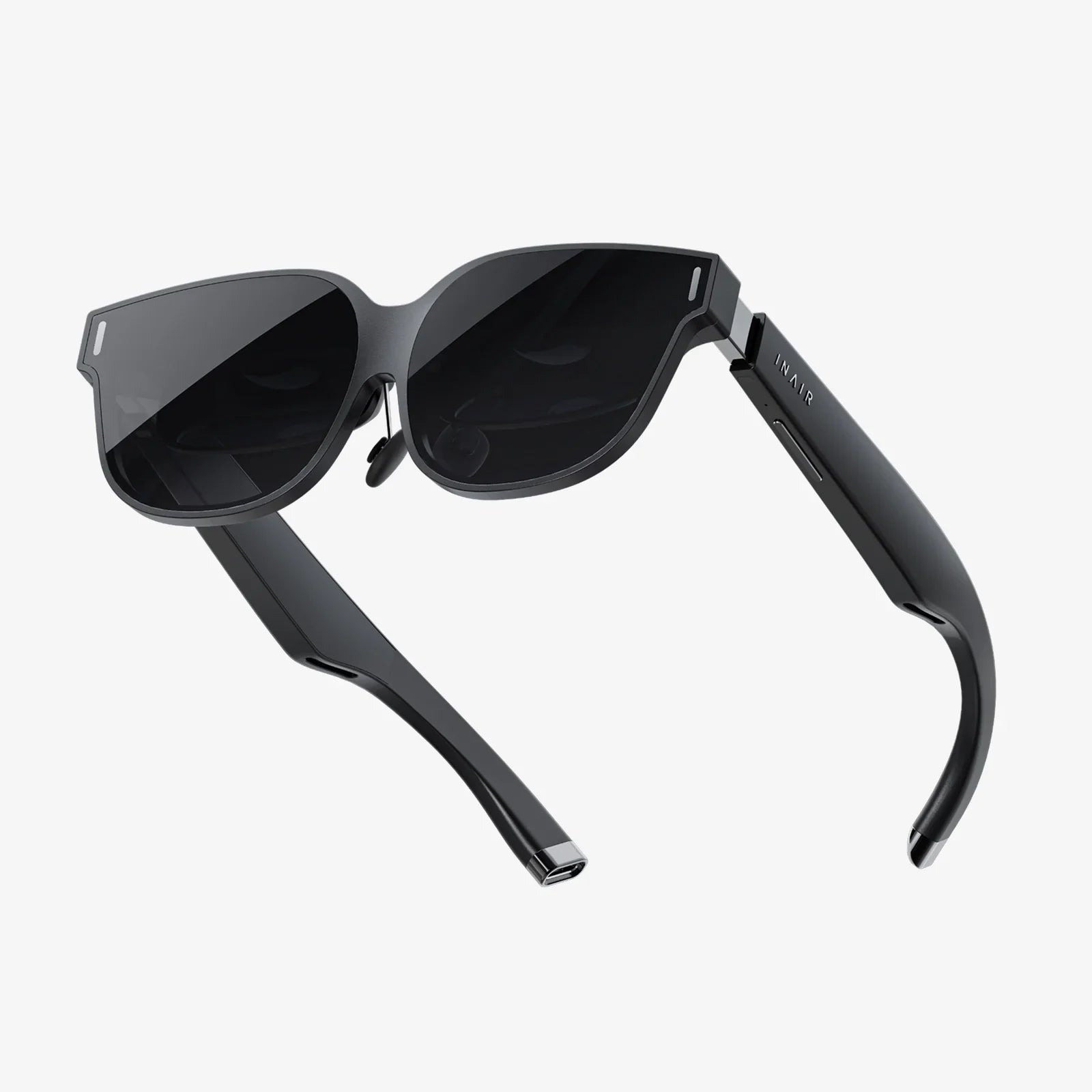
Smart glasses are the hardware designed to break down that barrier. They are wearable computers in the form of eyeglasses or similar frames that project digital information directly into the user's line of sight. Early versions were clunky and offered limited functionality, but modern iterations are becoming increasingly sophisticated, lightweight, and socially acceptable. Their key components include:
Smart glasses provide the crucial "hands-free, heads-up" experience that unlocks the true potential of AR, transforming it from a novel application into an intuitive extension of human capability.
The true magic happens when these two technologies converge. The powerful, intelligent software of AR apps finds its ideal canvas in the immersive, unobtrusive display of smart glasses. This symbiosis is moving us from mobile-first to a ambient-first computing paradigm.
Instead of pulling a device from your pocket, information contextually relevant to your situation appears automatically in your periphery. Directions materialize as floating arrows on the sidewalk. The name and details of a colleague you recognize but can't quite place appear discreetly next to them. The nutritional information of a product you pick up at the grocery store flashes beside it. This is contextual computing at its most powerful, reducing cognitive load and decision fatigue by delivering information precisely when and where it is needed.
While consumer applications often capture the imagination, the most immediate and impactful adoption of AR apps and smart glasses is occurring within enterprise and industrial sectors. Here, the return on investment is clear and dramatic.
On the factory floor or at a remote wind turbine, technicians wearing smart glasses can access hands-free guidance. An AR app can overlay digital schematics, animated assembly instructions, or torque specifications directly onto the physical equipment they are repairing. A remote expert can see what the on-site technician sees and annotate their field of view with arrows, circles, and notes, guiding them through a complex procedure without ever boarding a plane. This drastically reduces errors, slashes training time, and minimizes equipment downtime.
In hospitals, surgeons are using this technology to visualize complex anatomical data, such as MRI scans or 3D models of a patient's organs, superimposed directly onto the patient during a procedure. This provides an X-ray-like vision, improving surgical precision and outcomes. Medical students can practice procedures on detailed holographic patients, and nurses can use AR overlays to locate veins more accurately for injections.
In massive distribution centers, order pickers equipped with smart glasses are guided by AR apps that display the most efficient picking route and visually highlight the exact shelf and bin location of items. This "vision picking" system has been shown to increase picking accuracy to near 100% and improve speed by over 15%, transforming supply chain efficiency.
Architects and interior designers can walk clients through immersive, life-size holographic models of unbuilt structures. They can visualize how a new piece of furniture would look in a room, change finishes and materials in real-time, and identify potential design clashes before construction begins, saving immense time and resources.
Beyond the workplace, the fusion of AR apps and smart glasses promises to redefine our daily routines and social interactions, though this future is still being written.
For this future to be realized, significant hurdles must be overcome. The path to mainstream adoption is fraught with technical, social, and ethical challenges.
The dream device—socially acceptable glasses with all-day battery life, powerful processing, immersive high-resolution displays, and robust connectivity—does not yet exist at a consumer price point. Challenges like overcoming the vergence-accommodation conflict (where your eyes struggle to focus on digital objects at different depths) and creating displays bright enough for outdoor use remain active areas of research and development.
Perhaps the most significant barrier is social acceptance. The concept of wearing a camera on your face that can record others raises profound privacy concerns. Societies will need to develop new etiquettes and potentially new laws governing recording in public and private spaces. The "glasshole" stigma from early attempts must be overcome through elegant, non-intrusive design and clear, consensual use cases.
As with any transformative technology, there is a risk of exacerbating the digital divide. Ensuring these tools are accessible, affordable, and beneficial to all segments of society, not just the wealthy or technically adept, will be crucial to their equitable integration.
The ultimate success of this technology will be measured by its invisibility. The goal is not to create a world cluttered with distracting digital noise, but to develop an intuitive interface that feels like a natural extension of our own cognition. The most powerful AR experiences will be those we barely notice—the subtle cue that prevents us from getting lost, the instant translation that facilitates a connection, the just-in-time information that empowers a decision.
We are standing on the precipice of a new era of human-computer interaction. The journey from the first brick-like mobile phones to the sleek smartphones of today provides a blueprint for the evolution of AR apps and smart glasses. What begins as a specialized, somewhat cumbersome tool will, through relentless innovation, refine itself into an indispensable, elegant, and ultimately personal portal to a richer reality. The boundary between the digital and the physical is not just blurring; it is being intentionally and intelligently woven together, and it will forever change how we work, learn, play, and see the world itself.
Share:
Augmented Reality Widespread: The Invisible Revolution Reshaping Our World
AR VR Could Look Like: A Glimpse into the Invisible Future