


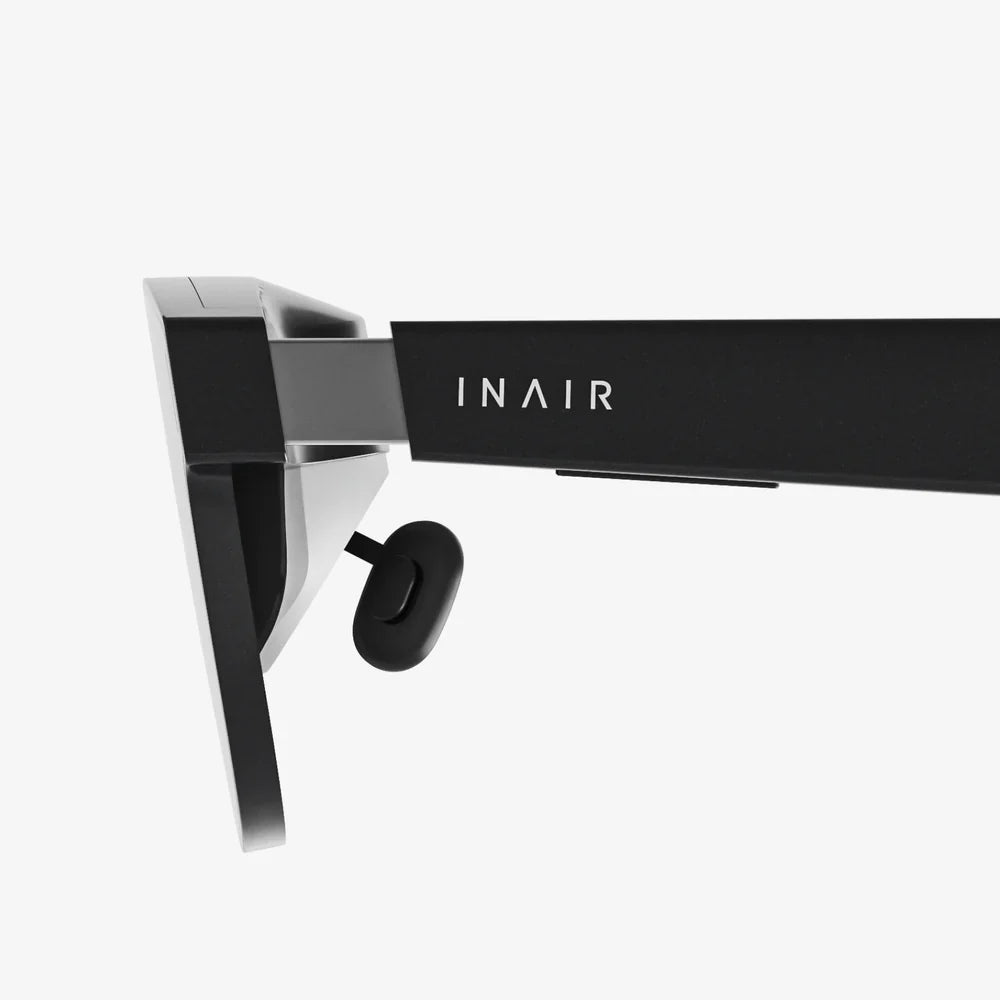
- by wangfred
AI Glasses Available: The Dawn of a New Visual and Auditory Computing Paradigm
- by wangfred
Imagine a world where information doesn't live on a screen in your hand, but is seamlessly woven into the very fabric of your perception. A world where real-time translation is whispered in your ear as you converse, where complex data is overlaid on machinery you're repairing, and where navigating a new city requires nothing more than a glance. This is no longer the stuff of science fiction; it is the promise made real by the fact that sophisticated AI glasses are now available to the public. This isn't just a new gadget; it's the vanguard of a fundamental shift in how we interact with technology, data, and the world itself, moving computing from something we hold to something we wear and experience.
The term "AI glasses" can be nebulous, but at their core, they are wearable head-mounted devices that utilize artificial intelligence to process information from their sensors and provide contextually relevant feedback to the user. Unlike their simpler predecessors, which might have offered a basic heads-up display, true AI glasses are defined by their on-board or cloud-connected intelligence. Their functionality is built upon a sophisticated stack of hardware and software working in concert.
The hardware suite is the eyes and ears of the operation. It typically includes:
The magic, however, happens in the software. This is where raw sensor data is transformed into intelligent insight. Machine learning models are trained on vast datasets to perform specific tasks:
While the consumer applications are thrilling, the most profound immediate impact of AI glasses is being felt in enterprise and specialized fields. Here, they are not just convenient; they are revolutionizing workflows, enhancing safety, and boosting efficiency.
For technicians, engineers, and field service workers, AI glasses are a game-changer. A technician repairing a complex piece of equipment can have the schematic diagram overlaid directly onto the machinery, with animated arrows guiding them to the next step. They can live-stream their point-of-view to a remote expert thousands of miles away, who can then draw annotations that appear in the technician's field of view, facilitating expert guidance without the cost of travel. This "see-what-I-see" capability drastically reduces errors, shortens repair times, and empowers less experienced workers to perform complex tasks.
In healthcare, the implications are staggering. Surgeons can have vital signs, ultrasound images, or 3D anatomical models projected into their visual field during procedures, eliminating the need to look away at a monitor. Medical students can use them for immersive training, visualizing complex biological processes in 3D. For clinicians, they can provide instant access to patient records hands-free during examinations, and AI-powered visual recognition could one day assist in diagnosing skin conditions or identifying problematic moles by comparing them to medical databases.
This is perhaps one of the most powerful use cases. For the visually impaired, AI glasses can act as a powerful visual interpreter. They can describe scenes, read text aloud from signs and documents, identify currency, and even recognize familiar faces, providing a new level of independence. For those who are deaf or hard of hearing, real-time transcription of conversations can be displayed directly on the lenses, turning spoken dialogue into subtitles for the world. This technology has the potential to break down communication barriers in profound ways.
For the everyday user, the applications are shifting from pure information retrieval to contextual assistance. Imagine:
The path to widespread adoption is not without significant hurdles. The very features that make AI glasses powerful—constant sensors and recording capabilities—raise serious questions about privacy and the social contract.
The most glaring concern is the privacy of others. The ability to record video and audio discreetly creates a potential for pervasive surveillance. The societal norms around being recorded in public are already strained by smartphones; always-on, first-person recording from glasses could erode them completely. This necessitates clear and intuitive indicators—both visual and auditory—that recording is active, giving people in the vicinity informed consent.
There is also the immense issue of data security. These devices collect a continuous stream of highly personal biometric and visual data—a literal record of your life from your perspective. How is this data stored, processed, and protected? Who owns it? The potential for misuse, either through hacking or by the companies themselves for advertising or other purposes, is a massive risk that must be addressed with robust encryption and transparent, user-centric data policies.
Furthermore, the constant inflow of information creates a risk of cognitive overload and distraction. Will we become so reliant on digital overlays that we lose our ability to observe and interpret the analog world? Will walking down the street become a barrage of notifications and ads? Designing for situational awareness and creating modes of "digital minimalism" where the technology recedes into the background will be crucial for healthy adoption.
Finally, the "glasshole" stigma from earlier failed attempts at smart glasses still lingers. Wearing a camera on your face can be perceived as antisocial or threatening. Overcoming this social barrier requires not only better, more fashionable design that makes the technology look like ordinary eyewear but also a cultural shift and established etiquette for their use.
The current generation of AI glasses available today is impressive, but it is merely the foundation. The future trajectory of this technology points toward even deeper integration into our lives. We can expect rapid advancements in battery technology and processor efficiency, leading to all-day battery life in smaller, lighter form factors. Display technology will improve, offering wider fields of view, full color, and higher brightness for seamless AR in any lighting condition.
The true leap will come from the evolution of the AI itself. We will move from models that recognize objects to models that understand context and intent. Instead of just showing you a recipe, future AI glasses could observe the ingredients on your counter and guide you through each step, recognizing when you've added an item or chopped a vegetable. The interface will evolve from simple voice commands and touchpads to more intuitive control mechanisms like subtle gesture recognition and eventually, direct neural interfaces.
This will lead to the ultimate goal: ambient computing. The technology will fade into the background, no longer a device we consciously "use" but an intelligent extension of our own cognition, providing information and assistance precisely when and where it's needed, without ever demanding our full attention. It will feel less like wearing a computer and more like having a superpower.
The arrival of capable AI glasses marks a pivotal moment, not just in tech, but in human experience. They challenge us to reimagine the boundaries between the digital and the physical, to confront difficult questions about privacy in public spaces, and to harness a powerful tool for augmentation rather than alienation. The hardware is here, the software is learning, and the future is quite literally, in view.
Share:
Capabilities of Augmented Reality: Bridging Our Digital and Physical Worlds
Augmented Reality Impact: Reshaping Our World Through a Digital Lens