


- by wangfred
Capabilities of Augmented Reality: Bridging Our Digital and Physical Worlds
- by wangfred
Imagine a world where digital information doesn’t just live on a screen but is seamlessly woven into the fabric of your physical reality, enhancing everything you see, do, and experience. This is the promise of augmented reality, a technology rapidly evolving from a futuristic concept into a powerful tool reshaping our daily lives and professional landscapes. Its capabilities extend far beyond simple visual tricks, offering a new lens through which to interact with data, environments, and each other.
At the heart of every compelling augmented reality experience lies a fundamental capability: the technology's ability to perceive, understand, and interact with the physical world. This is not a simple overlay; it is a sophisticated dialogue between the digital and the real.
Spatial mapping involves using sensors, cameras, and algorithms to scan an environment and create a detailed digital twin or a depth-aware understanding of the space. This process allows the AR system to comprehend the geometry of a room, the location of walls, floors, tables, and other objects. This spatial awareness is crucial for the digital content to behave in a believable way. A virtual character can hide behind your real sofa, a digital information panel can appear firmly anchored to a real machine on a factory floor, and a animated dragon can convincingly land on your actual driveway, because the technology understands the geometry and confines of your space.
This capability is often coupled with plane detection, which identifies flat surfaces like floors, walls, and tables, providing a stage upon which digital objects can be placed. Furthermore, environmental understanding includes recognizing lighting conditions and shadows. Advanced AR systems can analyze the ambient light in a room and cast realistic shadows from virtual objects onto real surfaces, and vice-versa, dramatically increasing the sense of immersion and believability.
Closely tied to spatial awareness is the powerful capability of object and image recognition. This is where computer vision, a field of artificial intelligence, supercharges augmented reality. An AR device can be trained to recognize specific images, objects, or even entire scenes.
This capability is often activated through marker-based AR, where a specific image (a marker) triggers a digital response. For instance, pointing a device at a movie poster might cause a trailer to play seemingly from the poster itself. However, the technology has advanced to markerless recognition. An AR system can now identify a product on a shelf, a complex piece of industrial equipment, or a historical landmark without needing a pre-placed marker. It does this by comparing the visual data it captures against vast databases of known objects.
The implications are profound. A technician can point a device at a malfunctioning engine, and the AR system, recognizing the model, can overlay step-by-step repair instructions directly onto the components that need attention. A tourist can point their phone at a monument and see historical figures and events superimposed onto the landscape. This capability transforms passive observation into an interactive, information-rich experience.
Perception is only half the battle. The true power of AR is unlocked by its capability for real-time interaction. Users are not mere spectators; they are active participants who can manipulate digital content as if it were physically present.
This interactivity is enabled through gesture recognition and motion tracking. Cameras and depth sensors track the user's hands and fingers, allowing them to push virtual buttons, rotate 3D models with a pinch, scale objects by pulling them apart, or even use complex hand gestures to navigate menus—all without a traditional controller. This creates an intuitive and natural user interface that lowers the barrier to engaging with complex digital information.
Furthermore, this interaction is persistent and multi-user. Cloud-based AR experiences can allow digital objects to be placed in a real location and remain there for hours, days, or even indefinitely. Multiple users, each with their own device, can then view and interact with the same digital object simultaneously from different angles. This capability is the foundation for collaborative AR, where architects in different countries can stand around a virtual 3D model of a building placed on a real table, discussing and making changes in real-time.
One of the most transformative capabilities of augmented reality is its power to visualize abstract concepts, hidden systems, and future states. It makes the invisible, visible.
In fields like medicine, this is revolutionary. Medical students can explore a detailed, life-sized, and interactive hologram of the human body, peeling back layers of musculature, circulatory systems, and organs without ever touching a cadaver. Surgeons can use AR to project a patient's CT scan data—such as the precise location of a tumor—directly onto the patient's body during an operation, creating a kind of “X-ray vision” that enhances precision and improves outcomes.
In engineering and architecture, AR allows for breathtakingly detailed design visualization. Instead of looking at blueprints on a 2D screen, architects and clients can walk through a full-scale, photorealistic holographic rendering of a building that isn't yet built. They can change materials, move walls, and see how sunlight will filter through the windows at different times of day. This capability to simulate and visualize in context reduces errors, saves vast amounts of money, and ensures the final product meets expectations.
Augmented reality excels at delivering the right information at the right time, directly within the context where it is needed. This capability turns the entire world into an information interface.
This is often referred to as “heads-up" information. For example, navigation systems are being developed that overlay directional arrows and street names onto the real road ahead on your car's windshield, allowing you to keep your eyes on the road. In a warehouse, a picker wearing AR smart glasses can have the most efficient route to the next item highlighted on the floor in front of them, with a digital indicator pointing to the exact shelf location, massively improving logistics efficiency.
This contextual layer extends to education and tourism. A student studying astronomy can point their tablet at the night sky and see the names, constellations, and trajectories of stars and planets overlay their real-world view. This just-in-time information delivery is far more impactful and memorable than reading the same facts in a textbook.
AR has the unique capability to collapse geographical distances, enabling experts to be “virtually present” anywhere in the world. This is not just a video call; it is an interactive, annotated, and spatially aware collaboration.
In a remote assistance scenario, a field technician encountering a complex problem can don AR glasses and share their live first-person view with an expert located thousands of miles away. The expert can then draw digital arrows, circles, and instructions that appear anchored to the actual machinery in the technician's field of view. The expert can say, “Turn this valve," and a digital arrow will point directly to the correct valve. This precise visual communication drastically reduces resolution time, minimizes errors, and eliminates the need and cost for experts to travel on-site.
This capability for telepresence extends to collaborative design and social interaction, allowing people to share a space and interact with digital content as if they were physically together, opening new frontiers for remote work and connection.
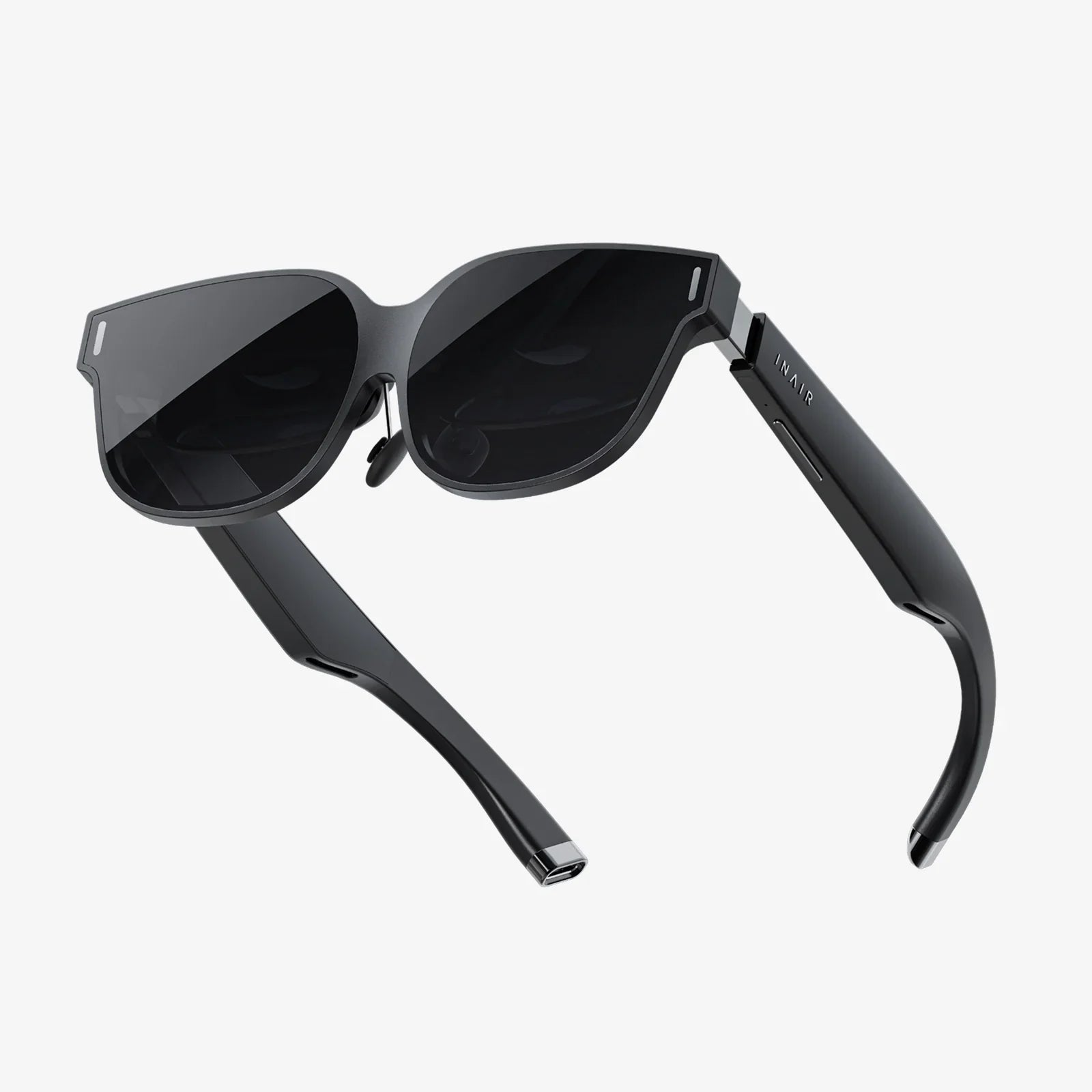
The convergence of these capabilities points toward a future where augmented reality becomes the primary interface between humans and digital information. The goal is to move beyond the isolating, rectangular screens of smartphones and computers toward a world where computing is ambient, contextual, and integrated into our natural field of view.
This vision is a key component of the concept of the metaverse—a persistent network of shared 3D virtual spaces. AR acts as the bridge, or portal, that allows elements of this digital universe to manifest and interact with our physical reality. Instead of putting on a fully immersive virtual reality headset to escape the world, you might use AR glasses to bring useful and entertaining elements of the digital world into your own.
The ultimate capability of AR is to enhance human potential. It amplifies our perception, extends our knowledge, improves our skills, and connects us in new ways. It has the power to make us smarter workers, more efficient problem-solvers, and more deeply connected learners. The technology is maturing at a staggering pace, and its convergence with AI and 5G connectivity will only unlock further capabilities we are only beginning to imagine. The line between what is real and what is digital is blurring, and augmented reality is the paintbrush with which we are creating this new, enhanced world.
The potential of this technology is not just on the horizon; it is already here, being deployed in operating rooms, factory floors, and classrooms today. As these capabilities become more refined and accessible, they promise to fundamentally alter our relationship with technology, transforming it from a tool we hold in our hands to an intelligent layer that enhances our very reality. The next time you look around your room, just imagine what you could be seeing.
Share:
Augmented Reality Headset 2025: The Dawn of a Seamless Digital Layer on Reality
AI Glasses Available: The Dawn of a New Visual and Auditory Computing Paradigm