


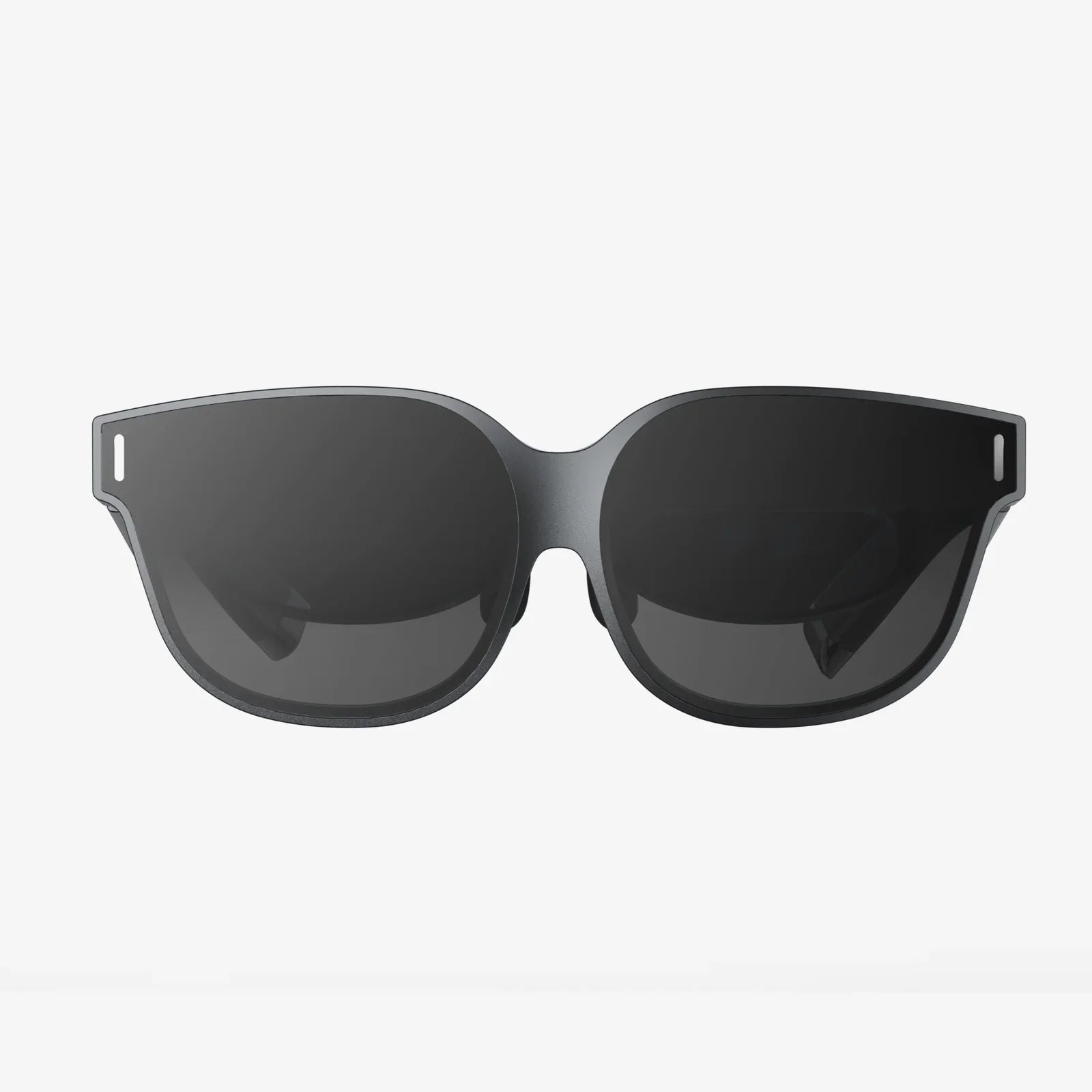
- by wangfred
Augmented Reality Headset 2025: The Dawn of a Seamless Digital Layer on Reality
- by wangfred
Imagine a world where the digital and the physical are no longer separate realms viewed through a clunky screen, but a single, integrated experience painted directly onto the fabric of your reality. This is the promise of the augmented reality headset in 2025, a promise that is rapidly maturing from science fiction into a tangible, transformative toolset poised to redefine human-computer interaction. The next generation of devices is not just an incremental update; it represents a fundamental leap towards a future where information, creativity, and connection are contextually woven into the world around us, accessible with a glance, a gesture, or a whisper. The gateway to this new dimension of experience is closer than you think, and its impact will be nothing short of revolutionary.
The journey to the 2025 augmented reality headset has been one of relentless miniaturization, refinement, and reimagining. Early devices, often hampered by limited fields of view, weighty designs, and short battery life, served as crucial proofs of concept but struggled to find a mainstream audience. They were, in essence, the cumbersome personal computers of the 1970s—powerful for enthusiasts but inaccessible to the masses.
By 2025, this paradigm has shifted dramatically. The core technologies enabling augmented reality have undergone a series of breakthroughs:
The most profound change brought by the 2025 augmented reality headset is the death of the traditional screen-based interface. Interaction becomes intuitive, contextual, and multi-modal.
Gesture and Gaze: The combination of precise hand-tracking and eye-tracking creates a powerful and natural input system. You can manipulate digital objects simply by looking at them and pinching your fingers. A glance at a notification can expand it; a subtle finger flick can dismiss it. Complex menus and toolbars are replaced by interfaces that appear exactly when and where you need them, responding to your intent.
Spatial Audio and Voice: Voice assistants evolve into true conversational partners, aware of your context. Instead of saying, "Hey assistant, set a timer," you might simply look at your oven and say, "Remind me when this is done." The headset understands that "this" refers to the roast chicken it sees through its cameras. Spatial audio ensures that digital sounds appear to emanate from their source in the real world, whether it's a colleague speaking from across your virtual conference table or navigation cues coming from the direction of your next turn.
Ambient and Haptic Feedback: While full haptic suits remain a niche, the headsets themselves incorporate subtle haptic feedback mechanisms in the arms or headband. A gentle pulse might signal an important notification or confirm a selection. More advanced devices may pair with simple wearable rings or wristbands to provide more nuanced tactile feedback, allowing you to "feel" the texture of a digital object you're manipulating.
The enterprise and professional sectors will be the earliest and most profound beneficiaries of this technology. The augmented reality headset of 2025 becomes an indispensable tool across industries.
Design and Engineering: Architects and engineers can walk through full-scale 3D models of their designs, examining structural integrity and aesthetic flow before a single foundation is poured. Mechanics can see animated repair instructions overlaid directly on the engine they are fixing, with part numbers and torque specifications visible beside each bolt.
Healthcare and Medicine: Surgeons can have vital signs, MRI scans, and procedural guides superimposed on their field of view during operations, eliminating the need to look away at monitors. Medical students can practice complex procedures on hyper-realistic digital holograms. Therapists can use controlled augmented environments to treat phobias or guide patients through rehabilitation exercises.
Remote Collaboration: The concept of video conferencing becomes obsolete, replaced by true holographic presence. Colleagues from across the globe can appear as photorealistic avatars in your physical space, able to collaborate on a 3D model, a document, or a physical prototype as if they were standing right next to you. This "holoportation" technology dissolves geographical barriers, creating a truly global and interactive workspace.
Beyond the workplace, these devices begin to subtly enhance daily life and social interaction in meaningful ways.
Contextual Information: Walking through a city, you can choose to see historical information about buildings, ratings floating over restaurants, or real-time translations of street signs. At a conference, you could see the name and professional background of someone you're speaking to, pulled from a public profile, helping to break the ice.
Personalized Learning and Guidance: Learn to play the piano by seeing digital keys light up on the actual instrument in front of you. Follow a digital cooking instructor that guides you through each step, measuring ingredients virtually and warning you if the heat is too high. The world becomes an interactive tutorial.
Accessibility Reimagined: For individuals with visual impairments, the headset can highlight curbs, identify obstacles, and amplify text. For those with hearing impairments, it can provide real-time, spatially-aware captions for conversations in a crowded room, indicating who is speaking. This technology has the potential to create a more equitable and accessible world.
This bright future is not without its shadows. The widespread adoption of always-on, sensory devices raises critical questions that society must address.
The Privacy Paradox: A device that sees everything you see and hears everything you hear is a data collection powerhouse of unprecedented scale. Who owns this data? How is it used? Robust, transparent, and user-centric data governance frameworks must be established. The potential for surveillance, both corporate and governmental, is a significant concern that requires preemptive ethical and legal boundaries.
The Digital Divide 2.0: Will this technology become a ubiquitous utility or a luxury that further separates socioeconomic classes? Ensuring equitable access to the tools that will power the next economy is crucial to prevent a new, more immersive form of digital inequality.
Psychological and Social Impact: What happens to shared reality when everyone can customize their perception of the world? Will we retreat into personalized digital bubbles? The long-term effects of blending reality with a persistent digital overlay on human psychology, attention spans, and social cohesion are unknown and must be studied carefully.
Safety and Security: Ensuring these devices cannot be hijacked to display malicious or dangerous information is a matter of public safety. Furthermore, designing interfaces that do not cognitively overload users in critical situations, like driving or walking near traffic, is a paramount engineering challenge.
The augmented reality headset of 2025 is far more than a new gadget; it is the lens through which we will begin to perceive a new layer of existence. It represents the culmination of decades of research in computing, optics, and AI, converging into a device that aims not to replace our world, but to enrich it. It promises to amplify human potential, democratize expertise, and connect us in ways previously confined to imagination. The door to this augmented age is creaking open, and the view on the other side will change everything.
Share:
What Is The Primary Difference Between AR and VR - A Deep Dive Into Digital Realities
Capabilities of Augmented Reality: Bridging Our Digital and Physical Worlds