


- by wangfred
What Is The Primary Difference Between AR and VR - A Deep Dive Into Digital Realities
- by wangfred
You’ve seen the headlines, watched the futuristic demos, and perhaps even tried on a headset yourself. The worlds of augmented and virtual reality are no longer science fiction; they are rapidly becoming integral parts of our digital landscape, promising to revolutionize everything from how we work and learn to how we play and connect. But for all the buzz, a fundamental question often remains shrouded in confusion, a question that sits at the very heart of understanding this technological revolution: what truly separates the two? Is it just the headgear, or is the divide far more profound? The answer lies not in the device itself, but in a core philosophical and technological split that defines two entirely different ways of interacting with the digital realm.
At its absolute simplest, the primary difference between AR and VR can be distilled into a single, powerful concept: one adds to your reality, while the other replaces it. This is the north star that guides every aspect of their design, function, and application.
Augmented Reality (AR) functions as a digital overlay upon the physical world you currently inhabit. It enhances your existing environment by superimposing computer-generated images, data, text, or 3D models onto your field of view. The key principle here is that your reality remains the foundation. You can still see your living room, your office, or the street in front of you, but now that reality is enriched with a layer of interactive information. It’s akin to a dynamic, context-aware heads-up display for life itself. The goal of AR is to supplement and augment, to make the real world more informative, entertaining, or efficient.
Virtual Reality (VR), in stark contrast, operates on the principle of total immersion. It severs your visual and auditory connection to your physical surroundings and transports you to a completely simulated, computer-generated environment. When you put on a VR headset, your real world disappears. You might be standing on the surface of Mars, exploring a mythical dungeon, or sitting in a virtual meeting room with colleagues from across the globe. The goal of VR is to convince your senses that you are somewhere else entirely, to create a convincing and engaging reality from scratch. It is an exercise in substitution, not supplementation.
While the distinction between AR and VR is clear at the extremes, the line between them is not always a rigid wall. It is more accurately described as a spectrum, often referred to as the Mixed Reality (MR) continuum. This spectrum encompasses all possible variations and combinations of real and virtual objects.
On one far end, you have the complete physical reality of your un-augmented surroundings. On the opposite far end, you have a fully immersive, synthetic virtual environment. In between these two poles lies a vast space for blending. For instance, a simple AR experience might place a static cartoon character on your table through your phone’s screen. A more advanced MR experience might allow that virtual character to recognize your table, understand its dimensions, and realistically jump up to sit on its edge, casting a virtual shadow that matches your room’s lighting. It interacts with and is anchored to your real world in a believable way. This highlights that the primary difference is not just about what you see, but how deeply the digital and physical worlds interact.
The philosophical split between enhancement and immersion is directly mirrored in the hardware required to power these experiences. The technology needed to simply add a layer to reality is fundamentally different from the technology needed to build an entire reality from the ground up.
Because VR’s mission is to create immersion, its hardware is designed for enclosure and sensory control.
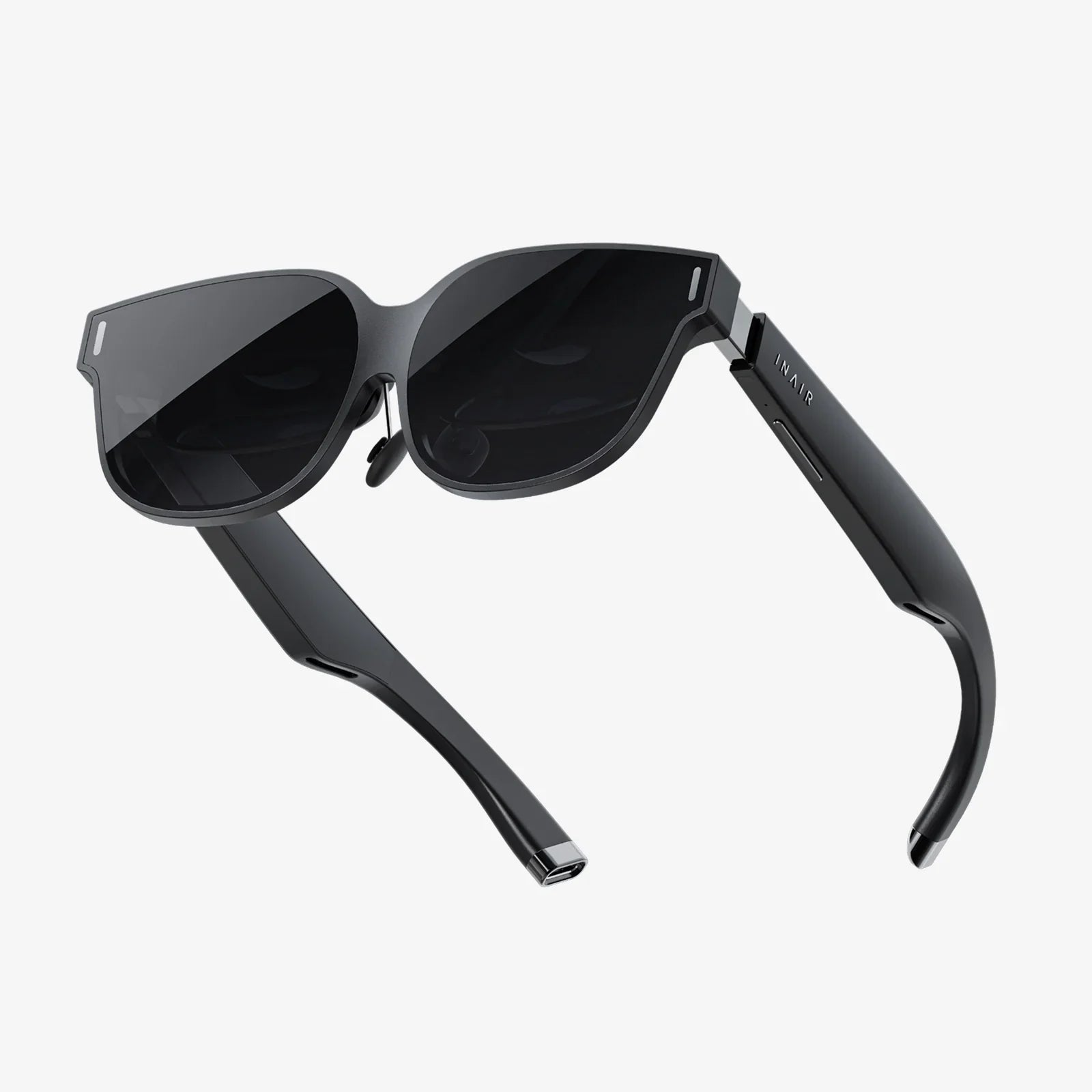
AR hardware, by contrast, is designed for transparency and context awareness. Its job is to see the real world and then intelligently augment it.
The divergent paths of AR and VR naturally lead them to excel in different applications. Their unique strengths make them suited for particular tasks, though there is increasing overlap in enterprise and creative fields.
VR thrives in scenarios where total immersion is the ultimate goal.
AR finds its power in enhancing and streamlining our interaction with the real world.
The choice between augmenting reality and replacing it also carries different social and psychological weights. VR is often, though not always, a solitary experience. You are cut off from the people and space around you, which is its greatest strength for immersion but also a significant social barrier. It can be isolating. AR, in its ideal form, is designed to be social and contextual. It aims to enhance shared experiences—allowing multiple people to see and interact with the same digital object placed in their physical space, fostering collaboration and shared understanding without isolating the user from their surroundings.
Psychologically, VR’s ability to induce a strong sense of “presence”—the feeling of actually being in the virtual environment—is its magic bullet. This can lead to profound experiences but also to simulation sickness if the technology isn’t perfectly calibrated. AR induces a different feeling, one of wonder and utility as the magical and the mundane coexist seamlessly in your field of view.
The future is not necessarily a choice between AR or VR. The trajectory of the industry points toward convergence. The ultimate device may be a single pair of glasses capable of seamlessly switching between a fully transparent AR mode and an occluded, immersive VR mode—a concept often called VR/AR passthrough. In this model, the headset would use its external cameras to feed a video feed of the real world to its internal displays, which could then be augmented or completely replaced. This would blur the line even further, making the primary difference a software-driven choice made by the user or developer in the moment, rather than a fixed hardware capability.
This technological evolution will not erase the core conceptual difference; it will simply give us more fluid control over it. The fundamental question of whether we wish to enhance our reality or escape to another will remain. Understanding this primary difference is the key to grasping the potential of these transformative technologies. It’s the difference between a powerful tool that makes our world smarter and a boundless canvas that lets us imagine entirely new ones. And as both continue to evolve at a breakneck pace, this foundational knowledge is your compass for navigating the exciting, blended realities of tomorrow.
So the next time you see a demonstration or consider an investment in this space, ask yourself the essential question: is this technology designed to make my world better, or to take me to a better world? The answer will instantly reveal its true nature, its potential, and its place in the ever-expanding universe of human experience. The revolution will not be purely virtual or merely augmented; it will be shaped by our ability to harness the unique power of each.
Share:
Best VR Headsets for Glasses Wearers 2025: A Clear Vision of the Future
Augmented Reality Headset 2025: The Dawn of a Seamless Digital Layer on Reality