


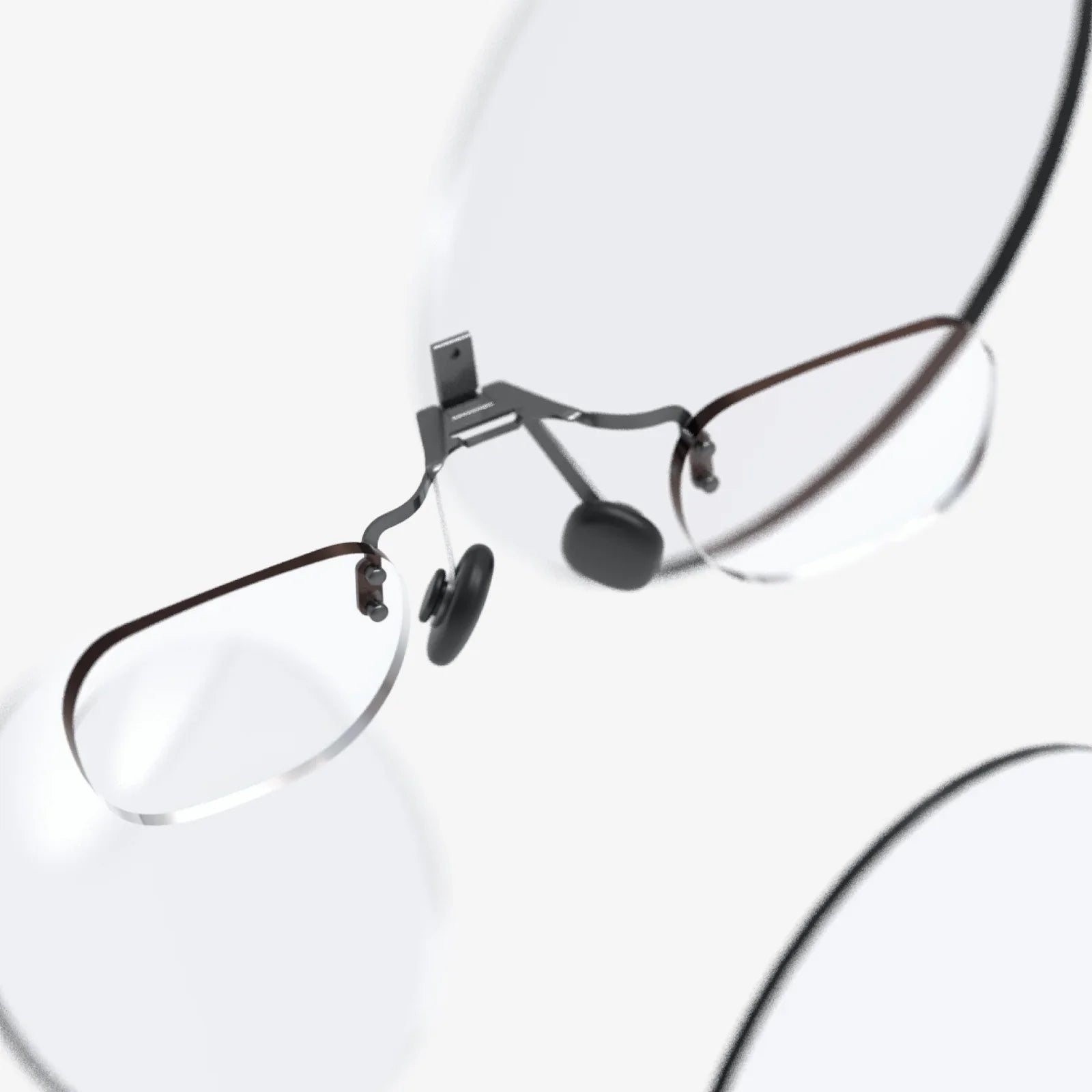
Imagine a world where the digital and physical realms don’t just coexist on a screen you hold in your hand, but are seamlessly woven into the very fabric of your perception. A world where information appears not as a distraction, but as an intuitive enhancement of reality itself. This was the breathtaking promise that materialized at CES 2025, not as a distant sci-fi fantasy, but as a tangible, wearable revolution. The central protagonist of this new narrative was a single, transformative category of device: AI glasses.
The Evolution from Novelty to Necessity
The journey to CES 2025 was paved with both hype and disappointment. For over a decade, the concept of smart glasses oscillated between groundbreaking prototypes and commercial flops. Early iterations were often bulky, socially awkward, and offered limited functionality that failed to justify their intrusion into our field of vision. They were solutions in search of a problem.
What changed? The convergence of several critical technological vectors reached an inflection point. The miniaturization of microprocessors, breakthroughs in low-power consumption displays, the advent of high-speed, low-latency connectivity, and most importantly, the maturation of sophisticated, on-device artificial intelligence. CES 2025 didn't just showcase new hardware; it unveiled the first generation of devices where the AI is not an accessory but the very core of the experience. These are not glasses with AI features; they are AI entities that happen to take the form of glasses.
Beyond Augmented Reality: The Invisible Interface
Previous demonstrations of augmented reality (AR) focused on overlaying vivid 3D objects onto the real world—a whale bursting from a conference room floor or a virtual screen pinned to a wall. At CES 2025, the emphasis shifted dramatically from the spectacular to the subtle. The goal was no longer to augment reality but to annotate it intelligently and unobtrusively.
The AI glasses on display utilized micro-LED or laser beam scanning投影技术 to project information directly onto the retina. This creates crisp, bright images that appear to float in space, yet are intelligently faded and contextualized to avoid overwhelming the user. The true magic, however, lies in the artificial intelligence governing this display. The AI acts as a perceptual filter, deciding what information is relevant, when it should appear, and how it should be presented.
- Contextual Awareness: Using a suite of sensors—high-resolution cameras, depth sensors, microphones, and inertial measurement units (IMUs)—the glasses construct a real-time understanding of the user's environment. Are you in a grocery store? The AI can highlight recipes on packages and guide you to ingredients. In a foreign city? It can overlay real-time translations of street signs and menus directly onto your view.
- Proactive Assistance: This is where the "AI" truly shines. Instead of waiting for a voice command, the glasses anticipate needs. By analyzing your calendar, location, and even your gaze, they can proactively surface information. Glance at a colleague you haven't seen in a year, and a discreet cue might remind you of their name and your last project together. Look at a complex piece of machinery, and a schematic highlighting the component you're focusing on could appear.
- Auditory Augmentation: Advanced bone conduction audio systems provide rich, spatial sound without blocking ambient noise. This allows for discrete notifications, real-time translation directly into your ear, and even AI-powered audio filtering, like amplifying the voice of the person in front of you in a noisy room while dampening background chatter.
The Architectural Backbone: On-Device AI and Edge Computing
The most significant technical leap evident at CES 2025 was the widespread adoption of dedicated Neural Processing Units (NPUs) within the glasses themselves. Earlier models relied heavily on streaming data to the cloud for processing, introducing lag, consuming massive bandwidth, and raising serious privacy concerns. Sending a constant video feed of your life to a remote server is a non-starter for widespread adoption.
The new generation processes the vast majority of data directly on the device. The onboard NPU handles complex computer vision tasks, natural language processing, and real-time decision-making instantaneously. This shift to on-device AI is fundamental. It ensures:
- Unprecedented Responsiveness: Actions feel instantaneous because the data doesn't have to travel miles to a data center and back.
- Enhanced Privacy: Sensitive visual and auditory data can be processed and immediately discarded, with only anonymized, necessary queries being sent to the cloud.
- Reliability: Functionality remains intact even in areas with poor or no connectivity.
This architecture transforms the glasses from a dumb terminal into a powerful, autonomous cognitive prosthesis.
A New Paradigm for Human-Computer Interaction
The mouse and keyboard defined the PC era. The multi-touch screen defined the smartphone era. CES 2025 suggested that the next era will be governed by a multimodal symphony of inputs, all orchestrated by AI.
Voice commands remain a key component, but they are now more natural and conversational thanks to large language models running locally. Subtle gestures, like a finger pinch or a swipe on the temple of the glasses, provide tactile control. However, the most revolutionary input is gaze. Where you look tells the AI what you are paying attention to, providing an incredibly rich and implicit context for your commands. You don't need to say "translate that sign"; you simply look at the sign, and the AI, understanding your intent, translates it. This creates a user interface that is truly intention-based, reducing the friction between thought and action.
The Societal and Ethical Crossroads
With such transformative power comes profound responsibility. The halls of CES 2025 were buzzing not just with excitement, but with serious conversations about the societal implications of pervasive, always-on AI perception.
- The Privacy Paradox: How do we balance the incredible utility of these devices with the right to privacy? The potential for surreptitious recording or data collection is immense. Robust, transparent privacy frameworks, perhaps involving hardware kill-switches for cameras and microphones, and clear visual indicators when recording is active, will be non-negotiable for public trust.
- The Digital Divide 2.0: This technology promises to be a great equalizer, offering real-time translation and assistance to those with disabilities or learning difficulties. Yet, it also risks creating a new chasm between those who can afford this cognitive augmentation and those who cannot.
- The Etiquette of Enhanced Reality: Social norms will need to adapt. Is it rude to wear glasses during a conversation? How do we know if someone is recording us? These questions moved from theoretical to urgently practical on the show floor.
Industry Verticals Poised for Transformation
The demonstrations at CES 2025 moved beyond consumer novelty to show concrete enterprise applications that promise to redefine productivity and safety.
- Healthcare: Surgeons can access patient vitals and MRI overlays without looking away from the operating field. EMTs can receive guided instructions for complex procedures while keeping their hands free.
- Manufacturing & Field Service: Technicians can see wiring diagrams overlaid on machinery, receive step-by-step repair instructions, and remotely collaborate with experts who can see their point of view.
- Education and Training: From mechanics to medical students, learners can interact with holographic models and receive contextual information, transforming how complex skills are acquired.
The potential for reducing errors, accelerating workflows, and enabling remote expertise is staggering.
The Road Ahead: From Prototype to Daily Driver
Despite the stunning progress, challenges remain. Battery life, while improved, still constrains all-day usage. The social acceptance of wearing cameras on your face will take time. And the software ecosystem—the apps and services that will power these devices—is still in its infancy. However, the consensus at CES 2025 was clear: these are no longer conceptual hurdles, but engineering and social ones. The path forward is visible.
The next two years will be less about radical new hardware and more about refinement: making the glasses lighter, more power-efficient, and indistinguishable from fashionable eyewear. The real battle will be fought in the algorithms—the AI that must become ever more intuitive, contextual, and truly useful.
The spectacle of CES 2025 wasn't found in a single, flashy product reveal. It was in the quiet, collective realization that a fundamental shift in our relationship with technology is now imminent. The age of staring down at a slab of glass is giving way to a new era of looking out at a world intelligently enhanced. The future is not in your pocket; it's on your face, and it sees, understands, and assists in ways we are only beginning to comprehend.
Share:
Do You Need Glasses for VR? The Ultimate Guide to Vision in Virtual Reality
VR AR MR XR: Navigating the Immersive Technology Spectrum