


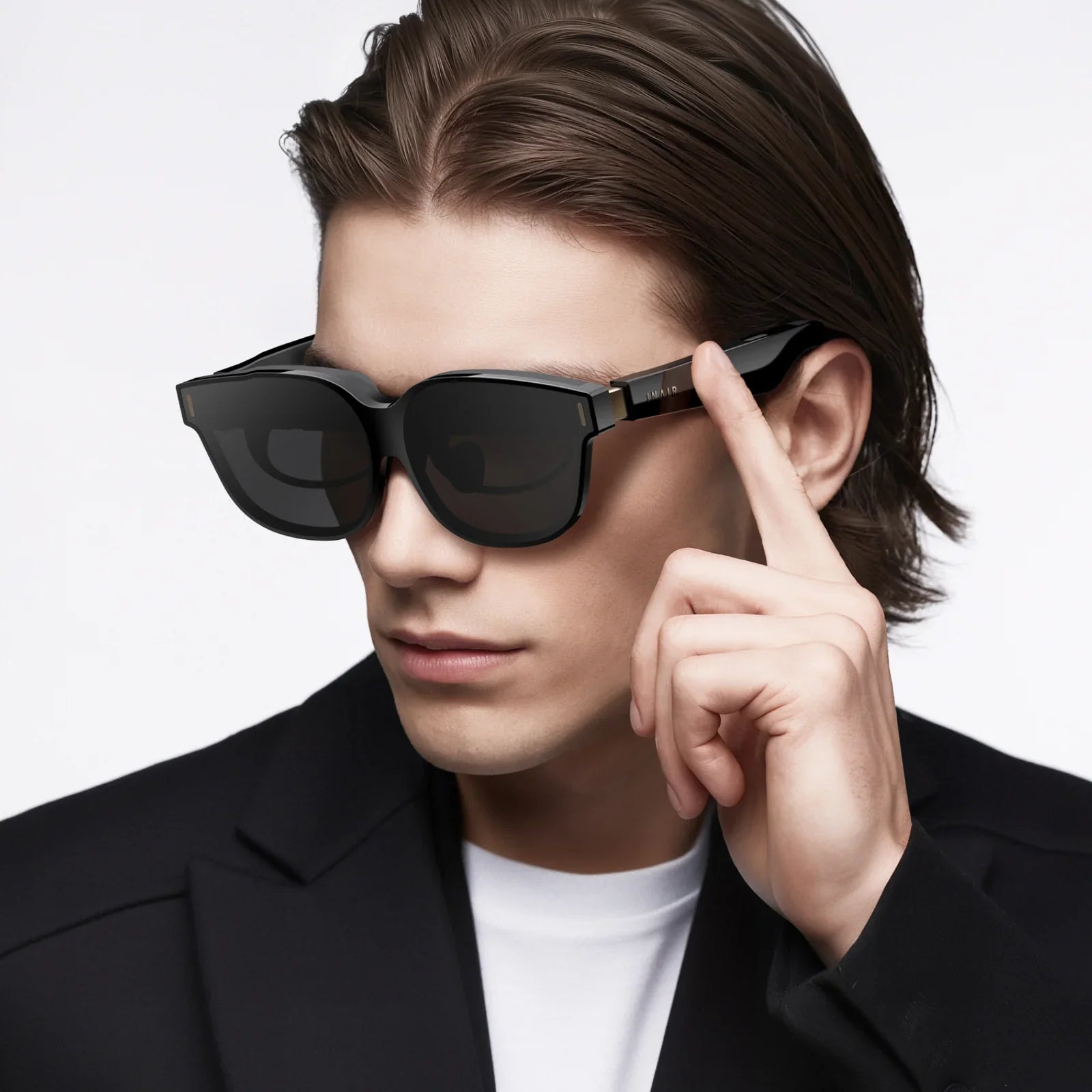
Stepping into a breathtaking virtual landscape only to be met with a blurry, indistinct mess is the quickest way to break immersion. For the millions of people worldwide who rely on corrective lenses, the question of visual clarity is the first and most important barrier to entry in virtual reality. If the real world requires glasses or contact lenses to see sharply, does the same rule apply within a digital universe? The answer is not just a simple yes or no; it's a journey into the fascinating interplay of optics, personal physiology, and cutting-edge technology. Understanding this relationship is the key to unlocking a comfortable and visually stunning virtual experience.
The Fundamental Optics of a VR Headset
To understand why vision correction is necessary in VR, we must first dismantle the magic trick that is a modern headset. Unlike a television or monitor that you view from a distance, a VR headset's screens are mere inches from your eyes. It would be impossible for your eyes to focus on something so close without assistance.
This is where the headset's lenses come in. These are not the same as prescription eyeglass lenses. Their primary function is to act as a sophisticated optical relay system. They take the image from the close-up screen and bend the light rays so that they appear to be coming from a distance, typically a few meters away. This trickery allows your eye's natural lens to relax and focus as if you were looking at a faraway object, preventing strain and making the image perceptually comfortable.
However, this system has a critical implication: if you need glasses to see clearly at a distance in the real world, you will almost certainly need them to see clearly in VR. The headset's lenses are creating a simulated distant image. If your eyes cannot focus on a distant image without correction, the virtual world will appear blurry. The headset does not correct for vision imperfections like myopia (nearsightedness), hyperopia (farsightedness), or astigmatism; it merely changes the focal distance of the content you are viewing.
The User Experience: Wearing Glasses Inside a Headset
For many users, the most straightforward solution is to simply wear their everyday glasses inside the headset. This is a viable option supported by most hardware designers, but it comes with a unique set of pros and cons that must be carefully considered.
The Advantages of Using Your Own Glasses
- Immediate Solution: There's no waiting for additional accessories or custom parts. You can use the equipment you already own.
- No Extra Cost: This method requires no financial investment beyond the headset itself.
- Perfect Prescription: You are using lenses perfectly tailored to your specific vision needs by your eye care professional.
The Challenges and Drawbacks
- Comfort and Pressure: This is the most common issue. The combination of the headset's strap and the arms (temples) of your glasses can create uncomfortable pressure points on the sides of your head and the bridge of your nose.
- Risk of Damage: There is an inherent risk of your glasses' frames scratching the headset's delicate Fresnel lenses. Conversely, the headset's lenses can also scratch the lenses of your glasses if they make contact during use.
- Reduced Field of View (FOV): The frames of your glasses can act as blinders, slightly reducing the immersive, panoramic field of view that VR is famous for.
- Light Leakage and Fit Issues: Glasses can prevent the headset's facial interface from forming a proper seal, allowing external light to leak in and breaking immersion.
Most headsets include a "glasses relief" adjustment, often a small dial or knob that pushes the lens assembly further away from your face to create more room for frames. This is the first setting to adjust if you choose this path.
Prescription Lens Inserts: The Premium Custom Solution
For enthusiasts and those who spend significant time in VR, prescription lens inserts are widely considered the gold standard. These are custom-made magnetic adapters that slot perfectly into the headset's lens housing, effectively replacing the need for your external glasses.
These inserts are crafted by third-party companies using your exact prescription. They are typically made from high-quality, lightweight optical materials and come with anti-reflective and blue-light filtering coatings as standard options. The process involves selecting your headset model and entering your prescription details online.
Why Inserts Are a Game-Changer
- Superior Comfort: They eliminate all pressure and discomfort caused by wearing two sets of frames. The headset feels as it was designed to.
- Optimal Protection: They act as a permanent protective barrier, ensuring your headset's original lenses never come into contact with dust, eyelashes, or cleaning cloths, let alone glass or plastic frames.
- Maximized Immersion: With no frame obstructions, you enjoy the headset's full, intended field of view and a perfect light seal.
- Convenience: Putting on the headset becomes a one-step process. There's no fiddling with aligning two devices on your face.
The primary consideration is the upfront cost and the short waiting period for shipping. However, for any regular user, the investment is almost universally hailed as one of the most impactful upgrades for the VR experience.
The Contact Lens Alternative
For those who already wear and tolerate contact lenses comfortably, they present an elegant solution to the vision correction dilemma. Contacts correct your vision directly on the surface of your eye, rendering the space between your eye and the headset's lens irrelevant.
This method offers unparalleled convenience and the most natural, unobstructed view. However, it's not without its own caveats. Some users report that the already somewhat dry environment inside a headset can exacerbate eye dryness associated with contact lens wear. It's crucial to use high-quality, breathable lenses and have lubricating eye drops on hand for extended sessions.
Special Considerations: Astigmatism and Presbyopia
While the basic rule of "if you need distance correction, you need it in VR" holds true, certain conditions deserve special mention.
Astigmatism: This common condition, caused by an irregularly shaped cornea, causes blurred vision at all distances. Uncorrected astigmatism in VR doesn't just make things blurry; it can manifest as distorted lines, difficulty perceiving depth accurately, and even contribute to eye strain and headaches faster than simple nearsightedness. Accurate correction, whether through glasses, inserts, or contacts, is therefore especially critical for users with astigmatism.
Presbyopia (Age-Related Farsightedness): This is the need for reading glasses that typically emerges after age 40. Since VR headsets project an image with a focal distance of roughly two meters, users with only presbyopia (who have good natural distance vision) may not need their readers inside the headset. They can see the virtual world clearly. The challenge arises when trying to read virtual text or menus that are designed to appear "close-up" within the virtual environment. Some software interfaces can be hard to read. This is a unique case where a mild bifocal or progressive lens in an insert might be beneficial, or simply ensuring text and UI elements are scaled appropriately in the headset's settings.
The Future of Vision Correction in VR
Hardware developers are acutely aware that vision correction is a significant accessibility and comfort hurdle. The future promises more integrated and elegant solutions beyond aftermarket inserts.
Several concepts and patents explore headsets with built-in mechanical diopter adjustments, similar to binoculars. This would allow users to dial in a basic correction for nearsightedness and farsightedness without any additional accessories, though it would not solve for astigmatism.
More futuristic, though still in the realm of R&D, are technologies like varifocal lenses. These systems would not only adjust for prescription but also track the user's eye-tracking to determine precisely where they are looking in the virtual space and adjust the focal plane of the image dynamically. This would mimic the natural behavior of the human eye, potentially reducing vergence-accommodation conflict—a primary source of VR discomfort—and making the experience more natural and accessible for everyone, regardless of their vision.
Making the Right Choice for Your Eyes
The decision on how to handle vision correction in VR is deeply personal and depends on your prescription, your budget, your tolerance for discomfort, and how often you plan to use the technology.
For the casual user who dips into VR occasionally, trying your glasses with the headset's built-in spacer is a perfectly fine starting point. Be mindful of contact and scratches.
For the frequent user or enthusiast, prescription lens inserts are an undeniable quality-of-life upgrade. They transform the experience from a compromised one to a pristine and comfortable digital escape.
For contact lens wearers, you likely already have your solution, but be mindful of eye dryness during long play sessions.
Ultimately, the goal is the same for everyone: a clear, comfortable, and immersive experience. Your vision is your primary gateway into virtual worlds, and ensuring that gateway is as sharp and unobstructed as possible is the first and most important step toward truly believing you are somewhere else. Don't settle for a blurry reality when the tools for perfection are well within reach.
Imagine a virtual world so sharp and defined you can count the pixels on a distant digital mountain or read the fine print on a virtual document without a second thought. That level of clarity isn't a fantasy; it's the direct result of addressing your personal visual needs head-on. The blurry barrier between you and total immersion isn't a limitation of the technology—it's a solvable puzzle. By taking a few simple steps to understand and correct your vision inside the headset, you're not just putting on a device; you're opening a window to another dimension, and for the first time, you'll be able to see it perfectly.
Share:
Custom Augmented Reality: The Ultimate Guide to a Bespoke Digital Future
AI Glasses CES 2025: The Dawn of a New Invisible Computing Era