


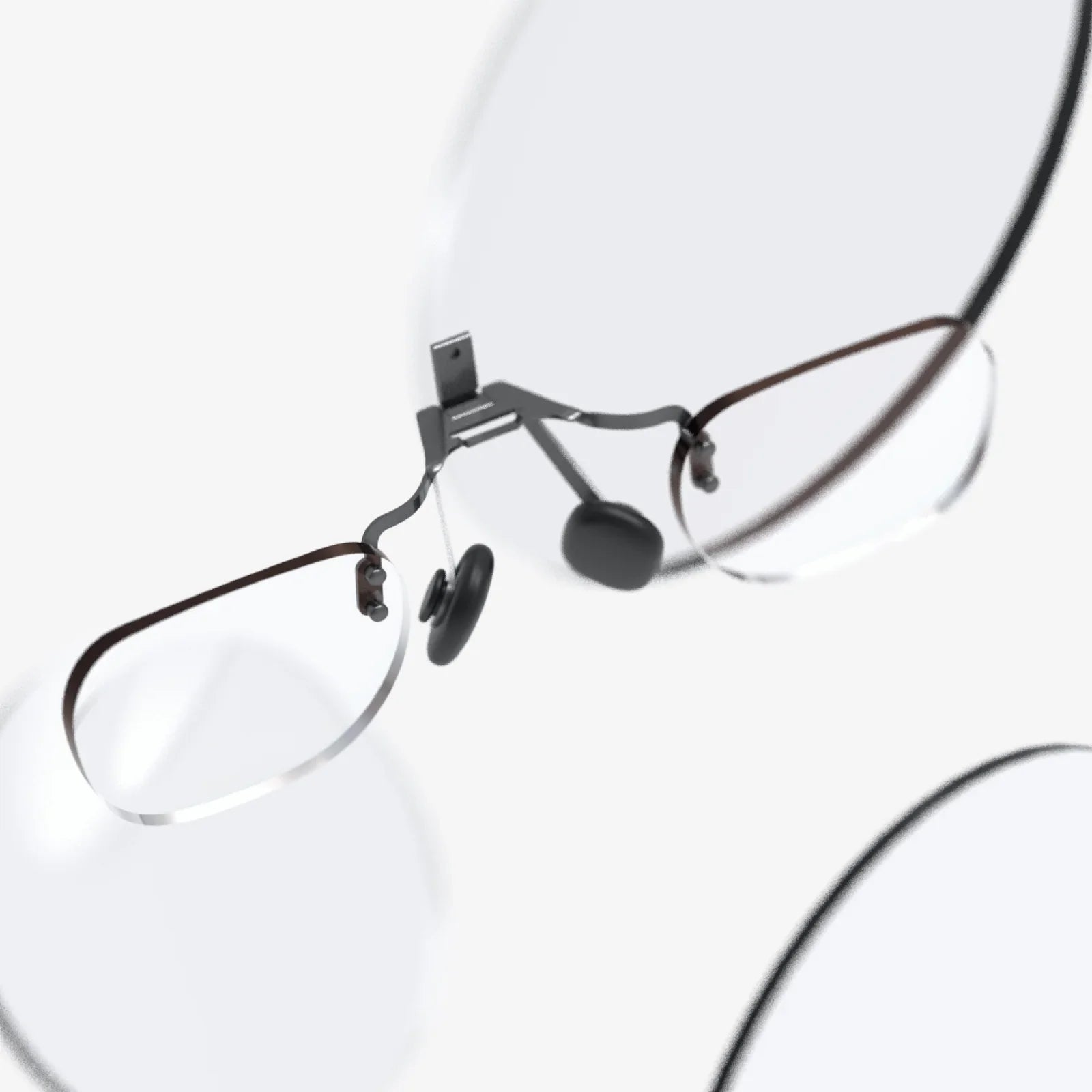
Imagine a world where the line between the digital and the physical blurs into insignificance, where information doesn't reside on a screen in your pocket but is seamlessly overlaid onto the very fabric of your reality. This isn't a distant dream from a cyberpunk novel; it's the emerging present. The technology to make this possible is here, and it’s evolving at a breathtaking pace. The future of computing is not in your hand; it's on your face. The revolution is being framed, quite literally, and it’s inviting you to see the world through a new, intelligent lens.
The Architectural Blueprint: How AI Glasses Perceive and Process the World
At their core, AI glasses are a sophisticated convergence of hardware and software, designed to act as a perceptual prosthetic. Unlike standard eyewear, they are packed with a suite of sensors that serve as their eyes and ears. High-resolution cameras continuously capture the user's field of view, while microphones pick up ambient sound and voice commands. Inertial Measurement Units (IMUs), including accelerometers and gyroscopes, track head movement and orientation with precision, ensuring digital overlays remain stable in the physical world.
This constant stream of raw data is the fuel for the artificial intelligence engine. This is where the magic happens. A compact but powerful onboard processor, often supplemented by cloud computing for more complex tasks, runs sophisticated machine learning models in real-time. These models are trained on vast datasets to perform specific perceptual tasks:
- Computer Vision: This is the cornerstone technology. Algorithms can identify and classify objects (a person, a car, a specific product on a shelf), read text (street signs, documents, menus), and even understand scenes (a busy kitchen, a park, a conference room).
- Natural Language Processing (NLP): This allows the glasses to understand spoken commands and questions from the user, enabling hands-free control. It also powers the incredible feat of real-time speech-to-text translation and transcription.
- Augmented Reality (AR) Rendering: Once the AI understands the environment, it must present information back to the user. Using micro-display projectors or waveguides embedded within the lenses, it casts text, images, and 3D models directly into the user's line of sight, creating the illusion that digital content exists in the real world.
This entire pipeline—from sensor capture to AI inference to visual rendering—happens in milliseconds, creating an experience that feels intuitive and instantaneous.
Beyond Novelty: The Practical and Powerful Applications Today
While the full potential of this technology is still unfolding, current iterations are already solving real-world problems and enhancing human capabilities in meaningful ways.
Revolutionizing Accessibility
For individuals with visual or auditory impairments, AI glasses can act as a powerful assistive technology. They can audibly describe a scene, read text aloud from any surface, identify currency notes, and even recognize familiar faces and whisper their name. For those who are deaf or hard of hearing, real-time speech-to-text transcription can be displayed directly in their vision, turning conversations into captioned experiences and making social interactions more accessible than ever before.
Shattering Language Barriers
One of the most immediately impressive applications is real-time translation. A user can look at a foreign menu, and the text can be instantly overlaid with the translation in their native language. In a conversation, the glasses can transcribe what someone is saying in another language and display the translated subtitles in real-time. This doesn't just facilitate tourism; it has profound implications for global business, diplomacy, and cultural exchange, effectively functioning as a universal translator.
Augmenting Professional Workflows
In fields from manufacturing and logistics to healthcare and field service, AI glasses are boosting efficiency and accuracy. A technician repairing complex machinery can have schematics and step-by-step instructions projected onto the equipment itself. A warehouse worker can see optimal picking routes and item information without glancing at a handheld scanner. A medical professional could, in the future, have vital patient data or surgical guidance available without ever looking away from their task. This hands-free, eyes-forward access to information is a paradigm shift for many industries.
Enhancing Daily Life and Cognitive Offloading
On a more personal level, these devices promise to streamline daily life. Imagine getting subtle navigation arrows painted onto the sidewalk in front of you, never needing to look at your phone again for directions. You could be reminded of a person's name at a party, get recipe instructions floating beside your mixing bowl, or control your smart home devices with a glance. They offer a form of cognitive offloading, freeing our minds to focus on engagement and experience rather than memorization and device management.
The Other Side of the Lens: Navigating a Minefield of Ethical Concerns
The power of AI glasses is inextricably linked to a host of serious ethical, privacy, and societal challenges that we are only beginning to grapple with. The very features that make them useful also make them potentially dangerous.
The Privacy Apocalypse
This is the most significant concern. A device that records audio and video continuously represents an unprecedented threat to personal privacy. The concept of consent in public spaces becomes murky. If someone is wearing these glasses in a cafe, are they recording everyone around them? Could they be running facial recognition without anyone's knowledge? The potential for covert surveillance, either by individuals, corporations, or governments, is staggering. Robust digital ethics and entirely new legal frameworks will be required to prevent a world where we are all unknowingly subjects of constant data capture and analysis.
The Social and Psychological Cost
How will constant augmentation affect our human interactions? Will we be present in a conversation, or will we be distracted by a stream of notifications and information? There is a risk of further eroding our already-fragile attention spans. Furthermore, the potential for reality manipulation is disturbing. If a device can overlay anything it wants onto your vision, what is to stop bad actors from creating convincing deepfakes in real-time or altering your perception of your surroundings for malicious purposes? The very notion of a shared, objective reality could be undermined.
The Digital Divide and Accessibility
As with any transformative technology, there is a risk of creating a new class divide: those who can afford augmented perception and those who cannot. Will access to real-time information and translation become a prerequisite for high-level jobs, creating an even greater advantage for the wealthy? Furthermore, designing interfaces that are intuitive and accessible for all, regardless of technical literacy or physical ability, will be a critical challenge.
Gazing into the Near Future: What's Next for Augmented Vision?
The current generation of AI glasses is merely the prototype, the bulky proof-of-concept. The trajectory points toward devices that are indistinguishable from regular eyewear—lighter, more powerful, and with all-day battery life. Advances in battery technology, chip design (with dedicated AI processors), and display tech will drive this miniaturization.
Beyond hardware, the AI models themselves will become more sophisticated. They will move beyond simple recognition to true contextual understanding. Your glasses will not just see a coffee shop; they will know your order history, see how busy it is, and remind you that you have time to grab a coffee before your next meeting. They will become proactive assistants, anticipating needs based on a deep understanding of your context, habits, and the environment.
The ultimate goal is a seamless, always-available interface that feels like a natural extension of our own cognition—a true "superpower" for perception. The path to getting there, however, is fraught with challenges that we must confront with careful thought, inclusive design, and strong ethical guidelines.
The frames are being set, the lenses are being tuned, and a new layer of reality is waiting to be switched on. This isn't about escaping into a virtual world; it's about profoundly enhancing the one we already inhabit. The question is no longer if this technology will integrate into our lives, but how quickly we can adapt our societies, our laws, and our own humanity to responsibly harness its world-altering potential. The view through this new lens is dazzling, complex, and ultimately, ours to define.
Share:
Upcoming AR VR Headset to Revolutionize How We Interact With the Digital World
Next AI Glasses: Beyond Screens and Into a Seamless Augmented Reality