


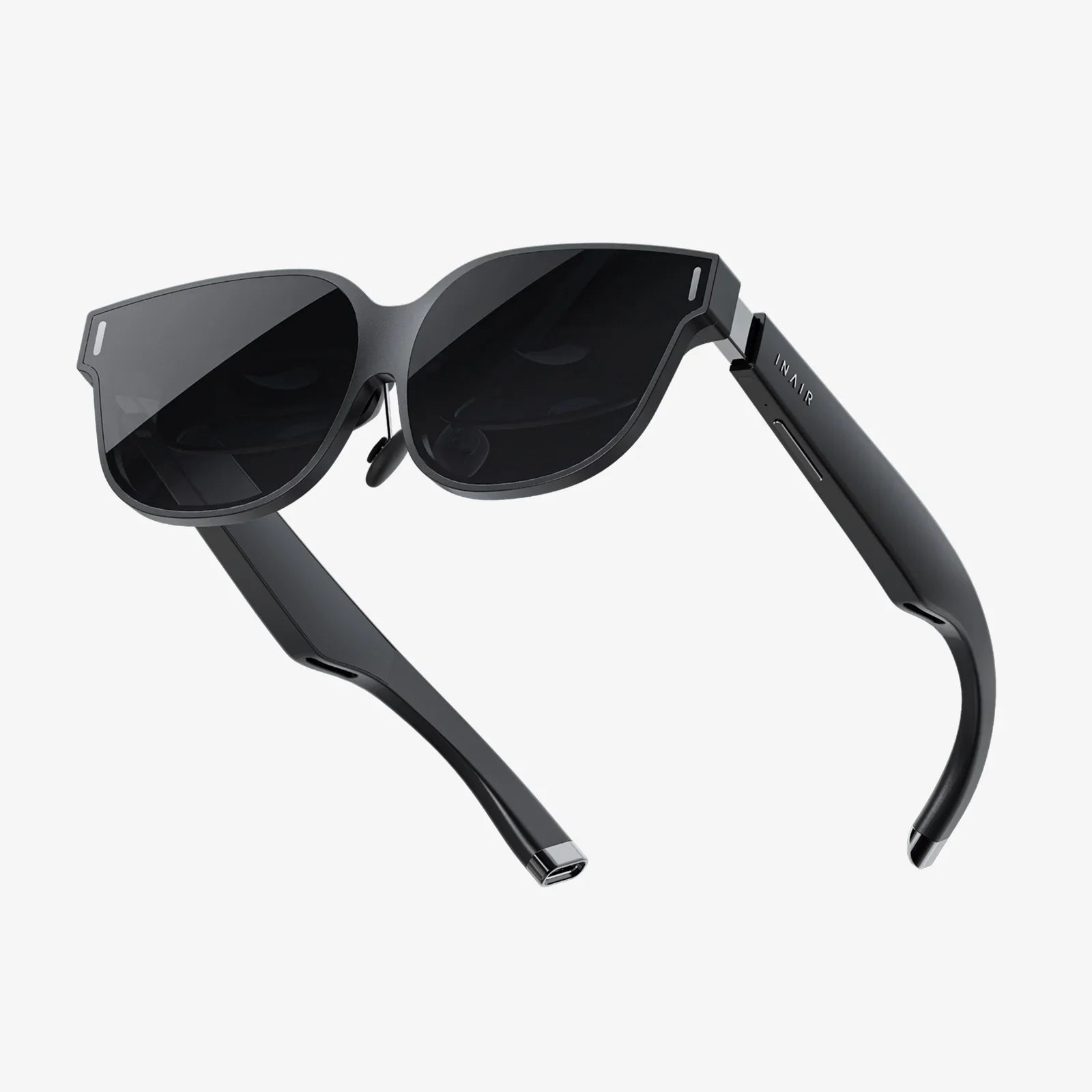
Imagine a device that doesn’t just sit on your face but becomes a seamless extension of your perception, a portal to boundless experiences, and a tool that fundamentally alters your work, play, and connection. The whispers and rumors are building to a crescendo; the upcoming AR VR headset to reshape our reality is no longer a distant sci-fi fantasy, but a tangible future knocking at our door. This isn't just about a spec bump or a new controller; this is about a paradigm shift in human-computer interaction, and the anticipation is palpable.
The Convergence of Realities: Blurring the Lines Between AR and VR
For years, Augmented Reality (AR) and Virtual Reality (VR) have been on parallel but distinct paths. VR headsets offered complete immersion in digital worlds, often at the expense of isolating the user from their physical environment. AR glasses, meanwhile, promised to overlay useful digital information onto the real world but were frequently limited by narrow fields of view, clunky form factors, and underwhelming capabilities. The next generation of headsets is poised to shatter this dichotomy through a powerful new concept: high-fidelity passthrough.
This technology uses advanced outward-facing cameras to capture the real world in real-time and display it inside the headset with such incredibly low latency and high resolution that your brain accepts it as reality. This enables a spectrum of experiences, from full VR immersion to rich AR overlays, all within the same device. The upcoming AR VR headset to bridge this divide will function as a chameleon, adapting to the user's needs instantly. One moment you're designing a life-size 3D model that appears to sit in the middle of your living room (AR), and the next, you've transitioned seamlessly into a virtual meeting room with colleagues from across the globe (VR), all without ever removing the device.
Seeing is Believing: The Display and Visual Fidelity Leap
The heart of any immersive experience is the display. The upcoming AR VR headset to deliver true visual comfort will move beyond the standard LCD and OLED panels that have defined the first wave. We are entering the era of micro-OLED and innovative pancake lens systems.
Micro-OLED panels are incredibly small, allowing for much more compact headset designs, but pack an astonishing number of pixels into a tiny space. This translates to resolutions that meet or exceed human visual acuity—the mythical "retina display" for VR. The dreaded "screen door effect," where users can see the gaps between pixels, will become a relic of the past. Coupled with pancake lenses, which use a folded optics path to drastically reduce the distance between the display and the eye, these headsets will be significantly slimmer and lighter while offering a vastly sharper, clearer, and more comfortable image. Wider field of view (FOV) will also be a key battleground, moving closer to the natural human FOV to enhance the feeling of true presence.
The Window to the Soul… and the Interface: Advanced Eye and Hand Tracking
Forget clunky controllers for a moment. The most intuitive interface is the one we were born with: our eyes and our hands. The upcoming AR VR headset to understand your intent will feature built-in, high-precision eye-tracking and hand-tracking as standard, core functionalities.
Eye-tracking is a game-changer for multiple reasons. Firstly, it enables Foveated Rendering. This technique uses eye-tracking to render the area where you are directly looking in full, high resolution, while subtly reducing the rendering quality in your peripheral vision. Since your peripheral vision cannot discern the detail anyway, this massively reduces the computational load on the processor, allowing for incredibly complex graphics without requiring a supercomputer on your face. Secondly, it creates a new dimension for social interaction. In a virtual meeting, your avatar can now make genuine eye contact, and your eyes can convey emotion and attention in a way that feels human. It also allows for intuitive menu navigation—simply look at an option and confirm with a subtle gesture.
Complementing this is robust hand-tracking. The ability to reach out and manipulate digital objects with your bare hands, feeling the interaction through haptic feedback, is a profound leap in immersion. It makes the digital world feel tangible. This technology will redefine creative workflows, from sculpting virtual clay to conducting a digital orchestra with the wave of a hand.
The Brain of the Operation: Processing Power and On-Device AI
Driving these breathtaking experiences requires immense processing power. The upcoming AR VR headset to boast true independence will likely feature a system-on-a-chip (SoC) designed specifically for the intense demands of spatial computing. These chips will not only handle complex graphics rendering but also the constant, real-time processing of multiple camera feeds for passthrough, depth sensing, and tracking.
Integral to this will be a powerful Neural Processing Unit (NPU) dedicated to on-device artificial intelligence. This AI will be the silent, intelligent engine running in the background, making everything feel magical. It will be responsible for understanding the environment—recognizing surfaces, objects, and people. It will power predictive tracking, anticipating your hand movements to reduce latency to imperceptible levels. It will enable voice assistants that understand context within your spatial environment. This shift towards on-device AI is also crucial for privacy and latency; your most sensitive data, like a scan of your home, won't need to be sent to the cloud to be processed.
Designing for the Human Face: Form Factor, Comfort, and All-Day Wear
A technological marvel is useless if it's uncomfortable to wear. The first generation of headsets often felt like strapping a brick to your face. The upcoming AR VR headset to be worn for hours will prioritize ergonomics and aesthetics above all else. We are moving towards a glasses-like form factor, though true all-day AR glasses may still be a generation away for high-end capabilities.
Expect to see significant weight reduction through new materials and the compact designs enabled by pancake lenses. Advanced weight distribution will be key, moving the battery to a separate, portable pack or integrating it as a counterweight at the back of the headband to avoid front-heaviness. Materials will become lighter and more breathable to prevent the overheating and discomfort that can break immersion. The goal is no longer a device you use for an hour-long gaming session, but a tool you can comfortably wear for an entire workday, a social gathering, or a long-haul flight.
Connecting and Perceiving: Connectivity and the Haptic Future
While standalone operation is the goal for mobility, the upcoming AR VR headset to serve as a primary compute device will also offer high-bandwidth connectivity options. Wi-Fi 6E and future Wi-Fi 7 standards will allow for low-latency streaming from a local PC or console, enabling ultra-high-fidelity experiences that leverage external processing power. This hybrid model offers the best of both worlds: mobility for on-the-go AR and social VR, and a tethered mode for the most graphically intense simulations.
Furthermore, the future of immersion lies not just in what we see, but what we feel. Haptic feedback is evolving beyond simple controller rumbles. We are looking at advanced haptic gloves that can simulate the texture and resistance of a virtual object, and even full-body haptic suits for complete sensory immersion. While these may be peripheral at first, the core headset will lay the groundwork for this ecosystem, providing the spatial awareness and tracking necessary to make these experiences coherent and powerful.
Building the World: The Software and the Metaverse
The hardware is nothing without the software and content to bring it to life. The upcoming AR VR headset to unlock new creative realms will launch alongside or quickly foster a new generation of spatial applications. We will move beyond isolated apps and games into more persistent and interconnected experiences—the early foundations of the metaverse.
This won't be one singular virtual world, but a constellation of interconnected digital spaces and experiences. Imagine attending a live concert in VR with friends, then switching to an AR mode to review a holographic schematic of a new product with your engineering team, all within the same consistent digital identity and framework. The operating system for these devices will be a spatial OS, treating your physical room as a desktop where windows can be pinned to walls and 3D models can be inspected from every angle. Developers will be given powerful new tools to create applications that understand and interact with the real world, leading to breakthroughs in fields like architecture, medicine, and remote collaboration.
The Long-Term Vision: From Headsets to Neural Interfaces
As awe-inspiring as these near-term headsets will be, they represent a stepping stone. The technology is on a clear trajectory towards even greater miniaturization, eventually converging with the form factor of regular eyeglasses and then, perhaps decades from now, moving towards non-invasive neural interfaces.
The goal is to move the technology from something we wear to something we use, and eventually, to something that feels like a natural extension of our own cognition. The challenges of battery life, display efficiency, and social acceptance will be slowly overcome. The upcoming generation of headsets is the critical bridge—the proof of concept that will demonstrate the undeniable utility and magic of spatial computing to a mass audience, funding the research and development that will take us to the next stage.
The stage is set for a revolution not just in gaming, but in how humanity learns, works, creates, and connects. The hardware is converging, the software is maturing, and the developers are dreaming bigger than ever before. The upcoming AR VR headset to change everything won't just be a product launch; it will be the key that unlocks a new dimension of human experience, and it's a key that is already turning in the lock. The door is about to open.
Share:
Best Tools for Augmented Reality: A Developer's Guide to Building the Future
AI Glasses Exist and They Are Redefining Our Reality Right Now