


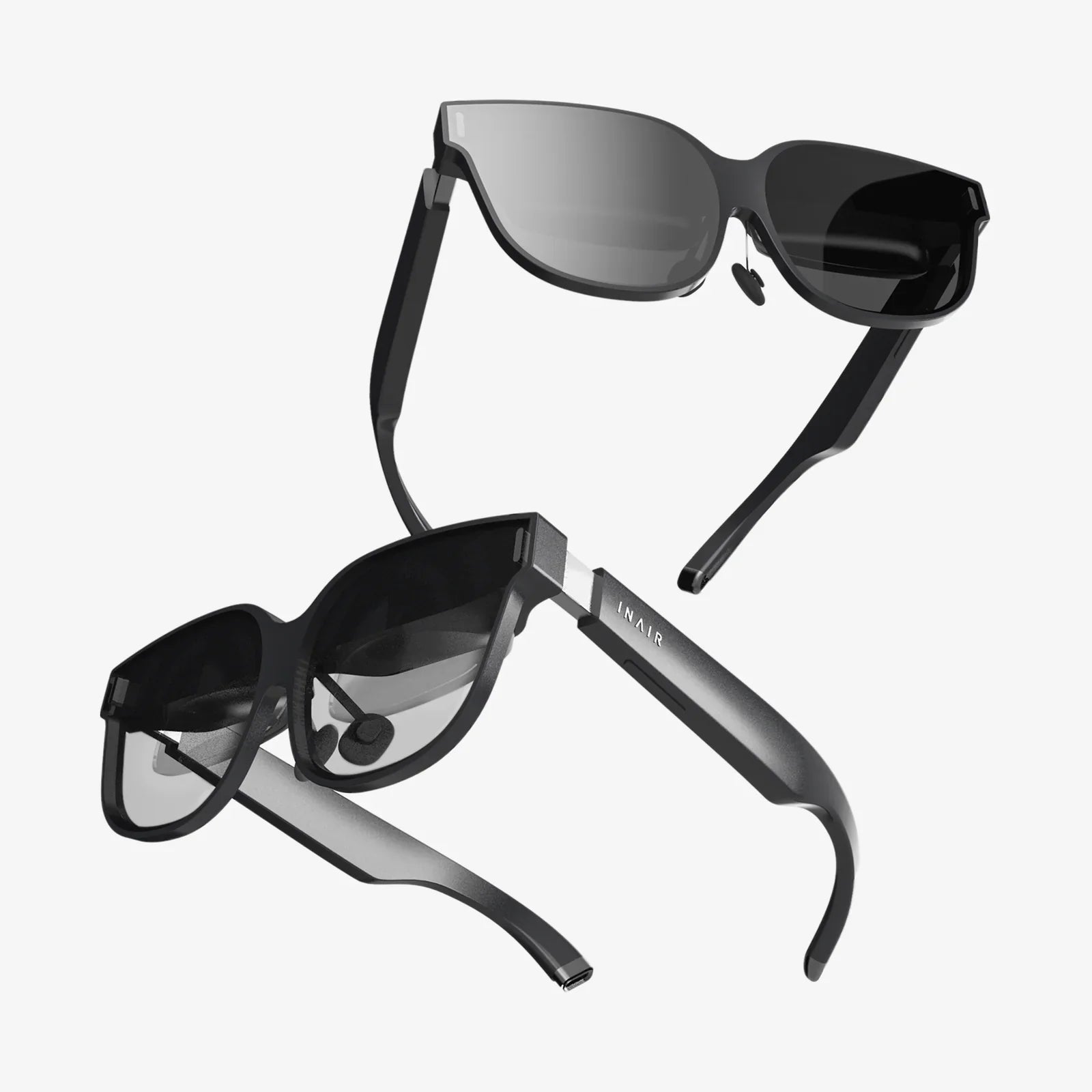
Imagine a world where your iPhone’s intelligence isn’t confined to a slab of glass in your pocket but is projected seamlessly onto the world around you. Information appears as you need it, digital assistants understand your context without a spoken word, and the line between the physical and digital realms begins to blur. This isn't a distant science fiction fantasy; it's the imminent reality being crafted by the emergence of AI glasses designed to work in concert with your iPhone. This powerful combination represents more than just a new gadget; it heralds a fundamental shift in personal computing, moving us from a paradigm of pulling information out of a device to one where it is gracefully pushed into our field of view, enhancing our perception and capabilities.
The Convergence of Two Technological Titans
The concept of smart glasses has existed for years, often stumbling over clunky designs, limited battery life, and a lack of a compelling, everyday use case. Similarly, the smartphone, while a marvel of modern engineering, has reached a plateau of iterative improvements. The true breakthrough lies not in each device alone, but in their symbiotic partnership. The iPhone acts as the brain—the powerful computational engine, the cellular modem, the app ecosystem, and the familiar user interface. The AI glasses serve as the eyes and the new display—a lightweight, wearable portal that captures the world and overlays it with intelligent information.
This partnership solves critical challenges. By offloading the heavy processing and connectivity demands to the iPhone, the glasses can remain sleek, comfortable, and socially acceptable for all-day wear. They become a specialized terminal, a window, while the phone remains the versatile workhorse we already carry. This bifurcation of responsibility is key to creating a wearable that people will actually want to wear, moving beyond the niche appeal of previous attempts and into the mainstream.
Beyond Augmented Reality: The Intelligence Layer
While the term "Augmented Reality" (AR) is often used interchangeably with this technology, it only tells part of the story. The true magic of AI glasses for the iPhone is the artificial intelligence that powers them. This isn't just about placing a virtual dinosaur in your living room; it's about creating an intelligent layer of context and assistance over your entire life.
This intelligence manifests in several transformative ways:
Contextual Awareness and Real-Time Translation
Imagine walking through a foreign city. Your glasses, seeing the street signs and menus through their integrated cameras, can instantly translate Japanese kanji or French text into English, overlaying the translation directly onto your view of the real world. A conversation with a local who doesn't speak your language becomes possible, with subtitles appearing in near-real-time. The AI doesn't just translate words; it understands context, ensuring idioms and nuances are conveyed accurately.
Visual Search and Information Retrieval
See a landmark and wonder about its history? Glance at a book in a store café? Notice a plant in a friend's garden you'd like to identify? Instead of pulling out your phone, opening an app, and typing a query, a simple voice command or even a programmed gesture—"What is that?"—will allow the AI to analyze the visual scene, identify the object, and present relevant information discreetly in your periphery. This shifts search from an intentional, disruptive act to a seamless, continuous flow of knowledge.
Proactive Assistance and Navigation
The AI will learn your routines and anticipate your needs. Walking towards a subway station, it might proactively display the schedule for your regular train line. In a grocery store, it could highlight items on your shopping list or flag products that align with your dietary preferences. Walking directions won't be a blue dot on a map but a clear line or arrow painted onto the sidewalk in front of you, guiding you effortlessly to your destination while allowing you to keep your head up and engaged with your surroundings.
Memory Augmentation and Personal Productivity
For professionals, the applications are profound. During a meeting, key points could be transcribed and displayed. For a technician repairing complex machinery, a schematic could be overlayed onto the equipment itself, guiding their hands. For a student in a lab, instructions and safety protocols could be visible right next to their experiment. The glasses act as an externalized, photographic memory and a hands-free manual, drastically reducing cognitive load and error.
The Seamless iPhone Integration: A Built-in Advantage
The deep integration with the iOS ecosystem is what will set these glasses apart from standalone AR devices. This isn't just a Bluetooth accessory; it's a new form factor for the iPhone itself.
- Unified Ecosystem: Your messages, calls, notifications, and apps will seamlessly transition from your iPhone screen to your glasses. Answer a call by simply looking at a virtual accept button. Listen to messages read aloud by a lifelike AI voice. Control your smart home devices by looking at them. The glasses become the ultimate remote control for your digital life.
- Power and Performance: Leveraging the iPhone's powerful A-series chips and neural engine means the glasses can perform complex computer vision and machine learning tasks without needing their own bulky, heat-generating processors. This ensures a smooth, responsive experience.
- App Store Revolution: The existing millions of iOS developers will have a new, incredibly rich canvas to build upon. We will see an explosion of new applications specifically designed for this spatial, context-aware interface, from new forms of social media and games to revolutionary enterprise tools.
Navigating the Inevitable Challenges
Of course, this future is not without its significant hurdles. The path to widespread adoption is paved with technical and social challenges that must be thoughtfully addressed.
The Privacy Paradox
A device with always-on cameras and microphones worn on your face is arguably the biggest privacy challenge the tech world has ever faced. The potential for misuse, surveillance, and unauthorized data collection is enormous. The solution will not be purely technical but must be cultural and legislative. Transparency will be paramount. Features like a physical shutter for the cameras, clear indicator lights when recording, and on-device processing that anonymizes data before it is sent to the cloud will be non-negotiable. Users must have absolute control over their data and a clear understanding of how it is being used.
The Social Hurdle: The "Glasshole" Stigma
The failure of earlier products created a social stigma around wearing computers on your face. People do not want to feel like they are being recorded or that the person they are talking to is distracted by a digital feed. The design must be indistinguishable from classic eyewear at a casual glance. The user interface must be discreet, using audio cues, subtle visual projections in the lower periphery, and intuitive gesture controls that don't require wild hand movements. The technology must be polite; it should enhance social interactions, not detract from them.
Battery Life and Form Factor
While the iPhone handles the heavy lifting, the glasses still require power for their displays, sensors, and basic processors. All-day battery life is essential for true ambient computing. This will require breakthroughs in low-power micro-displays and efficient optics. Furthermore, the goal must be a form factor that is lightweight, comfortable for all-day wear, and available in a variety of styles to suit personal tastes. They must be something people want to wear before they even turn them on.
The Future is Through a New Lens
The development of AI glasses for the iPhone is not a question of if, but when. The underlying technologies—computer vision, neural networks, miniaturized sensors, and high-resolution micro-displays—are advancing at a breakneck pace. When this technology matures, it will redefine our relationship with technology for the second time this century, following the smartphone revolution.
We will move from a world of looking at our devices to looking through them. The goal will shift from maximizing screen time to minimizing it—replacing the addictive pull of a smartphone with a calm, contextual, and assistive technology that empowers us to be more present in the real world. It promises to make us more knowledgeable, more capable, and more connected to the environment and people around us, all while the technology itself fades into the background of our perception.
The next time you unlock your iPhone, consider that its ultimate purpose may not be to hold your attention, but to set it free. The future of connectivity isn't in your hand; it's right before your eyes, waiting for the perfect pair of AI glasses to bring it into focus.
Share:
What Are The Best VR Glasses? A Deep Dive Into The Ultimate Immersive Experience
AR vs VR Comparison Diagram: A Visual Guide to Understanding the Key Differences