


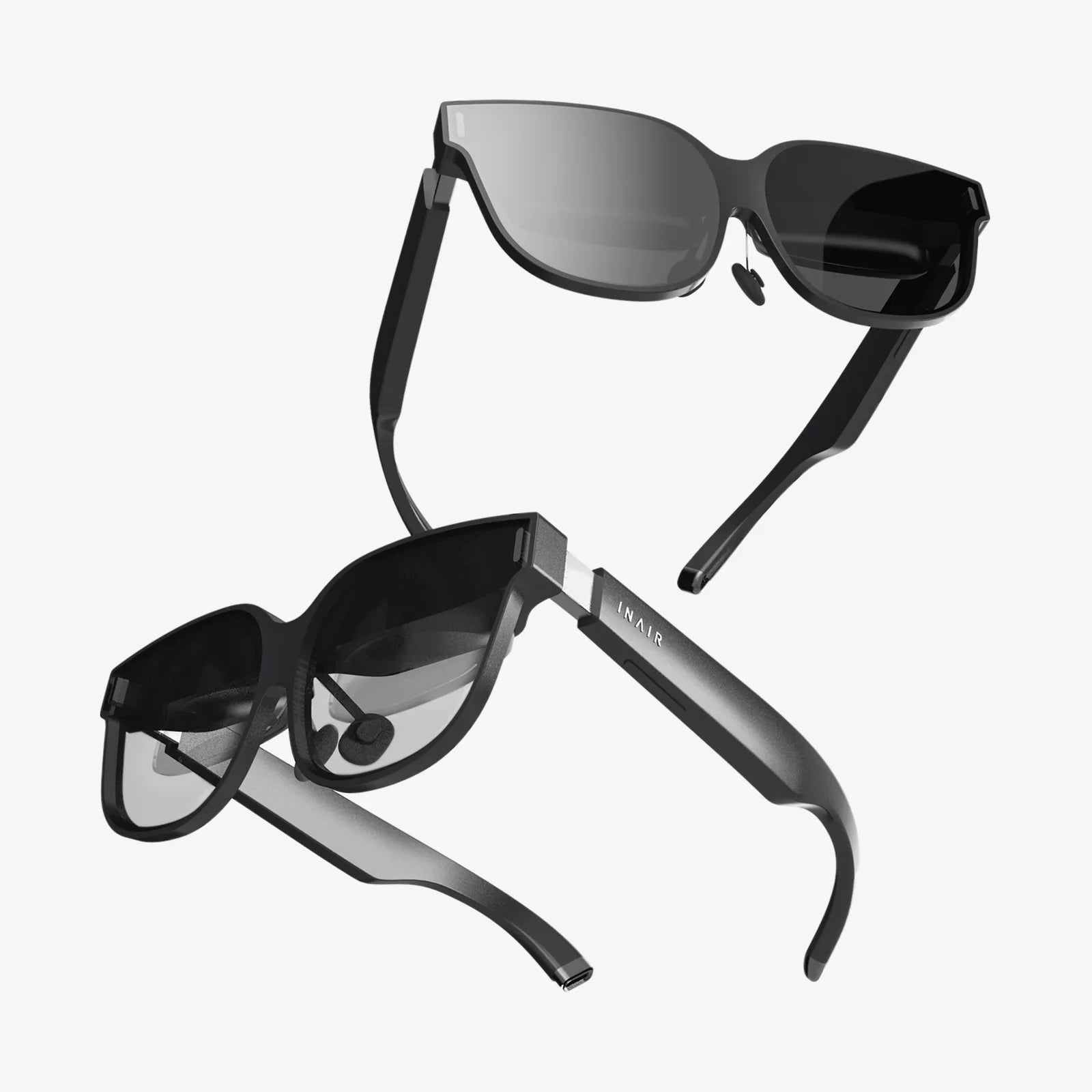
Imagine a world where information flows seamlessly into your field of vision, where language barriers dissolve with a glance, and your surroundings become an interactive, intelligent canvas. This is not a distant future promised by science fiction; it is the emerging reality, and it’s being worn on the faces of men around the world. The era of AI glasses for men has arrived, moving beyond clunky prototypes and niche gadgets to become a sophisticated fusion of fashion, function, and formidable computational power. This wearable revolution promises to fundamentally alter how we work, socialize, and navigate the complexities of modern life, all from a device that looks like a classic pair of spectacles.
From Sci-Fi to Reality: The Evolution of Wearable Intelligence
The concept of augmented reality eyewear has captivated imaginations for decades. Iconic characters in film and literature have used high-tech visors to analyze threats, access data, and see the unseen. For years, the technology to create such devices lagged far behind this vision, resulting in bulky, expensive, and socially awkward headsets that were more novelty than necessity. Early attempts, while groundbreaking in their engineering, failed to achieve the critical trifecta of powerful computing, all-day battery life, and a socially acceptable form factor.
The turning point came not from a single breakthrough, but from a convergence of several technological trends. The miniaturization of processors, the development of ultra-low-power displays, and advancements in battery technology created the foundation. Simultaneously, the proliferation of high-speed mobile networks and the maturation of cloud computing meant that these devices did not need to house immense processing power locally; they could tap into the vast resources of the cloud, effectively becoming a portal to a distributed AI brain.
Today's generation of AI glasses for men represents the culmination of this progress. They are designed to be lightweight, comfortable, and, crucially, indistinguishable from high-end traditional eyewear at a casual glance. This deliberate focus on aesthetics is key to their adoption. The modern man is not just a tech enthusiast; he is also conscious of style. Manufacturers have partnered with renowned optical designers to ensure that these devices are not just smart, but also stylish, available in a variety of frames that suit professional, casual, and athletic tastes. The goal is to make the technology recede into the background, becoming an invisible enhancement to the user's capabilities rather than a distracting head-mounted computer.
Under the Lens: Deconstructing the Core Technologies
To understand the capabilities of AI glasses, one must look at the sophisticated suite of technologies packed into their slim frames. It is a marvel of modern engineering, integrating components that were, until recently, the size of a small book.
The Display: Your Private Augmented Canvas
At the heart of the experience is the display technology. Unlike virtual reality headsets that immerse you in a completely digital world, AI glasses use augmented reality to overlay digital information onto the real world. This is primarily achieved through one of two methods: Optical See-Through and Video See-Through. The most common and elegant solution for consumer glasses uses miniature projectors that beam light onto a specially coated lens, which then reflects the image directly into the user's retina. This creates the illusion of text, images, or videos floating in space several feet away, all while allowing the user to see their physical environment clearly and without obstruction. This private screen is only visible to the wearer, making it perfect for checking notifications, navigation prompts, or translations without constantly looking down at a phone.
The Brain: On-Device and Cloud AI Synergy
The "AI" in AI glasses is not a marketing gimmick. It is a multi-layered intelligence system. A powerful, yet efficient, system-on-a-chip (SoC) within the frames handles immediate tasks: processing sensor data, running basic machine learning models, and managing power. This on-device AI allows for rapid responses, such as instantly translating text you look at or identifying an object in your view.
For more complex tasks—like conducting a detailed web search, analyzing a complex scene, or processing natural language commands—the glasses seamlessly connect to a smartphone or directly to the cloud via Wi-Fi or cellular networks. Here, massive AI models with billions of parameters can be leveraged, sending back refined information to be displayed. This hybrid approach balances the need for low-latency responsiveness with access to virtually unlimited computational power.
The Senses: A Suite of Environmental Sensors
To understand and interact with the world, AI glasses are equipped with an array of sensors that act as their eyes and ears. This typically includes:
- High-Resolution Cameras: For capturing images and video, reading text, and identifying objects.
- Depth Sensors: To understand the three-dimensional structure of the environment, allowing digital objects to be placed realistically on physical surfaces.
- Inertial Measurement Units (IMUs): Including accelerometers and gyroscopes to track head movement and orientation with precision.
- Microphone Arrays: For capturing voice commands and conducting calls. Advanced beamforming technology helps isolate the user's voice from background noise.
- Speakers or Bone Conduction Audio: To deliver private audio feedback without blocking ambient noise, crucial for maintaining situational awareness.
Connectivity and Power: The Lifelines
Staying connected is paramount. Bluetooth provides a reliable link to a paired smartphone, while Wi-Fi and optional cellular connectivity allow for standalone operation. All this technology demands significant power. Engineers have made incredible strides in energy density, packing batteries into the arms of the glasses. Some models even employ a split-battery design to distribute weight evenly. For power users, a companion battery pack is often available, ensuring the device can last throughout a full day of use.
A Day in the Life: Transformative Applications for the Modern Man
The true value of any technology is revealed in its application. For the professional, the traveler, the fitness enthusiast, and the creative, AI glasses are becoming an indispensable tool, enhancing productivity, safety, and enjoyment.
Enhanced Productivity and the Future of Work
For the modern professional, these glasses are a productivity powerhouse. Imagine walking into a meeting and having the names and roles of everyone in the room discreetly displayed next to their faces. During a presentation, your talking points or key data metrics can float in your periphery, allowing for a more natural and engaging delivery without constantly referring to notes or a screen. For field technicians and engineers, step-by-step repair instructions or schematic diagrams can be overlaid directly onto the machinery they are fixing, guiding their hands and reducing errors. This concept, known as "spatial computing," has the potential to revolutionize fields from manufacturing and logistics to healthcare and design, creating a hands-free, eyes-up workflow that is both safer and more efficient.
Seamless Navigation and Real-World Translation
For the global citizen and traveler, AI glasses act as a personal guide. Walking through an unfamiliar city, turn-by-turn navigation arrows can be painted onto the street itself, eliminating the need to hold up a phone and look like a tourist. The most profound application, however, is real-time translation. Look at a restaurant menu, a street sign, or a document in a foreign language, and the translated text instantly appears, superimposed in its place. You can even hold a conversation with someone speaking another language, seeing their translated speech as subtitles in real-time, and hearing a translated version of your own words spoken to them. This technology doesn't just translate languages; it has the potential to break down cultural and communicative barriers entirely.
Fitness, Health, and Augmented Experiences
The health and fitness applications are vast. For runners and cyclists, performance metrics like heart rate, pace, and distance can be displayed within their line of sight, allowing them to stay focused on their path. During a workout, a personal trainer avatar could demonstrate the next exercise set right in front of them. More advanced health monitoring, through sensors that track pupil dilation or even analyze skin tone for vital signs, offers a glimpse into a future of continuous, non-invasive health tracking. Beyond utility, these glasses can augment experiences at concerts, sporting events, and museums, providing additional information, statistics, or artistic commentary layered over the live event.
The Other Side of the Lens: Privacy, Security, and Ethical Quandaries
With great power comes great responsibility, and the capabilities of AI glasses raise significant and valid concerns. The most pressing issue is privacy. A device that can continuously record audio and video presents a profound threat to personal privacy if misused. The concept of a society where every interaction could be recorded and analyzed by someone wearing these glasses is a legitimate fear.
Manufacturers address this with clear ethical frameworks and technical safeguards. prominent physical indicators like LED lights that signal when recording is active are non-negotiable features. Strict data handling policies, with on-device processing for sensitive tasks and clear user consent requirements for recording, are essential. There is also an ongoing societal and legal conversation about establishing "augmented-free" zones in certain private spaces, much like rules against recording today.
Security is another critical frontier. The constant data stream between the glasses, a phone, and the cloud must be encrypted end-to-end to prevent interception. Furthermore, the potential for digital overlays to be hacked and manipulated—a concept known as "augmented reality hijacking" where malicious actors could alter navigation signs or instructions—is a security challenge that must be proactively addressed. Navigating this new ethical landscape requires a collaborative effort between technologists, policymakers, and the public to establish norms that harness the benefits of this technology while fiercely protecting individual rights.
The Road Ahead: The Future is Clear and Augmented
The current generation of AI glasses is impressive, but it is merely the first step. The future holds even more transformative possibilities. Advancements in photonics will lead to even smaller, brighter, and more energy-efficient displays. 5G and eventual 6G connectivity will provide the near-instantaneous data transfer rates needed for truly immersive and complex cloud-rendered experiences. The AI models themselves will become more contextual and anticipatory, moving from reactive tools to proactive assistants that surface information you need before you even ask for it.
We are moving towards a world where the physical and digital realms are not just connected, but fused. The smartphone, a device that demands our attention and pulls us away from our surroundings, will likely cede its dominance to a more ambient, contextual, and unobtrusive form of computing. AI glasses represent the vanguard of this shift. They promise a future where technology enhances our human experience without replacing it, where we can be more present in the real world while simultaneously being empowered by the digital one.
The next time you see someone wearing a sharp pair of glasses, take a second look. They might just be browsing the internet, receiving directions, or breaking down a language barrier, all while looking you directly in the eye. This seamless integration of intelligence into our daily attire is not just changing what we can do; it is quietly, stylishly, and profoundly changing who we are. The world is about to look very different through this new lens.
Share:
Augmented Reality Is Reshaping Our World: From Smartphones to the Metaverse
Buy VR Glasses: The Ultimate Guide to Entering the Virtual World