


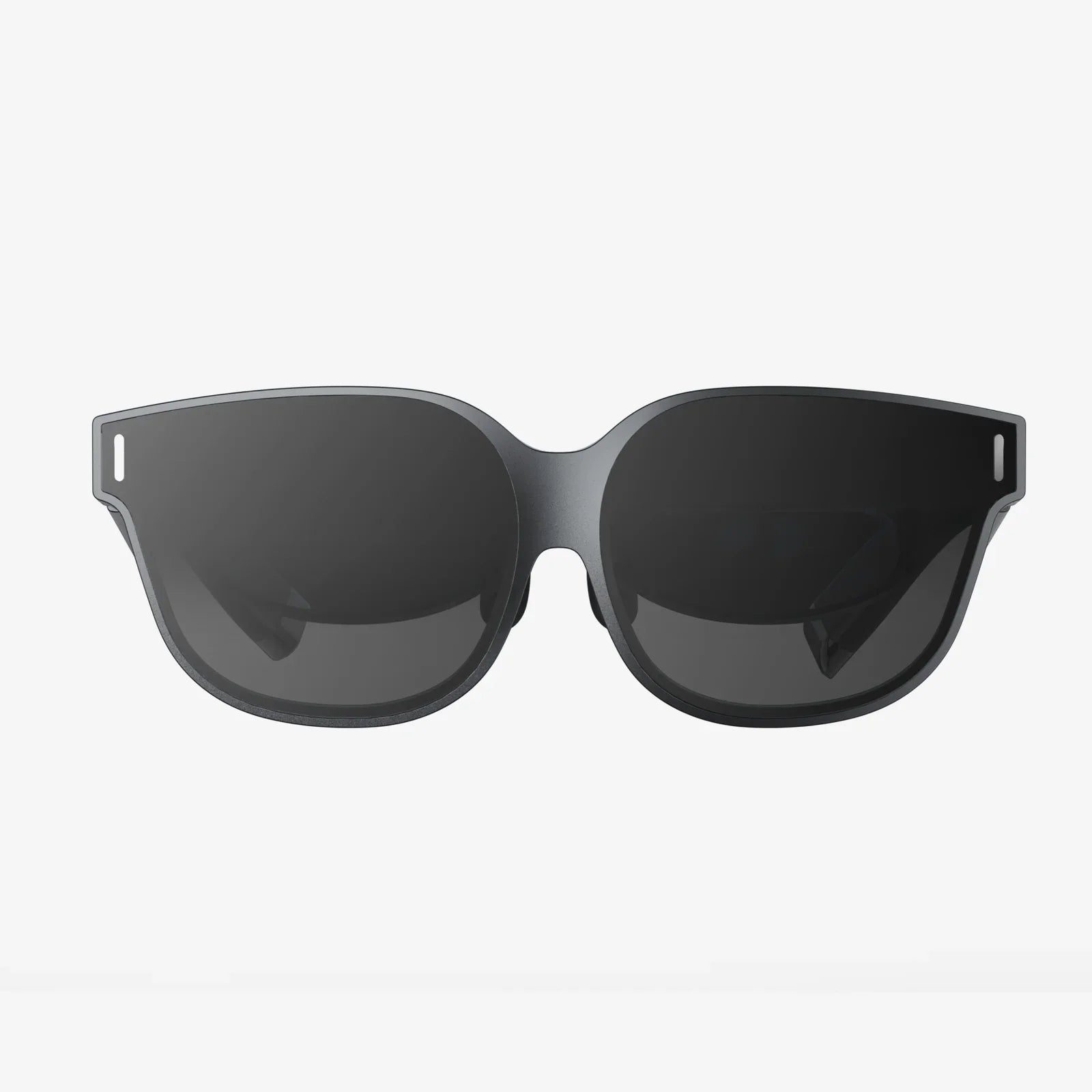
Imagine a world where information flows seamlessly into your field of vision, where language barriers dissolve in real-time, and your surroundings become an interactive canvas of digital intelligence. This is no longer the realm of science fiction; it is the imminent reality promised by the latest wave of AI glasses now available for sale. These devices represent a fundamental leap beyond simple heads-up displays, positioning themselves as the next indispensable portal between humanity and the vast potential of artificial intelligence, fundamentally altering our perception of reality itself.
The Core Architecture: What Makes Glasses "AI"?
At first glance, a pair of AI glasses might resemble standard eyewear, but beneath their sleek exterior lies a sophisticated technological ecosystem. Unlike their simpler predecessors that projected basic notifications, true AI glasses are defined by their integrated intelligence. This intelligence is powered by a combination of onboard hardware and, often, a robust connection to cloud-based neural networks.
The hardware suite typically includes:
- Microphones: An array of sensitive microphones to capture voice commands and ambient sound, enabling natural language interaction and audio context awareness.
- Cameras: Small, high-resolution cameras that act as the eyes of the device, continuously capturing the user's environment for object recognition, text translation, and navigation.
- Miniature Displays: Advanced waveguide or microLED technology that projects digital imagery directly onto the lenses, creating the illusion that holographic information exists in the real world.
- Processing Unit: A dedicated chipset, often a System-on-a-Chip (SoC), designed to handle the immense computational load of computer vision and machine learning tasks with efficiency to preserve battery life.
- Sensors: A suite including accelerometers, gyroscopes, and magnetometers to precisely track head movement and orientation, anchoring digital content stably in the user's physical space.
This hardware collects raw data, but the true magic happens in the software. On-device AI models perform initial processing for low-latency tasks, while more complex computations are offloaded to powerful cloud AI. This synergy allows for the real-time analysis that defines the user experience, from identifying a plant species to translating a street sign instantly.
Beyond Novelty: Practical Applications Reshaping Daily Life
The value of any technology is measured by its utility, and AI glasses are bursting with practical, life-enhancing applications that move far beyond a flashy gimmick.
Real-Time Translation and Transcription
One of the most immediately powerful features is the ability to break down language barriers. Imagine traveling in a foreign country and having subtitles for the world appear before your eyes. You can look at a restaurant menu, and the text instantly overlays its translation. You can have a conversation with someone speaking another language, and near real-time translated subtitles are displayed for both participants. Furthermore, these devices can transcribe meetings, lectures, or conversations, providing a searchable, textual record of spoken interactions, a boon for professionals and students alike.
Augmented Reality Navigation and Contextual Information
Navigation is transformed from looking down at a phone screen to following digital arrows and markers painted onto the sidewalk ahead. This not only is safer but also more intuitive. Beyond directions, AR navigation can highlight points of interest—showing you the history of a building you're looking at, the ratings of a restaurant you're passing, or the details of an artwork in a museum. The world becomes annotated with a layer of dynamic, context-aware information.
Enhanced Accessibility
The potential for aiding individuals with visual or auditory impairments is profound. For those with low vision, AI glasses can describe scenes, identify obstacles, read text aloud from documents or products on a shelf, and recognize faces, whispering a person's name through a bone conduction speaker as they approach. For the hard of hearing, they can provide advanced speech-to-text transcription, effectively captioning live conversations in the user's field of view.
Hands-Free Productivity and Assistance
For mechanics, surgeons, engineers, and field technicians, having access to schematics, instructions, or data sheets without looking away from their work is revolutionary. A chef could follow a recipe hands-free. A warehouse worker could receive picking instructions and confirm inventory with voice commands, drastically improving efficiency and safety. The AI assistant, always present and contextually aware, can retrieve information, set reminders based on location, and manage tasks without the user ever needing to reach for a device.
The Inevitable Ethical Crossroads: Privacy, Security, and Society
The integration of always-on cameras and microphones into a wearable, inconspicuous form factor raises significant and legitimate ethical concerns that society must urgently address.
The Privacy Paradox
The very feature that makes these glasses powerful—their ability to see and hear what the user does—also makes them a potent surveillance tool. The concept of consent is blurred. While a user may be recording for their own purposes, every person within the camera's frame is being recorded without their explicit permission. This creates a societal tension between the right to use a personal technology and the right to privacy in public spaces. Clear visual and audio indicators that recording is active are a minimum requirement, but broader social norms and legal frameworks need to be established.
Data Security and Ownership
These devices will generate an unprecedented amount of sensitive biometric and environmental data—a continuous log of everything the user sees and hears. Where is this data stored? How is it encrypted? Who owns it? Could it be subpoenaed? Could it be hacked? The specter of a large-scale data breach involving such intimate footage is a nightmare scenario. Manufacturers must prioritize end-to-end encryption, on-device processing where possible, and transparent data policies that give users full control over their information.
The Social Contract and "Glassholes" 2.0
Early attempts at consumer smart glasses faced significant social backlash, with wearers being labeled negatively. Society will need to develop a new etiquette for their use. Is it rude to wear them during a conversation? Will restaurants and private businesses ban them? Navigating these social hurdles will be just as important as overcoming the technical ones for widespread adoption.
Navigating the Purchase: A Buyer's Considerations
For those looking to enter this new technological frontier, several key factors should guide the decision-making process.
- Battery Life and Performance: AI processing is power-intensive. Evaluate the claimed battery life versus real-world usage scenarios. Does it last a full day, or will it need a midday charge? How does performance affect heat and comfort?
- Design and Comfort: Unlike a phone that stays in your pocket, this is a device you wear on your face. It must be comfortable, lightweight, and, for most consumers, stylish enough for daily wear. Does it look like normal eyewear?
- Display Technology: Is the display bright and clear enough for outdoor use? Does it obstruct your vision or can it be seamlessly ignored? How is the field of view?
- Software Ecosystem and AI Capabilities: The hardware is a shell without powerful, intuitive software. Research the AI features offered. How accurate is the translation? How responsive is the assistant? Is the ecosystem open for third-party developers to build apps, ensuring future growth?
- Privacy Controls: Scrutinize the manufacturer's privacy features. Are there physical camera shutters? Are there clear indicators? What are the data storage and retention policies?
The Future Vision: Where Do We Go From Here?
The current generation of AI glasses is merely the foundational step. The future trajectory points toward even more profound integration. We are moving toward contact lenses with embedded displays, neural interfaces that bypass the eyes entirely, and AI agents so advanced they act as true cognitive partners. These future devices could constantly health-monitor, detect early signs of disease through biomarkers in tears or retinal scans, and provide unimaginable levels of contextual support, effectively becoming an extension of our own cognition.
The path forward is not just about making the technology smaller, faster, and cheaper. It is about navigating the complex web of human relationships, ethics, and laws that this technology will inevitably touch. It demands a collaborative effort between engineers, ethicists, policymakers, and the public to ensure that the age of augmented humanity enhances our world rather than diminishes it. The goal is not to escape reality but to enrich it, to build a future where technology empowers human connection, understanding, and potential without compromising the very values that define us.
The bridge between the digital universe and your physical reality is being built right before your eyes—quite literally. This is not just another gadget; it's a new lens through which to experience life itself, offering a glimpse into a future where the line between helper and companion begins to beautifully, and perhaps unsettlingly, blur. The question is no longer if this future will arrive, but how consciously we will choose to step into it.
Share:
AR VR Stands For: The Ultimate Guide to Augmented and Virtual Realities
PC Gaming Glasses: The Ultimate Guide to Protecting Your Eyes and Dominating Your Game