


You've heard the terms whispered in tech circles, seen them in headlines, and perhaps even experienced them through a friend's headset, but what do AR and VR truly stand for? Beyond the simple definitions of Augmented Reality and Virtual Reality lies a vast, transformative landscape that is quietly reshaping everything from how we play games to how surgeons train for complex procedures. This isn't just about flashy gadgets; it's about a fundamental rewiring of our relationship with digital information and with each other. Prepare to have your perception of reality expanded as we dive deep into the meaning, mechanics, and monumental potential of the technologies collectively known as XR.
Decoding the Acronyms: More Than Just Words
At its most basic level, AR stands for Augmented Reality. The key word is "augmented." This technology superimposes computer-generated perceptual information—images, sounds, haptic feedback—onto our real-world environment. It enhances, or augments, your existing reality by layering digital content on top of it. Think of popular social media filters that place virtual puppy ears on your head or a navigation app that projects directions onto the live video feed of the street in front of you. You never lose sight of the real world; it's simply made richer with digital details.
Conversely, VR stands for Virtual Reality. Here, the key word is "virtual." This technology is designed to fully immerse you in a completely computer-generated environment, effectively replacing your reality. By wearing a headset that covers your field of vision and often incorporates headphones, you are transported to a digital world that can be a simulation of a real place or a completely fantastical creation. The goal of VR is to create a convincing sense of presence, making you feel as if you are truly inside this virtual space, whether you're walking on the surface of Mars or standing in the center of a meticulously reconstructed ancient Roman forum.
The Technological Pillars: How AR and VR Achieve the Impossible
The magic of AR and VR doesn't happen by accident. It's the result of sophisticated hardware and software working in concert to trick our senses, primarily sight and sound.
The Hardware of Illusion
For VR: The primary gateway is the head-mounted display (HMD). These devices contain high-resolution displays for each eye, creating a stereoscopic 3D effect. They are packed with a suite of sensors—including gyroscopes, accelerometers, and magnetometers—to track head orientation (rotational tracking) and, in more advanced systems, your physical position in a room (positional tracking). This allows the virtual world to respond naturally as you look around and move. Controllers are another critical component, tracked in 3D space to allow your hands to interact intuitively with the virtual environment, from picking up objects to manipulating complex interfaces.
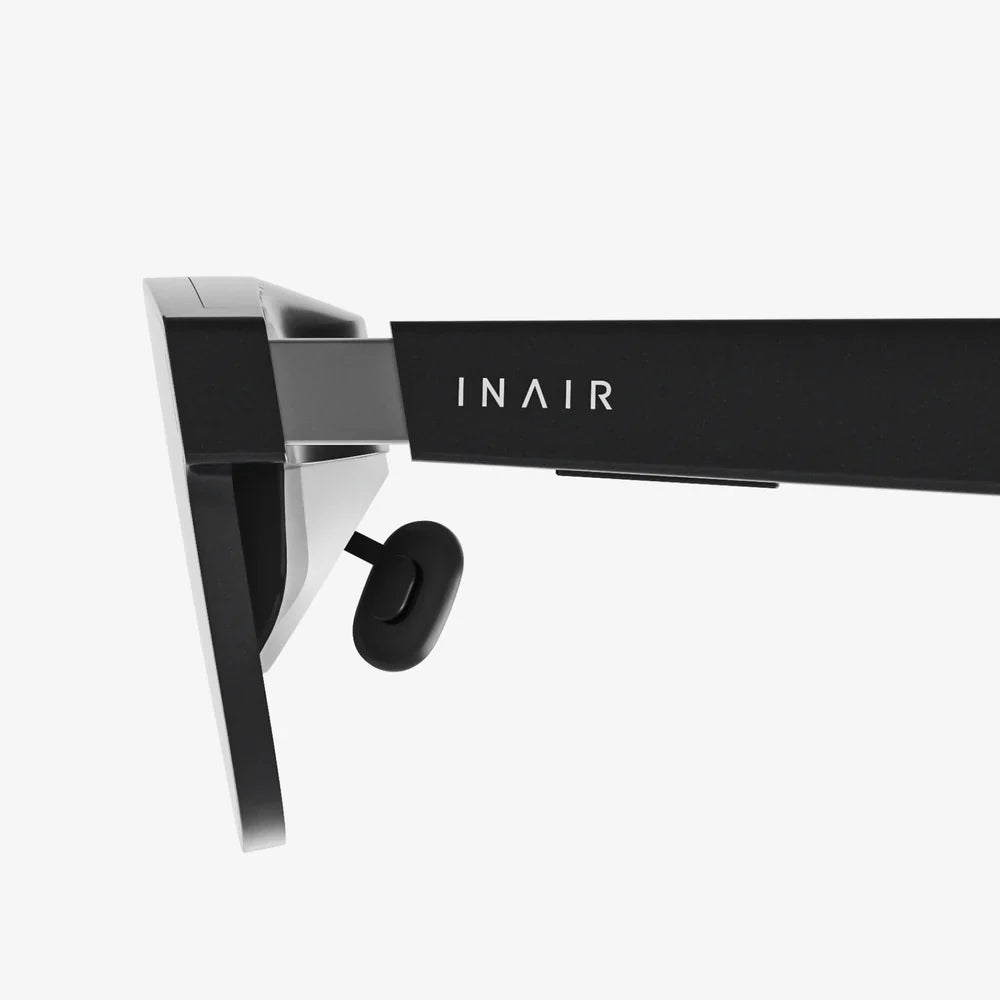
For AR: The hardware can be more varied. It ranges from simple smartphones and tablets, which use their cameras and screens to act as a window for augmented content, to more advanced dedicated eyewear. These smart glasses or headsets use transparent lenses or cameras to pass through a view of the real world, upon which they project digital imagery. This requires incredibly precise tracking and understanding of the physical environment, often achieved through simultaneous localization and mapping (SLAM) algorithms, which use cameras and sensors to map the room and place digital objects persistently within it.
The Software That Breathes Life
On the software side, powerful game engines are the unsung heroes. These platforms provide the tools to build, render, and animate the complex 3D worlds and objects that users see. They handle the immense computational tasks of physics simulation, lighting, and real-time rendering at high frame rates—a necessity to prevent motion sickness and maintain immersion. For AR, the software must also excel at computer vision, the field of AI that enables devices to recognize surfaces, objects, and spatial boundaries to anchor digital content convincingly.
A Spectrum of Experiences: Understanding the XR Continuum
While AR and VR are often discussed as distinct entities, they are better understood as two points on a broader spectrum known as Extended Reality (XR). This continuum encompasses all combined real-and-virtual environments.
On one far end, you have the complete reality of the physical world. On the opposite end, you have a fully virtual reality. In between, there exists a blend of both, often referred to as Mixed Reality (MR). MR is a more advanced form of AR where digital objects don't just appear superimposed but can interact with and be occluded by the real world. A virtual character that walks behind your real sofa, or a digital ball that bounces off your real wall, are hallmarks of a true Mixed Reality experience. This highlights that AR VR stands for a family of technologies that are increasingly converging, rather than operating in isolation.
Transforming Industries: The Practical Power of AR and VR
The applications of AR and VR extend far beyond entertainment, penetrating and revolutionizing core sectors of the global economy.
Revolutionizing Education and Training
Imagine medical students practicing complex surgical procedures on virtual patients, making mistakes and learning without any risk to human life. VR makes this possible. Trainee mechanics can learn to repair complex machinery by following interactive AR instructions overlaid directly onto the equipment, highlighting each part and step in the process. History students can take a VR field trip to ancient Egypt, walking through the temples and seeing them in their original glory. This shift from abstract learning to experiential, hands-on training dramatically improves retention and understanding.
Redefining Healthcare
In healthcare, AR is being used to give surgeons "X-ray vision," projecting CT scan data and critical information like the location of tumors and blood vessels directly onto the patient during an operation. VR is proving to be a powerful tool for pain management, distracting burn victims during painful wound care procedures. It's also at the forefront of mental health treatment, used for exposure therapy to help patients safely confront and overcome phobias and PTSD in a controlled, virtual environment.
Supercharging Enterprise and Manufacturing
On factory floors, AR smart glasses can provide workers with real-time data, schematics, and remote expert assistance, freeing their hands and drastically reducing errors. Designers and architects use VR to walk clients through virtual prototypes of buildings and products long before ground is broken or a single physical prototype is built, saving immense time and resources. This allows for collaborative design reviews where stakeholders from around the world can meet inside the same virtual model.
The Future of Retail and Remote Work
AR is changing how we shop. Customers can use their phones to see how a new sofa would look in their living room or how a pair of glasses would look on their face before making a purchase. For remote work, VR promises the ultimate virtual office—a shared space where distributed teams can collaborate on 3D models, brainstorm on virtual whiteboards, and interact with a sense of presence that video calls simply cannot replicate, fostering a stronger sense of connection and teamwork.
Challenges and Considerations on the Road to Adoption
Despite the immense potential, the path forward for AR and VR is not without significant hurdles.
Technical Limitations: For VR, achieving perfect visual fidelity, eliminating motion sickness for all users, and creating untethered headsets with all-day battery life and processing power remain challenges. For AR, the holy grail is creating eyewear that is socially acceptable—lightweight, stylish, and with a wide field of view—while packing in enough battery and computing power to run complex applications.
The Social and Ethical Dimension: As these technologies become more pervasive, new questions arise. How do we protect privacy in a world where devices with always-on cameras and microphones are worn in public and private spaces? What are the psychological effects of long-term immersion in virtual worlds or constant augmentation of reality? How do we prevent the creation of a digital divide between those who can afford access to these new realities and those who cannot? These are profound questions that society must grapple with as the technology evolves.
The Future is Already Here: What's Next on the Horizon
The trajectory of AR and VR points toward a future where the boundary between the digital and physical worlds becomes increasingly porous. We are moving toward more intuitive interfaces, moving beyond controllers to full hand-tracking, eye-tracking, and eventually brain-computer interfaces that will allow us to manipulate digital content with our thoughts. The concept of the "spatial web" or "metaverse"—a persistent, shared, and interconnected network of virtual spaces—is becoming a central focus for the industry, promising a new paradigm for social interaction, commerce, and entertainment.
Ultimately, AR and VR stand for a new lens through which we will experience computation. It's a shift away from looking at a screen to living inside the information. It’s about context and presence, about making data visceral and interaction intuitive. This isn't just the next iteration of the smartphone; it's a foundational technology that has the potential to become as integral to our daily lives as the internet itself, seamlessly blending our physical and digital existences in ways we are only beginning to imagine.
The journey into these new realities has just begun, and the definitions of AR and VR will continue to expand and evolve. The question is no longer what these acronyms stand for, but what we, as a society, will choose to build with them. The potential to enhance human capability, bridge vast distances, and solve complex problems is literally at our fingertips. The next time you see someone interacting with the air around them, remember—they might not be waving at nothing; they might be sculpting a new reality, one that is slowly, inevitably, becoming our own.
Share:
Can I Wear Glasses With VR? The Ultimate Guide to a Clear Virtual Reality
AI Glasses For Sale: The Ultimate Guide to the Next Evolution in Wearable Technology