


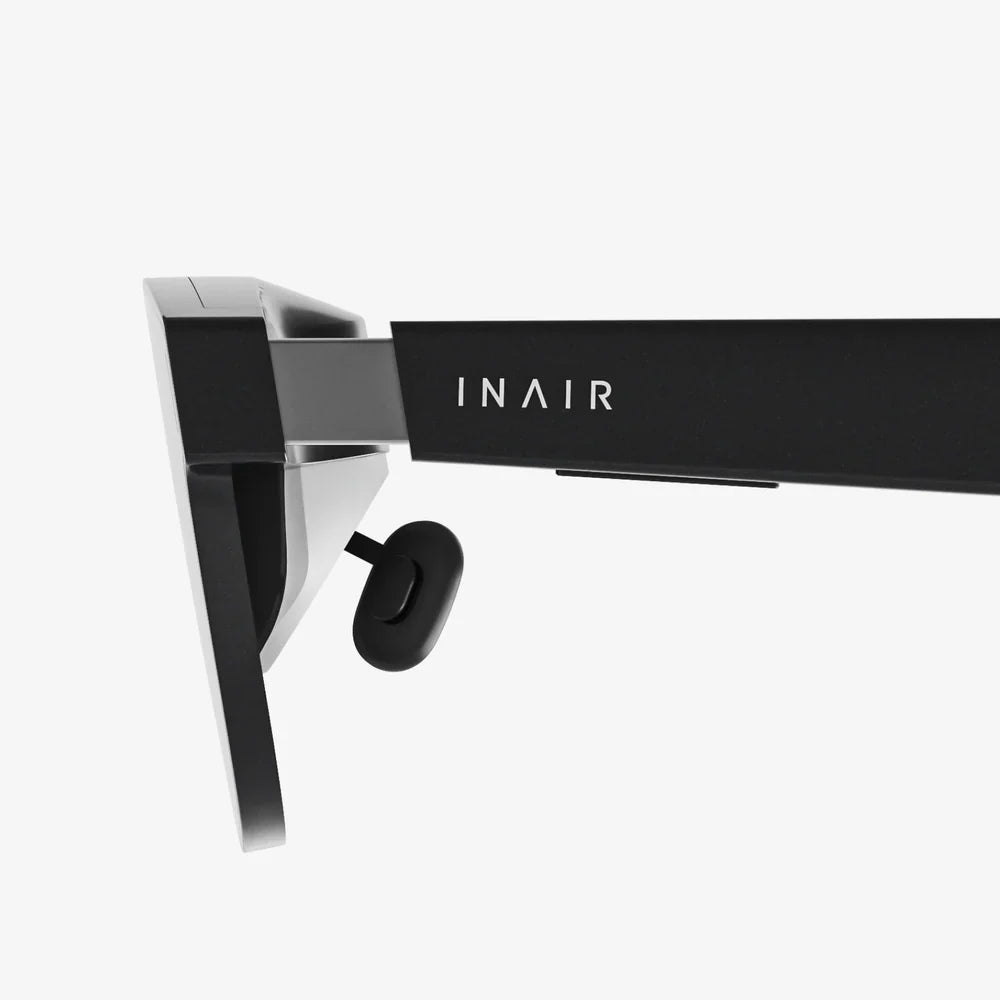
Imagine a world where information doesn't live on a screen in your hand, but floats seamlessly in your field of vision. Where language barriers dissolve as subtitles appear beneath a speaking foreigner, where you never forget a name because a digital reminder hovers near every face, and where complex data is visualized right before your eyes. This isn't a scene from a science fiction movie; it’s the burgeoning reality made possible by AI glasses. The promise is intoxicating: a frictionless merger of the digital and physical realms, an intuitive extension of human capability. But to understand this future, we must first answer the fundamental question: how do these sophisticated devices actually function? The magic isn't just in the lenses; it's in a symphony of advanced hardware and intelligent software working in perfect, invisible harmony.
The Hardware Foundation: The Eyes and Ears of the System
At their core, AI glasses are a feat of miniaturization, packing a powerful array of sensors and components into a form factor light enough to wear all day. This hardware suite acts as the device's perceptual system, gathering raw data about the world around you.
Optical Systems and Displays
This is the most critical and varied component, defining how digital information is presented to the user. Unlike virtual reality headsets that completely obscure your vision, AI glasses use optical systems designed for augmented reality (AR), overlaying graphics onto the real world. Several technologies dominate:
- Waveguide Displays: The most common method in high-end devices. Light from a micro-LED or laser projector is injected into a thin, transparent piece of glass or plastic (the waveguide). This light travels through the material via total internal reflection before being directed out towards the user's eye by sophisticated optical structures like diffraction gratings. This allows for a sleek, eyeglasses-like design while projecting a bright, clear image.
- Birdbath Optics: This system uses a beamsplitter (the "birdbath") and a spherical mirror to fold the light path from a micro-display into the user's eye. It often offers a wider field of view but can result in a slightly bulkier form factor compared to waveguides.
- Retinal Projection: A more experimental approach where a low-power laser scans an image directly onto the user's retina. This can create a image that appears incredibly sharp and is always in focus, regardless of the user's eyesight, but presents significant engineering and safety challenges.
Sensors: Perceiving the Environment
For the AI to understand and interact with the world, it needs data. This is gathered by a sophisticated sensor array typically including:
- Cameras: High-resolution RGB cameras capture visual data for tasks like object recognition, text scanning, and photography. Depth-sensing cameras, often using structured light or time-of-flight (ToF) technology, measure the distance to objects, creating a 3D map of the environment. This is crucial for placing digital objects realistically in space.
- Inertial Measurement Units (IMUs): These are the workhorses of motion tracking. A combination of accelerometers, gyroscopes, and magnetometers tracks the precise movement, rotation, and orientation of the glasses themselves with incredible speed and accuracy.
- Microphones: An array of microphones is used not just for voice commands and calls, but also for audio beamforming. This technology allows the glasses to focus on the sound coming from the user's mouth while filtering out background noise, enabling clear voice interactions even in noisy environments.
- Other Sensors: Ambient light sensors adjust display brightness, and proximity sensors detect when the glasses are being worn, conserving battery life.
Processing and Connectivity
Raw sensor data is useless without a brain to process it. This happens in two places:
- On-Device Processing: A dedicated System-on-a-Chip (SoC) within the glasses handles immediate, low-latency tasks like sensor fusion (combining data from the IMU and cameras for stable tracking), basic voice recognition wake-words, and managing the display. This processor is optimized for extreme power efficiency.
- Off-Device (Cloud) Processing: For complex AI tasks—like translating a full sentence, identifying a rare flower, or searching the web—the glasses act as a client. They stream data via Wi-Fi or cellular connectivity (often tethering to a smartphone) to powerful cloud servers. These servers run massive AI models and return the results almost instantaneously.
Power and Audio
All this technology demands power. AI glasses use compact, high-density batteries often integrated into the temples. Efficient power management is paramount. For audio, instead of traditional speakers, many use bone conduction or open-ear audio systems that direct sound into the ear canal without blocking ambient noise, allowing the user to stay aware of their surroundings.
The Software and AI: The Brain Behind the Lenses
Hardware collects the data, but software and artificial intelligence give it meaning. This is where the true magic of "AI glasses" happens.
Computer Vision: Teaching Machines to See
This field of AI is fundamental. Using neural networks trained on millions of images, the software can:
- Identify and Classify Objects: It can distinguish a dog from a cat, a car from a bicycle, and a specific brand of cereal box on a shelf.
- Perform Text Recognition (OCR): It can read text from documents, signs, and menus, enabling real-time translation or information extraction.
- Enable Simultaneous Localization and Mapping (SLAM): This is the true killer app for spatial awareness. SLAM algorithms use the camera and IMU data to simultaneously map an unknown environment and track the glasses' position within that map in real-time. This allows digital content to be "pinned" to a physical wall or tabletop and stay there as you move around.
- Facilitate Facial Recognition: With appropriate privacy safeguards and user consent, the AI can identify individuals, pulling up their name and context from a digital contact list.
Natural Language Processing (NLP) and Voice AI
Voice is the primary interface. NLP models convert spoken words into text, understand the intent behind the command (e.g., "Hey [Assistant], what's that building?" versus "Set a timer for 10 minutes"), and generate appropriate, conversational responses. This allows for hands-free, intuitive control.
The Operating System and Applications
A specialized operating system (often a variant of mobile OSes) ties everything together. It manages the resources, provides APIs for developers, and runs applications specifically designed for an augmented reality context. These apps leverage the device's unique capabilities—its always-available camera, display, and sensors—to deliver experiences impossible on a smartphone.
The User Experience: A Seamless Symphony in Action
So, how does this all come together from a user's perspective? Let's walk through a few scenarios:
Scenario 1: Real-Time Translation
- You look at a Japanese menu. The cameras continuously capture the visual feed.
- The on-device processor uses its computer vision model to identify the block of text and runs Optical Character Recognition (OCR) to convert the image of text into digital characters.
- This digital text is securely sent to a cloud-based AI translation model.
- The model translates the Japanese text to English and sends the translated text back to the glasses.
- The glasses' display system (e.g., waveguide) projects the English text, perfectly aligned and overlaid on top of the original menu items in your field of view. This entire process happens in near real-time, creating the illusion of the world translating itself before your eyes.
Scenario 2: Navigation and Contextual Information
- You ask, "How do I get to the central station?"
- The microphones pick up your voice, and the audio beamforming isolates it from street noise.
- The on-device NLP chip detects the wake-word and streams the audio to the cloud for full processing.
- The cloud AI interprets the query, calculates a route, and sends back turn-by-turn instructions as a series of data points.
- The glasses' SLAM system understands your precise location and orientation. It uses the waveguide display to project glowing arrows onto the sidewalk at your feet, indicating exactly where to turn. As you walk, it can also highlight points of interest—like a highly-rated café—by placing a floating digital tag above its door.
Scenario 3: Productivity and Assistance
- You are repairing a complex piece of equipment. A digital instruction manual is open in your AR workspace.
- Using SLAM, you "pin" the schematic diagram to the wall next to you, where it stays locked in place.
- As you look at a specific component on the machine, the computer vision model recognizes the part. It cross-references this with the manual and highlights the next step in your procedure, displaying it right next to the component you're holding.
- You can use voice commands to scroll through the manual or take a hands-free video of the process for later review.
Challenges and The Road Ahead
Despite the incredible technology, significant hurdles remain. Battery life is a constant battle against the power demands of sensors and processors. Form factor and style are improving but achieving a truly normal-looking pair of glasses with all this tech inside is a monumental engineering challenge. Social acceptance and privacy concerns are paramount; the presence of always-on cameras raises legitimate questions about surveillance and etiquette that society and lawmakers are only beginning to grapple with. Furthermore, creating interfaces that feel intuitive and not overwhelming is a delicate design balance.
Yet, the trajectory is clear. Processors will become more efficient, batteries more dense, and displays brighter and cheaper. AI models will grow more capable and faster. We are moving from clunky prototypes toward a future where powerful, discreet, and socially acceptable AI glasses become as ubiquitous as the smartphone, offering a fundamentally new way to learn, work, and connect with the world around us. They represent not just a new device, but a new platform for human-computer interaction.
The true potential of AI glasses lies not in isolating us in a digital bubble, but in unlocking a deeper, more informed engagement with our immediate physical reality. They promise to be the ultimate tool for enhancing human perception, turning every glance into an opportunity to learn, navigate, and create. This isn't just about having a screen closer to your face; it's about redefining your relationship with information itself, making the knowledge of the digital world an intuitive and immediate layer atop everything you see. The future is looking right back at you, and it's ready to help.
Share:
AR VR XR: The Ultimate Guide to the Immersive Technology Revolution
VR Glasses for Work: The Dawn of the Immersive Office and Its Revolutionary Potential