


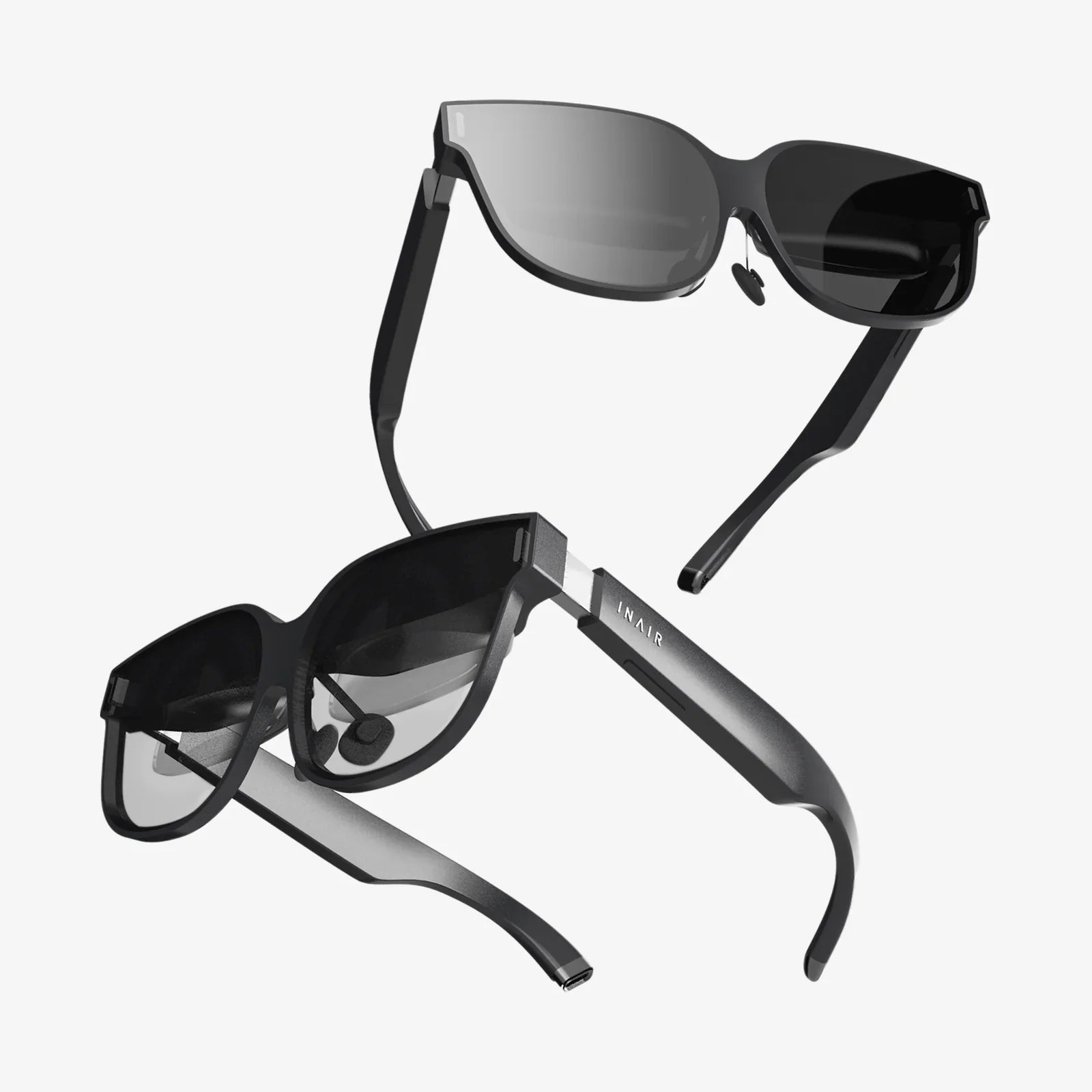
Imagine a world where the digital and physical seamlessly intertwine, where you can learn complex surgery by practicing on a holographic heart, explore ancient ruins from your living room, or see how a new sofa would look in your home before you buy it. This is no longer the realm of science fiction; it is the burgeoning reality being built by the powerful trio of immersive technologies: AR, VR, and XR. This revolution is poised to reshape everything from entertainment and education to manufacturing and medicine, and understanding it is key to navigating the future.
Demystifying the Acronyms: A Spectrum of Experience
While often used interchangeably, AR, VR, and XR represent distinct points on a spectrum of immersive technology. Understanding their differences is the first step to appreciating their individual and collective potential.
Virtual Reality (VR): The Complete Digital Escape
Virtual Reality is the most immersive of the three, designed to fully transport the user into a completely computer-generated environment. By wearing a head-mounted display that covers the user's entire field of vision, VR blocks out the physical world and replaces it with a digital one. This environment can be a photorealistic simulation of a real place or a fantastical landscape born from pure imagination.
The core principle of VR is presence—the convincing sensation of being physically present in a non-physical world. This is achieved through a combination of sophisticated technology:
- Head-Mounted Displays (HMDs): These devices contain high-resolution screens for each eye, creating a stereoscopic 3D effect.
- Tracking Systems: Using external sensors or internal cameras and gyroscopes, these systems track the user's head movements (rotational and positional tracking) in real-time, adjusting the perspective in the virtual world accordingly. This prevents disorientation and reinforces the feeling of being inside the simulation.
- Controllers: Handheld controllers tracked in 3D space allow users to interact naturally with the virtual environment, picking up objects, pushing buttons, and gesturing.
Initially championed by the gaming industry, VR's applications have exploded far beyond. It is now a powerful tool for immersive training simulations for pilots, surgeons, and soldiers, allowing them to practice high-risk procedures in a consequence-free environment. Architects and real estate agents use VR to conduct virtual walkthroughs of unbuilt homes and properties across the globe.
Augmented Reality (AR): Enhancing Your World
If VR is about replacement, Augmented Reality is about augmentation. AR overlays digital information—images, text, 3D models, and animations—onto the user's view of the real world. Instead of being taken to a new environment, the existing environment is enhanced with a digital layer.
AR experiences are most commonly accessed through everyday devices like smartphones and tablets, using their cameras to display digital content on the screen. However, more advanced AR is delivered through specialized glasses or smart lenses that project information directly into the user's field of vision, leaving their hands free.
The magic of AR lies in its contextuality and accessibility. The digital content is anchored to and interacts with the real world. For instance, you can point your phone at a restaurant and see its reviews float above the door, or use an app to see how a new tattoo might look on your arm. Key technologies enabling this include:
- Computer Vision: This allows the device to understand and interpret the environment, recognizing surfaces, objects, and spatial geometry.
- Simultaneous Localization and Mapping (SLAM): This complex algorithm allows a device to map an unknown environment while simultaneously tracking its own location within that space. This is crucial for placing digital objects persistently in the real world.
From navigation arrows painted onto the road in your windshield to interactive learning manuals for complex machinery, AR is fundamentally about providing information and interaction exactly when and where it is needed.
Extended Reality (XR): The Umbrella Term for It All
Extended Reality is not a separate technology but an umbrella term that encompasses all real-and-virtual combined environments and human-machine interactions generated by computer technology. It includes AR, VR, and everything in between.
XR represents the entire spectrum, from the completely real to the completely virtual. This concept is often visualized using the Virtuality Continuum, a concept introduced by Paul Milgram and Fumio Kishino in 1994. On one end you have the real environment, and on the other, a fully virtual environment. Mixed Reality (MR) exists in the middle, where real and digital objects co-exist and can interact in real-time.
XR is the preferred term for the industry as a whole because it acknowledges that these technologies are not siloed. They are converging, with AR devices incorporating more immersive VR-like capabilities and VR headsets adding cameras to blend the real world into the virtual—a concept often called pass-through AR. XR is the future-forward term that describes the blended world we are moving towards.
The Engine Room: Core Technologies Powering Immersion
The magic of XR doesn't happen by accident. It is powered by a suite of advanced technologies working in concert.
Sensory Hardware: Gateways to New Realities
The hardware is the user's direct conduit to the experience. Beyond the displays themselves, this includes:
- Haptic Feedback Systems: These devices provide tactile sensations, from simple vibrations in controllers to advanced gloves and suits that simulate the feeling of touch, pressure, and temperature, profoundly deepening immersion.
- Inside-Out vs. Outside-In Tracking: Outside-in tracking uses external sensors placed around a room to precisely track the HMD and controllers. Inside-out tracking, now the standard, uses cameras on the HMD itself to map the environment and track its own position, making setup easier and untethering the user from a specific play area.
- Eye and Hand Tracking: Advanced headsets now include cameras that track eye movement and hand gestures. This allows for more intuitive interaction (grabbing virtual objects with your actual hands) and enables foveated rendering, where the highest detail is rendered only where the user is looking, drastically improving performance.
The Computational Backbone: Processing Immense Data
Creating believable, interactive worlds in real-time requires immense computational power. This happens through a combination of:
- Mobile Processors: For standalone headsets and mobile AR, powerful, energy-efficient systems-on-a-chip (SoCs) handle the processing on the device itself.
- Cloud Computing and 5G: The high bandwidth and low latency of advanced wireless networks are game-changers. They allow for cloud rendering, where the heavy computational lifting is done on remote servers and the visual stream is sent to the headset, enabling incredibly complex experiences on lighter, more affordable hardware.
- Artificial Intelligence and Machine Learning: AI is the brain behind the operation. It powers the computer vision that understands scenes, enables realistic avatars and NPCs (non-player characters), and can generate dynamic content and environments on the fly.
Transforming Industries: The Practical Power of XR
The true value of AR, VR, and XR is revealed in their transformative applications across the global economy.
Revolutionizing Education and Training
XR is turning passive learning into active, experiential discovery. Medical students can dissect virtual cadavers and practice intricate surgical procedures. History classes can take virtual field trips to the Colosseum at the height of the Roman Empire. Mechanics can train on virtual engines, with parts and instructions overlaid directly onto their workspace. This hands-on, mistake-forgiving environment accelerates learning and improves retention dramatically.
Redefining Enterprise and Manufacturing
On factory floors and in corporate offices, XR is driving efficiency and innovation. Remote experts can see what a field technician sees through AR glasses and annotate their view to guide them through a repair, reducing downtime and travel costs. Designers and engineers can collaborate in real-time on 3D holographic models of new products, making changes and iterations instantly. This digital twin technology allows for entire factories to be designed and optimized in virtual space before a single physical machine is moved.
The Future of Healthcare
Beyond training, XR is becoming a direct tool for treatment and therapy. VR is used for exposure therapy to help patients overcome phobias and PTSD in a controlled, safe setting. It is also a powerful tool for pain management, distracting patients during painful procedures. Surgeons use AR to overlay patient data, such as MRI scans, directly onto their field of view during operations, providing critical information without looking away from the patient.
New Frontiers in Retail and Commerce
The try-before-you-buy concept is being redefined. Customers can use AR to see how furniture fits and looks in their home, how clothes fit their avatar, or how a new shade of paint would transform a room. Car buyers can explore every detail of a vehicle's interior in VR without visiting a dealership. This not only enhances customer confidence but also reduces return rates.
Navigating the Challenges: The Path to Mass Adoption
Despite its potential, the XR industry must overcome significant hurdles to achieve widespread adoption.
- Hardware Limitations: For true immersion, headsets need to be lighter, more comfortable, have longer battery life, and offer higher-resolution displays—all while remaining affordable. The quest for the perfect form factor, whether glasses-like or otherwise, continues.
- User Experience and Accessibility: Issues like motion sickness in VR, intuitive user interfaces, and creating experiences that are valuable and easy to use for a non-technical audience are critical. The technology must fade into the background to let the experience shine.
- Social and Ethical Considerations:
The rise of persistent virtual worlds and always-on AR glasses raises profound questions about privacy, data security, and the psychological effects of blending realities. Who owns the data collected about your home through AR? How do we prevent the creation of a digital divide between those who can access these technologies and those who cannot? Establishing ethical frameworks and robust regulations is essential for building a healthy XR ecosystem.
The Blended Future: Where Are We Headed?
The ultimate trajectory of AR, VR, and XR is not towards three separate paths, but towards a convergence. We are moving towards a future of spatial computing, where digital information is not confined to screens but is integrated into the fabric of our physical lives, accessible through lightweight, ubiquitous glasses.
In this future, your digital workspace could be a 360-degree environment around you, with documents, screens, and communication windows placed wherever you want. Your social interactions could happen in virtual spaces that feel as tangible as physical ones, with photorealistic avatars conveying genuine emotion. The very way we interface with data and with each other will be transformed.
This evolution will be gradual, driven by continuous innovation in semiconductors, optics, networking, and AI. It will shift from being a novelty to a utility, and eventually to an indispensable part of our daily lives, as integral as the smartphone is today.
The lines between what is real and what is digital are not just blurring—they are being deliberately and creatively woven together. AR, VR, and XR are the shuttles and looms for this new fabric of reality, offering a canvas for human creativity and problem-solving that is literally boundless. The question is no longer if this future will arrive, but how quickly we can adapt to its possibilities and shape it responsibly. The door to these new worlds is now open, and the journey inside is the next great adventure.
Share:
Artificial Intelligence Augmented Reality: The Symbiotic Future Reshaping Our World
AI Glasses How Do They Work: A Deep Dive Into The Future On Your Face