


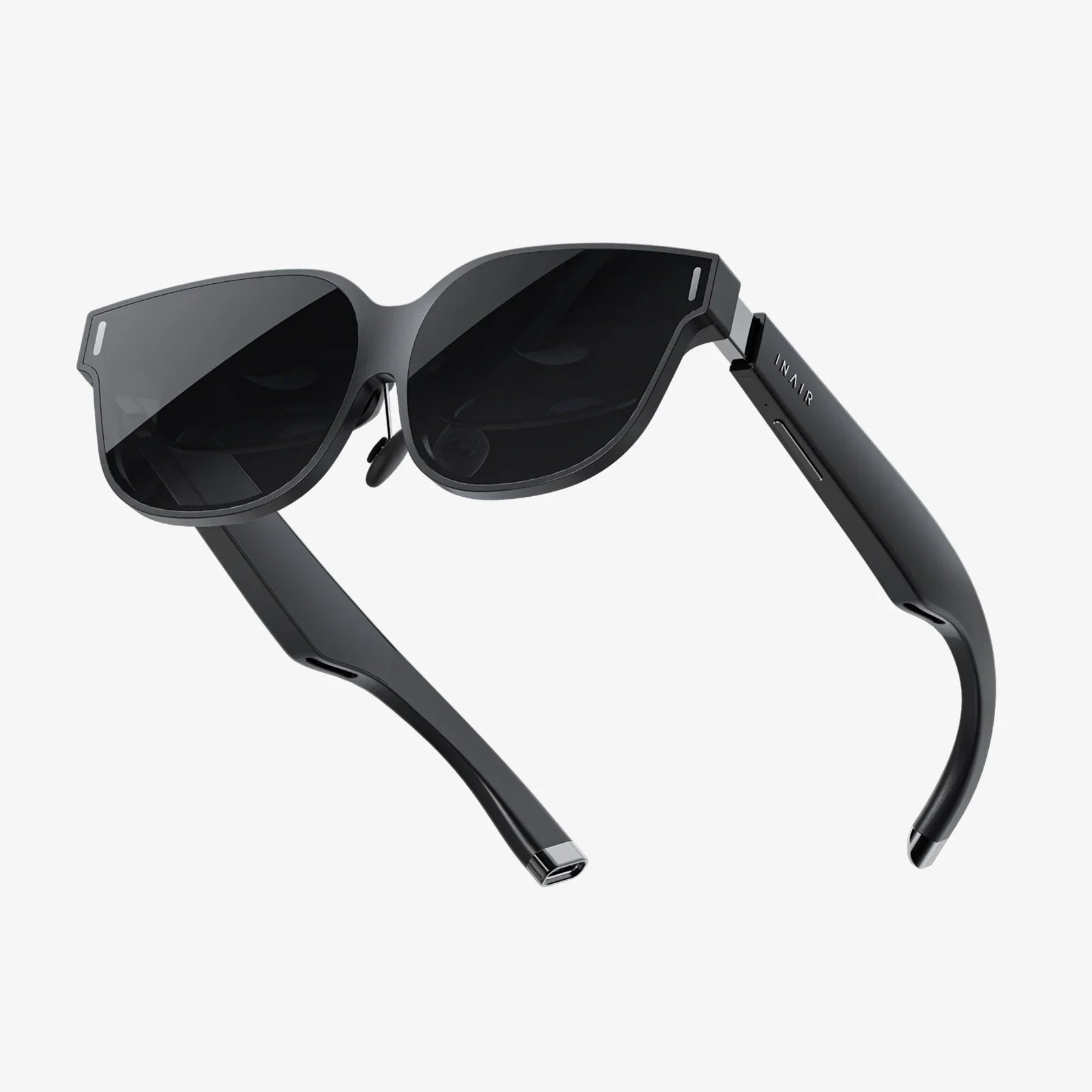
Imagine a world where information floats seamlessly before your eyes, where language barriers dissolve with a whisper, and your surroundings are overlaid with a digital intelligence that understands your every need. This is no longer the realm of science fiction; it's the promise of AI glasses, a technological revolution that is slowly but surely making its way to the Nigerian market. For the tech-savvy, the curious, and the forward-thinking Nigerian consumer, the burning question isn't just about what these devices can do, but rather, what does it cost to step into this augmented future? The quest to understand the AI glasses price in Nigeria is a journey through a complex landscape of cutting-edge innovation, daunting import logistics, and a market poised for explosive growth.
Deconstructing the Cost: Why Are AI Glasses Priced the Way They Are?
To truly grasp the AI glasses price in Nigeria, one must first look beyond the final price tag. These are not simple spectacles; they are sophisticated wearable computers packed with advanced technology. The cost is a sum of numerous intricate parts and extensive research and development.
The Core Technological Components:
- Micro-Displays and Optical Systems: This is the magic window to augmented reality. Whether using waveguide technology, micro-OLED, or Laser Beam Scanning, these systems project digital images onto the lenses. They are incredibly complex to manufacture and represent a significant portion of the cost.
- Processing Units: AI glasses require a powerful, miniaturized System-on-a-Chip (SoC) to handle complex tasks like computer vision, neural processing, and real-time data analysis. This computational power is essential for a smooth AR experience.
- Sensor Suite: A typical pair of high-end AI glasses is equipped with a plethora of sensors: high-resolution cameras, depth sensors, inertial measurement units (IMUs), microphones, and sometimes LiDAR scanners. These sensors allow the device to understand its environment, track movement, and capture data.
- Battery Technology: Powering all this technology requires a compact, long-lasting battery. Developing efficient power management systems for such a small form factor is a major engineering challenge that adds to the expense.
- AI and Software Platform: The hardware is useless without the intelligent software that drives it. The cost includes the development of sophisticated algorithms for object recognition, natural language processing, spatial mapping, and the user interface.
The Nigerian Market Factor:
Once the base manufacturing cost is set, several local factors dramatically influence the final AI glasses price in Nigeria.
- Import Duties and Taxes: Nigeria's import regime adds a substantial levy on electronics. Customs duties, Value Added Tax (VAT), and other levies can increase the landed cost by 20% to 35% or more, depending on the product's classification.
- Logistics and Shipping: Transporting fragile, high-value electronics from manufacturing hubs in East Asia to Nigeria involves significant costs for air freight, insurance, and handling by local clearing agents.
- Foreign Exchange (FX) Fluctuations: The volatility of the Naira against the US Dollar is perhaps the single biggest determinant of price. Retailers often price their goods based on the prevailing parallel market rate to hedge against future devaluation, leading to higher consumer prices.
- Retail Markup and Warranty: Local distributors and retailers need to cover their operational costs, make a profit, and often provide some form of local customer support or warranty service, which is factored into the final price.
The Nigerian AI Glasses Market Landscape: Official vs. Grey Market
When searching for AI glasses in Nigeria, consumers will encounter two primary channels, each with its own price implications and risks.
The Official Channel: This involves authorized distributors or international e-commerce platforms that ship directly to Nigeria. The advantages are clear: manufacturer warranty, genuine products, and reliable customer support. The downside is that this is often the most expensive route due to full compliance with import regulations and taxes. You are paying for peace of mind and legitimacy.
The Grey Market: This is a dominant force in the Nigerian electronics market. Individuals and small businesses import devices, often in small quantities, and sell them through online marketplaces or social media. The AI glasses price in Nigeria via the grey market can be significantly lower, as sellers may bypass official import channels and some duties. However, the risks are substantial:
- No Warranty: The manufacturer's warranty is typically invalid for grey market goods.
- Risk of Counterfeits: There is a higher chance of receiving refurbished, used, or even counterfeit products.
- No Local Support: If the device malfunctions, you have no recourse for repairs or support.
- Potential for Customs Issues: If the seller did not properly clear the item, you might be liable for unexpected customs charges upon delivery.
AI Glasses Price in Nigeria: A Tiered Breakdown
The market can be segmented into three broad tiers, each catering to different needs and budgets. Prices are estimates and subject to constant change due to FX fluctuations.
1. Entry-Level and Smart Glasses (₦50,000 - ₦200,000)
This category doesn't feature full augmented reality but incorporates AI-driven functionalities through a simpler display or connects to a smartphone. They are primarily focused on notifications, basic translations, audio, and hands-free photography.
- Features: Basic monochrome or simple color displays, built-in speakers and microphones, touch controls, smartphone dependency.
- Use Cases: Receiving notifications, controlling music, taking photos and videos, simple language translation, listening to podcasts.
- Price Justification: Lower cost due to less complex optical systems and processing power. They are more akin to a powerful Bluetooth headset with a visual element.
- Nigerian Market Position: This is the most accessible tier for the average Nigerian tech enthusiast. Prices here are heavily influenced by FX rates and can often be found on e-commerce platforms like Jumia or Konga, though stock is inconsistent.
2. Mid-Range AR Glasses (₦200,000 - ₦600,000)
This tier represents a significant step up, offering true optical see-through augmented reality. They often function as standalone devices or companion products to computers and consoles for a portable large-screen experience.
- Features: Higher-resolution color displays, better field of view, spatial tracking, more advanced sensors, standalone or tethered operation.
- Use Cases: Mobile computing (virtual monitors), immersive gaming, basic AR applications for navigation and information display, remote assistance.
- Price Justification: The jump in price is due to superior waveguide technology, better processors, and more sophisticated software for spatial awareness.
- Nigerian Market Position: This is a niche market, primarily targeting developers, tech professionals, and serious gamers. Purchases are almost exclusively made through international online stores or specialized grey market vendors. The final price is highly sensitive to shipping and customs costs.
3. High-End Enterprise & Developer Kits (₦600,000 and Above)
At the pinnacle of the market are devices designed for industrial, medical, and professional use. These are not consumer products but powerful tools for businesses.
- Features: Top-tier displays with the widest field of view, advanced depth sensors, industrial-grade build quality, enterprise-grade software and security, specialized SDKs for developers.
- Use Cases: Complex assembly line instructions, remote expert guidance for field engineers, advanced medical imaging, architectural and engineering design visualization.
- Price Justification: The cost reflects cutting-edge, often custom-built technology, robust construction, and specialized software licenses. The value proposition is based on ROI for businesses, not consumer entertainment.
- Nigerian Market Position: Procurement for these devices is done directly by corporations, government agencies, or universities. The price is often negotiated and includes enterprise support and service contracts. They are rarely available through retail channels.
Beyond the Purchase: Hidden Costs of Owning AI Glasses in Nigeria
The initial purchase is just the beginning. Prospective buyers must budget for ongoing expenses.
- Data Costs: Many AI functionalities, especially real-time translation and cloud-based processing, are data-intensive. With the high cost of mobile data in Nigeria, this can become a significant recurring expense.
- Accessories: Additional prescription lenses (if needed), specialized cases, alternative nose pads, and external battery packs can add tens of thousands of Naira to the total cost of ownership.
- Software Subscriptions: Some advanced features or professional applications may require monthly or annual subscriptions to unlock their full potential.
- Repair and Maintenance: Given their fragility, a broken display or damaged sensor can be catastrophic. Without local service centers, repairs might involve shipping the device abroad at great expense and risk.
Future Trends: Will AI Glasses Become More Affordable in Nigeria?
The trajectory of technology is towards miniaturization and cost reduction. As the components for AI glasses become more mass-produced, their base price will inevitably fall. However, for the Nigerian market, local economic factors will play an equally important role. A more stable Naira and more favorable import policies for technology could dramatically reduce the final price for consumers. Furthermore, increased competition as more manufacturers enter the space will also drive prices down and features up. The next 3-5 years are likely to see a significant expansion of the mid-range market, making the technology more accessible than ever before.
Making the Right Choice: A Buyer's Checklist for Nigeria
Before investing a small fortune, Nigerian consumers should carefully consider their needs:
- Define Your Primary Use: Are you a developer, a professional needing remote support, a gamer, or just a tech enthusiast? This will determine the necessary tier.
- Set a Realistic Budget: Factor in not just the device cost, but also import duties, shipping, and potential hidden costs.
- Research the Seller: If buying from a grey market vendor, scrutinize their reviews and reputation. For high-value items, prefer established platforms with buyer protection.
- Verify Compatibility: Ensure the glasses work with your existing ecosystem of devices (smartphone OS, computer, etc.).
- Consider the Connectivity: Check network band compatibility for models with cellular connectivity to ensure they work on Nigerian mobile networks.
- Plan for Support: Understand what you will do if the device breaks. Is there any local repair option, or will you need to ship it out?
The landscape of AI glasses price in Nigeria is a dynamic and complex one, a direct reflection of both global innovation and local economic realities. It represents a premium for early adopters, a necessary investment for enterprises, and a glimpse into a future that is rapidly becoming the present. For those willing to navigate its challenges, the reward is the opportunity to wear the future on their face, to see the world not just as it is, but as it could be, infused with intelligence and possibility.
As the sun sets over Lagos, the city's vibrant energy is a testament to Nigeria's relentless embrace of the new. Soon, amidst the bustling streets and thriving tech hubs, the flicker of augmented displays will begin to appear in the vision of pioneers, developers, and dreamers. The question of AI glasses price in Nigeria is your first step into this augmented dawn—an investment not just in a device, but in being among the first to truly see what comes next.
Share:
Augmented Reality Smart Glasses Price: The True Cost of Seeing the Future
Augmented Reality Smart Glasses Price: The True Cost of Seeing the Future