


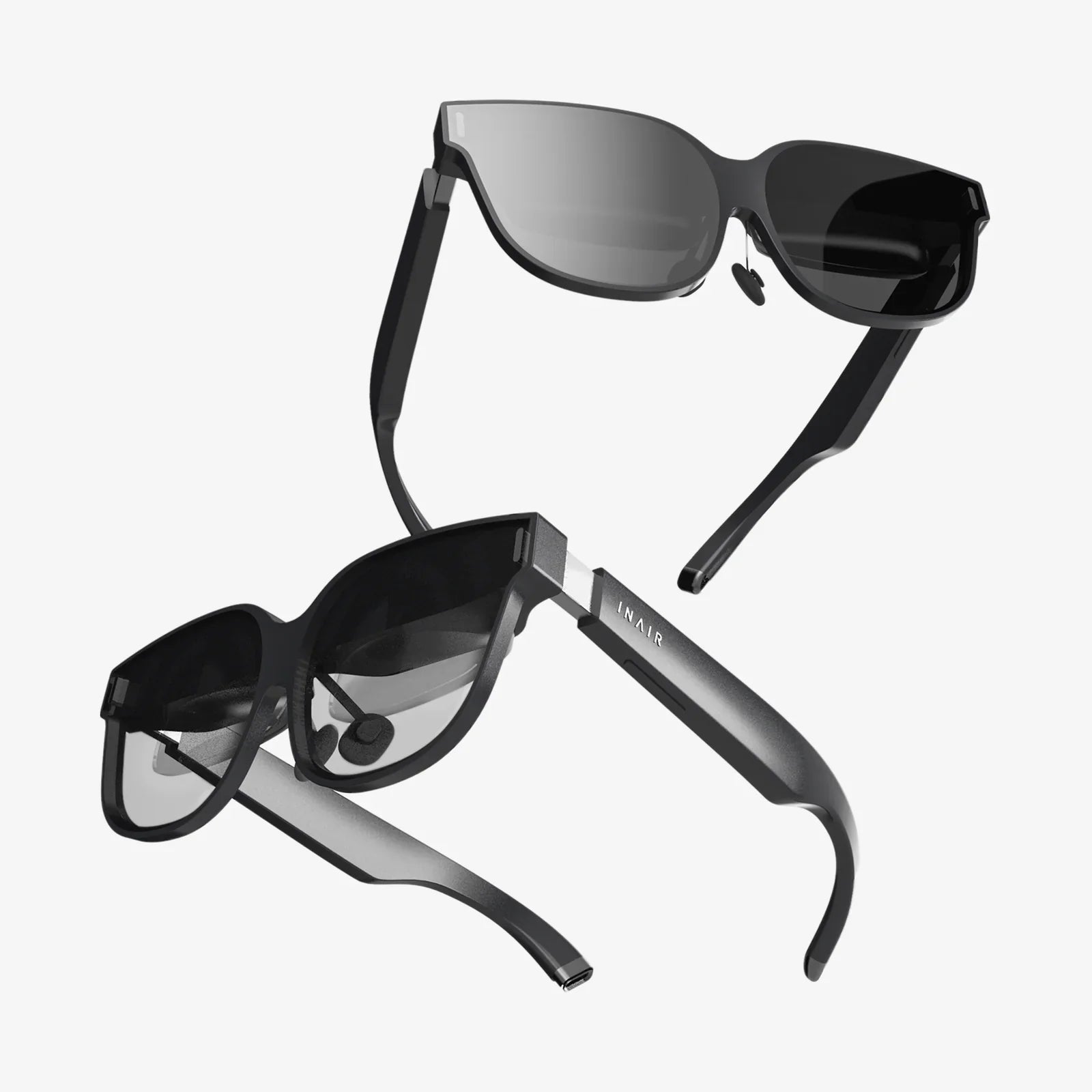
The sleek, futuristic silhouette of augmented reality smart glasses has long been a staple of science fiction, promising a world where digital information seamlessly blends with our physical reality. For many consumers and tech enthusiasts, the burning question isn't about the potential of this transformative technology, but something far more immediate and tangible: the price. How much will it cost to step into this new dimension, and what exactly are you paying for? The answer is far more complex than a simple number on a tag, weaving together cutting-edge innovation, manufacturing hurdles, and a strategic vision for the future of computing.
The journey to understand the price of AR smart glasses begins with a deep dive into the sophisticated components packed into their often deceptively simple frames. Unlike virtual reality headsets that transport you to a completely digital world, AR glasses must be lightweight, socially acceptable, and powerful enough to overlay high-resolution, contextually aware graphics onto the real world. This requires a symphony of advanced hardware.
The Engine Room: Displays and Optical Systems
At the heart of any AR glasses is the display system, arguably the most significant contributor to both the performance and the cost. These are not simple screens; they are complex optical engines that must project images onto transparent lenses or directly into the user's eye. Technologies like Waveguide optics, MicroLED projectors, and holographic film are employed to create bright, clear, and wide field-of-view visuals. Manufacturing these microscopic components with nanometer precision is an incredibly complex and expensive process, often with low initial yields. The research and development behind these light engines represent a massive investment that is reflected in the price of early-generation devices.
The Brain: Processing Power and AI
To understand and interact with the world, AR glasses require substantial processing power. This includes a central processing unit (CPU), a graphics processing unit (GPU) for rendering, a digital signal processor (DSP) for sensor data, and increasingly, a dedicated neural processing unit (NPU). This NPU is crucial for enabling real-time AI features like object recognition, spatial mapping, and gesture tracking without draining the battery or relying on a tethered device. This level of miniaturized, heterogeneous computing, designed to fit within an eyeglass form factor while managing heat dissipation, pushes the boundaries of semiconductor technology and comes at a premium cost.
The Senses: Sensors and Cameras
For the digital world to interact with the physical one, AR glasses need a suite of sensors to act as their eyes and ears. This typically includes high-resolution RGB cameras for video capture and object recognition, depth sensors (like time-of-flight sensors) for accurately mapping the environment in 3D, inertial measurement units (IMUs) for tracking head movement, and microphones for voice commands. Each sensor adds cost, and the software that fuses all this data into a coherent understanding of the user's surroundings represents years of software engineering effort.
Form Factor and Battery Life
Perhaps the greatest engineering challenge is balancing all this technology with the need for all-day comfort. Consumers will not adopt bulky, uncomfortable, or socially awkward glasses. This demands custom-designed, miniature components, advanced materials like magnesium alloys or carbon fiber to reduce weight, and innovative battery solutions. Developing safe, long-lasting, and compact batteries that can power this intensive computing is a major hurdle. These design constraints for miniaturization and aesthetics drive up manufacturing costs significantly compared to larger, stationary devices.
Beyond Hardware: The Software Ecosystem
The price of AR glasses isn't just about the physical product. A significant portion of the cost goes toward funding the extensive software development required to make them useful. This includes the operating system, developer tools (SDKs), and core applications. Companies invest billions in creating a robust platform that will attract developers to build the apps and experiences that will ultimately drive consumer adoption. The early price of hardware often helps subsidize this massive ecosystem development.
The Three Tiers of the AR Glasses Market
Currently, the AR smart glasses market is not a monolith; it's segmented into distinct tiers, each with its own price point and purpose.
Enterprise and Professional Grade
At the top of the pyramid are devices designed for industrial, medical, and military use. These glasses prioritize functionality, durability, and performance over aesthetics and cost. They often feature a wider field of view, more robust tracking, and specialized software for tasks like remote assistance, complex assembly, or surgical guidance. Prices in this tier can range from several thousand to tens of thousands of dollars, as they are viewed as specialized tools that provide a clear return on investment through increased productivity and reduced errors.
Developer and Enthusiast Kits
This tier is aimed at software developers and early adopters who are building the next generation of AR experiences. These kits provide access to the technology ahead of the consumer market but may lack polish, have limited battery life, or feature a less refined design. Their price is typically high, often between one and two thousand dollars, reflecting their niche status and the cost of supporting a developer community.
The Emerging Consumer Tier
This is the most talked-about segment: glasses designed for everyday use by the general public. The goal here is to achieve a balance between performance, style, and an affordable price point. Early consumer-focused models often function as companions to a smartphone, leveraging its processing power to keep the glasses themselves lighter and less expensive. Prices here are the most dynamic, starting from a few hundred dollars for basic models and rising quickly with added capabilities.
The Path to Affordability: Why Prices Will Fall
The current high price of advanced AR glasses is not permanent. Several powerful forces are already working to drive costs down and pave the way for mass adoption.
Economies of Scale
Currently, AR components are manufactured in relatively low volumes. As demand increases and production scales up, the cost per unit will plummet. This is a classic pattern in consumer electronics, seen in everything from flat-screen televisions to smartphones. High-volume production will make advanced displays and sensors significantly cheaper.
Technological Integration and Miniaturization
Moore's Law and advancements in semiconductor technology will continue to pack more processing power into smaller, more energy-efficient chipsets. The integration of multiple functions onto a single system-on-a-chip (SoC) will reduce complexity, size, and cost. Breakthroughs in manufacturing processes for waveguides and microLEDs will also improve yields and lower prices.
The Subscription Model and Carrier Partnerships
It is highly probable that the future of consumer AR will involve alternative pricing strategies. Much like smartphones, we may see glasses offered at a significantly reduced upfront cost when bundled with a service plan or data subscription from a telecommunications provider. This model would make the technology instantly more accessible to a broader audience.
Competition and Market Maturation
As more players enter the market, competition will intensify, forcing innovation and pressuring companies to offer more compelling features at lower price points. This healthy competition will be a primary catalyst for driving down costs and improving the value proposition for consumers.
What You're Really Investing In
When you consider the price of augmented reality smart glasses, it's essential to look beyond the hardware. You are investing in a new platform for communication, information, and entertainment. You are funding the research that is pushing the boundaries of optics, artificial intelligence, and human-computer interaction. The initial cost is a reflection of the immense technological achievement required to condense a supercomputer into a device that fits on your face.
The true value of AR glasses will not be measured in dollars and cents alone, but in the new capabilities they unlock—the ability to have a conversation with a colleague on the other side of the world as if they were standing in your living room, to receive real-time translations of street signs in a foreign country, or to learn a complex repair task with digital instructions overlaid directly on the machinery. The price is the gateway to a fundamentally new way of interacting with both technology and the world around us, a shift that promises to be as profound as the advent of the smartphone.
Ultimately, the question of price is a moving target, a snapshot of a technology in rapid transition. Today's premium cost for high-end AR glasses represents the frontier of what is possible, a badge for those leading the charge into a blended reality. But with every passing year, that frontier expands, and the cost of admission drops, bringing a future once confined to imagination closer to the everyday consumer. The journey from a niche, expensive tool to a ubiquitous, affordable companion is already underway, and the final price tag will be far less important than the profound change it unlocks for how we work, connect, and see our world.
Share:
AI Glasses Price in Nigeria: A 2024 Buyer's Guide to Cost, Features & Market Trends
AI Glasses Price in Nigeria: A 2024 Buyer's Guide to Cost, Features & Market Trends