


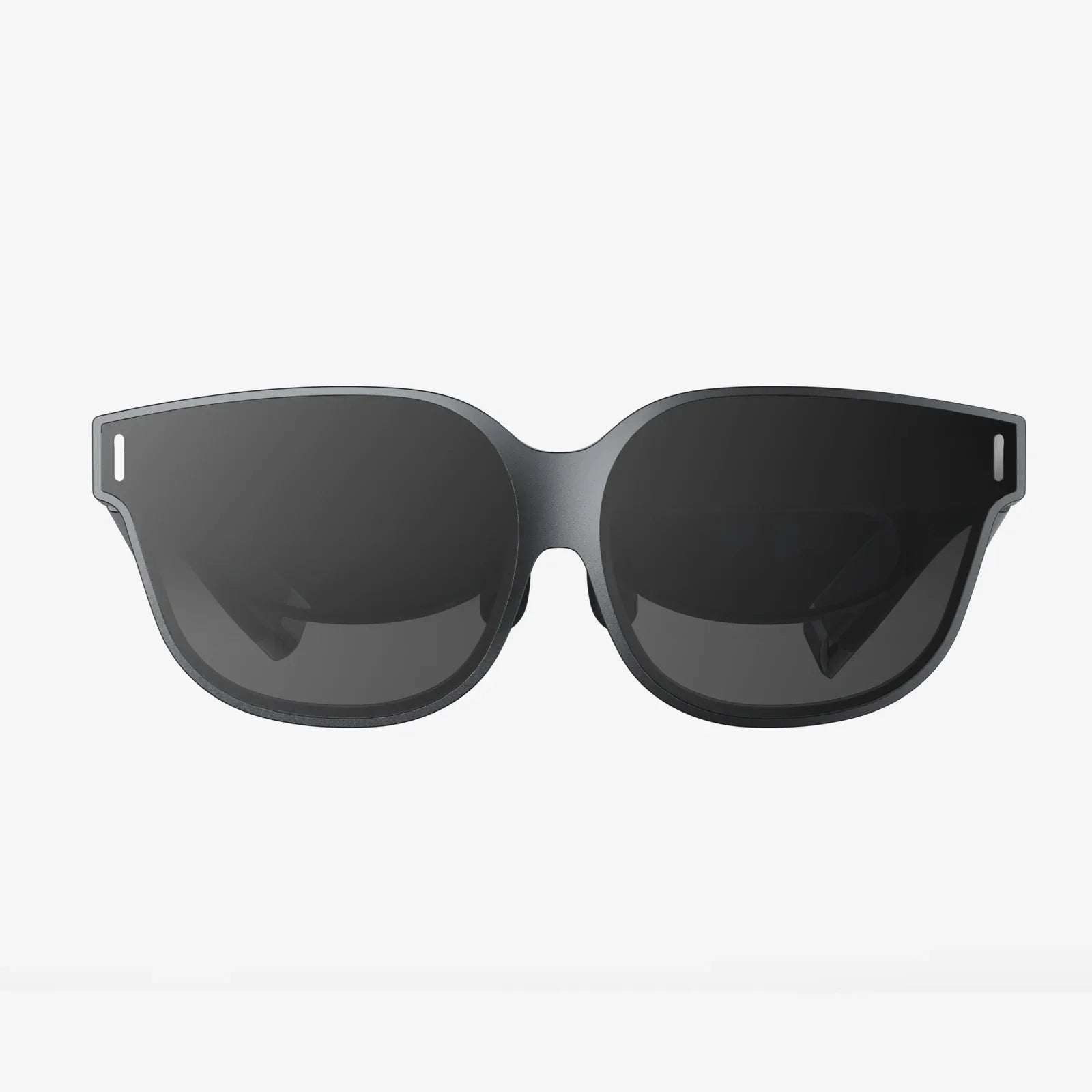
Imagine a world where information flows as effortlessly as sight, where the digital and physical realms are seamlessly stitched together not on a screen you hold, but on the very lens through which you perceive reality. This is the tantalizing promise held by the latest generation of AI glasses, a technological leap that is quietly moving from science fiction fantasy to tangible consumer reality. The race to dominate this nascent market is fierce, with a diverse array of products and brands vying to become the definitive portal to our augmented future. The question is no longer if we will wear our computers, but which vision of that future will we choose to see.
The Architectural Pillars of Intelligent Eyewear
At their core, AI glasses are a symphony of miniaturized technology, each component playing a critical role in creating a cohesive and powerful user experience. Understanding these pillars is key to appreciating the engineering marvel they represent.
The Visual Cortex: Displays and Optics
The most crucial interface is the display system. Unlike virtual reality headsets that engulf the user in a digital world, the goal here is augmentation—overlaying contextual information onto the real world without obstruction. Several technologies are competing for dominance. Waveguide optics, often using diffraction gratings, channel light from a micro-projector at the temple into the user's eye, painting a transparent image onto the world. Other systems use micro-LEDs projected onto a combiner lens. The challenge is immense: achieving high brightness, rich color, a wide field of view, and a small, socially acceptable form factor, all while managing power consumption and heat.
The Perceptual Engine: Sensors and Cameras
For the AI to understand and augment the world, it must first perceive it. A sophisticated array of sensors acts as the glasses' eyes and ears. High-resolution cameras capture visual data, while depth sensors (like time-of-flight sensors) map the environment in three dimensions, understanding the distance and spatial relationship between objects. Inertial Measurement Units (IMUs) track head movement and orientation, ensuring the digital overlays stay locked in place on physical objects. Microphones capture audio, enabling voice commands and advanced audio processing, while ambient light sensors adjust display brightness for optimal visibility.
The Digital Brain: On-Device AI and Processing
The raw data from the sensors is meaningless without interpretation. This is where the artificial intelligence comes in. A dedicated processing unit, often a Neural Processing Unit (NPU), runs complex machine learning models in real-time. This on-device AI is responsible for a multitude of tasks: computer vision to identify objects, text, and people; natural language processing to transcribe and translate speech instantly; spatial mapping to understand the user's environment; and contextual awareness to deliver the right information at the right time. The shift towards on-device processing, rather than relying solely on cloud-based AI, is critical for reducing latency, preserving battery life, and protecting user privacy.
The Voice of Command: Audio and Haptics
Interaction cannot rely on a traditional touchscreen. Bone conduction audio or miniature directional speakers allow users to hear synthesized voices, translations, and notifications without earbuds, leaving their ears open to ambient sound. This technology transmits sound waves through the bones of the skull directly to the inner ear. For subtle notifications and feedback, haptic engines in the temple arms provide gentle vibrations, a private and discreet method of communication from the device.
The Evolving Ecosystem: A Spectrum of Products and Philosophies
The market for AI glasses is not monolithic. Different products and brands are emerging with distinct philosophies, targeting various use cases and user demographics. This spectrum can be broadly categorized, though the lines are constantly blurring.
The Productivity Powerhouses
One major category focuses on augmenting professional and daily productivity. These devices are often designed as full-fledged wearable computers. They prioritize a robust suite of features: real-time transcription and translation for global business meetings, step-by-step instructional overlays for field technicians, hands-free access to diagrams and manuals for surgeons or engineers, and seamless integration with existing productivity suites. The design language for these models tends to be more tech-forward, signaling their advanced capabilities, with a stronger emphasis on battery life and processing power over high-fashion aesthetics.
The Subtle Assistants
On the other end of the spectrum are devices that prioritize discretion and social acceptance. Their primary function is often centered on a few key AI features—like live transcription, translation, and audio recording—accessed through a minimalist interface. They frequently resemble standard eyeglasses or fashionable sunglasses, hoping to normalize the technology by making it invisible. The AI in these models works in the background, enhancing moments of conversation and observation without a constant, distracting visual display. The goal is to provide utility without the user looking or feeling like a cyborg.
The Niche Innovators
Beyond these broad categories, specialized devices are emerging for specific vertical markets. For the fitness and wellness audience, some products overlay performance metrics and navigation directly into the athlete's field of view, while using sensors to track biometrics. For the creative and design community, prototypes exist that allow for manipulating 3D models in mid-air or visualizing new paint colors on a wall in real-time. These niche products demonstrate the vast potential of the technology when tailored to a specific task, often pushing the boundaries of what the form factor can do.
Beyond the Hype: Tangible Applications Changing Lives Today
While the future potential is vast, the current applications of AI glasses are already delivering profound value.
- Revolutionizing Accessibility: For individuals who are deaf or hard of hearing, live transcription glasses can break down communication barriers, displaying conversations as subtitles on the lens in real-time. For those with low vision, AI can identify objects, read text aloud from menus or documents, and describe scenes.
- Demolishing Language Barriers: Imagine traveling in a foreign country and reading a street sign, a menu, or having a conversation with a local, with translations appearing instantly before your eyes. This technology is actively turning the world into a more connected and accessible place.
- Transforming Field Work: A technician repairing a complex machine can see schematics overlaid on the equipment itself. An architect can walk through a construction site and visualize the digital building model aligned with the physical structure. A farmer can monitor crop health data simply by looking at a field.
- Hands-Free Knowledge and Navigation: From cooks following recipes without touching a device to logistics workers navigating massive warehouses while keeping their hands free to move packages, the efficiency gains are significant.
The Inevitable Hurdles: Challenges on the Road to Adoption
For all their potential, AI glasses face significant obstacles before they can achieve widespread consumer adoption.
The Privacy Paradox
This is the single greatest challenge. Devices with always-on cameras and microphones understandably raise alarm bells. The potential for surreptitious recording, facial recognition, and constant environmental data collection presents a privacy nightmare. Manufacturers must adopt a privacy-first approach: clear physical indicators when recording, strict on-device data processing, transparent data policies, and user-controlled permissions. Without unwavering trust, the technology will be dead on arrival.
The Social Stigma and Design
Previous attempts at smart glasses faltered because they were seen as geeky, intrusive, or just plain ugly. Social acceptance is paramount. The winning designs will be those that people feel proud to wear as fashion items first and tech devices second. This requires deep collaboration between technology firms and fashion houses to create products that are lightweight, comfortable, and available in a variety of styles to suit personal tastes.
The Battery Life Conundrum
Running powerful AI models, displays, and numerous sensors is incredibly power-intensive. Users will not accept glasses that need to be charged every few hours. Innovations in battery technology, ultra-low-power chipsets, and efficient software are essential to support all-day usage. Many current solutions use a separate battery pack housed in a case or connected via cable, a compromise that highlights the technical challenges.
Defining the "Killer App"
While the use cases are numerous, the consumer market often rallies around a single, irresistible application. For smartphones, it was the app ecosystem and the mobile internet. For AI glasses, the killer app remains elusive. It could be hyper-realistic navigation, a revolutionary social media filter, an unparalleled personal assistant, or something yet to be imagined. Until that defining application emerges, mainstream adoption may remain slow.
Gazing into the Crystal Ball: The Future is Augmented
The trajectory of AI glasses points toward a future where they become as ubiquitous as smartphones. We are moving toward contact lenses with embedded displays, eliminating the frame altogether. AI will evolve from recognizing objects to understanding complex scenes and intentions, predicting user needs before they are voiced. The line between our biological intelligence and artificial intelligence will blur, creating a new paradigm of human-computer interaction that is more intuitive, contextual, and powerful than anything we have today. The metaverse, often discussed in the context of VR, may find its most powerful expression through AR glasses, allowing digital artifacts and experiences to persist in our physical world.
The true winners in this space will not be those with the most powerful processor alone, but those who can master the trifecta of technology, design, and ethics. They will create devices that feel like a natural extension of ourselves, enhancing our human capabilities without compromising our privacy or our humanity. The revolution won't be televised; it will be seen through a pair of intelligent lenses, quietly reshaping our perception of what is real and what is possible.
Share:
Meta AI Glasses What Do They Do - The Future on Your Face
Meta AI Glasses What Do They Do - The Future on Your Face