


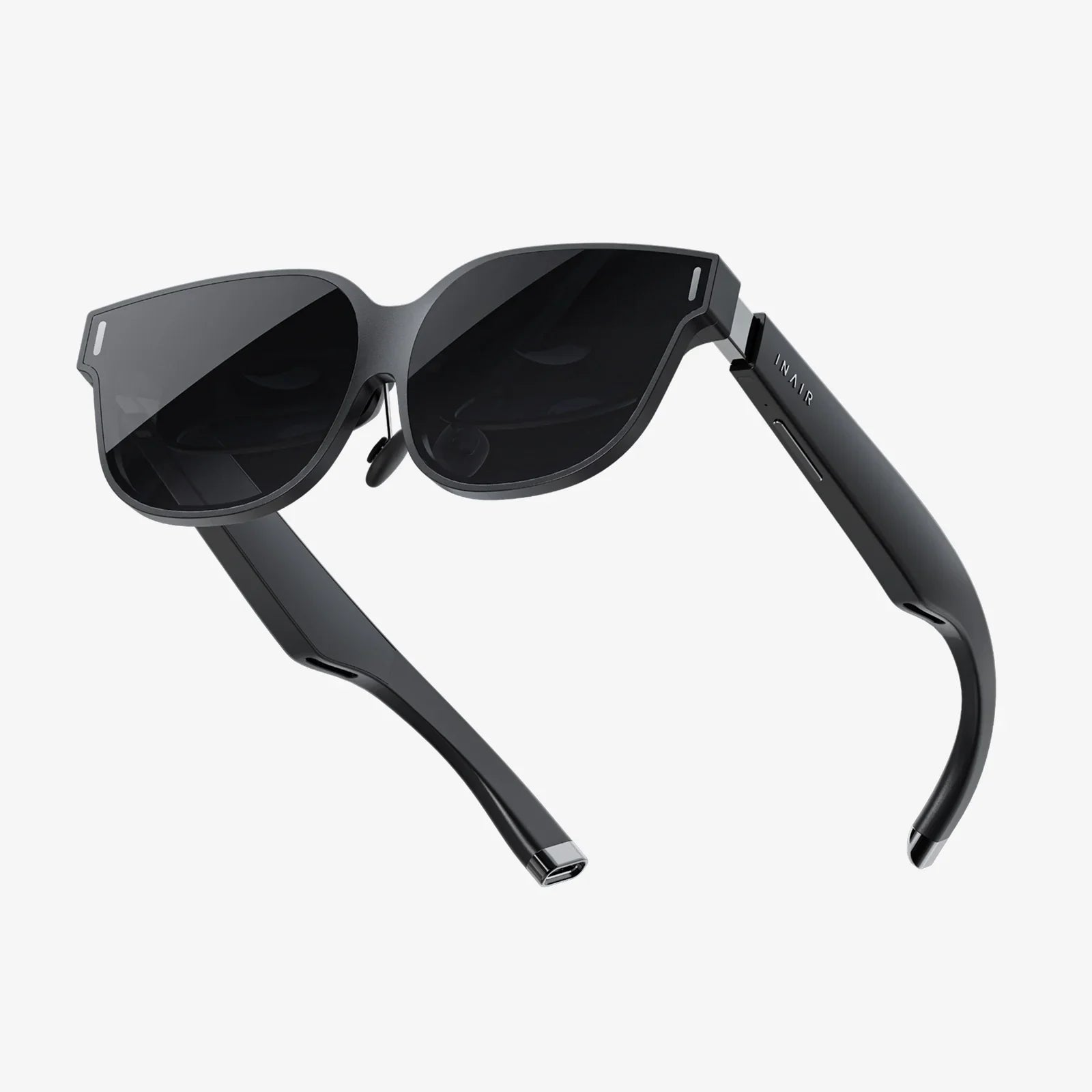
Imagine a world where information floats effortlessly before your eyes, where digital assistants can see what you see, and the boundary between the physical and digital realms begins to blur. This is no longer the stuff of science fiction; it’s the promise held within a sleek pair of AI glasses. The market is stirring, brimming with potential, and the choice of which pair to invite into your life is becoming one of the most intriguing tech decisions you can make. But with great potential comes great complexity. How do you sift through the specs and marketing hype to find the perfect augmented ally? The journey to finding your ideal pair starts here, by understanding that the right selection is less about the flashiest features and more about which device harmonizes perfectly with your unique rhythm of life.
Defining Your "Why": The Foundation of Your Selection
Before diving into technical specifications, the most critical step in your AI glasses selection process is introspection. These devices, in their current iterations, are often purpose-built. Understanding your primary use case will instantly narrow the field and prevent you from paying for capabilities you'll never use.
- The Productivity Powerhouse: Are you seeking a private, expansive desktop experience for work on the go? Do you dream of reviewing spreadsheets, coding, or attending video calls with a massive virtual monitor that only you can see? Your selection criteria will prioritize display quality, processing power for multitasking, and seamless integration with your existing productivity suite.
- The Creative Companion: For designers, architects, and artists, AI glasses can offer a new canvas. The ability to overlay digital creations onto the physical world, to visualize 3D models at scale, or to have your tools and palettes accessible without looking away from your subject is revolutionary. Here, color accuracy, spatial mapping precision, and creative software compatibility are king.
- The Fitness and Adventure Guide: For the athlete or explorer, AI glasses can provide real-time performance metrics, navigation cues overlaid on the trail, and hands-free communication. Durability, battery life, comfort during movement, and outdoor-readable displays become non-negotiable traits in your selection.
- The Accessibility Advocate: This is one of the most powerful applications. Glasses that can read text aloud for the visually impaired, translate spoken language into subtitles in real-time for the hearing impaired, or provide cognitive support are more than gadgets; they are life-changing tools. Selection here focuses on the robustness and accuracy of these specific assistive features.
- The Everyday Early Adopter: Perhaps you're drawn to the novelty and the potential for subtle, all-day augmentation—receiving discreet notifications, capturing photos and videos from a first-person perspective, or getting contextual information about your surroundings. Your selection will emphasize style, all-day comfort, social acceptability, and seamless smartphone integration.
Deconstructing the Technology: Key Specifications Explained
Once you know your "why," you can effectively evaluate the "how." The technology inside these glasses is what brings the magic to life, and understanding these components is essential for an informed selection.
The Window to Your Digital World: Display Technology
How the digital image is projected into your eye is arguably the most important technological differentiator. There are two primary methods, each with trade-offs.
- Optical See-Through (OST): This method uses semi-transparent lenses or waveguides to project light into your eyes, allowing you to see the real world directly with digital elements overlaid. The key advantage is a more natural view of your actual environment. However, achieving rich colors and deep blacks can be challenging, as digital objects can appear slightly transparent or faded against bright backgrounds.
- Video See-Through (VST): This approach uses outward-facing cameras to capture the real world and then displays a live video feed on opaque displays inside the glasses, with the digital elements composited onto this video. This allows for incredibly vivid and immersive digital content, with perfect occlusion (where digital objects can convincingly hide behind physical ones). The drawback is a potential lag in the video feed and a slight reduction in the resolution of the real world, which can be disorienting for some and raises safety concerns for activities like driving.
Beyond the method, evaluate the Field of View (FoV). A larger FoV means a bigger digital canvas, which is crucial for immersive experiences but demands more processing power and battery life. A smaller FoV might be sufficient for displaying notifications or basic data. Also, consider resolution and brightness—especially if you plan to use the glasses outdoors.
The Brain of the Operation: Processing and Connectivity
Is the intelligence built-in, or does it live in your pocket? This is a fundamental architectural question.
- Standalone Devices: These glasses have their own onboard processor, battery, and operating system. They function independently, like a powerful wearable computer. This offers maximum freedom and capability but results in a heavier, hotter, and more expensive form factor.
- Tethered/Tethered Devices: These glasses act as a sophisticated display and sensor array for a nearby device, typically a smartphone or a small wearable computer that slips into your pocket. The connected device handles the heavy computational lifting. This allows for a much lighter, cooler, and often more affordable design, but it tether you to another device and its battery life.
Your selection should balance your need for untethered freedom against your tolerance for weight and heat on your face. Also, scrutinize the connectivity options—Wi-Fi 6/6E, Bluetooth 5.2+, and ultra-wideband (UWB) can all contribute to a smoother, more responsive experience.
Perceiving the World: Sensors and Cameras
The "AI" in AI glasses is fueled by data, and that data comes from a suite of sensors. The quality and variety of these sensors directly determine what the glasses can understand and how they can interact with your environment.
- Cameras: High-resolution cameras are essential for computer vision tasks like object recognition, text scanning, and capturing photos and video. Consider the megapixel count, low-light performance, and frame rate for video.
- Spatial Mapping: To anchor digital objects to the real world, glasses use a combination of sensors like depth sensors (e.g., LiDAR), time-of-flight sensors, and stereoscopic cameras. The accuracy of this mapping is critical for a convincing AR experience.
- Inertial Measurement Unit (IMU): This combo of accelerometers, gyroscopes, and magnetometers tracks the precise movement and orientation of your head. This is vital for keeping digital content stable and locked in place as you move.
- Eye Tracking: An advanced but increasingly common feature, eye tracking allows for intuitive interaction (e.g., selecting items with your gaze), dynamic focus rendering for more comfortable viewing, and valuable analytics on user attention.
- Microphones and Speakers: For voice assistants and private audio, a quality array of microphones for noise cancellation and built-in directional speakers or bone conduction audio are key features to evaluate.
The Human Factor: Design, Comfort, and Social Dynamics
Technology is useless if you don't want to wear it. The human element is just as important as the silicon one.
- Form Factor and Style: Early head-mounted displays were bulky and obtrusive. The current trend is toward designs that resemble traditional eyewear as closely as possible. Consider weight, frame material, and overall aesthetics. Will you feel comfortable wearing these in a business meeting? At a coffee shop? Your selection must pass the "mirror test"—you should feel good wearing them.
- Ergonomics and Fit: Comfort over extended periods is paramount. Look for adjustable nose pads, flexible temples, and even custom prescription lens options if you require vision correction. A device that causes pressure points or fatigue will end up in a drawer, no matter how powerful it is.
- Battery Life and Management: Be deeply skeptical of manufacturer battery claims. Evaluate whether the stated life is for mixed use, video playback, or standby. Consider how the device is charged—a proprietary dock is less convenient than USB-C. For all-day use, look for options with swappable batteries or a companion battery pack that can provide a full day of power.
- The Social Contract: Wearing cameras on your face raises legitimate privacy concerns among those around you. Your selection should include a strong ethical component. Look for devices with clear physical indicators (like an LED light) that show when recording is active. Be prepared to be mindful and transparent about how you use this technology in public spaces.
Navigating the Ecosystem and Privacy Landscape
Your AI glasses do not exist in a vacuum. They are a portal into a larger ecosystem, and the rules of that ecosystem matter immensely.
- Software and Developer Support: The hardware is a shell without powerful software. Investigate the native operating system and its core applications. More importantly, look at the health of the developer platform. A robust SDK (Software Development Kit) and an active community of developers mean more innovative apps will be created for your device, future-proofing your investment.
- Data Handling and Privacy Policy: This is non-negotiable. These devices have the potential to collect an unprecedented amount of intimate data: what you see, where you go, what you look at, and what you say. Before you select a device, you must read the company's privacy policy. Where is the data processed (on the device or in the cloud)? Is it used to train AI models? Can you delete it? Your selection is a vote for a company's data ethics. Opt for devices that prioritize on-device processing and offer clear, user-controlled privacy settings.
- Long-Term Viability: The AR space is still young and volatile. Consider the company behind the glasses. Do they have a track record of supporting products long-term? Or are they a startup that might not exist in two years? Your selection should factor in the likelihood of ongoing software updates, security patches, and hardware support.
Making the Final Choice: A Practical Checklist
Armed with this knowledge, your final selection process should be methodical. Use this checklist to compare your shortlisted models:
- Primary Use Case: Does it excel at the one thing I need most?
- Display Type & Quality: OST vs. VST? Is the FoV, resolution, and brightness sufficient?
- Processing: Standalone or tethered? Does the performance match the promise?
- Sensor Suite: Does it have the right sensors (cameras, LiDAR, eye tracking) for my tasks?
- Design & Comfort: Would I wear this for hours? Does it fit my style?
- Battery Life: Does the real-world usage match my daily routine? How is it charged?
- Software & Apps: Is the OS intuitive? Are the key apps I need available today?
- Privacy Policy: Have I read and accepted how my data will be handled?
- Price & Value: Does the total cost, including any subscriptions or accessories, justify the features?
The perfect pair of AI glasses doesn't exist—yet. The ideal selection today is about finding the best compromise for your individual needs, accepting that this technology is still advancing at a breathtaking pace. It’s about choosing a platform that feels less like a piece of hardware and more like a natural extension of your own capabilities. The right pair will fade into the background, empowering you to engage with the world and your digital life in a more seamless, efficient, and perhaps even magical way. The future is putting on a pair of glasses, and that future is closer than you think. Your window into that augmented world awaits your command.
Share:
Artificial Intelligence AI Glasses: The Dawn of a Seamless Augmented Reality
Augmented Reality VR Trends 2025: The Future is a Blended Reality