


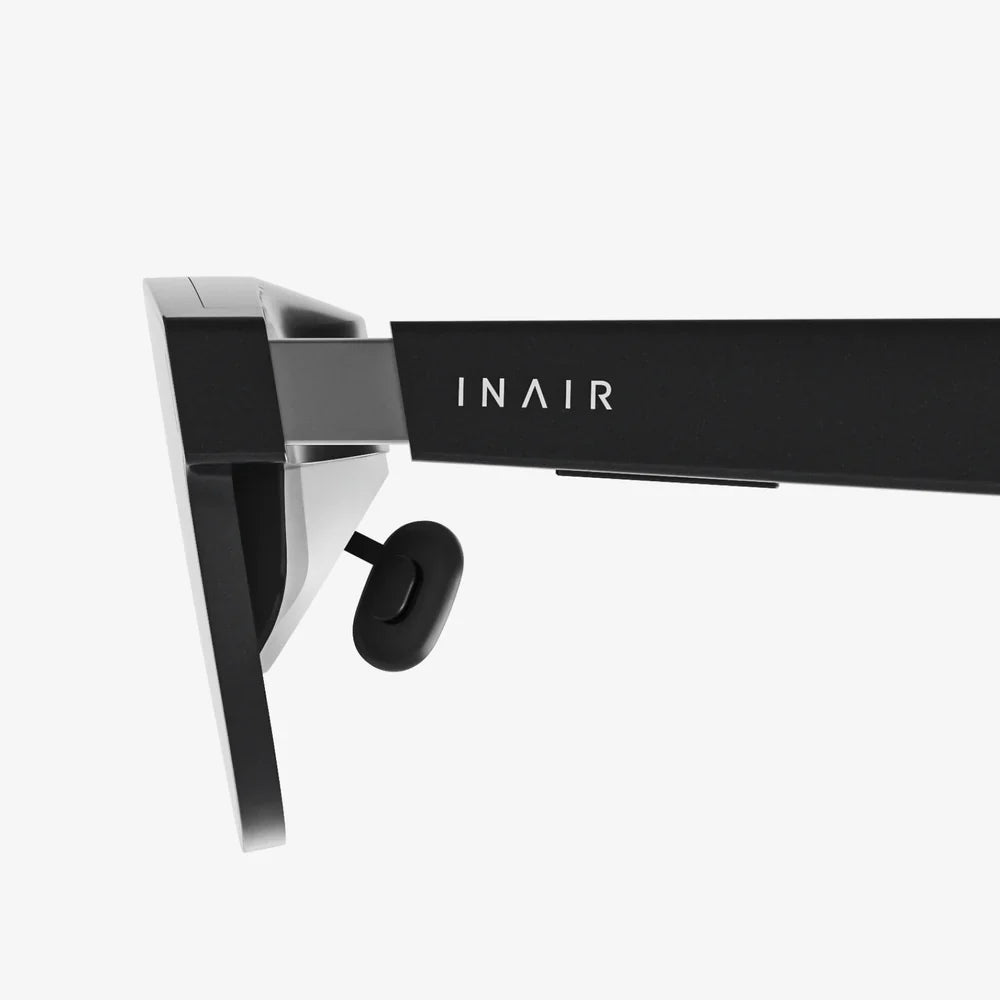
Imagine a world where information doesn't live on a screen in your hand but is seamlessly woven into the fabric of your reality. A world where language barriers dissolve in real-time, where your surroundings are not just seen but understood, and where a digital assistant doesn't just listen but sees what you see. This is the transformative promise of artificial intelligence AI glasses, a technological convergence that is set to break the two-dimensional shackles of the smartphone and usher in a new era of ambient, context-aware computing.
The Convergence of Vision and Intelligence
The concept of wearable displays is not new. For decades, technologists and science fiction authors have envisioned a future where data is overlaid onto our field of view. Early iterations were bulky, offered limited functionality, and struggled with fundamental issues like battery life and user interface. They were, in essence, screens placed far too close to the face. The true revolution lies not in the display technology alone, but in the integration of sophisticated artificial intelligence. AI is the brain that gives these glasses their sight and understanding.
Modern artificial intelligence AI glasses are built upon a foundation of several critical technologies working in harmony:
- Advanced Micro-Displays: Utilizing technologies like OLEDoS (Organic Light-Emitting Diode on Silicon) or LCoS (Liquid Crystal on Silicon), these tiny, high-resolution projectors beam images directly onto the lenses or into the user's retina, creating the illusion of holographic images floating in the real world.
- Computer Vision: Integrated cameras continuously scan the environment. This visual data is the primary input for the AI, allowing it to identify objects, people, text, and spatial relationships.
- Onboard Sensors: A suite of sensors including accelerometers, gyroscopes, magnetometers, and depth sensors work together to understand the user's head position, movement, and the three-dimensional structure of their environment. This is crucial for anchoring digital objects convincingly in physical space.
- Audio Systems: Bone conduction audio or miniature directional speakers provide a private auditory experience without blocking out ambient noise, enabling discreet interaction.
- The AI Engine: This is the core. Powered by increasingly efficient neural processing units (NPUs), the onboard AI processes the massive influx of sensor data in real-time. It performs tasks like object recognition, scene understanding, natural language processing for voice commands, and predictive analytics to anticipate user needs.
Beyond Novelty: Practical Applications Reshaping Industries
The potential of artificial intelligence AI glasses extends far beyond futuristic gaming or displaying notifications. They are poised to become powerful professional tools and life-enhancing assistants.
Revolutionizing the Workplace
In industrial and field service settings, these devices can dramatically enhance productivity and safety. A technician repairing a complex piece of machinery can see schematics overlaid directly onto the equipment, with step-by-step instructions guiding their hands. They can stream their point-of-view to a remote expert thousands of miles away, who can then annotate the technician's real-world view with arrows and notes. For a warehouse worker, AI glasses can display optimal picking routes and instantly verify items using visual recognition, eliminating errors and speeding up fulfillment.
Transforming Healthcare and Accessibility
The impact on healthcare could be profound. Surgeons could access vital patient statistics, ultrasound data, or 3D anatomical models without ever looking away from the operating field. For individuals with visual impairments, AI glasses can act as a powerful visual interpreter, describing scenes, reading text aloud from menus or documents, identifying currency, and warning of obstacles. For those who are deaf or hard of hearing, real-time speech-to-text transcription can be displayed within their vision, making conversations fluid and accessible.
Breaking Down Language Barriers
Imagine traveling in a foreign country and looking at a restaurant menu, a street sign, or a historical plaque. Artificial intelligence AI glasses could instantly translate the text and superimpose the translation in your native language over the original text, preserving the context and layout. In a conversation, real-time translation of spoken dialogue could be displayed like subtitles for life, fostering deeper cross-cultural communication.
Enhanced Learning and Memory
These devices could serve as an external, contextual hard drive for the human brain. Meeting a someone at a conference? The glasses could discreetly display their name and relevant details from your digital contacts after facial recognition. Struggling to remember how to assemble a piece of furniture? The instruction manual is projected directly onto the parts. Learning a new skill like cooking or playing an instrument? Guidance is overlaid onto your tools in real-time.
The Invisible Elephant in the Room: Privacy and Ethical Dilemmas
The advent of always-on, always-seeing artificial intelligence AI glasses presents perhaps the most significant societal and ethical challenge since the smartphone. The very features that make them powerful—persistent environmental awareness and recording—also make them potent surveillance tools.
The concept of contextual privacy is thrown into question. Individuals in public spaces have a reasonable expectation that they are not being continuously recorded and identified. The ability to surreptitiously record video, take photos, or run facial recognition on passersby raises alarming prospects for stalking, corporate espionage, and state-level surveillance. The dystopian vision of a world where everyone is constantly scanning and being scanned is a legitimate concern that must be addressed proactively, not reactively.
This necessitates a robust framework of ethical design principles and legislation:
- Clear Visual Indicators: Devices must have obvious, non-defeatable external lights or signals that indicate when recording or active analysis is taking place.
- Data Minimization and On-Device Processing: The default should be to process data locally on the device itself, rather than streaming continuous video to the cloud. Only the necessary metadata (e.g., "identified a book title") should be transmitted, not the raw video feed.
- Strict Consent Protocols: Features like facial recognition must be opt-in and require explicit, informed consent from all parties involved. "Privacy zones" could be digitally enforced, disabling recording in sensitive areas like bathrooms or changing rooms.
- Transparent User Control: Users must have simple, immediate control over their data and what the device is allowed to record and analyze.
Navigating this landscape will require a concerted effort from policymakers, technology developers, and the public to establish norms that protect individual rights without stifling innovation.
The Road to Ubiquity: Overcoming Technical and Social Hurdles
For artificial intelligence AI glasses to transition from niche prosumer devices to mainstream adoption, several significant hurdles must be cleared.
Design and Social Acceptance: The current generation of devices often leans toward a technical, utilitarian aesthetic. For mass appeal, they must become fashionable, lightweight, and indistinguishable from regular eyewear. People will not wear something that makes them feel self-conscious or socially awkward. The goal is not to look like a cyborg, but to wear a stylish accessory that happens to be incredibly powerful.
Battery Life and Thermal Management: Real-time computer vision and AI processing are computationally intensive tasks that drain batteries and generate heat. Breakthroughs in low-power chipsets, distributed computing (offloading some tasks to a paired phone), and battery technology are essential for all-day usability.
Developing the "Killer App": While many compelling professional applications exist, the consumer market needs a definitive, must-have use case—the equivalent of mobile email for the early BlackBerry or the app ecosystem for the iPhone. This might emerge from a seamless integration of augmented reality with social media, a revolutionary new gaming experience, or an AI assistant so intuitive it becomes indispensable.
Creating a Natural User Interface (UI): Interacting with a screen floating in front of your eyes cannot rely on touch. The UI must be primarily voice-controlled, gesture-based, or even utilize subtle neural input or eye-tracking. It needs to be intuitive, discreet, and non-disruptive to the user's real-world interactions.
A Glimpse into the Future
Looking further ahead, the evolution of artificial intelligence AI glasses points toward even more profound integration with our senses and cognition. We are moving toward interfaces that are not worn but woven into contact lenses or even directly integrated with the visual cortex. The AI will evolve from a reactive tool to a proactive partner, capable of drawing insights from the vast dataset of our lives to offer suggestions, enhance creativity, and manage our health and well-being by monitoring our vital signs and emotional state through micro-expressions and vocal tone.
This technology has the potential to redefine human potential itself, offering a cognitive augmentation that allows us to process information and interact with our digital world in ways previously confined to imagination. It represents a fundamental shift from looking at a device to looking through a intelligent window onto the world.
The path to a future where artificial intelligence AI glasses are as commonplace as smartphones is fraught with challenges, but the destination is a world of unprecedented connection, understanding, and capability. The barrier between the digital and the physical is crumbling, and our view of the world will never be the same again. The next time you put on a pair of glasses, you might not just be correcting your vision—you might be enhancing your entire reality.
Share:
AR VR Skills: The Ultimate Guide to Building a Career in the Metaverse
AI Glasses Selection: The Ultimate Guide to Choosing Your Next Augmented Reality Companion