Imagine a world where information doesn't live on a screen in your pocket but is seamlessly woven into the fabric of your reality. Where a glance at a foreign street sign instantly translates, where a forgotten name appears as a subtle prompt during a conversation, and where complex data is visualized right before your eyes as you troubleshoot a machine. This is the tantalizing promise held by a new wave of ambitious ventures, the AI glasses startup, a sector buzzing with the potential to deliver the next great leap in personal computing. This isn't just about wearing technology; it's about augmenting human capability itself, and a handful of daring innovators are betting everything on making this science fiction a daily reality.
The Convergence: Where Hardware Meets Intelligence
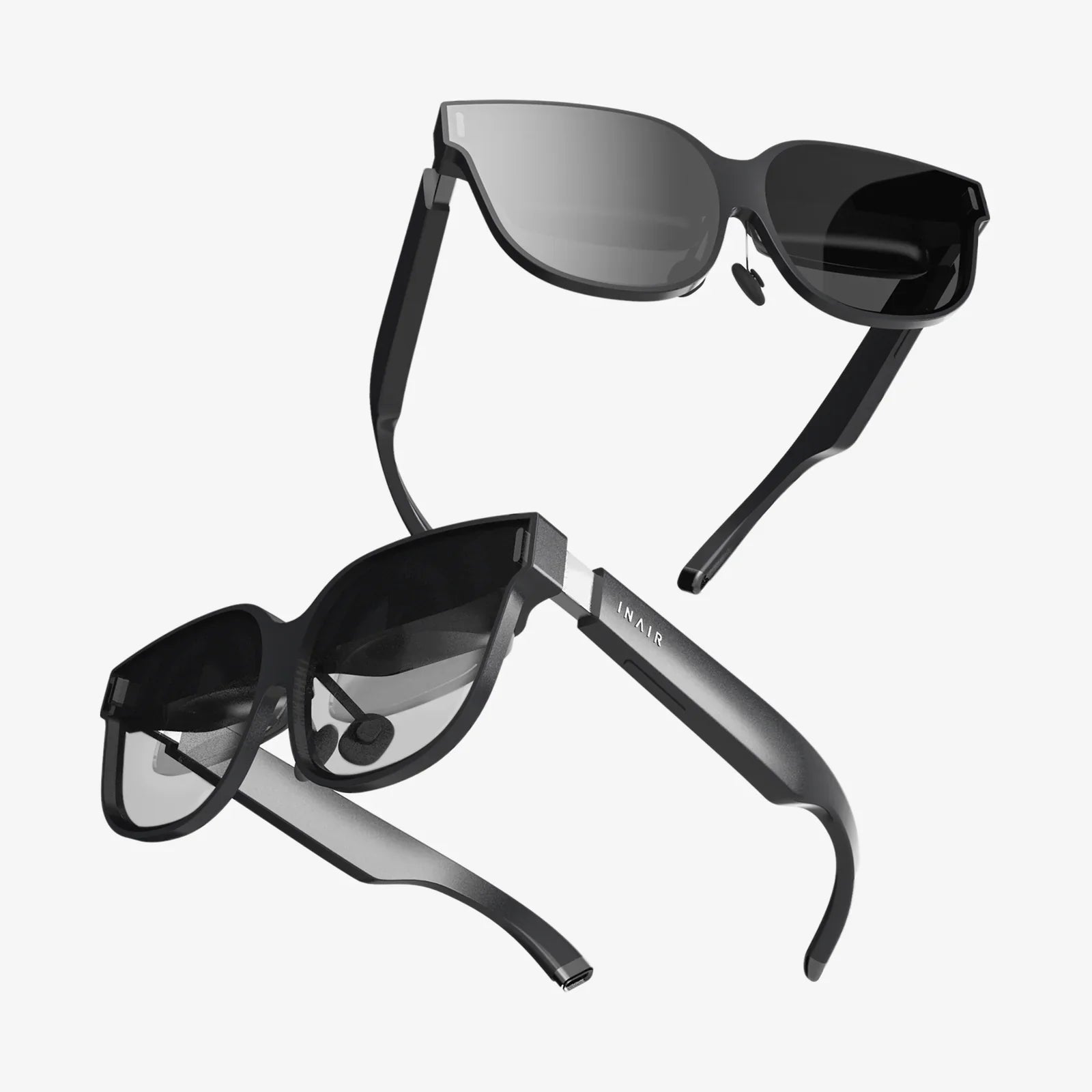
The concept of smart eyewear is not new. For years, large technology corporations have experimented with head-mounted displays, with varying degrees of success and failure. These earlier iterations often fell short, plagued by clunky designs, limited battery life, social awkwardness, and a lack of compelling, everyday applications. They were solutions in search of a problem. The landscape today, however, is fundamentally different, creating a fertile ground for agile startups to innovate. Three critical technological shifts have converged to make the current moment ripe for disruption.
The Miniaturization of Powerful Components
Modern microprocessors are exponentially more powerful and energy-efficient than those available just a few years ago. This allows startups to pack serious computational power into the slim form factor of eyeglass frames. Tiny sensors—including high-resolution cameras, depth sensors, accelerometers, and gyroscopes—have also become cheap and small enough to be integrated discreetly. This hardware evolution is the essential foundation, providing the eyes and ears for the AI brain.
The Revolution in Artificial Intelligence
This is the true game-changer. The rise of sophisticated neural networks, computer vision models, and large language models (LLMs) provides the intelligence to make sense of the world in real-time. An AI glasses startup isn't just building a camera; it's building a system that can understand what the camera sees. This enables a previously impossible class of applications:
-
Real-time Visual Recognition: Identifying objects, people, text, and places instantly.
-
Contextual Awareness: Understanding the user's environment and situation to provide relevant information.
-
Natural Language Interaction: Allowing users to converse with their AI assistant through natural speech, hands-free.
-
Audio Augmentation: Enhancing hearing, translating spoken language, and filtering out background noise.
Shifting Social and Cultural Norms
The world is now acclimated to people wearing technology on their faces. The widespread adoption of wireless earbuds and the gradual normalization of wearing face coverings have reduced the social barrier to entry for eyewear-based tech. Furthermore, there is a growing cultural emphasis on immersive experiences, from augmented reality gaming to virtual meetings, all of which point towards a future where digital overlays on our physical world are more accepted.
The Startup Advantage: Agility, Focus, and Vision
While tech giants have vast resources, startups possess unique advantages in this nascent field. They are unburdened by legacy products or the need to protect existing revenue streams. This allows for radical focus on a single, transformative vision. An AI glasses startup can be hyper-focused on a specific use case, whether it's for industrial maintenance, assisting individuals with visual impairments, or providing real-time information for professionals. This focus often leads to more elegant and purpose-driven design, as they are not trying to be everything to everyone.
Startups also move with incredible speed. They can iterate on design, software, and user experience rapidly based on early adopter feedback, unencumbered by large corporate bureaucracy. This agility is crucial in a field where the optimal form factor and killer application are still being discovered. They can take bold risks on novel interaction methods, display technologies like holographic waveguides, and unconventional business models that larger companies might avoid.
The Immense Hurdles: Why Most Will Fail
The path to creating a successful consumer AI glasses product is fraught with monumental challenges. The list of failures in this category is long, serving as a cautionary tale for every new entrant. The technical and logistical hurdles are arguably the most difficult in all of consumer electronics.
The Form Factor Conundrum
This is the fundamental paradox: consumers want a device that is powerful, with long battery life and a bright, high-resolution display, but also looks like a normal, lightweight pair of glasses. These two goals are in direct opposition. Battery technology remains a significant bottleneck. Fitting a battery that can last a full day into a glasses stem, while also powering a processor, sensors, and a display, is a herculean task of miniaturization and power management. The display technology itself—projecting information onto the user's retina without blocking their view—is incredibly complex and expensive to manufacture at scale.
The Privacy Problem
An AI glasses startup must navigate a minefield of privacy concerns. A device that has a always-on camera and microphone is inherently controversial. Building robust, transparent, and user-controlled privacy features is not optional; it is a prerequisite for survival. Startups must implement clear physical indicators when recording, strict on-device processing for sensitive data, and ironclad data security. Gaining public trust will be one of the single biggest challenges, requiring a commitment to ethical design that places user privacy above all else.
The Software Ecosystem
Hardware is nothing without software. A startup must not only build the physical device but also a compelling operating system and a robust software development kit (SDK) to attract third-party developers. Creating this ecosystem from scratch is a massive undertaking. The killer app for AI glasses might not be conceived by the startup itself but by a developer using their platform. Fostering that creative community is essential for long-term viability.
Beyond the Hype: Practical Applications and Target Markets
While the consumer market is the ultimate prize, many savvy AI glasses startups are initially targeting specific enterprise and niche applications. This B2B approach provides a clearer path to revenue, allows for a more specialized (and perhaps less stylish) design, and solves real, valuable problems for businesses.
Enterprise and Industrial Use Cases
In industrial settings, workers' hands are often busy, and access to information is critical. Technicians repairing complex machinery can have schematics and step-by-step guides overlaid on their field of view. Warehouse pickers can receive order information and navigation cues without looking down at a scanner. Remote experts can see what an on-site worker sees and provide visual annotations to guide them through a repair, saving time and travel costs. The value proposition here is clear: increased efficiency, reduced errors, and enhanced training.
Healthcare and Accessibility
This is perhaps the most profound application. AI glasses can be life-changing for people with visual impairments, describing their surroundings, reading text aloud, and identifying faces. Surgeons could have vital signs and imaging data displayed during procedures. The potential to assist those with hearing loss through advanced speech-to-text transcription is also immense. For these use cases, the technology moves from a convenience to a necessity, providing a powerful tool for independence and improved quality of life.
The Long Road to the Mainstream Consumer
The journey to the everyday consumer will be gradual. It will likely start with early adopters and tech enthusiasts who are willing to tolerate limitations for a glimpse of the future. Success in this market will hinge on achieving the holy grail: a product that offers undeniable utility in a package that people are proud to wear as a fashion accessory. The price point must also eventually reach a mass-market level. This will require economies of scale and technological advancements that are still years away.
The Future Vision: A New Layer of Reality
The work of these startups is about more than a product; it's about establishing a new platform for human-computer interaction. They are building the interface for spatial computing, where the digital and physical worlds cease to be separate. The successful AI glasses startup won't just sell hardware; it will sell access to an augmented layer of reality, a subscription to a more informed, efficient, and connected existence.
This future platform will be powered by a pervasive artificial intelligence that understands our context and intentions, offering information and assistance proactively but unobtrusively. It could fundamentally change how we learn, work, socialize, and navigate our world. It promises a shift away from the isolating experience of staring down at a smartphone screen to a more engaged and enhanced experience of the world around us.
The road ahead for an AI glasses startup is perilous, requiring a rare blend of hardware engineering prowess, software genius, visionary design, and unwavering ethical commitment. The challenges are enough to make even the most optimistic investor pause. Yet, the potential reward is a place in history, not just as a company that built a successful gadget, but as the architect of the next major computing paradigm. The race is on to define this future, and the winner will have built not just a pair of glasses, but a lens through which we will all see the world anew.


Share:
Fantasy vs Augmented Reality: The Battle for Our Perceptual Future
Why Was Augmented Reality Created: Bridging the Digital and Physical Worlds