


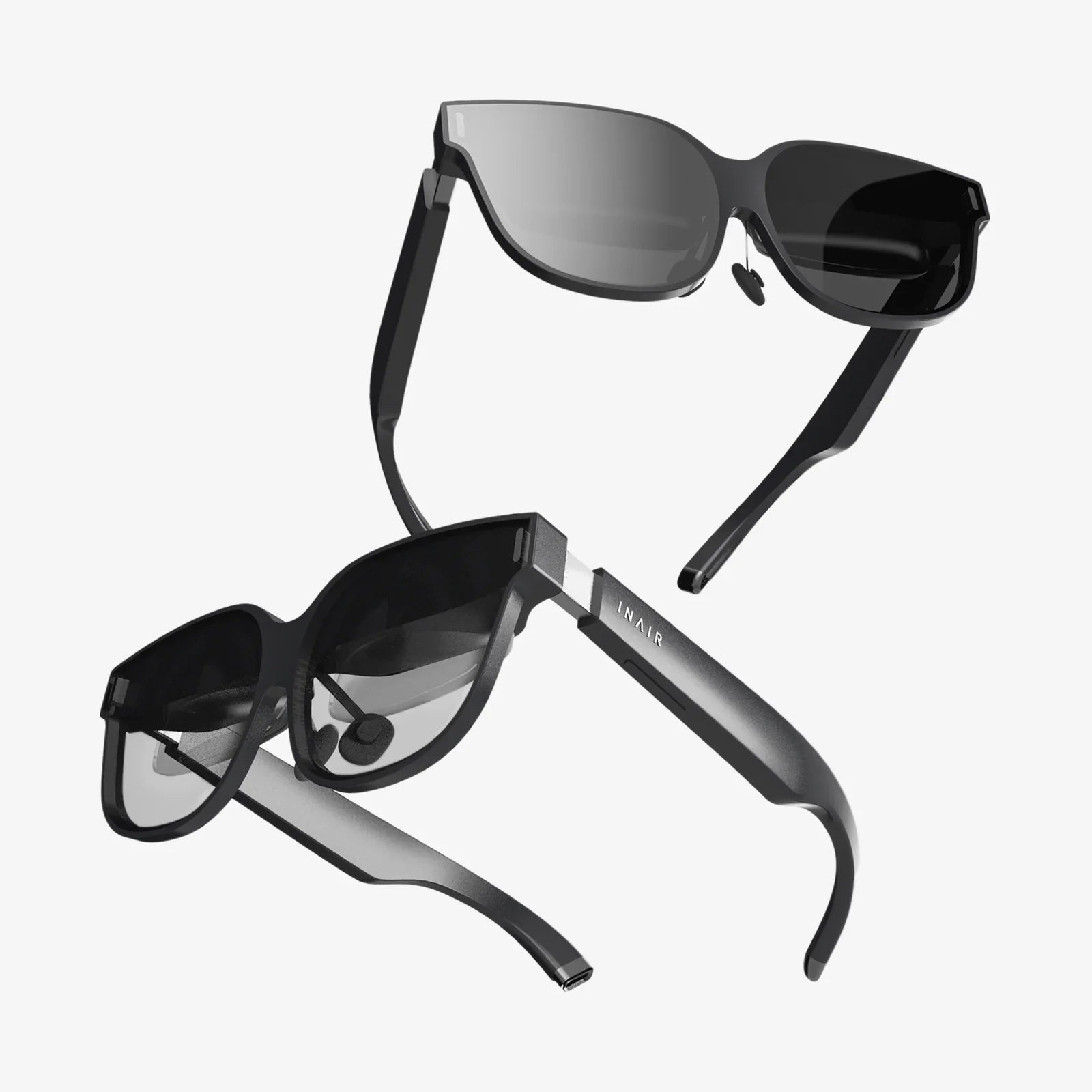
- by wangfred
AI Glasses That Look Normal: The Invisible Revolution on Your Face
- by wangfred
Imagine walking down the street, receiving real-time translations of foreign street signs, getting subtle reminders of a person's name you just met, or having the answer to a complex problem displayed discreetly in the corner of your vision—all without ever pulling out a device or looking like a character from a science fiction movie. This is the promise of AI glasses that look normal, a technological leap that aims to weave artificial intelligence so seamlessly into our daily lives that it becomes almost invisible. This isn't about flashy gadgets; it's about a fundamental shift in human-computer interaction, moving from something we hold to something we wear, from a tool we actively use to an ambient partner that passively assists.
The dream of computerized eyewear is not new. For decades, visionaries and tech companies have attempted to place a computer on our faces, with results ranging from clunky and impractical to socially awkward and commercially unsuccessful. Early iterations were often bulky, tethered to heavy processing units, and featured displays that were obtrusive and limited their field of view. They screamed "technology" in a context where most people want their glasses to whisper "style."
The fundamental challenge has always been a trilemma: balancing computational power, battery life, and a normal, socially acceptable form factor. You could have powerful glasses, but they'd be large and have short battery life. You could have glasses that last all day, but they'd be computationally weak. Or, you could have glasses that look normal, but they would sacrifice both power and battery. Recent breakthroughs are finally allowing engineers to solve this puzzle. The miniaturization of processors, advances in ultra-low-power chipsets designed for on-device AI, and more efficient battery technologies are converging to make truly normal-looking AI glasses a reality.
So, how do these unassuming frames deliver such powerful capabilities? The magic lies in a sophisticated suite of miniaturized components working in concert.
The true potential of normal-looking AI glasses is unlocked not by what they are, but by what they enable you to do. The applications span from practical daily assistance to transformative professional and accessibility tools.
Imagine a mechanic seeing a wiring diagram overlaid on the engine they are repairing, a student getting historical facts about a monument they are viewing, or a chef seeing recipe timers and instructions hands-free while cooking. The ability to access contextual information without breaking focus or flow state is a monumental boost to productivity and immersive learning.
For individuals with visual or hearing impairments, AI glasses can act as a powerful assistive technology. They can describe scenes, read text aloud, identify currency, amplify sounds, and provide real-time captioning of conversations. By providing this information audibly or through simplified visual cues, they can offer a new level of independence.
In our globalized world, these glasses could finally break down language barriers. Conversing with someone in a different language could involve near-real-time subtitles of what they are saying and a whispered translation of your responses. Traveling in a foreign country could become infinitely easier, with menus, signs, and directions instantly translated.
We've all experienced the frustration of forgetting a name moments after an introduction. AI glasses, with facial recognition (opted into and used ethically), could provide a subtle name prompt. They could also help those with memory-related conditions by offering contextual reminders about tasks, locations, and people.
This technology does not arrive without significant and valid concerns. The very feature that makes AI glasses powerful—their always-on, always-sensing nature—is also what makes them potentially intrusive. The idea of people wearing cameras and microphones capable of recording at any moment is a legitimate societal fear.
Addressing this requires a multi-faceted approach:
The path forward is not to ban the technology, but to build it with privacy and ethical considerations at its core from the very beginning.
As this form factor matures and becomes more widespread, its impact will extend far beyond convenience. We are looking at a potential shift in the very fabric of human cognition and social interaction. Will we become overly reliant on constant digital assistance, potentially atrophying our own memory and problem-solving skills? Or will it free up our cognitive resources for more creative and complex pursuits, effectively augmenting human intelligence?
Socially, norms will have to adapt. How do we interact with someone who is partially engaged with a digital overlay? The concept of "presence" may need to be redefined. Furthermore, a new digital divide could emerge—not just based on who has access to information, but on who has access to seamless, instantaneous information.
The ultimate success of AI glasses that look normal hinges on a simple but profound idea: the best technology feels like no technology at all. It's not a device you use; it's an experience you have. It's the quiet confidence of navigating the world with an expert guide whispering in your ear, the relief of never forgetting a important detail, and the joy of connecting across cultures without a second thought. The revolution won't be televised; it'll be reflected in the lenses of a perfectly ordinary pair of glasses.
Share:
Which Is an Example of Augmented Reality? A Deep Dive into the Digital Layer Over Our World
Which Is an Example of Augmented Reality? A Deep Dive into the Digital Layer Over Our World