Imagine pointing your phone at a seemingly empty city street and watching historical figures reenact a pivotal moment right before your eyes, or looking through a pair of glasses at a complex engine to see animated repair instructions overlaid directly onto the machinery. This is not science fiction; it is the tangible, revolutionary experience of augmented reality (AR), a technology that is rapidly weaving a digital tapestry over our physical world. The question "which is an example of augmented reality?" opens a portal to a universe of practical, innovative, and often magical applications that are reshaping how we work, learn, shop, and play. This deep dive will move beyond the buzzword to explore the very fabric of AR, illustrating its profound potential with concrete, real-world examples.
Demystifying the Magic: What Exactly Is Augmented Reality?
Before we can catalog its examples, we must first define the beast. Augmented reality is a technology that superimposes a computer-generated image, video, or 3D model onto a user's view of the real world, thus creating a composite view that augments the real world with digital information. Unlike Virtual Reality (VR), which creates a completely immersive, artificial environment, AR starts with the real world and adds to it. The core principle is contextual integration; the digital content is not random but is directly relevant to the physical environment the user is in.
The technological stack that makes this possible is complex but fascinating. It typically involves:
-
Sensors and Cameras: These act as the eyes of the device, gathering real-world data. They scan the environment, track surfaces, and understand depth and spatial relationships.
-
Processing: AR devices, whether smartphones or specialized glasses, require significant processing power akin to a powerful computer to combine the digital and physical seamlessly.
-
Projection and Display: This is how the digital content is presented to the user. It can be through a smartphone screen, a head-up display (HUD), smart glasses, or even more experimental retinal projections.
-
Software and Algorithms: This is the brain of the operation. Sophisticated algorithms, often powered by machine learning, perform simultaneous localization and mapping (SLAM). SLAM allows the device to understand its position in the world while simultaneously mapping the environment around it, ensuring a digital dragon can convincingly sit on your real-world coffee table.
Beyond the Game: Expansive Real-World Applications
While a certain mobile game brought AR to mass consciousness, its utility stretches far beyond capturing digital creatures. The answer to "which is an example of augmented reality?" is found in dozens of industries solving real human problems.
Revolutionizing Retail and E-Commerce
Perhaps one of the most relatable examples is in how we shop. AR has effectively bridged the gap between online convenience and in-store certainty.
-
Virtual Try-On: Fashion and beauty retailers allow customers to use their smartphone cameras to "try on" everything from sunglasses and makeup to hats and hairstyles in real-time. Furniture retailers have adopted this powerfully, enabling users to place true-to-scale 3D models of sofas, tables, and decor directly into their living room. They can walk around the item, see how the light hits it at different times of day, and be confident it fits before purchasing.
-
In-Store Navigation and Information: Some large retail chains have implemented AR through their apps. By pointing their phone at a store shelf, a user can see product reviews, nutritional information, or even allergy warnings overlaid on the physical products. Other apps can guide you through a large store to the exact aisle and shelf where your item is located.
Transforming Education and Training
AR is turning abstract concepts into tangible, interactive experiences, fundamentally changing the learning process.
-
Interactive Textbooks: Instead of a static image of a human heart in a biology book, students can scan the page with a tablet to see a beating, interactive 3D model emerge. They can rotate it, zoom in on layers, and watch animations of blood flow—all from their desk.
-
Complex Skill Training: This is a paramount example of industrial AR. Mechanics in training can look at an engine through AR glasses to see step-by-step repair instructions and animated guides highlighting exactly which bolt to turn next. Medical students can practice procedures on detailed, virtual holograms overlayed onto mannequins, reducing risk and improving proficiency before working on real patients. This type of hands-on, visual guidance drastically reduces error rates and improves learning retention.
Enhancing Healthcare and Medicine
The stakes in healthcare are high, and AR is proving to be a life-saving tool.
-
Enhanced Surgical Visualization: Surgeons can use AR displays to see critical information, such as the precise location of a tumor or the path of a major blood vessel, directly in their field of view during an operation. This is achieved by overlaying pre-operative scans (like CT or MRI) onto the patient's body, effectively giving them "X-ray vision" and allowing for more precise and less invasive procedures.
-
Patient Education and Rehabilitation: Doctors can use AR models to explain a complex condition or surgical procedure to a patient in an easy-to-understand visual format. In physical therapy, AR games can motivate patients to complete repetitive movements by turning exercises into engaging challenges.
Powering Industrial Design and Manufacturing
Known as Industry 4.0, AR is a cornerstone of the modern factory and design studio.
-
Prototyping and Design: Automotive and product designers can project full-scale, interactive 3D models of new designs into a physical space. Team members can walk around the virtual prototype, inspect details, and make modifications in real-time without the cost and time of building a physical model.
-
Assembly Line Assistance and Maintenance: assembly line workers receive visual cues through smart glasses that show exactly which part to install and where, streamlining complex processes. Field technicians repairing complex machinery can receive remote expert guidance; a specialist miles away can see what the technician sees and draw arrows or highlight components directly into their visual field, enabling faster and more accurate repairs.
Reimagining Navigation and Tourism
AR is turning our world into an interactive guidebook.
-
Windshield Heads-Up Displays (HUDs): Already available in many vehicles, this AR application projects navigation arrows, speed, and hazard warnings directly onto the windshield, allowing drivers to keep their eyes on the road.
-
Interactive City Exploration: Tourists can point their phone's camera at a monument, building, or street sign and instantly see historical facts, restaurant reviews, or translations overlaid on the live view. Museums use AR to bring exhibits to life, allowing skeletons to regain flesh or paintings to animate, telling their story directly to the visitor.
The Hardware Spectrum: How We Access the Augmented World
The experience of AR varies greatly depending on the device used, each offering a different level of immersion.
-
Smartphone and Tablet AR: This is "marker-based" or "location-based" AR and is the most accessible form. It uses the device's camera and screen as a window to layer digital content onto the world. It's powerful but requires holding a device up.
-
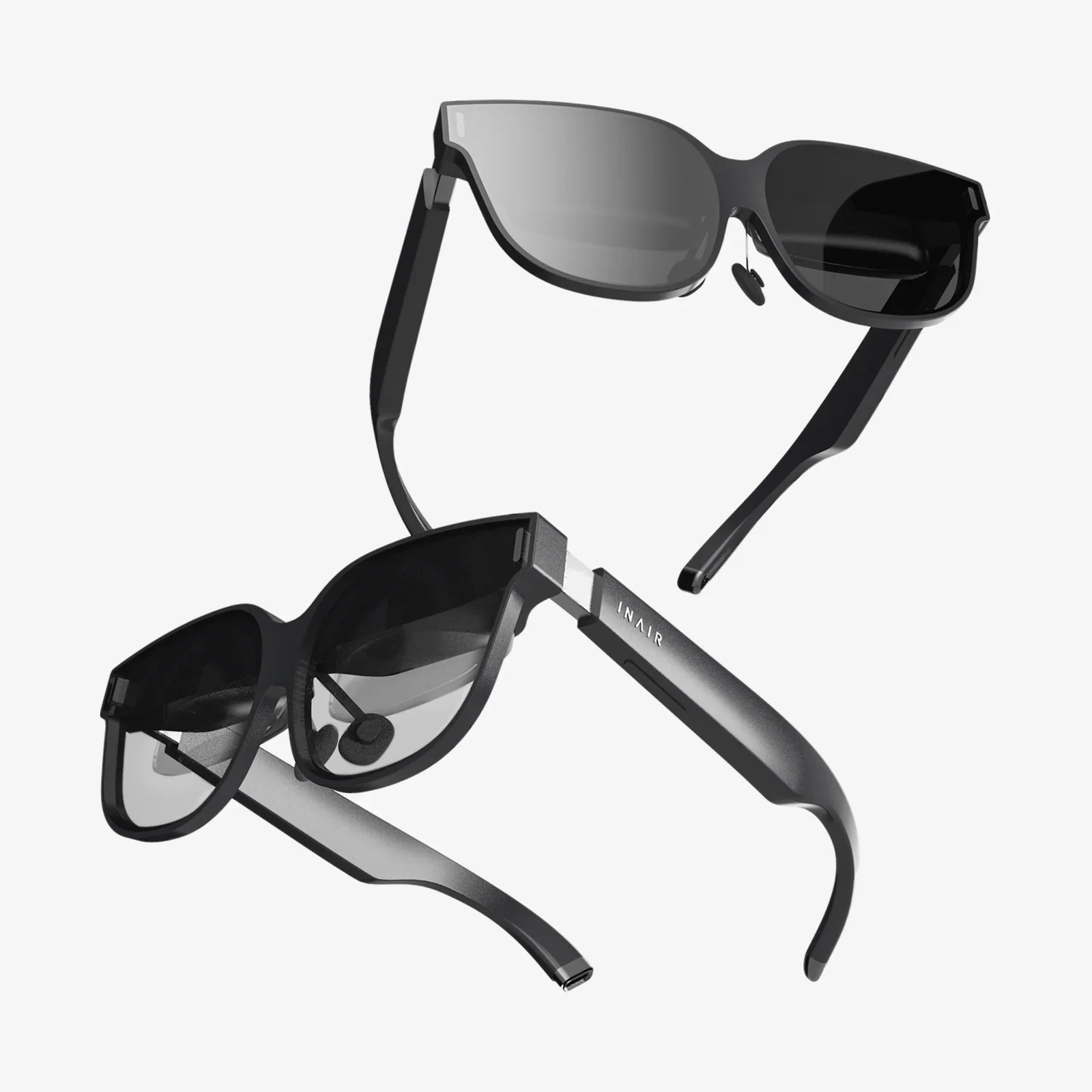
Smart Glasses and Headsets: This is the future of truly seamless AR. These wearable devices, like more advanced versions of the glasses pioneered by a major tech company, project information directly into the user's field of vision, leaving their hands free. This is crucial for industrial and medical applications.
-
Specialized AR Systems: This includes everything from the holographic displays used in design studios to AR heads-up displays in fighter jet cockpits and modern vehicles.
The Future and Ethical Considerations
The trajectory of AR points towards a future where digital information is seamlessly and constantly integrated into our perception of reality—a concept often called the "metaverse" or "spatial computing." We are moving towards lighter, more powerful glasses with longer battery life and more natural user interfaces like gesture and voice control.
However, this powerful technology comes with significant questions. Issues of data privacy are immense, as AR devices constantly capture and analyze our surroundings. The potential for pervasive advertising and digital spam in our physical vision is a concern. Furthermore, the societal impact of a population divided between those who can afford AR technology and those who cannot—a "digital divide" in the physical world—must be addressed. The line between the real and the digital, and who controls that layer, will be one of the defining debates of the coming decade.
So, the next time you wonder which is an example of augmented reality, look beyond the game. It’s the medical student practicing a delicate procedure, the factory worker assembling a complex component with flawless accuracy, the family visualizing a new sofa in their home, and the tourist unlocking the hidden stories of a city. It is a transformative lens through which we are beginning to see not just what is, but what could be, fundamentally enhancing human capability and reshaping our reality one digital layer at a time. The future is not just ahead of us; it’s already being superimposed right before our eyes.


Share:
AI Glasses That Look Normal: The Invisible Revolution on Your Face
AI Glasses That Look Normal: The Invisible Revolution on Your Face