


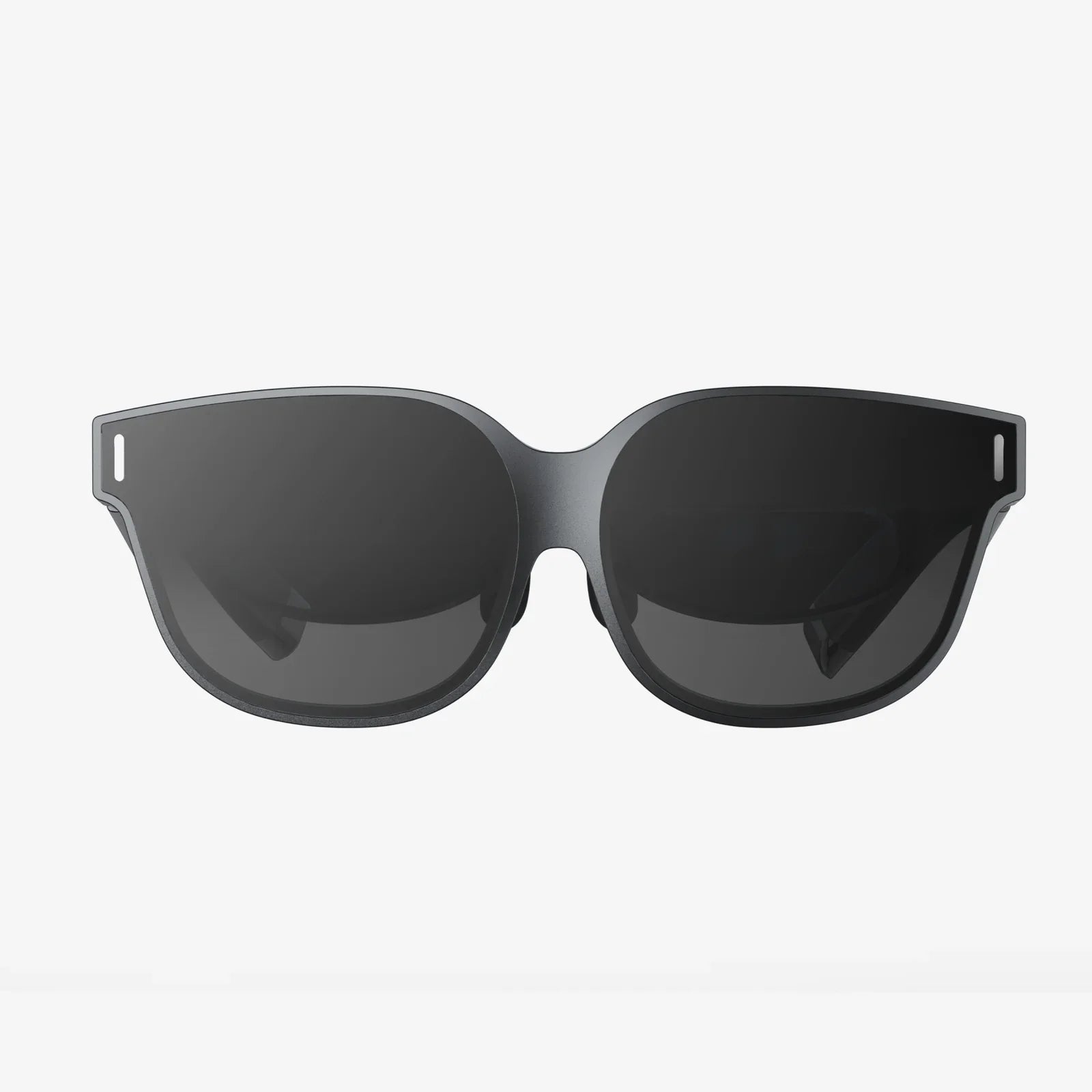
Imagine a world where information doesn't live on a screen you hold in your hand, but is seamlessly woven into the very fabric of your reality. A world where language barriers dissolve before your eyes, where you can instantly identify constellations in the night sky, or receive subtle guidance while repairing a complex engine—all without ever looking down at a device. This is not a distant science fiction fantasy; it is the emerging reality being built today, and it is being delivered through a revolutionary form of wearable technology: AI glasses. These sophisticated devices are poised to redefine our relationship with technology, moving computing from our pockets to our periphery and augmenting our human senses with the power of artificial intelligence.
The Core Concept: Augmented Reality and Ambient Computing
At their essence, AI glasses are a wearable computer designed for your face. They integrate a combination of sophisticated hardware—including micro-displays, cameras, microphones, speakers, and a suite of sensors—with powerful, on-device and cloud-based artificial intelligence software. Unlike virtual reality headsets that transport you to a completely digital environment, most AI glasses are designed for augmented reality (AR). Their primary function is to overlay digital information, graphics, and data onto your view of the physical world, enhancing your perception and interaction with your surroundings.
This philosophy is part of a broader shift in technology known as ambient computing. The goal is to make technology fade into the background, becoming an intuitive and always-available helper rather than a distracting device that demands our constant attention. Instead of pulling out a smartphone, unlocking it, opening an app, and searching for information, AI glasses aim to deliver that information contextually and immediately, right before your eyes, often activated by a simple voice command or a glance. This represents a fundamental change from -seeking information to receiving it proactively and contextually.
Deconstructing the Magic: Key Hardware Components
The seemingly magical abilities of AI glasses are made possible by a carefully orchestrated symphony of hardware components, each playing a critical role.
- Optical Systems and Micro-Displays: This is how digital images are projected into the user's field of view. Different technologies are used, from waveguide displays that pipe light to the eye to more direct projection systems. The challenge is to create bright, clear, and high-contrast images that can be seen in various lighting conditions without obstructing the user's natural vision.
- Cameras and Sensors: High-resolution cameras act as the "eyes" of the glasses, continuously capturing the world in front of the user. These feeds are processed by the AI to understand the environment. Additional sensors, including depth sensors, accelerometers, gyroscopes, and magnetometers, work together to precisely track head movements, understand spatial orientation, and map the user's position in 3D space. This is crucial for anchoring digital objects stably in the real world.
- Audio Systems: Advanced bone conduction technology or miniature directional speakers allow audio to be delivered directly to the user's ears without blocking ambient environmental sounds. This enables private listening for notifications, translations, or music while keeping the user aware of their surroundings. Microphones, often with beamforming capabilities, are used to capture voice commands clearly while filtering out background noise.
- Processing Unit and Battery: A miniaturized computer, often featuring a specialized neural processing unit (NPU), handles the immense computational load required for real-time AI tasks. All of this is powered by a compact, high-density battery strategically placed in the frame or arms of the glasses to balance weight and provide all-day usability.
A Day in the Life: Transformative Functionalities and Use Cases
The true power of AI glasses is revealed not in their specifications, but in the practical, life-enhancing tasks they can perform. Their applications span from mundane daily chores to complex professional tasks.
Real-Time Language Translation and Cross-Cultural Communication
One of the most immediately impactful features is real-time translation. Imagine traveling in a foreign country and looking at a restaurant menu, a street sign, or a historical plaque. The AI glasses' camera captures the text, and in near real-time, the translated text is overlaid directly onto your view, seamlessly replacing the foreign characters with your native language. This extends to spoken conversation as well. As someone speaks to you in another language, you can see a live transcription of their words translated, or even hear a synthesized voice whisper the translation into your ear. This functionality has the profound potential to break down language barriers, fostering deeper cultural exchange and understanding.
Visual Assistance and Contextual Information
AI glasses can act as a visual assistant, providing instant information about what you see. Point your gaze at a landmark, and historical facts and figures might pop up. Look at a flower in a garden, and the glasses could identify its species and care instructions. This extends to urban environments as well. Look at a restaurant, and see its reviews and ratings superimposed on its facade. Glance at a movie poster, and see showtimes and a link to watch the trailer. This "visual search" capability turns the entire world into an interactive, information-rich database.
Augmented Navigation and Spatial Awareness
Moving beyond the turn-by-turn directions on a phone screen, AI glasses can project digital arrows, pathways, and markers onto the actual streets and sidewalks in front of you. This allows for navigation without constantly looking down at a device, making it safer for pedestrians and more intuitive to follow. Inside large, complex buildings like airports, hospitals, or corporate campuses, the glasses could guide you to your exact gate, room, or office by overlaying directions onto the real-world hallways.
Accessibility and Empowerment
For individuals with visual or hearing impairments, AI glasses offer a powerful new layer of assistance. For those with low vision, the glasses can identify obstacles, enhance contrast, read text aloud, and describe scenes, people, and objects. For the hard of hearing, they can provide real-time captioning of conversations, transcribing what people are saying as they say it and displaying the text within the user's field of view. This application demonstrates the technology's potential to genuinely augment human capability and provide greater independence.
Professional and Industrial Applications
In the workplace, AI glasses are powerful tools for productivity and precision. A field technician repairing a complex machine can see schematics, instructional videos, or sensor data overlaid directly onto the equipment they are working on. A surgeon could have vital signs and 3D anatomical models visualized during a procedure. A warehouse worker can see picking and packing instructions without needing to carry a scanner or tablet, keeping their hands free. In these contexts, the technology reduces error, speeds up task completion, and provides a continuous stream of hands-free information.
The Invisible Engine: The AI and Machine Learning Models
None of these features would be possible without the complex AI models running behind the scenes. These models process the vast streams of data from the glasses' sensors in real-time.
- Computer Vision: This is the core technology that allows the glasses to "see" and understand the visual world. It involves object detection (identifying and locating objects like a car or a person), image segmentation (understanding the boundaries of different elements in a scene), and text recognition (reading and interpreting written words).
- Natural Language Processing (NLP): NLP enables the translation features and allows the glasses to understand and process voice commands. It goes beyond simple keyword recognition to grasp the intent and context behind a user's speech.
- On-Device AI vs. Cloud AI: For speed, privacy, and reliability (especially without an internet connection), many AI tasks are processed directly on the device itself using its NPU. More complex computations, like searching a massive database, may be sent to the cloud. The most advanced systems use a hybrid approach, seamlessly blending on-device and cloud processing for optimal performance.
Navigating the Challenges: Privacy, Design, and Social Acceptance
The path to mainstream adoption of AI glasses is not without significant hurdles. The very features that make them powerful also raise important questions.
Privacy and the Societal Gaze: A device with always-on cameras and microphones worn on one's face is inherently privacy-invasive. The potential for unauthorized recording, facial recognition, and data collection is a major concern. Manufacturers must implement clear, transparent, and robust privacy controls. This includes physical indicators like recording lights, easy-to-use software toggles to disable sensors, and strict data anonymization policies. Building trust is paramount; without it, the technology risks creating a "societal gaze" where people feel uncomfortable being around someone who could be recording them at any moment.
The Form Factor Conundrum: For any wearable to succeed, it must be something people actually want to wear. Early prototypes were often bulky, awkward, and emitted a noticeable glow from their displays—a phenomenon known as the "hologram effect." The ultimate challenge is to pack immense computing power into a form factor that is lightweight, comfortable, aesthetically pleasing, and available in a variety of styles to suit different tastes. The goal is to look like ordinary eyewear, not a piece of conspicuous tech.
Battery Life and Connectivity: Demanding AI processes are a significant drain on battery life. Delivering a full day of use on a single charge remains a key engineering challenge. Furthermore, many features rely on a constant, high-bandwidth connection to the cloud, which can be unreliable or unavailable in certain areas, limiting functionality.
The Future Vision: Where Do We Go From Here?
The current generation of AI glasses is merely the beginning. As the underlying technologies—especially AI chips, battery density, and display systems—continue to advance at a rapid pace, the capabilities of these devices will expand exponentially. We can anticipate a future where AI glasses evolve into a universal companion, capable of more complex and predictive assistance. They could analyze your schedule and environment to proactively offer relevant information, act as a personalized fitness coach by analyzing your form during exercise, or even help with social interactions by providing subtle cues about the people you are meeting.
The long-term trajectory points toward a convergence of the digital and physical realms into a single, augmented experience. AI glasses are the key that unlocks this persistent digital layer, transforming how we work, learn, communicate, and navigate our lives. They promise a future where technology enhances our humanity without isolating us from the real world, empowering us with knowledge and capability right when and where we need it most.
The next time you fumble for your phone to look up a fact, translate a word, or find your way, consider this: the ultimate tool for these tasks might not be in your pocket, but sitting right on your face, waiting for its potential to be fully realized. The age of ambient, augmented intelligence is dawning, and it promises to change everything about how we perceive and interact with the world around us.
Share:
Extended Reality AR VR 2025: The Year the Digital and Physical Worlds Finally Merge
Augmented Reality Solutions Australia: Transforming Industries Down Under