


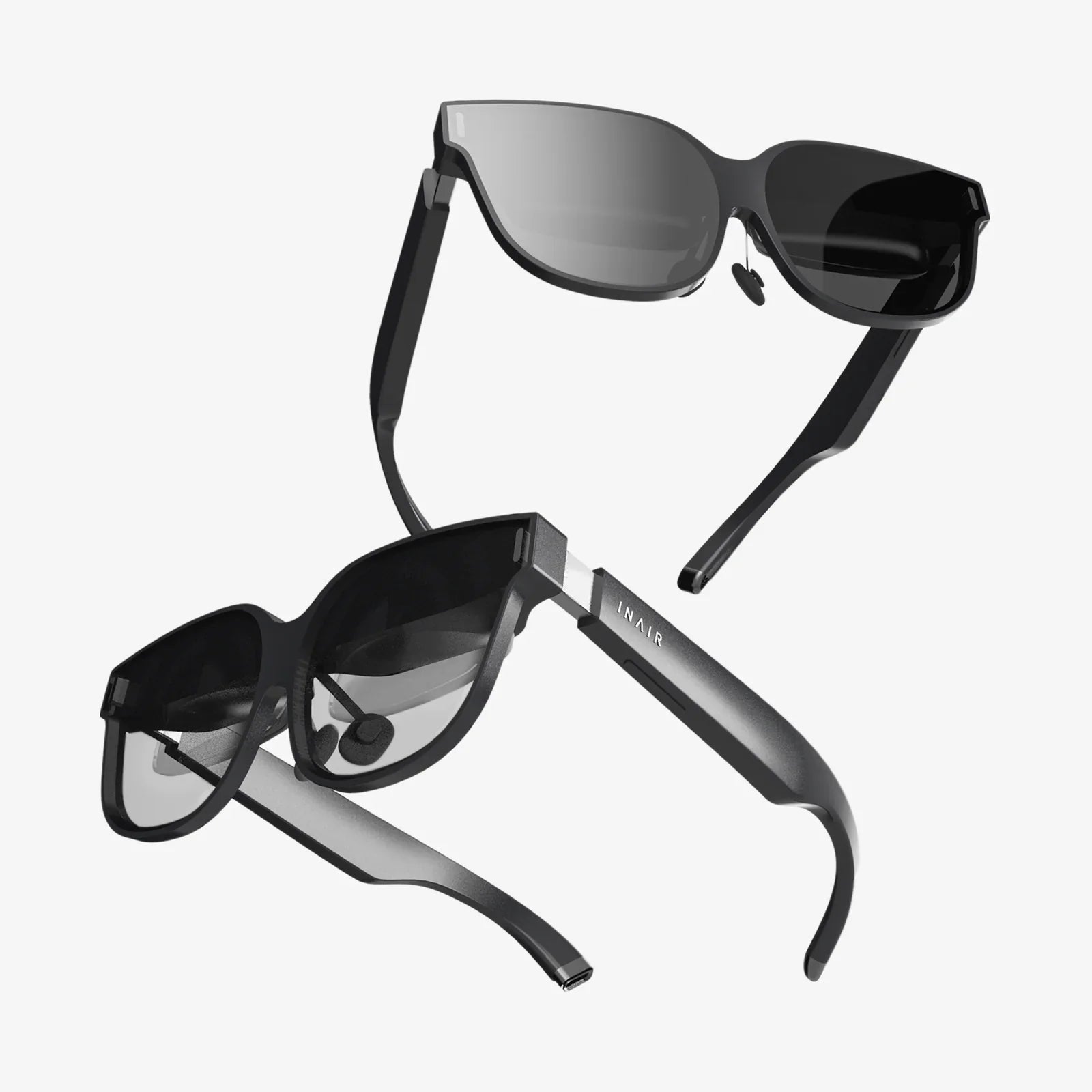
Imagine a world where your morning briefing isn't on a screen but projected onto your kitchen counter, where your remote colleague appears as a photorealistic hologram in the seat next to you, and where learning about ancient Rome means walking its bustling, virtual streets. This isn't a distant science fiction fantasy; it's the tangible future being built today, and 2025 is shaping up to be the pivotal year where Extended Reality (XR)—the umbrella term encompassing Augmented Reality (AR) and Virtual Reality (VR)—truly arrives for the masses. The convergence of critical technologies is setting the stage for a revolution that will blur the lines between our physical existence and the digital realm in ways we are only beginning to comprehend.
The Great Convergence: Beyond the AR vs. VR Debate
For years, the discourse around immersive technology has been bifurcated: AR versus VR. The former overlays digital information onto the real world, while the latter immerses the user in a completely synthetic environment. By 2025, this dichotomy will largely become obsolete. The future lies not in choosing one over the other but in a fluid spectrum of experiences, often referred to as the "virtuality continuum."
We are moving towards devices that can seamlessly transition along this continuum. A single pair of advanced smart glasses might start your day in an AR mode, displaying notifications and navigation cues as you commute. Upon arriving at your desk, the same device could trigger a deeper immersive mode, enveloping you in a private VR workspace for deep focus. This hybrid approach, sometimes called Mixed Reality (MR), will be the hallmark of next-generation hardware. The goal is to have the digital world understand the physical one—surfaces, lighting, objects—and interact with it intuitively, making the technology feel less like a tool and more like an extension of our own perception.
The Hardware Revolution: Lighter, Smarter, and More Powerful
The single biggest barrier to widespread XR adoption has been the hardware. Bulky headsets, limited battery life, and underwhelming processing power have confined high-end experiences to early adopters. 2025 will see these limitations crumble.
The form factor is undergoing a radical transformation. The quest for socially acceptable, all-day wearable glasses is the industry's holy grail. Advances in micro-optics, like holographic waveguides and pancake lenses, are making it possible to shrink the optical engine to something that can fit into a frame resembling conventional eyewear. Simultaneously, the move towards a split-rendering architecture is crucial. Instead of the headset doing all the heavy computational lifting, it will act as a sophisticated display and sensor hub, offloading complex processing to a powerful companion device, be it a smartphone, a dedicated compute puck, or even edge cloud servers. This drastically reduces weight, heat, and power consumption.
Furthermore, on-device intelligence is leaping forward. Dedicated AI co-processors will handle critical tasks in real-time:
- Eye-Tracking and Foveated Rendering: By precisely tracking where a user is looking, the system can render the center of their vision in ultra-high detail while subtly reducing the fidelity in their peripheral vision. This mimics human sight and slashes the GPU workload by orders of magnitude.
- Inside-Out Tracking and Spatial Mapping: Advanced sensor arrays (cameras, LiDAR, depth sensors) will continuously scan the environment, creating a millimetre-accurate 3D map of the room. This allows digital objects to occlude realistically behind real-world furniture and interact with physical surfaces.
- Natural Interaction: The clunky controllers of today will be supplemented, and often replaced, by hand-tracking and voice commands. The ability to reach out and "grab" a holographic model with your bare hands, or to pinch and drag virtual screens with intuitive gestures, creates a profound sense of presence and breaks down the last barriers of abstraction.
The Software and Connectivity Backbone: 5G and the Spatial Web
Powerful hardware is useless without an ecosystem of software and content to support it. The development for 2025 is not just about individual apps but the creation of a persistent, shared, and context-aware digital layer over our world—often called the spatial web or the metaverse.
This requires a new paradigm for connectivity. The high bandwidth and ultra-low latency promised by widespread 5G and nascent 6G deployments are the essential plumbing for cloud-rendered XR. They will enable complex experiences to be streamed directly to lightweight devices, making high-fidelity XR accessible without a tethered supercomputer. Imagine attending a live concert as a hologram from your living room, with near-zero lag, feeling as if you are truly there amidst the crowd.
Development platforms and game engines are already evolving to empower creators to build for this spatial web. These tools are integrating features specifically for understanding physical spaces, managing persistent digital content anchored to real-world locations, and facilitating multi-user interactions. This will give rise to a new class of "spial developers" who design experiences not for a rectangle but for the world itself.
Transforming Enterprise and Industry: The Productivity Paradigm Shift
While consumer applications capture the imagination, the most immediate and profound impact of XR by 2025 will be felt in enterprise and industrial settings. The return on investment here is clear and measurable, driving rapid adoption.
- Remote Assistance and Collaboration: A field technician repairing a complex piece of machinery can share their live view with an expert thousands of miles away. The expert can then annotate the technician's real-world view with arrows, diagrams, and instructions, effectively guiding their hands. This reduces downtime, travel costs, and errors dramatically.
- Design and Prototyping: Automotive, aerospace, and architecture firms are already using XR to visualize and interact with 3D models at 1:1 scale. By 2025, this will be standard practice. Teams from across the globe will stand inside a virtual prototype of a new building or car engine, making design decisions long before any physical materials are used.
- Training and Simulation: From surgeons practicing complex procedures on virtual patients to warehouse workers learning optimal picking routes in a digital twin of their facility, XR provides a safe, scalable, and highly effective training environment. Muscle memory and spatial knowledge developed in simulation translate directly to real-world performance.
Reshaping Social Connection and Entertainment
The promise of XR as a social platform will move beyond the novel avatars of today towards genuine telepresence. The goal is to make remote interaction feel as natural as being in the same room.
Advancements in photogrammetry and volumetric capture will allow for the creation of hyper-realistic digital doubles of people. Coupled with spatial audio that accurately simulates sound coming from a specific point in space, a business meeting or a family gathering in XR will carry a weight and authenticity that flat video calls simply cannot match. Entertainment will become participatory. Instead of watching a movie, you might step into it, exploring the environment and experiencing the narrative from different angles. Live sports events will offer virtual seats with the best view in the house, alongside real-time stats and replays floating in your periphery.
Navigating the Inevitable Challenges
This exciting future is not without its significant challenges. The path to 2025 must be navigated carefully, with proactive solutions for the problems XR will inevitably create.
- Privacy and Data Security: XR devices are arguably the most intimate data collection devices ever conceived. They have the potential to record everything you see, hear, and even where you look. Establishing robust frameworks for data ownership, consent, and security is paramount to prevent a dystopian future of perpetual surveillance.
- Digital Divide and Accessibility: There is a real risk that these powerful tools could exacerbate existing inequalities. Ensuring equitable access and designing for inclusivity from the outset is critical to prevent a new class of "information haves and have-nots" based on who can afford to augment their reality.
- Psychological and Societal Health: What are the long-term effects of spending significant time in blended realities? Issues of identity, dissociation, and the potential for new forms of addiction need to be studied. Furthermore, the proliferation of persistent digital content could lead to visual pollution in public spaces, a new form of spam etched onto our reality.
The year 2025 represents more than just a date on a calendar; it is the culmination of decades of research, development, and dreaming. It is the threshold where Extended Reality stops being a technology we use and starts being an environment we inhabit. The devices will become invisible, the interactions will become instinctive, and the digital layer will become as integral to our daily lives as the internet is today. The businesses, creators, and policymakers who begin preparing for this spatial shift now will be the ones who shape the reality we all share tomorrow. The line between the human and the machine, the physical and the digital, is about to become beautifully, and irrevocably, blurred.
Share:
Best VR 2.0 Glasses: The Ultimate Immersive Experience Unveiled
AI Glasses What They Do: A Deep Dive Into The Future On Your Face