


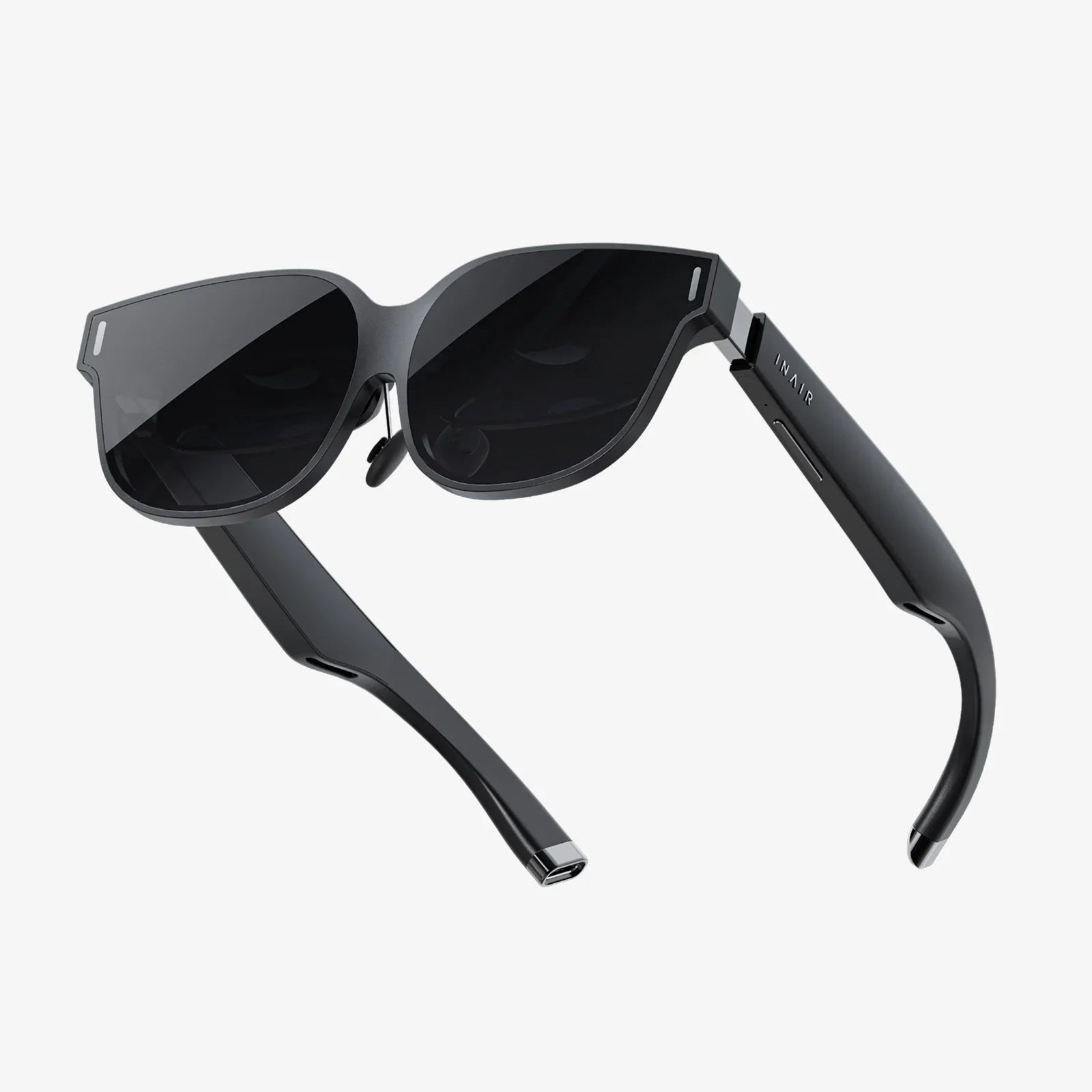
Imagine a world where information flows around you like a sixth sense, where digital insights are layered seamlessly onto your physical reality without the need to glance down at a screen. This isn't a distant sci-fi fantasy; it's the imminent future being shaped by a new category of wearable technology: AI glasses with an integrated headband. This innovative design isn't just a stylistic choice; it represents a fundamental leap in engineering, enabling a level of computational power, sensory input, and all-day comfort that previous wearable attempts could only dream of. We are standing on the precipice of a revolution, one that will dissolve the boundaries between our digital and physical lives, and it all starts with a simple band.
The Architectural Breakthrough: Why the Band Matters
For years, the dream of smart glasses was hampered by a critical constraint: space. Traditional eyeglass frames, with their delicate arms and minimalist design, simply lack the real estate to house the sophisticated technology required for true artificial intelligence and augmented reality. The processors needed for real-time language translation, object recognition, and spatial mapping generate heat and demand significant battery life. Attempting to cram this tech into a standard frame led to compromised performance, limited functionality, and designs that were often bulky, uncomfortable, or socially awkward.
The introduction of a band changes everything. This isn't merely a strap; it's a technological powerhouse.
- Distributed Computing Power: The band acts as a primary housing unit for the battery and the main processing chipset. By moving the computational heavy-lifting from the temples to the band, manufacturers can utilize more powerful, efficient processors without compromising on weight distribution or comfort around the ears and nose.
- Advanced Sensor Suite: The band provides ample room for a suite of sensors that are crucial for contextual awareness. This can include high-fidelity microphones for beamforming audio and capturing voice commands in noisy environments, additional cameras for a wider field of view and better depth perception, and inertial measurement units (IMUs) for precise head tracking.
- Immersive Audio Revolution: One of the most compelling applications is the integration of spatial audio speakers directly into the band. By positioning speakers near the ears without occluding them, these devices can deliver private, immersive sound experiences—from taking calls to listening to music—while still allowing the user to hear the ambient sounds of their environment. This is a critical safety feature and a key differentiator from traditional headphones, enabling a state of constant, aware connectivity.
This architectural shift transforms the glasses from a simple display terminal into a comprehensive wearable computer, with the band serving as its engine room.
Beyond Convenience: The Core AI Functionalities
The physical form is only half the story. The true magic of AI glasses with a band lies in the sophisticated artificial intelligence that powers them. This AI operates on several levels, constantly processing data from the built-in sensors to deliver proactive, contextual assistance.
Real-Time Translation and Transcrip-tion
Imagine walking through a foreign market and seeing subtitles appear beneath a vendor's speech, or sitting in a multinational meeting where every participant's words are translated and transcribed in real-time directly within your field of vision. The combination of powerful on-board processing, cloud-connected AI models, and sensitive microphones makes this possible. The band allows for multiple, strategically placed mics to cancel noise and isolate speech, making the translations remarkably accurate even in challenging acoustic environments. This functionality doesn't just break down language barriers; it effectively erases them, fostering a level of global communication previously unimaginable.
Contextual Awareness and Visual Search
These glasses can see what you see and understand it. The AI can identify objects, landmarks, and text. Point your gaze at a restaurant, and reviews or menu highlights might pop up. Look at a complex piece of machinery, and a schematic or instruction manual could overlay the relevant components. Need to remember where you parked? The glasses can log the location visually. This visual search capability turns the world into an interactive database, providing information on-demand without ever requiring a manual search query.
Proactive Personal Assistance
Moving beyond simple voice commands like "set a timer," the AI in these glasses aims to be predictive. By understanding your routine, location, and schedule, it can offer gentle, helpful nudges. Are you walking past a grocery store? It might remind you that you're out of milk. Is your calendar showing a meeting across town? It could alert you to leave early based on real-time traffic conditions it sees through mapping data. This assistant is always present, always aware, but designed to be unobtrusive, offering information only when it's truly useful.
A New Paradigm for Human-Computer Interaction
AI glasses with a band fundamentally challenge our current model of interacting with technology—the smartphone-led paradigm of "pull" information, where we must consciously take out a device, unlock it, open an app, and search for what we need. This new wearable ushers in an era of "push" information, where relevant data is presented to us automatically based on our context.
This represents a shift towards ambient computing, where technology recedes into the background of our lives. The goal is not to command your attention but to augment it. The interface becomes your entire environment, and interaction happens through natural language, gaze, and gesture. This seamless integration promises to make us more efficient and more informed, but it also raises a crucial question: will it make us more present, or less?
Proponents argue that by eliminating the need to constantly check a phone, these devices could actually enhance real-world engagement. You can maintain eye contact in a conversation while secretly being fed talking points or translations. You can enjoy a live sports game while seeing player stats overlay the field, without ever looking away from the action. The technology aims to enhance reality, not replace it.
Navigating the Ethical and Social Minefield
No discussion of always-on, always-aware wearable technology is complete without a serious examination of the profound ethical and social implications. The very features that make AI glasses powerful also make them potentially intrusive.
- Privacy for the User and the Bystander: This is the paramount concern. Devices with always-on cameras and microphones present a significant privacy challenge. Robust, transparent controls are non-negotiable. There must be clear, physical indicators—like a light—that show when recording is active. Furthermore, policies must be established to prevent unauthorized recording of individuals without their consent, a concern that has plagued previous iterations of wearable cameras.
- Data Security: The amount of personal, visual, and audio data these devices will collect is staggering. This data is a goldmine for the AI models, but also a prime target for malicious actors. Manufacturers must implement end-to-end encryption and give users full control over their data, including what is stored, how it is used, and the ability to delete it permanently.
- Social Acceptance and Etiquette: Will society accept people wearing cameras on their faces in every social setting? Restaurants, gyms, offices, and private homes may need to establish new norms. The "glasshole" stigma from earlier attempts shows that social acceptability is not a given and must be earned through respectful design and user behavior.
- The Digital Divide: As with any advanced technology, there is a risk that these tools could exacerbate existing inequalities, creating a class of hyper-informed, augmented individuals and leaving others behind.
Addressing these concerns is not a secondary task; it is a prerequisite for the successful and responsible adoption of this technology.
The Future is Framed: What Lies Ahead?
The current generation of AI glasses with a band is impressive, but it is merely the foundation. The future development path is incredibly exciting. We can anticipate advancements in battery technology that will allow for all-day use even with more powerful features. Display technology will improve, moving from simple LED projectors to full-color, high-resolution waveguides that can overlay vivid digital images onto the real world. The AI itself will become more nuanced, understanding not just what you are looking at, but your intent and emotional state.
Potential applications span every imaginable sector: surgeons could access patient vitals and diagrams hands-free during procedures; engineers could see schematics overlaid on equipment they are repairing; tourists could experience historical sites come alive with reenactments and information. The line between assistive technology and consumer technology will blur, offering powerful tools for individuals with disabilities, from auditory assistance for the hard of hearing to navigational aid for the visually impaired.
The integration of a band is the key that unlocked this potential. It solved the fundamental physics problem of where to put the tech, allowing the glasses themselves to remain lightweight, stylish, and focused on what they do best: providing a window to an augmented world.
The age of staring down at a small, isolated screen is drawing to a close. The next computing platform is being built not on your desk or in your pocket, but on your face, and its most critical component is the unassuming band that makes it all possible. This convergence of design and intelligence doesn't just offer a new gadget; it promises a fundamental change in how we perceive, interact with, and understand the world around us. The future is not in your hand—it’s in your field of view.
Share:
Augmented Reality AR Glasses Supplier: Your Ultimate Guide to Sourcing the Future
Latest Wearable Tech 2025: The Invisible Revolution Reshaping Your Reality