


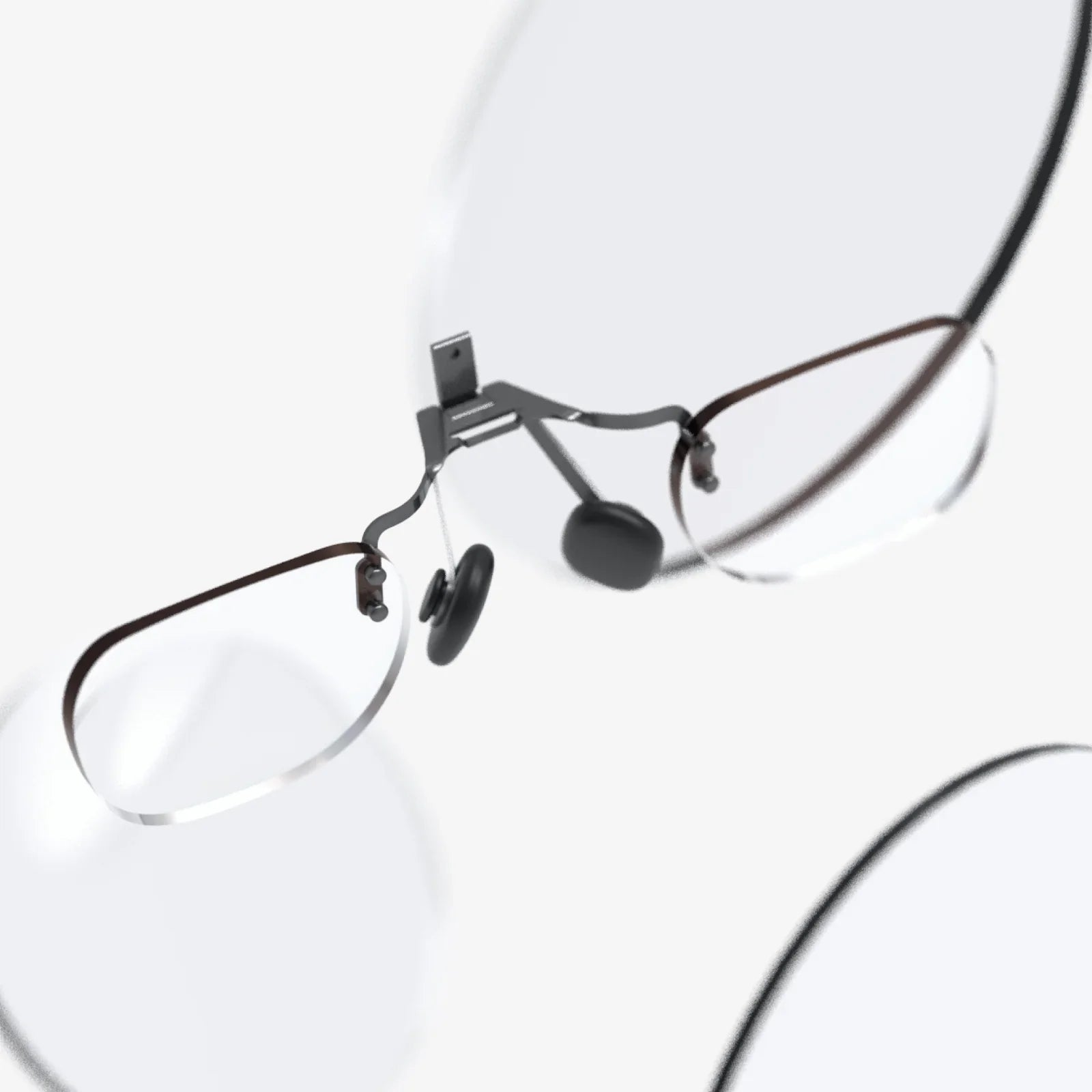
Imagine a world where digital information seamlessly overlays your physical reality, where your field of vision becomes a canvas for productivity, entertainment, and connection. This is no longer the stuff of science fiction; it's the imminent future being built today, and the gateway is a pair of sophisticated augmented reality glasses. But behind every sleek design and powerful processor lies a complex, global network of innovation. The single most critical decision for any company aiming to bring this future to market is choosing the right augmented reality AR glasses supplier—a partner that can transform a visionary concept into a reliable, market-ready product. This choice will determine not just the quality of the device, but the very experience of the end-user and the ultimate success of the entire venture.
The Evolving Ecosystem of AR Hardware Supply
The landscape for sourcing AR glasses is multifaceted and rapidly maturing. Unlike a decade ago, when options were limited to a handful of specialized defense contractors, today's market is a vibrant tapestry of different types of suppliers, each with its own strengths, specializations, and target markets. Understanding this ecosystem is the first step toward making an informed decision.
At the highest level, suppliers can be categorized by their approach to market and their core competencies. Some companies operate as Original Design Manufacturers (ODMs). These partners offer pre-designed, pre-engineered AR glass solutions that can be slightly customized, typically with branding and software, and then brought to market under another company's name. This path offers significant advantages in speed to market and reduced development cost, as the heavy lifting of R&D, prototyping, and initial testing has already been completed. It is an ideal route for businesses that want to enter the AR space quickly without building an entire hardware division from scratch.
On the other end of the spectrum are Original Equipment Manufacturers (OEMs) or custom manufacturing partners. These suppliers engage in a deeply collaborative process to create a completely bespoke AR device from the ground up. This path is chosen by companies with a very specific, often novel, vision for their AR glasses—a unique form factor, a proprietary display technology, or specialized sensors for a niche industrial application. While this route demands a substantially larger investment in both time and capital, it results in a truly differentiated product that can capture a unique position in the market.
Furthermore, the supply chain is not monolithic. Some suppliers focus exclusively on key enabling components, such as micro-displays (e.g., MicroLED, LCoS), waveguides, optical engines, and specialized sensors. These component-level suppliers are the bedrock of the industry, driving the technological advancements that make each generation of AR glasses lighter, brighter, and more power-efficient. Partnering with a full-scale glasses supplier often means indirectly leveraging the innovations of these specialized component makers.
Critical Factors in Selecting Your AR Glasses Supplier
Choosing a supplier is far more complex than comparing spec sheets and price quotes. It is a strategic partnership that will last for years. Several non-negotiable factors must be rigorously evaluated.
Technical Proficiency and R&D Capability
The core of any worthy supplier is its engineering talent and its commitment to research and development. You must assess their track record. Have they successfully shipped products at scale? Do they have deep expertise in the "trinity" of AR challenges: optics, display, and miniaturization? Request detailed case studies and ask to speak with existing clients. A supplier's ability to innovate and solve complex technical problems will be the greatest determinant of your product's performance.
Manufacturing Quality and Scalability
A brilliant prototype is worthless if it cannot be manufactured consistently and at volume. scrutinize the supplier's Quality Assurance (QA) processes and certifications (like ISO 9001). Do they have experience with high-precision, low-volume assembly lines, and can they scale to hundreds of thousands or millions of units if your product is a hit? A visit to their production facilities is highly recommended to witness their manufacturing hygiene, supply chain management, and assembly line capabilities firsthand.
Software and Development Support
Modern AR glasses are a symphony of hardware and software. The best hardware is crippled by poor software development kits (SDKs), unstable firmware, or inadequate developer support. Evaluate the supplier's software stack. Is it robust and well-documented? Do they offer strong technical support to your software team? A supplier that provides a solid SDK, regular firmware updates, and accessible engineering support dramatically reduces your time to market and improves the stability of the final product.
Navigating the Core Technologies: What Your Supplier Must Master
Your chosen supplier must be a master of several cutting-edge technologies. Their competency in these areas will directly define the user experience of your AR glasses.
The Optical Heart: Display and Waveguide Systems
This is arguably the most critical technological hurdle. The goal is to project bright, high-resolution digital images onto the user's retina while allowing them to see the real world clearly. The two main components are the micro-display (the tiny screen generating the image) and the optical combiner (which merges the digital and real-world light).
Suppliers may utilize different display technologies, such as MicroLED for its high brightness and efficiency, or LCoS and DLP for their maturity. The combiner is often a waveguide—a flat, glass-like piece of optics that pipes light from the display on the temple to the eye. Manufacturing waveguides with high efficiency and minimal artifacts (like rainbow effects) is a dark art mastered by only a handful of suppliers globally. Your partner's choice and mastery of this optical stack will determine the clarity, field of view, and aesthetic appeal of the glasses.
Processing Power and Connectivity
AR processing is computationally intensive, requiring real-time tracking, rendering, and understanding of the environment. The supplier must architect a system that balances performance with thermal management and battery life. Some designs use a processing unit tethered to the glasses or housed within a smartphone, while more advanced designs aim for all computing to be self-contained within the glasses frame (standalone). The supplier's expertise in system-on-chip (SoC) integration, thermal design, and power management is paramount.
Sensor Fusion and Spatial Computing
For digital objects to feel anchored in the real world, the glasses must understand their position and orientation within it. This requires a suite of sensors—cameras, inertial measurement units (IMUs), depth sensors, and sometimes LiDAR—and sophisticated algorithms to fuse their data. This process, known as sensor fusion, is the foundation of spatial computing. A superior supplier will have deep expertise in calibrating these sensors and developing algorithms for robust inside-out tracking, hand-tracking, and scene understanding, enabling truly immersive and interactive AR experiences.
Beyond the Product: The Intangibles of a Successful Partnership
The relationship with your supplier extends beyond a simple client-vendor transaction. Several softer, yet crucial, factors must align for long-term success.
Intellectual Property (IP) and Transparency
Clear agreements on IP ownership are essential. Who owns the design modifications? How are background IPs (pre-existing technologies) and foreground IPs (new developments) handled? A trustworthy supplier will be transparent about the source of their key components and any potential IP licensing requirements, ensuring you are not exposed to legal risks down the line.
Cultural Alignment and Communication
You will be working closely with this partner for years. Time zone differences, language barriers, and differing corporate cultures can become significant obstacles. Choose a supplier whose team communicates proactively, demonstrates a clear understanding of your goals, and exhibits a collaborative, problem-solving mindset. Regular, clear communication is the grease that keeps the complex machinery of product development running smoothly.
Long-Term Vision and Roadmap
The AR industry is moving fast. Your supplier should not only fulfill your current order but also be a guide for the future. Do they have a technology roadmap? Are they investing in next-generation displays, slimmer waveguides, or more efficient processors? A partner invested in R&D will help future-proof your product line, allowing you to plan for successive generations and maintain a competitive edge.
The Future Sourced: Trends Shaping the Next Generation of Suppliers
The world of AR glasses supply is not static. Several powerful trends are reshaping what is possible and what will be expected from suppliers in the coming years.
The relentless drive for miniaturization and aesthetics will continue. The ultimate goal is glasses that are indistinguishable from regular eyewear. Suppliers leading in materials science, nano-optics, and ultra-compact component integration will be highly sought after. Furthermore, the rise of AI-powered AR is placing new demands. On-device AI accelerators are becoming a key differentiator, enabling real-time object recognition, natural language processing, and predictive analytics without a constant cloud connection.
Finally, we are moving toward a more open and interoperable ecosystem. The concept of a unified spatial web, where digital content can persist across different devices and platforms, is gaining traction. Forward-thinking suppliers are already designing their hardware and software with standards-based interoperability in mind, ensuring their devices are not isolated islands but part of a broader, connected digital layer over the physical world.
The journey to finding the right augmented reality AR glasses supplier is a complex but exhilarating one. It requires a meticulous balance of technical due diligence, strategic foresight, and a commitment to building a genuine partnership. The companies that take the time to navigate this landscape carefully, prioritizing expertise, quality, and collaborative spirit over mere cost, will be the ones that successfully open the window to a new reality for us all. They won't just be sourcing a product; they will be sourcing the very lens through which we will tomorrow work, play, and perceive the world around us.
Share:
Which Statement Describes AR Technology? A Deep Dive into the Digital Overlay Revolution
AI Glasses with Band: The Next Evolution in Personal Computing and Augmented Reality