


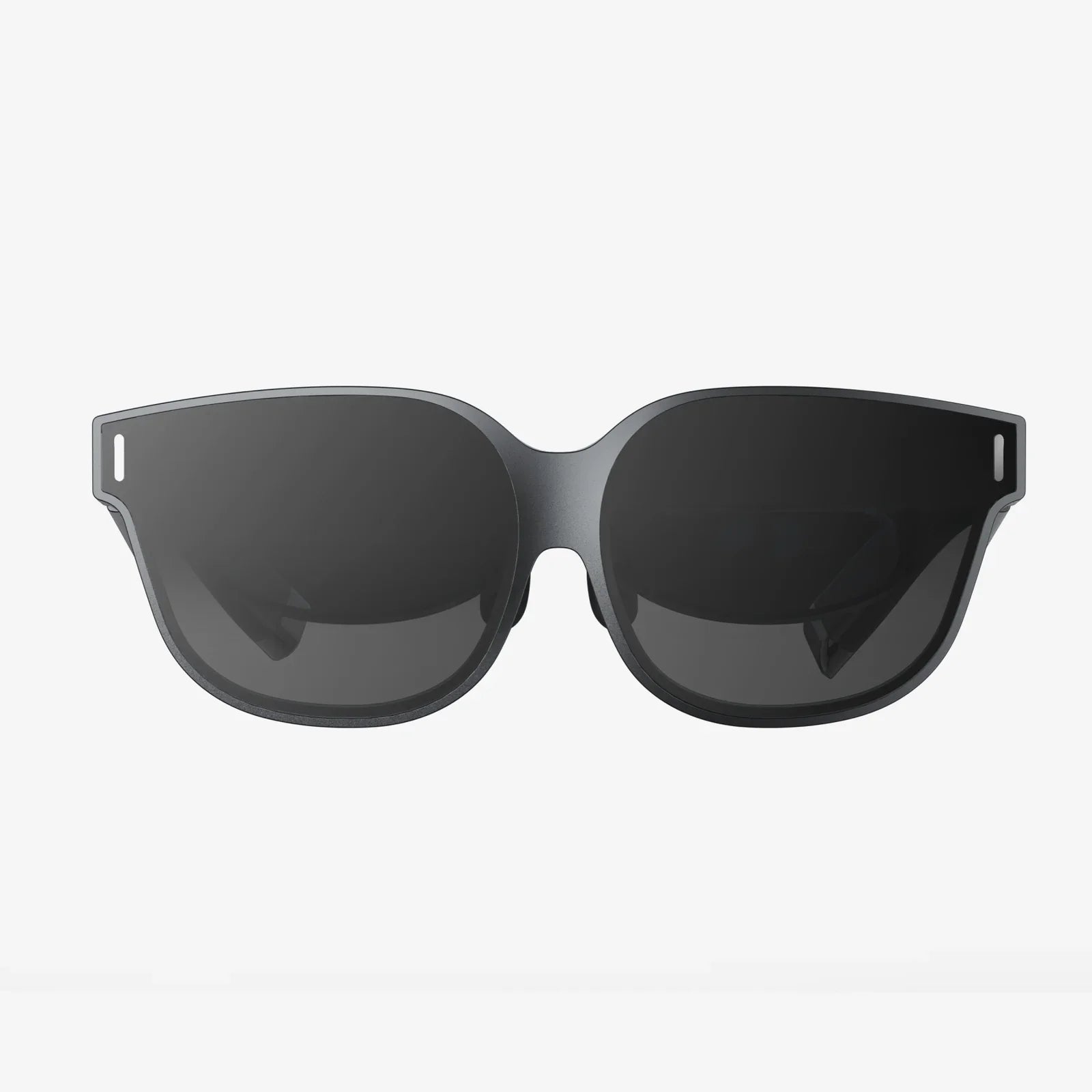
Imagine a world where information flows as freely as air, where digital insights are painted onto the canvas of your reality, and the line between the physical and virtual worlds dissolves into a seamless, intelligent experience. This is not a distant sci-fi fantasy; it is the imminent future being crafted by the rapid evolution of AI glasses with built-in displays. This nascent technology, a powerful fusion of advanced optics, sophisticated sensors, and generative artificial intelligence, promises to be the most personal and transformative computing platform we have ever encountered, fundamentally altering how we work, connect, and perceive the world around us.
The Architectural Marvel: How They Work
At first glance, a pair of these advanced spectacles might appear deceptively simple, but beneath the sleek exterior lies a symphony of cutting-edge technology. The core components work in concert to create a seamless augmented reality (AR) experience.
The Optical Heart: Waveguides and Micro-LEDs
The most critical innovation is the display system itself. Unlike holding up a phone or looking at a monitor, the technology must project information directly onto the user's retina without obstructing their natural view. This is primarily achieved through two methods. The first involves miniature micro-LED or OLED displays, incredibly small and bright screens positioned at the temples of the glasses. Their light is then bounced through a series of microscopic grooves and reflections inside the lens itself—a component known as a waveguide. This process pipes the digital image to the front of the eye while allowing ambient light to pass through, superimposing the virtual onto the real. The second method uses laser beam scanning to literally paint the image onto the retina with precise, focused light. Both methods strive for the same goal: a bright, high-resolution display that appears to float in space at a comfortable distance.
The Intelligent Brain: Sensors and Processing
A display alone is just a dumb terminal. The intelligence comes from a suite of sensors that act as the eyes and ears for the onboard AI. This typically includes:
- High-Resolution Cameras: To see what the user sees, enabling object recognition, text translation, and scene analysis.
- Depth Sensors (LiDAR/ToF): To map the environment in three dimensions, understanding distances and spatial relationships so digital objects can be placed realistically within a room.
- Inertial Measurement Units (IMUs): Gyroscopes and accelerometers that track the precise movement and orientation of the user's head, ensuring the digital overlay stays locked in place.
- Microphones: For voice commands and capturing audio from the environment.
- Speakers or Bone Conduction Audio: To deliver private, spatial sound without headphones.
All this sensor data is processed by a powerful, miniaturized chipset. Increasingly, this processing is happening on-device, thanks to dedicated Neural Processing Units (NPUs) designed to run AI models efficiently and with low latency. This is crucial for responsiveness and privacy, as sensitive data does not always need to be sent to the cloud.
The Conversational Interface: The AI Agent
The true magic is breathed into the device by its artificial intelligence. This is not a simple voice assistant; it is a contextual, multimodal AI agent. It continuously analyzes the video and audio feed, understanding context in real-time. It can identify objects, translate spoken language instantly, summarize long documents you're looking at, or recognize a person's face and discreetly remind you of their name and when you last met. This AI is the omnipresent, invisible guide that makes the hardware truly powerful.
Transforming Everyday Life: A World of Use Cases
The potential applications for this technology are as vast as human endeavor itself. We are moving from a paradigm of pulling information from a device to one where it is pushed to us contextually, the moment we need it.
Revolutionizing Productivity and Work
For the professional world, AI glasses represent an unparalleled tool for efficiency. Imagine a field technician repairing a complex piece of machinery with a schematic diagram and step-by-step instructions overlaid directly onto the components they are working on. Their hands remain free, and their focus never breaks. A surgeon could have vital signs, ultrasound data, or 3D anatomical guides visible during a procedure. For an architect, a 3D model of their design could be placed onto an empty construction site, allowing them to walk through and inspect it at a 1:1 scale before a single brick is laid. The concept of the desktop vanishes, replaced by an infinite, customizable workspace anchored in the real world.
Enhanced Navigation and Social Interaction
Beyond work, daily life is streamlined. Walking through a foreign city, directional arrows are painted onto the street, and restaurant reviews hover over their entrances. Meeting someone new? The AI, with permission, could display their professional background and shared interests from your digital address book, making introductions smoother. For those with visual or hearing impairments, the technology is profoundly enabling—describing surroundings, reading signs aloud, or providing real-time captioning of conversations.
The Future of Entertainment and Gaming
Entertainment will be unshackled from screens. Instead of watching a movie on a television, you could have a virtual cinema screen placed on your living room wall. Gaming will evolve into a truly physical activity, where your entire environment becomes the playground, with characters and events unfolding around your furniture. This immersive, blended reality promises a new form of storytelling and play that is both social and deeply personal.
The Invisible Elephant in the Room: Challenges and Ethical Dilemmas
For all its promise, the path to mainstream adoption of AI glasses is fraught with significant technological, social, and ethical hurdles that must be addressed.
Technical Hurdles: Battery, Form Factor, and Compute
The dream is a pair of glasses that look no different from regular eyewear, are comfortable to wear all day, and have all-day battery life. We are not there yet. Packing sufficient processing power and battery capacity into a lightweight, socially acceptable form factor remains the single greatest engineering challenge. Heat dissipation is also a major concern. Overcoming these barriers requires breakthroughs in semiconductor efficiency, battery chemistry, and optical science.
The Privacy Paradox
This is the most significant societal challenge. A device that is always on, always seeing, and always hearing is a potent surveillance tool. The potential for misuse by individuals, corporations, or governments is staggering. Questions abound: How do we prevent continuous, non-consensual recording? Who has access to the data collected? How is it stored and used? Robust, transparent, and user-centric privacy frameworks must be built directly into the hardware and software. Features like a physical shutter for the camera, clear recording indicators, and on-device processing that deletes data after analysis will be non-negotiable for gaining public trust.
The Social Stigma and the Digital Divide
Previous attempts at smart glasses faltered partly due to the "glasshole" stigma—the social awkwardness of interacting with someone whose attention might be divided and the fear of being recorded. Normalizing this technology will require new social etiquette and clear visual cues to indicate when recording is active. Furthermore, as with any advanced technology, there is a risk of exacerbating the digital divide, creating a new class of information-haves and have-nots, and potentially isolating users from their immediate physical environment.
Gazing into the Crystal Ball: The Long-Term Vision
Looking a decade or more ahead, AI glasses could evolve into something even more integrated and profound. The eventual endpoint may be contact lenses with built-in displays or even direct neural interfaces, bypassing the eyes and ears entirely. The technology could become a true extension of our cognition, offloading memory, providing real-time analysis of complex situations, and allowing for new forms of communication and creativity. It could fundamentally change our understanding of human potential and intelligence.
We are standing at the precipice of a new era, one where our digital and physical lives are finally converging into a single, coherent experience. AI glasses with built-in displays are the key that unlocks this door. They promise a world of immense possibility, from erasing language barriers and democratizing expertise to creating new artistic mediums. Yet, this power demands profound responsibility. The choices we make today—in design, in regulation, and in social norms—will determine whether this technology becomes a ubiquitous force for good or a tool of division and control. The future is not something that happens to us; it is something we build. And with this technology, we are building it right before our eyes.
Share:
Virtual Meeting Collaboration Tools Are Reshaping the Modern Workplace Forever
Wearable Tech Definition: The Ultimate Guide to Technology on the Move