


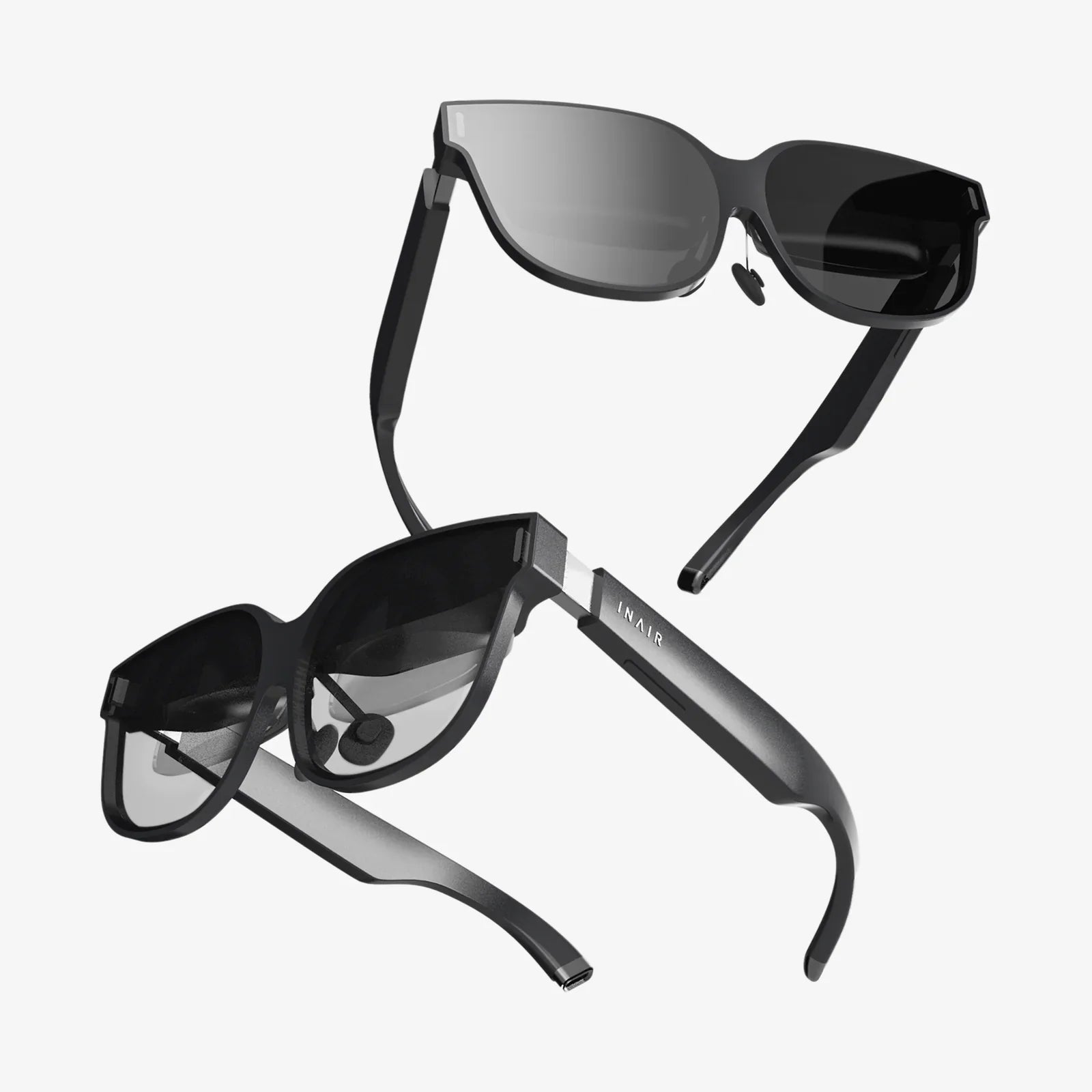
Imagine a world where information doesn't live on a device in your hand or on a desk, but floats effortlessly in your field of vision, accessible with a glance and controllable with a thought. This is not a scene from a science fiction epic; it is the imminent future being built today, and it’s arriving on the bridge of your nose. The convergence of advanced artificial intelligence and sophisticated optical engineering is birthing a new category of wearable technology: AI glasses with screens embedded directly into the lenses. This isn't just an incremental upgrade; it's a fundamental shift from looking at a screen to looking through one, promising to dissolve the barrier between the digital and the physical and redefine our very perception of reality.
The Architectural Marvel: How Screens Integrate Into Sight
At the heart of this revolution lies a seemingly impossible engineering challenge: projecting a high-resolution, bright digital image onto a transparent surface without obstructing the user's natural view. Unlike virtual reality headsets that transport you to a completely digital world, or earlier augmented reality attempts that used clunky reflectors, the latest generation of AI glasses employs several cutting-edge techniques to paint light directly onto the retina or the lens itself.
One predominant method involves the use of waveguide technology. Imagine etching a series of microscopic patterns onto a piece of glass or plastic within the lens. Light from a tiny micro-LED projector, often housed in the temple of the glasses, is injected into the waveguide. This light then travels along the waveguide, bouncing off these nano-structures before being directed precisely into the pupil. The result is a crisp, stable image that appears to hover in space several feet away, all while the real world remains perfectly visible behind it. It’s a ballet of photons, orchestrated at a nanometer scale.
Another approach utilizes holographic optical elements (HOEs) or laser-based retinal projection systems. These technologies are even more ambitious, aiming to draw graphics directly onto the eye with lasers or by creating complex light fields that reconstruct three-dimensional images within the user's vision. The common goal across all these methods is maximal immersion with minimal intrusion—creating a display that feels less like a screen and more like a natural extension of human sight.
The Intelligent Cortex: The AI That Powers the Vision
A transparent screen is merely a canvas; the artificial intelligence is the artist. The "AI" in AI glasses is what transforms them from a simple display into a contextual, proactive, and astonishingly intuitive companion. This intelligence operates on multiple layers, often processing data both on a dedicated onboard processor for low-latency responses and in more powerful cloud systems for complex computations.
At its core, the AI is a master of contextual awareness. Through a suite of sensors—including high-resolution cameras, microphones, inertial measurement units (IMUs), and sometimes LiDAR—the glasses continuously perceive the world around you. The AI fuses this real-time sensor data to understand your environment, your intentions, and your needs.
- Computer Vision: It can identify objects, text, and people (with appropriate privacy safeguards). Hold your gaze on a foreign language menu, and the translated text instantly overlays the original. Look at a complex piece of machinery, and a schematic diagram highlights its components.
- Auditory Intelligence: Advanced speech recognition and natural language processing allow for seamless, conversational interaction. You can dictate messages, ask complex questions about what you're seeing, or control smart home devices, all without uttering a wake word or lifting a finger.
- Predictive Assistance: By learning your routines and preferences, the AI can proactively surface information. Walking towards a subway station? Your train's schedule and track number might pop up. In a meeting? It could discreetly display your next talking points based on the agenda it heard.
This always-on, ambient intelligence aims to reduce the cognitive load of navigating the digital world, allowing you to remain present in the physical one.
A World Overlaid: Transformative Applications Across Industries
The potential applications for this technology stretch far beyond novelty, poised to revolutionize how we work, learn, and interact.
Professional and Industrial Metamorphosis
For field technicians, architects, and surgeons, AI glasses become an indispensable tool. A technician repairing a fiber-optic network could see cable layouts and diagnostic data overlaid directly on the physical lines they are handling. A surgeon could have vital signs, 3D anatomical models from pre-op scans, and guidance from a remote colleague superimposed on their patient, all while keeping their hands sterile and their focus absolute. This hands-free, eyes-free access to critical information dramatically enhances precision, efficiency, and safety.
Redefining Social and Personal Interaction
On a personal level, the implications are profound. For individuals with visual or hearing impairments, this technology can act as a powerful sensory augmentation tool. Real-time captioning of conversations, enhanced contrast for low-vision users, or object recognition to avoid obstacles could grant unprecedented levels of independence. Socially, imagine attending a conference where the name and professional background of everyone you meet gently hovers near them, eliminating awkward introductions and forgotten names—all governed by strict, user-controlled privacy settings.
The Future of Entertainment and Gaming
Entertainment will be unshackled from the television and the smartphone. Imagine watching a film where the characters and action appear to unfold on your wall or even interact with your living room furniture. Location-based gaming could reach new heights, with digital creatures and quests seamlessly integrated into your local park, transforming the entire world into a playground.
Navigating the Invisible Minefield: Privacy, Security, and Social Challenges
With great power comes great responsibility, and few technologies have embodied this maxim more than always-on, always-sensing AI glasses. The very features that make them powerful—persistent cameras and microphones—also make them a potential privacy nightmare. The prospect of a society where everyone could be passively recording audio and video at all times is a legitimate concern that manufacturers and regulators must address with utmost seriousness.
Key challenges include:
- Informed Consent: How do we ensure that people being recorded by someone wearing glasses are aware and have given consent? Clear visual and auditory signals indicating recording are a non-negotiable starting point.
- Data Sovereignty and Security: The vast amount of personal and environmental data collected must be encrypted and stored securely. Users must have complete control over their data, with transparent policies on what is processed on-device versus in the cloud.
- The Social Contract: The norms around using such devices in social settings, restaurants, and cinemas will need to be renegotiated. Will they be seen as a useful tool or a rude intrusion? This social acceptance will be as crucial to their adoption as the technology itself.
Building this technology without building a robust framework of ethics, privacy-by-design, and clear regulations would be a catastrophic failure, risking a public backlash that could stifle innovation for a generation.
The Road Ahead: From Prototype to Ubiquity
While the promise is extraordinary, the path to mainstream adoption is still lined with significant hurdles. Current challenges include miniaturizing components further to achieve a form factor that is indistinguishable from regular eyewear, extending battery life to last a full day of use, and resolving human factors like digital eye strain and motion sickness for some users.
The next decade will likely see a rapid evolution. We will move from single-color, monochromatic displays to full color and high dynamic range. Processors will become more powerful and energy-efficient, enabling more complex AI models to run directly on the device. As the underlying technologies mature and economies of scale drive down costs, AI glasses will likely follow the trajectory of the smartphone, evolving from a luxury product to an essential everyday tool.
We are standing at the precipice of a new era of computing, one where the interface fades into the background and the technology works for us, rather than us working for the technology. AI glasses with screens in the lens represent the most compelling step yet towards this goal of calm, ambient computing. They offer a glimpse of a future where we are no longer tethered to rectangles of glass and metal, but are instead enhanced, empowered, and connected in ways that feel effortless, intuitive, and, ultimately, human. The device isn't disappearing; it's becoming a part of us, and it will change everything.
Share:
Hologram Augmented Reality Glasses Are Redefining Our Digital and Physical Worlds
AR Technology Stands For a Revolution in How We Perceive and Interact With Reality