


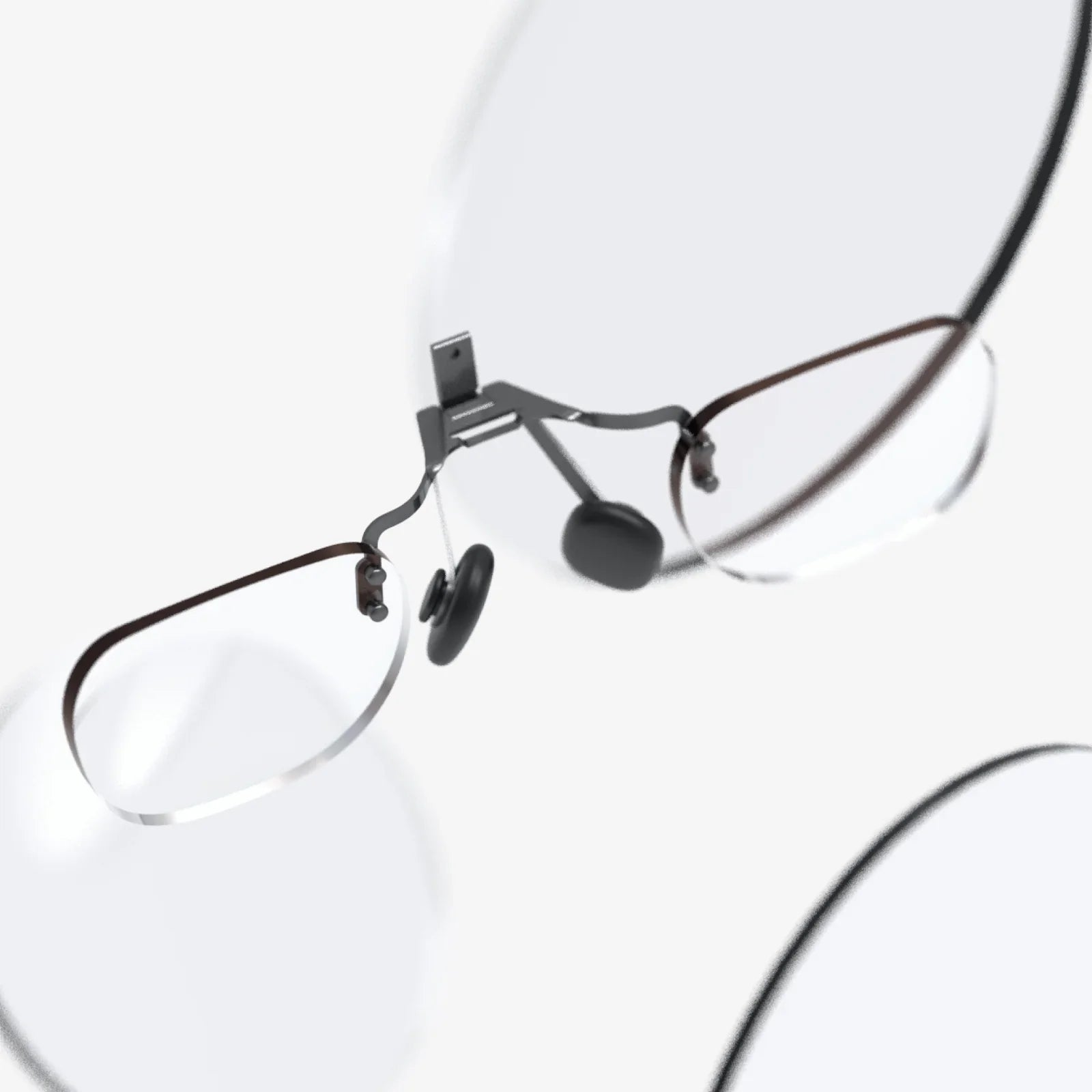
Imagine a world where digital information seamlessly overlays your physical reality, where you can translate a street sign instantly, get real-time navigation arrows painted onto the pavement, or have a complex schematic for a repair float in front of your eyes. This is the promise of AI goggles, a new category of wearable technology poised to revolutionize how we interact with information. But for many, the first and most pressing question is a simple one: what will they cost? The price of AI goggles is not just a number on a tag; it's a complex equation of cutting-edge technology, nascent market forces, and a fundamental shift in computing paradigms. Before you dismiss them as a luxury for the elite, it's crucial to understand the factors that dictate their cost and the immense value they are beginning to deliver.
Deconstructing the Cost: What You're Actually Paying For
The price of AI goggles is a sum of its sophisticated parts, each representing a significant leap in miniaturization and engineering. Unlike a simple pair of sunglasses, these are full-fledged computers worn on your face.
The Core Technological Marvels
At the heart of any AI goggle system are several non-negotiable, high-cost components:
- High-Resolution Micro-Displays: These are the tiny screens that project images onto your retinas. They require incredibly high pixel density to create a sharp, believable image that blends with the real world. Manufacturing these micro-displays with precision is a costly process, a primary driver of the AI goggles price.
- Advanced Optical Systems (Waveguides): This is the magic trick. Waveguides are transparent glass or plastic components that use diffraction to bend light from the micro-displays into your eyes. Designing and producing these to be clear, lightweight, and optically perfect is a formidable and expensive challenge.
- Spatial Computing Sensors: A full suite of sensors is essential. This includes high-resolution cameras for computer vision, depth sensors (LiDAR or time-of-flight) to understand the 3D structure of your environment, inertial measurement units (IMUs) for tracking head movement, and microphones for voice input. The integration and calibration of these sensors contribute significantly to the bill of materials.
- Onboard Processing Power: True AI goggles cannot be just a dumb terminal; they need immense local processing to handle tasks like real-time object recognition, spatial mapping, and gesture tracking. This requires miniaturized, powerful processors (often akin to those in high-end smartphones) and efficient cooling systems, all packed into a tiny form factor.
- Battery Technology: Powering all this technology demands a high-capacity battery that must also be small and safe enough to wear on one's head. Battery life is a major constraint, and developing compact, long-lasting solutions adds to the development and production cost.
The Spectrum of AI Goggles Price: From Prototype to Consumer
Not all AI goggles are created equal, and their prices reflect their intended audience and capabilities. We can broadly categorize them into three tiers.
Tier 1: Enterprise and Developer Grade (The Premium Tier)
This tier represents the current cutting edge. Devices here are designed for professionals—surgeons, engineers, factory floor managers, and software developers building the next generation of AR applications.
Price Range: Typically ranging from $2,500 to over $3,500.
What justifies the cost? You are paying for maximum performance, robustness, and specialized features. These devices boast the highest resolution displays, the most accurate spatial tracking, the widest field of view, and often include enterprise-grade software suites, warranties, and support. The AI goggles price here reflects low-volume production of highly specialized hardware. For a business where these tools can save thousands of hours or prevent costly errors, the return on investment is clear and justifies the premium.
Tier 2: Prosumer and Enthusiast Grade (The Emerging Middle)
This is a newer category aimed at tech enthusiasts, creators, and early adopters who want powerful capabilities but at a more accessible point than full enterprise pricing.
Price Range: Approximately $1,000 to $2,500.
The value proposition: These devices make compromises to hit a lower price point, perhaps with a slightly narrower field of view, less robust construction, or a more focused feature set. However, they still pack impressive technology and full spatial computing capabilities. Their AI goggles price is aimed at stimulating a developer ecosystem and building a market before a true consumer push.
Tier 3: The Future Consumer Grade (The Mass Market Goal)
This is the holy grail that every technology company is racing towards: a pair of AI goggles that are as socially acceptable, lightweight, and affordable as a premium pair of sunglasses. We are not there yet.
Projected Price Range: The target is widely believed to be between $500 and $1,000, a psychological barrier for mass adoption.
The challenges: Reaching this price requires breakthroughs in manufacturing scale, component miniaturization, and potentially a new approach to optics and displays. It may also involve business model innovations, like subsidizing the hardware cost through subscription services for AI features or app store revenue. The current AI goggles price for true spatial computing is simply incompatible with the consumer electronics mass market.
Beyond the Hardware: The Hidden Factors in the Price Tag
The cost of the physical device is only part of the story. Several other critical factors influence the final AI goggles price.
Research and Development (R&D)
The years of research, failed prototypes, and software development represent a monumental investment—often billions of dollars—that companies need to recoup. This R&D cost is amortized into the price of each unit sold, especially in the early years of a product's life cycle.
Software and the AI Ecosystem
The hardware is useless without a powerful operating system and a robust AI platform. The development of the core spatial AI—the algorithms that understand the world in real-time—is a ongoing and expensive endeavor. Furthermore, a healthy ecosystem of apps is crucial. A higher AI goggles price for early devices helps fund the development of this ecosystem, attracting developers who can later thrive when the market expands.
Market Positioning and Competition
As a nascent market, competition is still limited. With few players offering truly capable devices, the pricing power remains with the manufacturers. However, as more companies enter the space, competition will inevitably drive innovation and put downward pressure on the AI goggles price, benefiting consumers.
The Value Proposition: Is the Price Justified?
Evaluating the AI goggles price solely as a consumer electronics purchase is a mistake. Its value must be assessed through the lens of utility and transformation.
- Enterprise Efficiency: For businesses, the value is quantifiable. Training a new mechanic on a complex engine with an AR overlay guiding each step reduces time and errors. An architect visualizing a building's systems before construction can avoid million-dollar change orders. Here, the AI goggles price is an investment with a clear and rapid ROI.
- The Next Computing Platform: Proponents argue that spatial computing is as significant a shift as the move from command-line interfaces to the graphical user interface (GUI). If these devices become the primary way we interact with computing, the initial high cost is akin to the cost of early personal computers—a premium paid to access a transformative new technology at its inception.
- Augmented Human Capability: The value transcends mere productivity. Imagine real-time language translation fostering deeper communication, navigation for the visually impaired, or interactive educational experiences that bring history and science to life. This potential to augment human ability has an intangible value that goes far beyond a simple price comparison.
The Future of AI Goggles Price: A Trajectory of Accessibility
History provides a reliable guide for the future of wearable AI pricing. The trajectory of all transformative technologies—from cell phones and flat-screen TVs to laptops and VR headsets—follows a familiar pattern: high initial cost followed by rapid democratization.
We can expect the AI goggles price to follow a similar curve:
- Innovation Phase (Now): High prices driven by low-volume, cutting-edge components and massive R&D recoupment. Market is enterprise-focused.
- Adoption and Scaling Phase (Next 3-5 years): Prices begin to fall as manufacturing processes improve, components become commoditized, and competition increases. A prosumer market solidifies.
- Mass Market Phase (5+ years): Breakthroughs in optical technology (like metalenses) and display tech, combined with economies of scale, finally bring the price down to a true consumer level. The device becomes a fashion item and a mainstream tool.
The key to unlocking the mass market will be a technological breakthrough that simplifies the complex and expensive optical stack. Innovations in areas like holographic optics or laser beam scanning could be the key to drastically reducing the size, weight, and ultimately, the AI goggles price.
The journey to affordable, ubiquitous AI goggles is already underway. While the current price of entry may seem steep, it represents the cost of pioneering the next era of human-computer interaction. This initial investment by enterprises and developers is building the foundation for a future where contextual, ambient computing is accessible to all. The question is not if the price will drop, but how quickly, and how profoundly this technology will reshape our daily lives when it does.
Share:
Holographic Projection Technology: The Future of Immersive Interaction is Here
Wearable Gadgets Are Transforming How We Live, Work, and Connect