


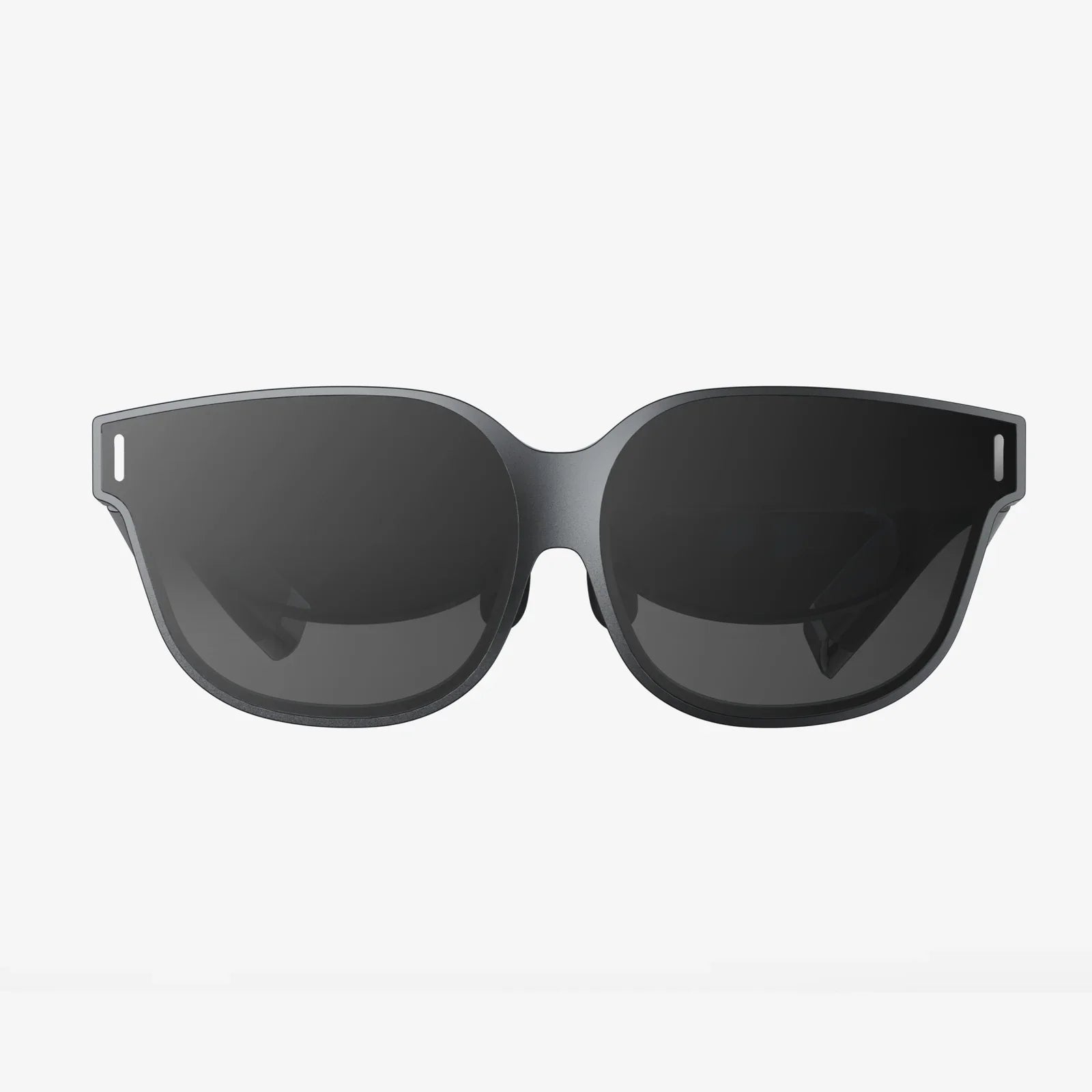
- by wangfred
AI Powered Eye Glasses: The Invisible Revolution Reshaping Human Experience
- by wangfred
Imagine a world where your most personal device doesn’t live in your pocket, demanding your constant attention, but rests effortlessly on your face, perceiving the world with you and whispering insights only you can hear. This is the silent promise of AI powered eye glasses, a technological leap that is poised to dissolve the barrier between human intuition and artificial intelligence, creating a symbiosis that will fundamentally alter how we work, learn, navigate, and connect.
The concept of smart eyewear is not new. For years, prototypes and early commercial attempts have flickered in and out of the public consciousness, often criticized for their clunky design, limited functionality, and social awkwardness. However, the current generation of AI powered eye glasses represents a paradigm shift. It is not merely about projecting a digital screen onto a lens; it is about embedding a contextual, ambient intelligence into the very fabric of our perception.
This revolution is powered by the convergence of several critical technologies. Miniaturized, high-resolution cameras and a suite of sensors—including LiDAR, depth sensors, and inertial measurement units—act as the eyes and ears of the device, continuously capturing a rich stream of data about the user's environment. This raw data is the fuel for the onboard AI engine.
The true magic, and the key differentiator from previous iterations, lies in sophisticated on-device artificial intelligence. Early smart glasses relied heavily on cloud connectivity, sending data for remote processing and waiting for a response. This introduced latency, drained battery life, and raised significant privacy concerns.
Modern AI powered glasses incorporate powerful, yet incredibly efficient, neural processing units (NPUs) or system-on-a-chip (SoC) designs capable of running complex machine learning models directly on the device. This enables several critical advantages:
This onboard AI is trained on massive datasets to perform a stunning array of tasks, from computer vision and natural language processing to predictive analytics and personalized recommendation systems.
The potential applications for AI powered eyewear stretch as far as the imagination, touching nearly every aspect of daily life and professional endeavor.
Perhaps the most immediate and profound impact is in the realm of accessibility. For individuals with visual or auditory impairments, these glasses can act as a powerful sensory augmentation tool.
In professional settings, AI glasses move beyond convenience to become indispensable tools that enhance safety, efficiency, and expertise.
These devices promise to turn the entire world into an interactive classroom and museum. A student walking through a historical site could see digital reconstructions of ancient buildings spring to life before their eyes. A museum-goer looking at a painting could instantly pull up information about the artist, the historical context, and critiques. A language learner immersed in a foreign country could read signs, menus, and conversations in their native language in real-time, accelerating the learning process through constant, contextual practice.
On a personal level, AI glasses could become an externalized, enhanced memory. They could discreetly display the name and key details of a person you’ve met before as you greet them. They could record moments from a first-person perspective, not as a distracting video taken with a phone, but as a seamless recording of your actual point of view, preserving cherished memories with perfect fidelity. They could help you find your lost keys by remembering where you last saw them.
With such transformative power comes a host of profound ethical, privacy, and societal challenges that must be addressed proactively. The ability to continuously record and analyze the world is a double-edged sword.
For AI powered glasses to move from a niche gadget to a mainstream platform, they must overcome significant hurdles in design and social acceptance.
The hardware must achieve a level of elegance, lightness, and battery life that makes them indistinguishable from traditional high-end eyewear. Bulky, obtrusive designs will remain a novelty. The user interface must be primarily auditory (through bone conduction or tiny speakers) and gesture-based, avoiding the socially isolating effect of glowing screens in front of the eyes.
Most importantly, the technology must be ambient and contextual. It should not demand attention but should offer it quietly when needed. The goal is not to lose ourselves in a digital overlay, but to use that overlay to enhance our appreciation and understanding of the real world. The AI should be a discreet assistant, not a distracting overlord.
We are standing at the precipice of a new computing era. We moved from the stationary mainframe to the personal computer, then to the mobile phone that we carry with us. The next logical step is to technology that we wear and that integrates with our senses. AI powered eye glasses are the first true manifestation of this "perceptual computing" age.
Future iterations will see even deeper integration. Advancements in neural interfaces could allow for control via subtle intention or even direct brain-computer interfaces. Display technology will evolve to project full-color, high-resolution holograms that are indistinguishable from reality. The AI itself will evolve from a reactive tool to a proactive partner, anticipating our needs based on a deep understanding of our context, habits, and goals.
The journey ahead is as much about crafting thoughtful policy and ethical frameworks as it is about technological innovation. It requires a collaborative effort between engineers, designers, ethicists, policymakers, and the public. We must build this future with intention, ensuring that the power of augmented perception is used to empower humanity, foster connection, and expand our potential, rather than to diminish our privacy, autonomy, and shared reality.
The next time you put on a pair of glasses, consider the invisible layer of intelligence that may soon reside within them—not as a barrier to the world, but as a lens to see it more deeply, understand it more completely, and engage with it more meaningfully than ever before. The future is looking right back at us, and it’s learning to see the world through our eyes.
Share:
VR Glasses Online: Your Ultimate Guide to Virtual Reality Shopping
New VR AR Headset Risks Being A Monument To Unchecked Ambition