


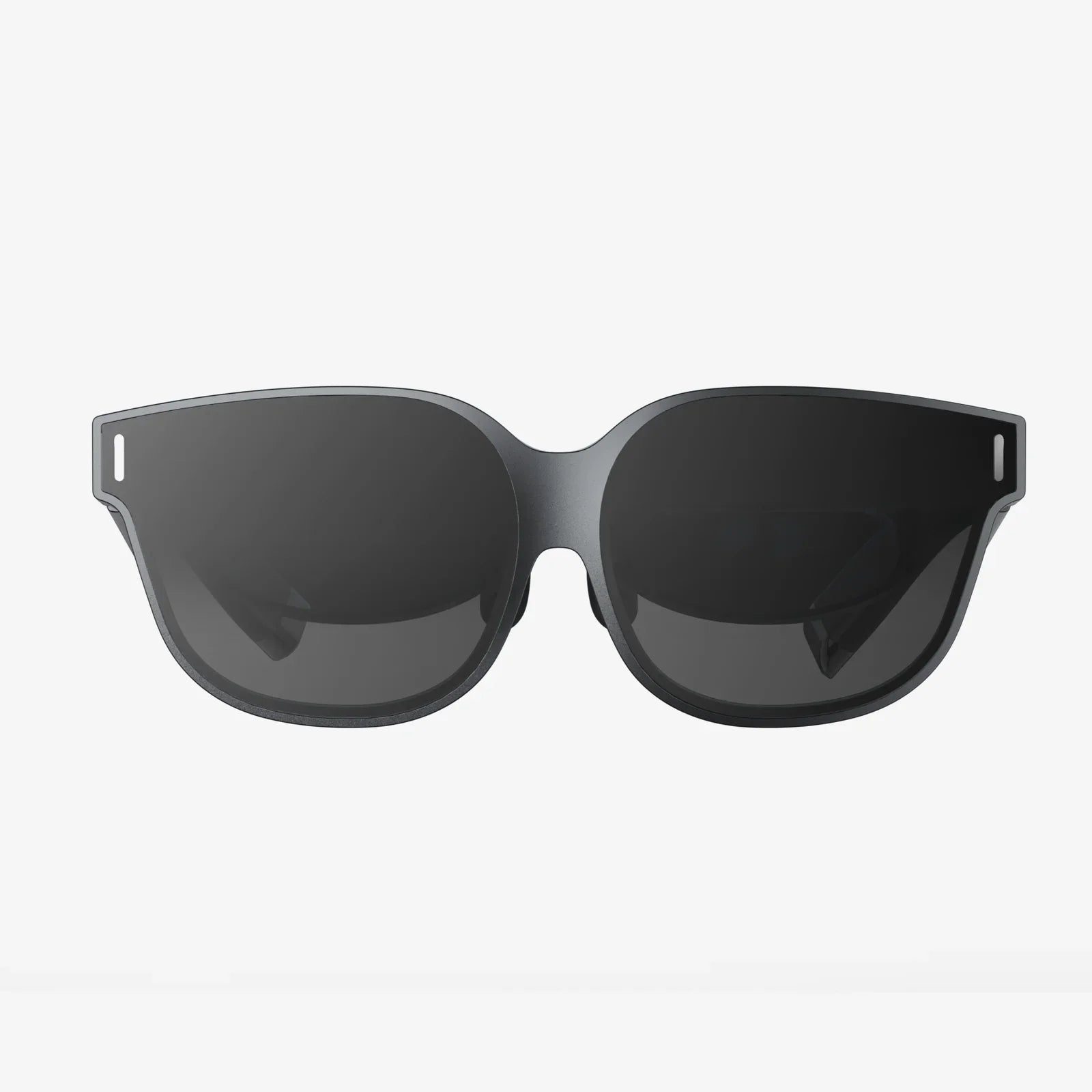
Imagine a world where the line between the digital and the physical doesn't just blur—it vanishes. Where information doesn't live on a screen in your hand but is seamlessly painted onto the canvas of your reality, accessible with a glance and a whisper. This is the promise, the paradigm-shifting potential, of AI powered super glasses. This isn't merely an incremental upgrade to existing wearable tech; it's a fundamental leap toward a new form of human-computer symbiosis, and it’s arriving faster than most of us anticipate. The ability to augment our perception, cognition, and interaction with the world around us represents one of the most significant technological frontiers of our time, poised to reshape everything from daily chores to global industries.
The Long Road to Clarity: From Concept to Convergence
The dream of augmented vision is not new. For decades, the concept has been a staple of science fiction, painting vivid pictures of a future where data overlays and digital assistants are part of our everyday field of view. Early attempts at bringing this vision to life were often bulky, expensive, and limited by the technology of their time. They were prototypes that demonstrated potential but failed to deliver a practical, comfortable, or socially acceptable user experience. The hardware was a constraint; displays were dim, batteries were large, and processing power was insufficient for the complex tasks required for true augmentation.
The true catalyst for change has been the simultaneous maturation of several critical technologies. This convergence is what finally makes AI powered super glasses a viable consumer product rather than a lab curiosity.
- Advanced Micro-Optics and Waveguides: The development of incredibly thin, transparent lenses capable of projecting high-resolution images directly into the user's eye is a foundational breakthrough. These systems allow users to see digital content superimposed on the real world without blocking their natural vision, a crucial step toward seamless integration.
- Miniaturized Sensors: A sophisticated array of sensors, including high-resolution cameras, depth sensors (LiDAR), accelerometers, gyroscopes, and microphones, act as the eyes and ears of the device. They continuously scan and interpret the environment, creating a rich, real-time data stream for the AI to process.
- Ubiquitous Connectivity: The rollout of high-speed, low-latency networks is essential. It allows these glasses to offload intensive processing tasks to powerful cloud-based AI, ensuring the device itself can remain lightweight and efficient while still performing incredibly complex operations.
- The AI Revolution: This is the most crucial piece. Raw sensor data is meaningless without interpretation. Modern artificial intelligence, particularly sophisticated machine learning and computer vision models, provides the brain. It is the AI that identifies objects, understands speech and gestures, translates languages in real-time, and generates contextual information, transforming raw data into actionable intelligence.
A Day in a Augmented Life: Transformative Applications
The applications for this technology extend far beyond novelty, promising to enhance nearly every facet of human endeavor.
Revolutionizing Work and Productivity
In industrial and technical fields, the impact is immediate and profound. A technician repairing a complex piece of machinery can see a schematic overlay highlighting the next component to remove, with torque specifications and warnings displayed right on the equipment itself. A surgeon could have vital signs, 3D anatomical models, or guidance from a remote colleague visualized directly over the operating field. An architect could walk through a physical building site and see their digital blueprint perfectly aligned with the construction, identifying potential clashes before they become costly errors. This hands-free, context-aware access to information dramatically reduces errors, accelerates training, and boosts efficiency.
Redefining Social Connection and Accessibility
AI powered super glasses promise to break down communication barriers in unprecedented ways. Imagine conversing with someone in a foreign language and seeing their words translated as subtitles in real-time, complete with cultural context notes. For the hard of hearing, speech could be instantly converted to text, making every conversation more accessible. These devices could recognize faces and discreetly remind you of a person's name and how you know them, alleviating social anxiety. They could enhance navigation for the visually impaired by describing surroundings, identifying obstacles, and reading street signs aloud.
Enhancing Learning and Exploration
Education could transition from passive learning to active, immersive discovery. A student studying astronomy could point their glasses at the night sky and see constellations, planets, and satellites labeled and animated with information about their composition and history. A history buff walking through a city could see historical photographs superimposed on modern buildings, effectively seeing through time. A museum exhibit could come alive with interactive 3D models and narratives, creating a deeply personal and engaging educational experience.
Seamless Daily Integration
On a more mundane level, the technology simplifies daily life. You could glance at your pantry and see a recipe suggestion based on the ingredients available, with step-by-step instructions hovering over your mixing bowl. You could control your smart home devices with a look and a voice command. Finding your keys could become a thing of the past as the glasses tag and track important items. The constant need to pull out a phone for simple tasks would disappear, allowing for a more present and uninterrupted flow through the day.
The Other Side of the Lens: Ethical and Societal Challenges
With such transformative power comes immense responsibility. The widespread adoption of AI powered super glasses raises profound questions that society must address proactively.
The Privacy Paradox
This is arguably the most significant hurdle. A device that sees what you see and hears what you hear is a powerful tool, but it is also a potent surveillance device. The potential for constant, passive recording of everyone and everything in the user's environment creates a nightmare scenario for personal privacy. How do we prevent the creation of a permanent, searchable record of our lives without our consent? Establishing clear digital etiquette and robust legal frameworks will be essential. Features like clear recording indicators, automatic blurring of non-consenting individuals, and strict data anonymization policies must be built into the core of the technology, not added as an afterthought.
The Digital Divide and Accessibility
As with any advanced technology, there is a risk that AI powered super glasses could exacerbate existing social and economic inequalities. If they become essential tools for high-paying jobs or superior educational outcomes, a new divide could emerge between those who can afford this augmentation and those who cannot. Ensuring that the benefits of this technology are broadly accessible, rather than a luxury for the affluent, will be a critical challenge for policymakers and developers alike.
Information Overload and Mental Wellbeing
There is a danger of cognitive overload. A world constantly buzzing with notifications, data, and digital stimuli could be overwhelming, leading to anxiety and a decreased ability to focus on the physical present. The always-on, augmented world might make it harder to disconnect, relax, and engage in genuine, uninterrupted human interaction. Designing for focus and intentionality, with user-controlled filters and "digital silence" modes, will be crucial for maintaining mental health in an augmented age.
Security and Manipulation
If our perception of reality is mediated by a software layer, that layer becomes a target for manipulation. Malicious actors could potentially hijack the feed to display false information, misleading advertisements, or even dangerous instructions. The threat of augmented spam or reality-based phishing attacks is a real concern. Ensuring these systems are secure from the hardware up is a non-negotiable requirement for user safety.
The Road Ahead: A Glimpse into the Next Decade
The current generation of devices is merely the first step. The future trajectory of AI powered super glasses points toward even deeper integration. We are moving toward more stylish, lightweight designs that are indistinguishable from regular eyewear, overcoming the current social stigma. Battery technology and processing efficiency will improve, enabling all-day use. The AI itself will become more anticipatory, moving from providing information you ask for to offering insights you didn't even know you needed.
The ultimate evolution may lie in direct neural interfaces, bypassing screens and speakers altogether to project information directly into our consciousness. While this remains in the realm of long-term research, it highlights the direction of travel: technology that adapts to us, rather than requiring us to adapt to it.
The journey toward ubiquitous augmented reality is not a question of "if" but "when." The convergence of AI, optics, and connectivity has unlocked a new realm of human potential. AI powered super glasses represent more than a product; they are a portal to a new way of being, working, and connecting. They challenge us to reimagine the possible, but they also demand that we proceed with caution, wisdom, and a unwavering commitment to building a future that is not only technologically advanced but also equitable, private, and profoundly human. The world is about to get a lot more interesting, one pair of glasses at a time.
Share:
Augmented Reality Market Statistics: A Deep Dive into the Numbers Shaping Our Digital Future
Augmented Reality Advantages and Disadvantages: A Deep Dive into Our Digital Future