


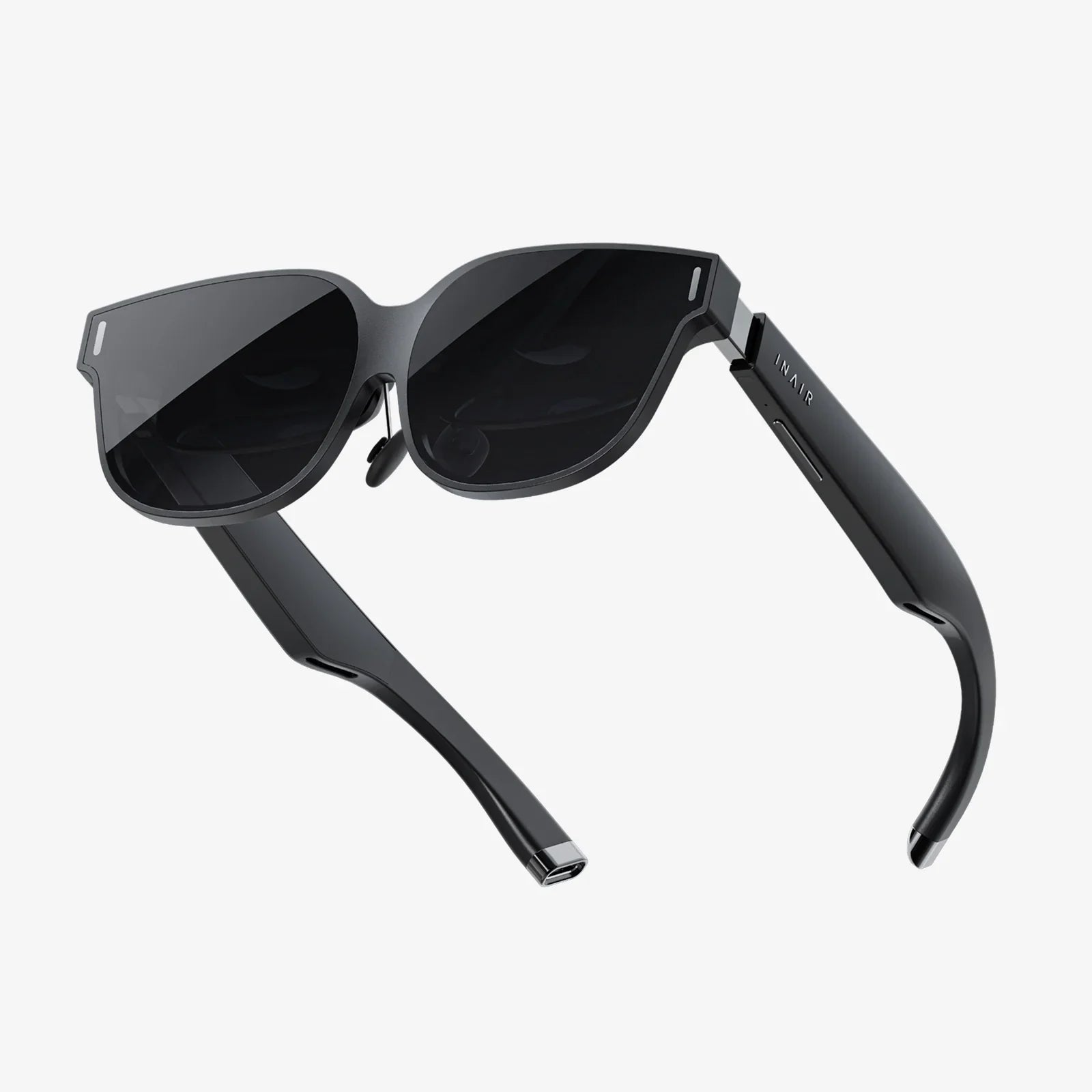
Imagine a world where digital information seamlessly overlays your physical surroundings, where instructions float above a complex machine, historical figures narrate their stories on a city street, and your living room becomes a virtual showroom for a new piece of furniture. This is no longer the stuff of science fiction; it is the rapidly materializing reality powered by augmented reality (AR), and the market statistics paint a picture of a technological revolution that is not just coming, but is already here. The numbers are staggering, pointing to a fundamental shift in how we interact with data, with each other, and with the world itself.
The Defining Metrics: Understanding the Market's Staggering Scale
To grasp the magnitude of the AR explosion, one must first look at the cold, hard data. The global augmented reality market, valued at a substantial figure in the tens of billions just a few years ago, is on a trajectory that most industries can only dream of. Market research consistently projects a compound annual growth rate (CAGR) well above 30% for the foreseeable future. This explosive growth is expected to propel the market value to surpass the one-hundred-billion-dollar mark before the end of the decade. This isn't merely incremental growth; it is a hockey-stick curve indicative of a technology moving from early adoption into the mainstream.
This valuation encompasses a wide ecosystem, including hardware (smart glasses, headsets), software platforms and development tools, and a vast array of applications and services. The number of AR-capable devices in circulation is another critical metric, with billions of smartphones now equipped with AR software development kits (SDKs) like ARKit and ARCore, making them instant portals to augmented experiences. Furthermore, shipments of dedicated AR headsets and smart glasses are projected to grow from the millions into the tens of millions annually, signaling a move beyond the smartphone screen to more immersive and hands-free form factors.
The Engine of Growth: Key Drivers Fueling the AR Revolution
Such remarkable statistics are not generated in a vacuum. They are the direct result of several powerful, converging technological and economic forces. The primary driver is the massive and sustained investment flowing into the sector. Billions in venture capital, corporate funding, and government grants are being funneled into AR startups and R&D departments of tech giants, accelerating innovation and reducing time-to-market for new solutions.
Concurrently, the underlying technologies that make AR possible are advancing at a breakneck pace. Improvements in computer vision, powered by artificial intelligence and machine learning, allow devices to understand and interact with their environment with unprecedented accuracy. The miniaturization of components like micro-displays, sensors, and processors has made wearable AR devices lighter, more powerful, and more affordable. The rollout of high-speed, low-latency 5G networks is also a critical enabler, as it allows for complex processing to be offloaded to the cloud, reducing the hardware burden on the device itself and enabling richer, more persistent experiences.
Finally, a significant cultural and generational shift is underway. A workforce familiar with digital interfaces is aging into decision-making roles, while a new generation of digital natives, for whom blending physical and digital worlds is second nature, is entering the consumer market. This widespread acceptance and curiosity are lowering barriers to adoption and creating fertile ground for AR applications to thrive.
Enterprise vs. Consumer: A Tale of Two Markets
A deep dive into the statistics reveals a fascinating bifurcation in the adoption curve. The enterprise and industrial sectors have emerged as the dominant force in the current AR market, accounting for a significantly larger share of revenue than the consumer segment. This is because AR solves critical, high-value business problems with a clear and demonstrable return on investment.
- Manufacturing and Industrial Maintenance: AR is revolutionizing assembly lines and repair procedures. Technicians can access digital work instructions overlaid directly onto machinery, reducing errors and training time by staggering percentages. Remote experts can see what a on-site worker sees and provide guidance through AR annotations, drastically cutting down on travel costs and machine downtime. Statistics show that companies implementing AR solutions report double-digit percentage improvements in productivity and a significant reduction in errors.
- Healthcare: The healthcare sector is leveraging AR for everything from complex surgery planning, where surgeons can visualize a patient's anatomy in 3D before making an incision, to medical training and patient education. Studies indicate that AR-assisted procedures can lead to increased precision and improved patient outcomes.
- Retail and E-commerce: While still growing, the consumer-facing application of AR in retail is a powerful driver of engagement and sales conversion. Virtual try-on for apparel, accessories, and cosmetics, as well as the ability to visualize furniture and home décor in a customer's own space, are reducing return rates and increasing consumer confidence. Market data shows that product interactions with AR content have a markedly higher conversion rate compared to those without.
- Education and Training: AR is creating immersive learning experiences, from bringing historical events to life in a classroom to providing hands-on technical training without the risk or cost of using real equipment. The adoption rate in educational technology is climbing steadily as the evidence for its efficacy mounts.
While consumer applications like gaming (epitomized by the global phenomenon of location-based AR games) and social media filters generate enormous user engagement metrics, their direct monetization and revenue generation currently lag behind enterprise solutions. However, this vast consumer engagement is building the foundational user base and familiarity that will drive the next wave of commercial AR applications.
Geographical Landscape: A Global Race for Dominance
The adoption of AR technology is a global story, but the market statistics highlight clear regional leaders. North America, particularly the United States, has historically held the largest market share, driven by its strong technology sector, high levels of R&D investment, and early adoption by major corporations in aerospace, defense, and manufacturing.
However, the Asia-Pacific region is projected to be the fastest-growing market throughout the forecast period. This growth is fueled by the massive manufacturing hubs in China, South Korea, and Japan, which are rapidly integrating AR into their industrial processes. Furthermore, countries like China have a highly mobile-savvy population that quickly adopts new consumer technologies, creating a massive testbed for new AR applications. Europe also represents a significant and sophisticated market, with strong activity in automotive, healthcare, and luxury retail applications of AR.
Beyond the Hype: Challenges and Barriers to Overcome
Despite the overwhelmingly positive trajectory, the AR market still faces hurdles that the statistics must account for. For widespread consumer adoption of dedicated AR glasses, several challenges remain. The form factor and style of devices need to evolve from bulky prototypes to something people would be comfortable wearing all day. Battery life remains a constraint for mobile, untethered experiences. Perhaps most importantly, the development of a truly compelling and indispensable "killer app" for the average consumer, beyond gaming and novelty filters, is still a work in progress.
Furthermore, issues of data privacy, digital security, and the potential for real-world distractions pose societal questions that need to be addressed. The market's long-term health depends not just on technological advancement but also on building trust and establishing ethical guidelines for the use of this powerful technology.
The Future in Focus: Projections and Emerging Trends
Looking at the forward-looking statistics and trends, the future of AR appears even more integrated into our daily lives. The concept of the "spatial web" or "Web 3.0" is gaining traction, where the internet evolves from pages on a screen to a layer of contextually relevant information and experiences anchored to the physical world. This will be powered by AR.
The convergence of AR with other transformative technologies like Artificial Intelligence (AI) and the Internet of Things (IoT) will create hyper-intelligent environments. An AR headset could not only show you a machine's manual but, by connecting to its IoT sensors, could highlight a component that is running too hot and display its real-time performance data. AI will power more natural and intuitive user interfaces, moving beyond controllers to gesture, voice, and even gaze control.
Market projections also point to the rise of AR cloud platforms—digital twins of the real world that allow for persistent AR experiences that can be shared by multiple users across different devices. This will unlock new possibilities in collaborative work, multiplayer gaming, and persistent digital art installations in public spaces.
The numbers don't lie; they tell a story of a market transitioning from potential to palpable impact. From the factory floor to the operating room, from the retail store to the classroom, augmented reality is ceasing to be a novelty and is becoming a necessary tool for efficiency, understanding, and connection. The market statistics are more than just data points; they are the coordinates charting our course into an augmented future, a future that is being built today, one layer of digital information at a time. This is no longer a niche interest for tech enthusiasts but a central pillar of the next computing platform, and its growth trajectory suggests it will soon be as ubiquitous and essential as the smartphone is today.
Share:
5 Advantages of Augmented Reality: Transforming Industries and Enhancing Lives
AI Powered Super Glasses Are Redefining Reality and Reshaping Our Future