


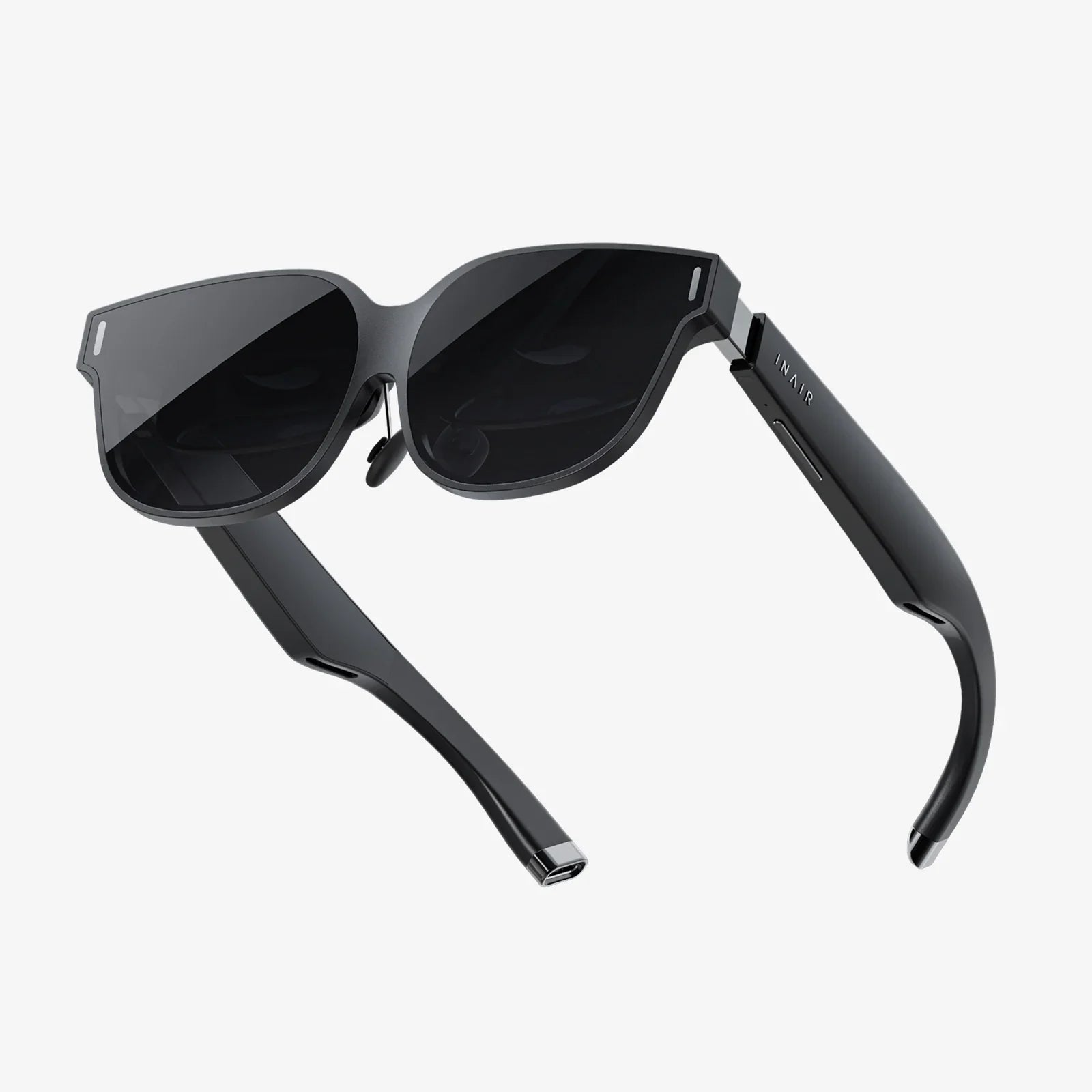
Imagine a world where your music anticipates your mood, where your calls are crystal clear in the middle of a roaring crowd, and where your headphones are not just a device, but an intelligent companion that curates your entire audio experience. This is no longer the realm of science fiction; it's the promise and potential of the AI Pro Bluetooth Stereo Headset. This comprehensive guide will pull back the curtain on this next-generation audio technology, exploring how the seamless integration of artificial intelligence is fundamentally reshaping what we expect from personal audio, promising an experience that is not just heard, but felt and understood.
The Evolution of Listening: From Wires to Intelligence
The journey of personal audio has been nothing short of revolutionary. We moved from cumbersome wired headsets to the liberation of Bluetooth technology, which cut the cord and gave us freedom of movement. Then came the era of active noise cancellation, allowing us to create bubbles of silence in a chaotic world. But the next logical, and most profound, step in this evolution is intelligence. The modern headset is no longer a simple transducer converting digital signals into sound waves; it has become a sophisticated computer for your ears, packed with sensors and processing power.
Deconstructing the "AI Pro" in Your Ears
What does it truly mean for a headset to be labeled an "AI Pro" model? The term is more than just a marketing buzzword; it signifies a core architectural shift. At its heart lies a powerful dedicated processing chip designed not for general computing, but for the specific, complex tasks required for real-time audio analysis and enhancement. This chip runs sophisticated algorithms that are the bedrock of its intelligence.
These algorithms are often built on machine learning models trained on massive datasets of audio. For instance, to improve voice calls, an AI model might be trained on thousands of hours of speech in various environments—windy streets, busy cafes, crowded airports—learning to distinguish the human voice from background noise with incredible accuracy. This training allows the headset to perform feats that were previously impossible with traditional digital signal processing (DSP) alone. It's the difference between a simple filter and a discerning ear.
A Symphony of Smart Features
The practical applications of this built-in intelligence manifest in a suite of features that elevate every aspect of the user experience.
Adaptive Active Noise Cancellation (ANC)
Traditional ANC is a static shield. You turn it on, and it generates inverse sound waves to cancel out ambient noise. An AI-powered system, however, is dynamic. It uses external microphones to continuously monitor your environment in real-time. Using machine learning, it can classify the type of noise—is it the constant hum of an airplane engine, the erratic chatter of an office, or the sudden blast of a construction site? It then adapts its cancellation strategy on the fly, applying the precise level of counter-noise needed for maximum effectiveness while preserving audio quality and minimizing pressure on the ears. It’s noise cancellation that breathes and adapts to your world.
Intelligent Voice Isolation for Calls
This is perhaps the most dramatic improvement. Everyone has experienced the frustration of a call where the other person says, "I can barely hear you; it's too noisy there." AI Pro headsets solve this with beamforming microphones and neural networks. The AI doesn't just suppress background noise; it identifies the unique characteristics of your voice and isolates it, effectively making you the lead singer in the audio mix and reducing everything else to a faint whisper. Whether you're walking next to a busy road or in a loud factory, your voice comes through with pristine clarity.
Personalized Soundscapes
We all hear differently. Our age, hearing health, and even the shape of our ears affect how we perceive sound. AI Pro headsets can use a brief setup process to analyze your personal hearing sensitivity across different frequencies. It then tailors the audio output specifically for you, boosting frequencies you may not hear as well and creating a sound profile that is uniquely optimized for your ears. Furthermore, some systems can learn your listening habits over time—do you prefer more bass for electronic music? A brighter treble for classical?—and subtly adjust the equalizer for different genres without you ever touching a setting.
Contextual Awareness and Transparency Mode
Smart transparency modes use AI to determine which external sounds are important and which are not. Instead of simply piping in all outside noise, the headset can be programmed to allow certain sounds to pass through—like a siren, a baby crying, or an airport announcement—while still blocking out less critical background rumble. This creates a safer and more intuitive experience, allowing you to remain aware of your surroundings without sacrificing your audio immersion.
Seamless Connectivity and Device Switching
Juggling between a phone, laptop, and tablet can be a Bluetooth nightmare. AI enhances the connectivity experience by predicting which device you are most likely to use next and ensuring a swift, stable, and automatic connection. It manages the complex dance of multipoint connectivity with greater reliability, reducing dropouts and lag.
The Engine Room: Bluetooth Technology and High-Resolution Audio
Of course, the "AI" must be paired with a robust and high-fidelity audio foundation. This is where modern Bluetooth codecs come into play. The latest versions of the Bluetooth standard offer significantly increased bandwidth and stability, reducing latency for gaming and video and providing enough data throughput for high-resolution audio streams.
Advanced audio codecs are capable of transmitting far more musical detail than the standard SBC codec of old. When this high-resolution audio data is received by the headset, the AI audio processor goes to work, upscaling audio, managing dynamic range, and ensuring that every bit of detail is reproduced with accuracy and warmth. The combination of a superior wireless signal and intelligent audio post-processing results in a rich, immersive, and incredibly detailed stereo experience that rivals, and often surpasses, wired alternatives.
Battery Life and the Efficiency of Intelligence
One might assume that adding a powerful AI processor would be a major drain on battery life. However, the opposite is often true. Because these chips are designed for extreme efficiency in specific tasks, they offload work from the main Bluetooth chip and actually optimize power consumption. The AI can manage battery usage intelligently, putting certain functions to sleep when not needed and only activating power-intensive features like ANC when the environment calls for it. The result is a headset that can deliver marathon listening sessions on a single charge, all while performing complex computations thousands of times a second.
The User Experience: An Intuitive Companion
All this technology would be meaningless if it weren't effortless to use. The true mark of a pro-level device is its simplicity. Interaction is often managed through intuitive touch controls or smart wear detection—where music automatically pauses when you take the headset off and resumes when you put it back on. Companion apps act as a dashboard for this intelligence, giving users the power to fine-tune their experience, update the AI models for new features, and choose how involved they want their intelligent assistant to be. It’s technology that serves you, not the other way around.
Beyond Music: The Broader Ecosystem
The applications for this technology extend far beyond listening to music or taking calls. For content creators, AI-enhanced audio monitoring and recording provide studio-quality sound capture in the field. For gamers, ultra-low latency modes and immersive spatial audio powered by AI algorithms create a competitive edge and a deeply engaging experience. For language learners, real-time translation and pronunciation assistance become possible. For those seeking mindfulness, AI can generate soundscapes that adapt to your heart rate or stress levels. The headset becomes a gateway to a wider ecosystem of augmented auditory reality.
The Future of Sound is Adaptive
We are standing at the precipice of a new era in audio technology. The integration of artificial intelligence into personal audio devices represents the most significant leap since the invention of wireless transmission itself. It moves the industry from a one-size-fits-all approach to a hyper-personalized, adaptive, and context-aware auditory experience. The focus is shifting from mere sound reproduction to sound interpretation and optimization.
The future will see even deeper integration, with AI that can monitor biometrics, respond to voice commands with even greater nuance, and interact with other smart devices to create a seamlessly connected auditory environment. The goal is a device that disappears, leaving only the perfect, personalized soundscape it was designed to create.
The era of passive listening is over. We are entering the age of intelligent audio, where your headset doesn't just play sound—it understands it. The AI Pro Bluetooth Stereo Headset is not merely a product; it is a testament to this new direction, offering a glimpse into a future where our technology listens, learns, and responds to our needs, creating a richer, clearer, and more personal connection to the world of sound. This is the new standard, and it’s an experience that demands to be heard.
Share:
AR Glasses vs Quest 3: The Ultimate Showdown for the Future of Computing
Projector 3D Video: Transforming Your Living Room into a Cinematic Universe