


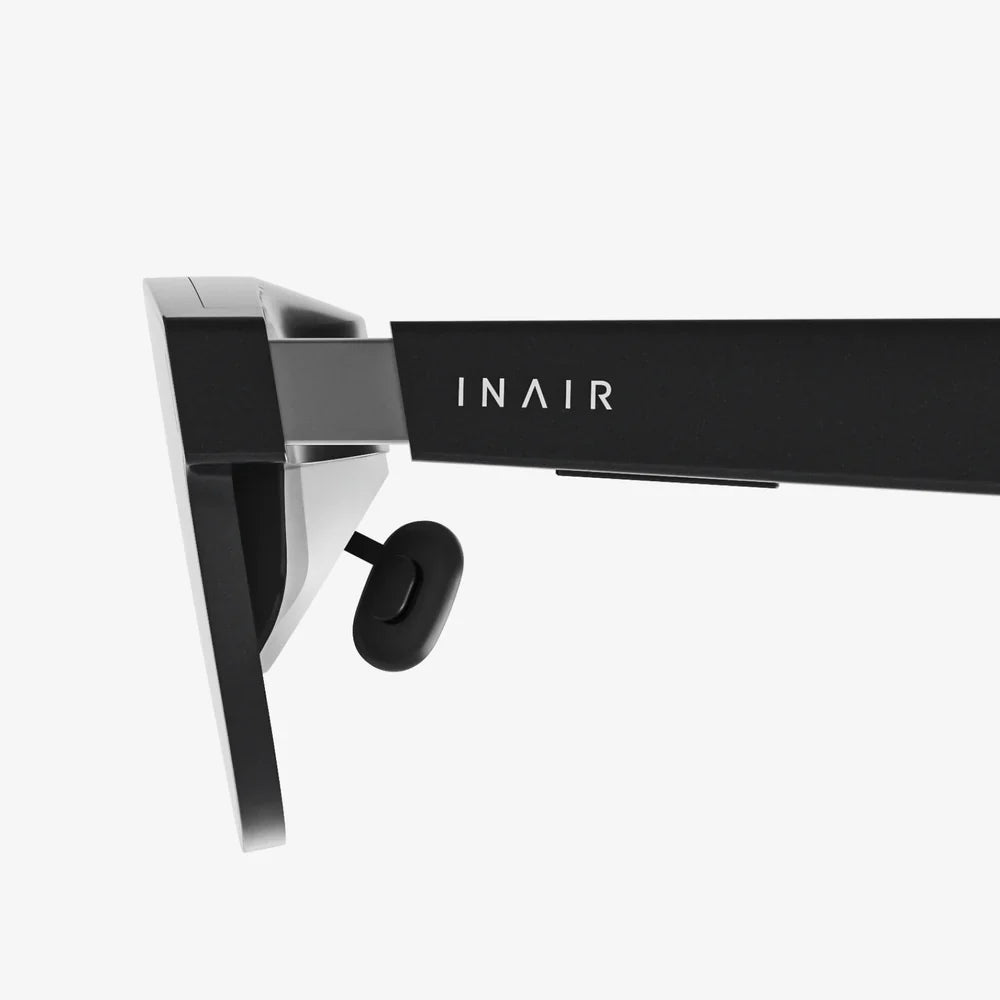
The technological landscape is shifting beneath our feet, and at the epicenter of this seismic change lies a critical battle for the future of how we interact with computers, information, and each other. It’s not merely a choice between two different types of headsets; it’s a choice between two fundamentally different visions of our digital future. On one side, we have the established power of all-encompassing virtual reality, exemplified by popular standalone devices. On the other, the emerging promise of augmented reality glasses that seek to layer digital information seamlessly onto our physical world. This isn't just a specs comparison—it's a philosophical divide that will define the next decade of personal technology.
The Core Philosophical Divide: Immersion vs. Integration
To understand the battle between AR glasses and advanced VR headsets, one must first appreciate the core philosophical difference that defines them. It is the difference between an escape from reality and an enhancement of reality.
Devices like the Quest 3 are masters of immersion. They are designed to transport you. By completely replacing your field of view with a digital environment, they offer a powerful, uninterrupted experience. This is their greatest strength. Whether you are exploring fantastical realms, attending a concert on Mars, or collaborating on a 3D model at life-size scale, the virtual world is all that exists. This total immersion is perfect for gaming, detailed simulation, and focused productivity where the distractions of the real world need to be eliminated. The technology prioritizes a high-resolution, high-refresh-rate visual experience that tricks your brain into accepting the digital realm as real.
AR glasses, in their ideal form, operate on the opposite principle. Their goal is not to replace your world but to become a seamless layer on top of it. The philosophy is one of integration and augmentation. Imagine seeing navigation arrows painted onto the road as you walk, having the name and professional background of a colleague subtly appear next to them as you shake their hand, or leaving a virtual sticky note on your microwave that only you can see. The technology prioritizes transparency, context-awareness, and always-available information. It’s computing that works for you in the background of your life, rather than an experience you must actively step into.
Under the Hood: A Tale of Two Technologies
The divergent philosophies of AR and VR demand radically different hardware architectures. While they share some common components like inertial measurement units (IMUs) and processors, their approaches to the most critical element—the display—are worlds apart.
The VR Headset Approach
Modern standalone VR headsets are technological marvels of integration. They are essentially powerful, wearable computers with two high-density screens placed mere centimeters from the user's eyes. Sophisticated pancake lenses focus the image and create a wide field of view. They employ inside-out tracking, using multiple external-facing cameras to map the room, track controllers, and understand the user's position in space. This allows for features like full-color passthrough, which effectively turns the VR headset into an AR device by showing a video feed of the real world. However, this is video passthrough augmentation, not true optical see-through AR. The experience, while impressive, is still looking at the world through cameras and screens, which can introduce latency, reduce resolution, and create a slight sense of disconnection from your actual surroundings.
The True AR Glasses Approach
True AR glasses aim for optical see-through (OST). This means you look directly at the real world through transparent lenses (often called waveguides). Digital images are then projected onto these lenses and reflected into your eyes, superimposing them onto your natural vision. This is a far more challenging technical problem than building a VR display. It requires incredibly miniature projectors (often laser-based), and complex nano-structured lenses that can bend light in precise ways. The goal is to make bright, vibrant digital images appear in focus against any real-world background. The major trade-off has historically been a significantly smaller field of view compared to VR—the digital content appears in a limited "window" rather than filling your entire vision. Overcoming this limitation is the holy grail of AR display technology.
The Experience Spectrum: Where Each Device Excels
These technological differences manifest in dramatically different user experiences, with each platform having domains where it is unquestionably superior.
The Realm of the VR Headset
- Gaming and Entertainment: This is VR's undisputed kingdom. The full immersion is perfect for deep, engaging games and breathtaking cinematic experiences on a virtual giant screen.
- Focused Design and Collaboration: Architects, engineers, and artists can manipulate 3D models at full scale, walking around them as if they were physical objects in a void, free from distraction.
- Training and Simulation: From practicing surgical procedures to operating complex machinery, VR provides a safe, controlled, and highly realistic environment for training without real-world consequences.
The Promise of the AR Glasses
- Contextual Computing and Navigation: AR glasses can overlay instructions onto a piece of equipment you're repairing, translate street signs in real-time, or guide you through an airport with arrows on the floor.
- Perpetual Productivity: Imagine having multiple large, virtual monitors available wherever you go—on your train commute, in a coffee shop, or at your kitchen table—without being tethered to a physical device.
- Social Connection: The promise of AR is that it doesn't isolate you. You can make video calls where the participant appears as a life-size avatar in your living room, all while maintaining eye contact and awareness of your actual environment and the people in it.
The Trade-Offs: Navigating the Current Limitations
No technology is perfect, and both paths are riddled with compromises that consumers must weigh.
Modern VR headsets have made incredible strides in comfort and convenience, becoming wireless and standalone. However, they remain relatively bulky devices that you consciously put on for a specific session. They are not designed to be worn all day. The social isolation is inherent—you are blind and deaf to the world around you while using them. While passthrough AR features are a step toward blending realities, the video feed quality, though improving, is still a facsimile of the real world, not the real world itself.
AR glasses, particularly those trying to achieve high performance, face their own steep hurdles. The quest for a wide field of view, bright imagery, and all-day battery life often leads to a difficult balancing act between form factor and function. Truly powerful AR glasses may require a wired connection to a processing pack or a smartphone, negating some of the desired freedom. Furthermore, the social acceptance of wearing cameras on your face that can record others presents a significant privacy challenge that the industry has yet to fully address or solve.
The Convergence and the Road Ahead
An fascinating trend is the beginning of a convergence between these two categories. High-end VR headsets are aggressively adopting high-resolution color passthrough, branding themselves as "mixed reality" devices. This allows them to run AR applications within a video feed of your environment. Conversely, some AR glasses are focusing on media consumption, offering virtual screens that simulate a theater-like experience.
However, it is crucial to recognize that high-quality video passthrough is not the same as true optical see-through. It is an emulation of AR, a clever workaround that leverages the strengths of VR hardware. It provides a glimpse into a mixed-reality future but remains a different experience with its own set of trade-offs in latency, visual fidelity, and power consumption.
The future likely holds a spectrum of devices. For the foreseeable future, dedicated VR headsets will reign supreme for immersive experiences, gaming, and simulations where total visual control is required. True AR glasses will evolve to become the next evolution of the smartphone—a lightweight, always-on companion for information and productivity that keeps you present in your world. The line will blur, but the fundamental philosophical and technological divide between building a portal to another world and building a layer on top of this one will persist.
Choosing between these visions is less about picking a winner today and more about betting on which paradigm will ultimately become the primary lens through which we compute. Will we retreat into perfect digital worlds, or will we choose to make our own world smarter, more informative, and more connected? The answer to that question will shape not just the devices on our faces, but the very fabric of our daily lives. The race to define the next era of human-computer interaction is on, and the ultimate winner might just be the one that understands we don't want to escape reality—we want to make it infinitely better.
Share:
Future Monitor Technology: The Next Frontier in Visual Realism and Interaction
AI Pro Bluetooth Stereo Headset: The Definitive Guide to the Next Generation of Audio