


- by wangfred
AI Progressive Glasses: The Dawn of a New Visual and Cognitive Reality
- by wangfred
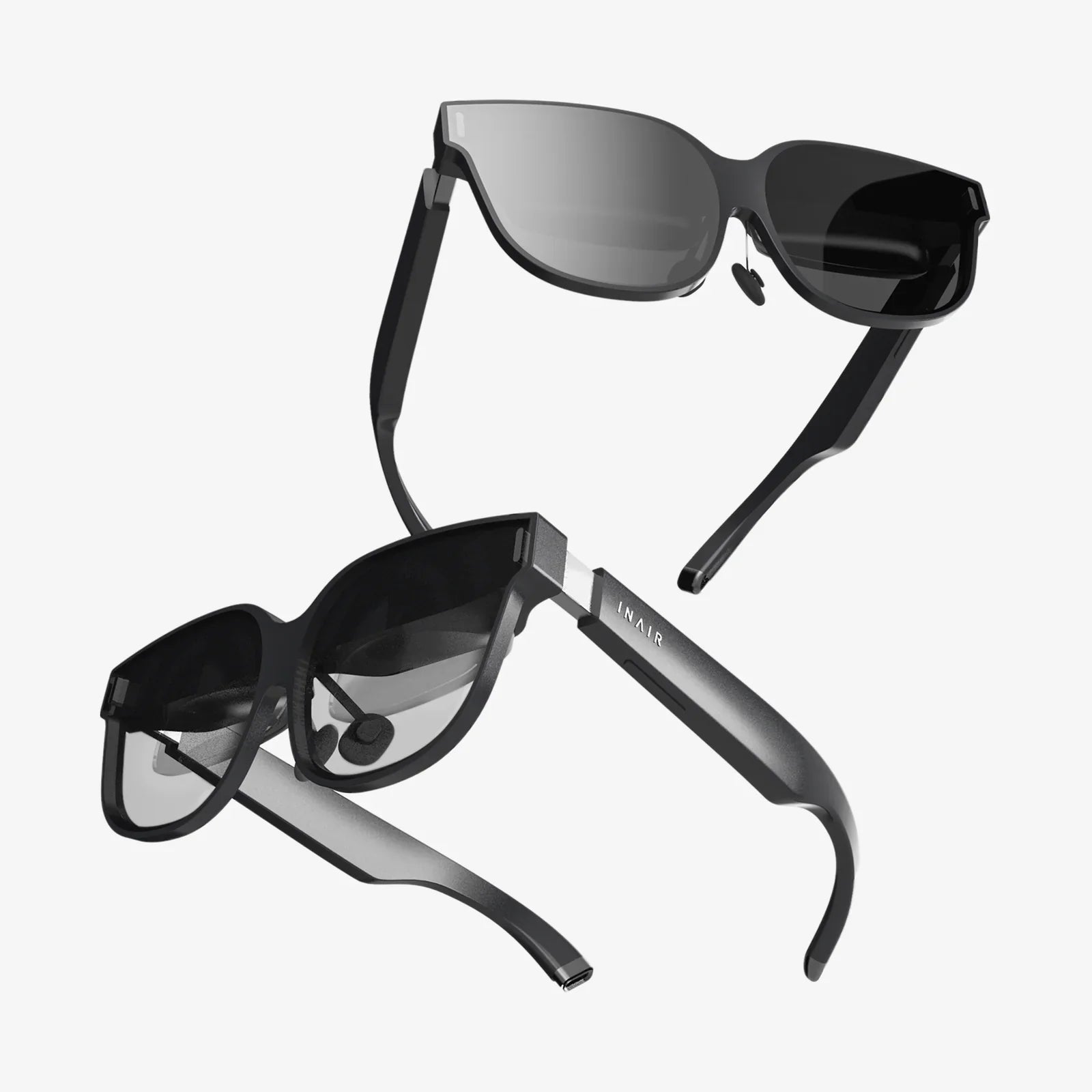
Imagine a world where your glasses do more than just correct your vision; they enhance your reality, understand your needs, and connect you to the digital realm in a way that feels as natural as blinking. This isn't a distant sci-fi fantasy—it's the imminent future being unlocked by the emergence of AI Progressive Glasses, a technological leap that promises to redefine our relationship with both the physical and digital worlds.
To understand the revolutionary potential of AI progressive glasses, one must first appreciate the two distinct fields they merge: advanced ophthalmic optics and cutting-edge artificial intelligence. For decades, progressive lenses have been the gold standard for addressing presbyopia, the age-related loss of near vision. These sophisticated lenses provide a seamless gradient of magnification, allowing the wearer to see clearly at all distances—far, intermediate, and near—without the tell-tale lines of bifocals.
Meanwhile, artificial intelligence has been rapidly evolving, moving from massive data centers into smaller, more efficient forms capable of running on portable devices. The development of sophisticated machine learning algorithms, coupled with powerful yet minuscule processors, has enabled the concept of "edge AI," where data is processed locally on the device itself rather than being sent to the cloud. This is crucial for wearable technology, as it ensures low latency, greater privacy, and continuous functionality regardless of internet connectivity.
AI progressive glasses represent the perfect marriage of these disciplines. They are not simply eyeglasses with a tiny screen attached. Instead, they are an integrated system where the optical correction is the foundation, and the AI is a layer of intelligence that augments the user's capabilities. The lenses themselves might be smart, embedded with microelectronics or liquid crystal technology to dynamically adjust their properties, or they might work in concert with miniature cameras, microphones, and sensors housed within the frame.
The true power of these devices lies in their software and AI capabilities. By processing a constant stream of visual and auditory data, they can perform a staggering array of functions that extend far beyond simple sight.
One of the most immediate applications is real-time language translation. Imagine traveling abroad and looking at a restaurant menu in a foreign language. Instantly, the text is overlaid in your native tongue directly onto your field of view. Conversations with locals become fluid, as subtitles appear for spoken words, breaking down language barriers in a way that feels truly magical. The AI doesn't just translate word-for-word; it understands context and idiom, providing a natural and accurate interpretation.
Navigation is transformed from a distracting map on a phone screen to an intuitive, heads-up display. Directional arrows are painted onto the pavement in front of you, and points of interest are highlighted as you glance around a new city. This goes beyond simple directions. The AI can recognize products on a shelf, providing instant information, reviews, or even allergy warnings by scanning ingredients. It can identify plant species during a hike, or provide historical facts when you look at a monument, effectively turning the entire world into an interactive, informative experience.
Perhaps the most profound impact will be in the realm of cognitive assistance. For individuals with conditions like prosopagnosia (face blindness), the glasses could discreetly display the name of a person approaching. In professional settings, they could act as a real-time prompter, displaying talking points during a presentation or providing technical data while repairing complex machinery. They become a seamless extension of one's memory and knowledge, accessing vast databases of information without the user ever needing to reach for a device.
A critical challenge for AI wearables is the interface. The success of AI progressive glasses hinges on their ability to be unobtrusive. No one wants to be constantly bombarded with pop-up notifications and distracting graphics. The AI must be anticipatory and subtle, providing information only when it is contextually relevant and desired by the user.
Interaction will move away from touchscreens and voice commands (which can be socially awkward) towards more natural modalities. This includes gesture control—a tiny flick of the wrist to dismiss a notification—or even more advanced systems like subvocalization, where the AI detects neuromuscular signals when you form words without speaking. The ultimate goal is an interface that feels like a silent partner, understanding your needs through your behavior, gaze, and environment, rather than explicit commands.
With such powerful capabilities come significant ethical and social considerations that must be addressed proactively.
These devices, by their very nature, are constantly capturing data about their surroundings. This raises enormous privacy concerns. Who has access to the video and audio feed? How is this data stored and used? The solution lies in robust edge computing, where all processing happens on the device itself, with only essential, anonymized data ever being transmitted. Strong encryption and clear, user-controlled data policies will be non-negotiable for widespread adoption.
There is a risk that such advanced technology could exacerbate the digital divide, creating a new class of "enhanced" individuals with access to superior information and capabilities. Furthermore, social acceptance is not guaranteed. The presence of cameras on everyone's face could lead to new social anxieties and etiquette dilemmas. Will recording notifications be required? How do we prevent these tools from being used for malicious purposes like surreptitious surveillance? These are not merely technical questions but societal ones that require broad discussion and thoughtful regulation.
Looking ahead, AI progressive glasses will evolve from a singular product into a platform. Developers will create applications for specific industries and use cases. Surgeons could use them to overlay MRI data directly onto their field of view during operations. Engineers could see schematics and diagnostics while working on equipment. The potential for specialized professional applications is as vast as the consumer one.
We are moving towards a future where technology recedes into the background, becoming woven into the fabric of our daily lives. AI progressive glasses represent a major step in that direction. They offer a vision of computing that is not a separate activity we engage with, but a continuous, ambient presence that enhances our natural abilities.
The journey from simple vision correction to intelligent augmentation is already underway. AI progressive glasses are not just about seeing more clearly; they are about understanding more deeply, interacting more seamlessly, and navigating the world with unprecedented confidence and connection. The future is not on your phone screen; it's right before your eyes.
Share:
Augmented Reality User Experience: Bridging the Digital and Physical Worlds
Best Augmented Reality Experiences: A Journey Through Digital Layers