


- by wangfred
Best Augmented Reality Experiences: A Journey Through Digital Layers
- by wangfred
Imagine a world where the line between the digital and the physical blurs into irrelevance, where information and imagination are painted directly onto the canvas of your reality. This is the promise of augmented reality (AR), a technology that has evolved from a futuristic concept into a powerful tool enhancing everything from how we play and learn to how we work and create. The quest for the best augmented reality experiences is not about finding a single app or game; it's about discovering the myriad ways this technology can fundamentally enrich our daily lives, offering new perspectives, solving complex problems, and unlocking unprecedented forms of entertainment and artistry. The digital layer is here, and it is waiting for you to peel it back.
Before diving into the experiences themselves, it is crucial to understand what separates AR from its technological cousins. Unlike Virtual Reality (VR), which aims to replace your entire field of vision with a simulated, digital world, Augmented Reality superimposes digital information—be it images, data, or 3D models—onto your view of the real world. This is most commonly achieved through the camera on a smartphone or tablet, or through specialized eyewear. The magic lies in the software's ability to understand its environment through advanced computer vision, simultaneous localization and mapping (SLAM), and object recognition. This allows a digital dinosaur to convincingly walk across your living room floor or a navigation arrow to appear fixed to the road ahead. The best experiences are those that achieve a seamless blend, where the digital elements feel like a natural, interactive part of our physical space.
The realm of gaming has been one of the most visible and explosive arenas for AR. The experience that brought AR to the global mainstream demonstrated the incredible potential for communal, location-based play. It transformed local parks and city landmarks into hunting grounds for fantastic creatures, creating a shared social phenomenon. This was just the beginning. The best AR games today leverage their unique position to turn your entire environment into a level. Tabletop games come to life on your kitchen table, with intricate battles unfolding between fantastical armies. Puzzle games use your walls and furniture as part of the challenge, requiring physical movement and spatial reasoning. Horror experiences can transform a familiar, safe space into a terrifying haunted house, with jump scares anchored to specific doors or corners. This genre proves that the most engaging playground isn't on a screen; it's the world around us, digitally enhanced.
Perhaps the most profound application of AR is in education and cultural heritage. The technology possesses a unique ability to make the abstract tangible and the distant immediate. In classrooms, students can dissect a virtual frog with no mess, hold the solar system in their hands, and watch historical events unfold on their desks. Complex anatomical structures can be explored layer by layer, rotating a beating heart or a human skeleton in mid-air. This interactive, visual learning caters to diverse learning styles and creates memorable, impactful lessons. Beyond the classroom, museums and historical sites are leveraging AR to create breathtaking experiences. Point your device at a fossil, and watch the dinosaur reconstruct itself and roam the exhibit hall. Stand in the ruins of an ancient temple, and see it restored to its former glory through your screen. These experiences bridge the gap between the past and present, allowing us to not just read about history, but to witness it.
While consumer apps grab headlines, some of the most sophisticated and valuable AR experiences are happening in industry. In fields like manufacturing, engineering, and medicine, AR is moving from a novelty to a critical tool. Technicians performing complex repairs on machinery can wear AR glasses that overlay schematics, torque specifications, and step-by-step instructions directly onto the components they are working on, freeing their hands and drastically reducing errors. Surgeons are beginning to use AR overlays during procedures, visualizing patient scan data like tumors or blood vessels directly on the surgical field. In architecture and interior design, clients can don a headset and walk through a full-scale 3D model of their future home before a single brick is laid. They can change wall colors, move furniture, and experience the flow of the space. These professional-grade experiences are not about entertainment; they are about enhancing precision, efficiency, and safety, demonstrating AR's immense practical value.
AR has emerged as a powerful new medium for artists, allowing them to create dynamic, site-specific works that exist in a shared physical space. Digital sculptures can be placed in public squares, interactive murals can change and respond to viewer movement, and entire galleries can exist as layers over reality, accessible only to those with the right app. This transforms public art from a static object into an evolving experience. For the individual, AR empowers a new form of creativity. Applications allow users to design their own AR experiences, placing custom artwork and animations around their homes or creating AR scavenger hunts for friends. Social media filters, while often whimsical, are a ubiquitous form of this creative expression, allowing millions to become part of a shared, augmented moment. The best artistic AR experiences challenge our perceptions of art as a fixed object, proposing instead a world where art is interactive, contextual, and deeply personal.
One of the most intuitive uses of AR is to enhance our navigation and understanding of our immediate environment. The next evolution of GPS is likely to be AR-powered, with arrows and directions laid over a live view of the road, making it unmistakably clear which exit to take or which turn is next. Indoors, large complexes like airports, hospitals, and shopping malls can use AR wayfinding to guide users seamlessly to their gate, a specific department, or a desired store. But it goes beyond simple navigation. Imagine pointing your phone at a restaurant and seeing its reviews and menu pop up instantly. Point it at a landmark to get a summary of its history. Point it at the night sky to have constellations identified and myths narrated. This layer of contextual information, available on-demand, turns the entire world into a hyperlinked, interactive encyclopedia, empowering us with knowledge exactly when and where we need it most.
The true potential of any technology is often realized when it connects people. AR is poised to revolutionize social interaction by allowing us to share digital space. Persistent AR experiences, anchored to a location, can be visited and interacted with by multiple people simultaneously. Friends separated by distance could meet up as avatars in a shared AR environment, playing a virtual board game on a real table or watching a virtual screen together on a real wall. This shared layer of reality could become the next major platform for social connection, moving beyond flat video calls into a world where we can collaboratively create and interact with digital objects as if they were physically present. The best social AR experiences will make us feel together even when we are apart, co-creating memories in a blended world.
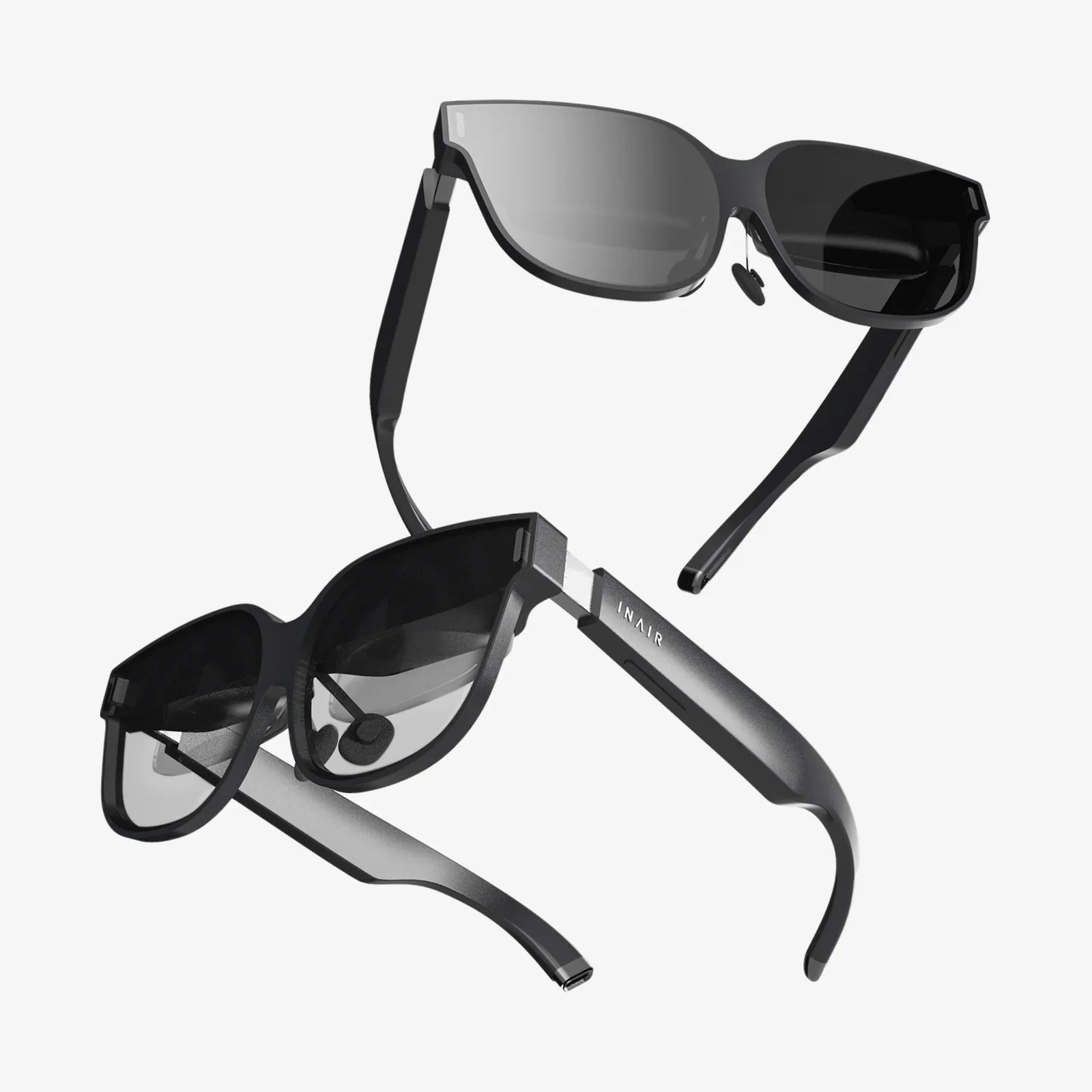
The path to perfect AR is not without its obstacles. For the technology to become truly seamless and ubiquitous, hardware must improve. Smartphones are a gateway, but the ultimate goal is comfortable, stylish, and powerful eyewear that can blend digital light with the real world all day long. Battery life, field of view, and social acceptance are significant hurdles. Furthermore, the creation of an AR layer over our world raises critical questions about privacy, data ownership, and visual pollution. Who controls what can be placed in public space? How do we prevent an overwhelming barrage of advertisements? Navigating these ethical and societal questions is as important as advancing the technology itself to ensure AR develops as a force for good.
The hunt for the best augmented reality experiences reveals a technology that is not a mere gimmick but a fundamental shift in our relationship with computing. It moves us away from looking down at a screen and towards looking out at a world enhanced with knowledge, creativity, and connection. From the classroom to the operating room, the art gallery to the factory floor, AR is demonstrating its power to inform, assist, and delight. We are standing at the threshold, our devices in hand, ready to lift the veil and see the world not just as it is, but as it could be. The next layer of your reality is just a click away—what will you discover when you choose to see it?
Share:
AI Progressive Glasses: The Dawn of a New Visual and Cognitive Reality
AR VR Means: Understanding the Technologies Reshaping Our Reality