


- by wangfred
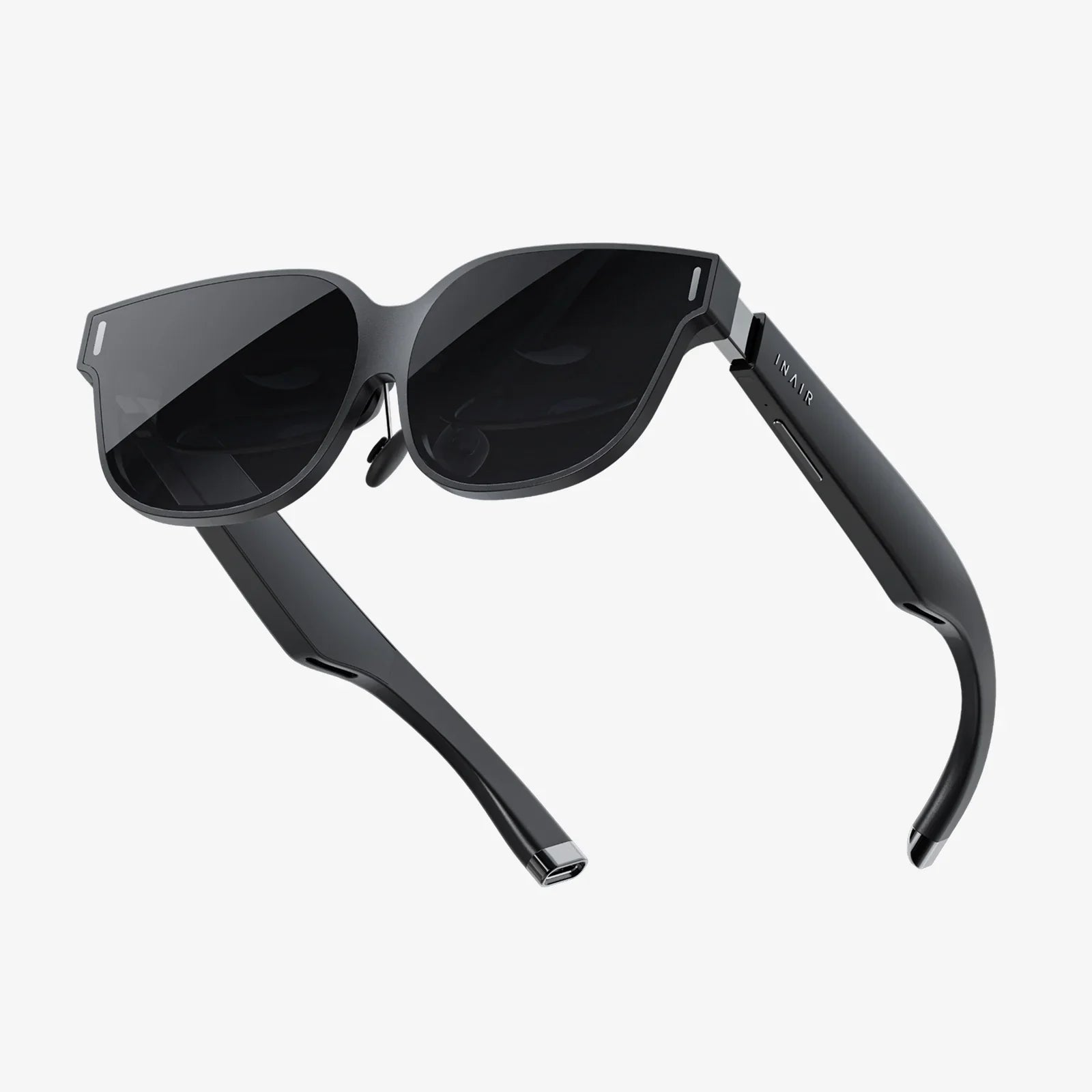
AI Smart Glasses with AR Display: The Invisible Revolution Reshaping Our World
- by wangfred
Imagine a world where information doesn’t live on a screen in your hand but is woven seamlessly into the fabric of your reality. Where directions appear as a glowing path on the sidewalk, the name of a forgotten acquaintance hovers politely near their face, and complex repair instructions are projected directly onto the machinery you’re fixing. This is not a distant science fiction fantasy; it is the imminent future being unlocked today by the rapid advancement of AI smart glasses with AR display. This technology promises to be the most personal and transformative computing platform since the smartphone, and it’s poised to change everything about how we work, connect, and perceive the world around us.
At their core, AI smart glasses are a symphony of miniaturized hardware and sophisticated software, all working in concert to create a new layer of interactive reality. Unlike their virtual reality counterparts, which seek to replace the world with a digital one, AR glasses aim to augment and enhance your existing environment.
The foundation of this technology is its ability to see and understand the world. This is achieved through a suite of tiny, powerful sensors. High-resolution cameras continuously capture the user’s field of view. But these aren't just for taking pictures; they are the primary data-gathering tool. Depth-sensing cameras, often using LiDAR (Light Detection and Ranging) or similar time-of-flight sensors, map the environment in three dimensions, calculating the precise distance to every surface and object. This creates a real-time 3D mesh of the world, allowing the digital content to understand and interact with the physical space—placing a virtual vase convincingly on a real table or having a digital character hide behind a real couch.
The raw visual data is nothing without interpretation. This is where the artificial intelligence comes in. A dedicated, low-power AI processing unit within the glasses acts as the brain. It runs complex machine learning models for tasks like:
This is the magic trick—the component that paints the digital world onto the real one. Several technologies are employed to achieve this, but the goal is always the same: to project bright, clear, and stable images onto the user’s retina while allowing them to see the real world unimpeded. Waveguide and holographic optics are common solutions, using tiny projectors and transparent lenses to bend light and create the illusion that digital text, images, and 3D models are existing in the user’s physical space. The fidelity of this display—its field of view, brightness, and resolution—is what separates a compelling experience from a mere technological novelty.
While impressive on their own, it is the fusion of AI and AR that unlocks their true potential. They are not merely two features bundled together; they are intrinsically linked in a symbiotic relationship.
Think of the AR display as the expression of the technology—the "what you see." It is the output device. The AI, however, is the cognition—the "what it means" and "what to show." The AI processes the sensor data to understand the context of the user's situation, and then dictates what information is relevant and how it should be displayed through the AR lenses.
For example, if the cameras see a restaurant, the AI can recognize it, cross-reference it with your preferences, and instantly display its star rating and today’s specials onto its facade. The AI does the heavy lifting of comprehension and decision-making, and the AR system executes the delivery of that decision into your visual field. Without AI, AR glasses would be dumb projectors, unable to understand what they are looking at. Without AR, the AI's insights would be trapped on a separate screen, breaking the user's immersion. Together, they create a continuous, contextual, and intuitive feedback loop between the user and their environment.
The applications for this technology extend far beyond consumer novelty. They are poised to revolutionize professional workflows, offering unparalleled gains in efficiency, safety, and capability.
In complex industrial settings, AI smart glasses are a game-changer. A technician repairing a malfunctioning turbine can have a schematic diagram, the machine’s service history, and a live video feed from a remote expert overlaid directly onto their view of the equipment. The AI can highlight the specific component that needs attention with a digital arrow and display the exact torque specifications for each bolt. This hands-free access to information drastically reduces errors, slashes training time, and minimizes downtime. Similarly, in logistics and warehousing, workers can see optimal picking paths and instantly verify items for shipment without ever consulting a clipboard or handheld scanner.
In medicine, the stakes are even higher. Surgeons can have vital signs, ultrasound data, or 3D anatomical models from pre-op scans projected directly into their field of view during a procedure, allowing them to keep their focus entirely on the patient. Medical students can practice procedures on hyper-realistic AR simulations. For general practitioners, the AI could instantly pull up a patient’s records the moment they walk into the room, displaying key metrics and history discreetly in the doctor's periphery.
Architects and interior designers can walk clients through full-scale, interactive holograms of their unbuilt projects, making real-time changes to materials, lighting, and layouts. Engineers can visualize stress tests and fluid dynamics simulations overlaid on physical prototypes, enabling a deeper understanding of complex systems before they are ever manufactured.
The concept of a "phone call" or "video conference" becomes obsolete. With AI smart glasses, remote collaboration becomes spatial. A colleague from across the globe can be represented as a photorealistic avatar in your room, able to point to physical objects, draw diagrams in mid-air that everyone can see, and interact with the shared environment as if they were physically present. This "telepresence" has the power to democratize expertise and make physical location far less relevant.
With such profound power comes significant responsibility. The widespread adoption of always-on, AI-powered cameras and displays worn on the face presents a thicket of ethical and social challenges that must be addressed proactively.
The most immediate concern is privacy. If everyone is wearing glasses that can record, identify faces, and analyze environments continuously, where does public space end and private surveillance begin? The potential for misuse is staggering, from corporations harvesting unprecedented amounts of behavioral data to governments enabling mass surveillance. Robust ethical frameworks, clear regulations, and transparent user controls over data collection are not optional; they are prerequisites for public trust. Features like obvious recording indicators (e.g., a glowing light) and strict, user-controlled permissions will be essential.
Social acceptance is another major hurdle. How do you know if someone wearing these glasses is recording you? Are they looking at you or reading an email projected next to your head? Navigating conversations will require new social norms and etiquettes. The term "Glasshole" from earlier iterations of this technology serves as a warning: the experience must be designed to be socially graceful, prioritizing interaction with people over distraction by data.
As with any transformative technology, there is a risk of exacerbating inequality. Will access to this powerful augmented layer of information become a prerequisite for success in certain jobs, creating a new class of augmented "haves" and unaugmented "have-nots"? Conversely, the technology also holds immense promise for accessibility, offering real-time translation for the deaf and hard of hearing, navigation for the visually impaired, and memory aids for those with cognitive disabilities. The guiding principle must be to design for inclusion from the outset.
The current generation of AI smart glasses are still in their relative infancy, often constrained by battery life, processing power, and display field of view. But the trajectory is clear and accelerating. The key to mass adoption lies in overcoming these technical hurdles while nailing the user experience. They must become lighter, more powerful, last all day, and offer a display that is both expansive and indistinguishable from reality. Most importantly, the software and AI interactions must feel effortless, intuitive, and genuinely useful, moving beyond gimmicks to become an indispensable tool.
The day is fast approaching when glancing at your wrist or pulling a slab of glass from your pocket will feel as archaic as dialing a rotary phone. AI smart glasses with AR display are not just another gadget; they are the beginning of a fundamental shift in humanity's relationship with technology. They promise to dissolve the barrier between the digital and the physical, unlocking human potential in ways we are only beginning to imagine. The world is about to get a new, incredible layer, and it will be visible only to those who choose to put on the glasses.