


Imagine a world where the digital and physical seamlessly intertwine, where you can summon information onto your coffee table, train for complex surgery without risk, or walk on the surface of Mars from your living room. This is no longer the realm of science fiction; it is the burgeoning reality being built today through the revolutionary technologies of Augmented Reality (AR) and Virtual Reality (VR). These two pillars of immersive tech are poised to redefine every facet of our lives, from how we work and learn to how we connect and play. This journey into their core is not just about understanding gadgets; it's about glimpsing the next chapter of human-computer interaction.
Defining the Realms: AR vs. VR
While often mentioned in the same breath, AR and VR offer distinctly different experiences. The fundamental difference lies in their relationship with the user's environment.
Virtual Reality: The Complete Digital Escape
Virtual Reality is the technology of total immersion. It completely replaces your real-world environment with a simulated one. By wearing a headset that encompasses your field of vision, you are visually and audibly transported to a computer-generated world. This world can be a photorealistic recreation of a real place, a fantastical game environment, or a abstract digital space for work or socializing. The goal of VR is to create a convincing sense of presence—the feeling of actually "being there."
Augmented Reality: The Enhanced Layer of Reality
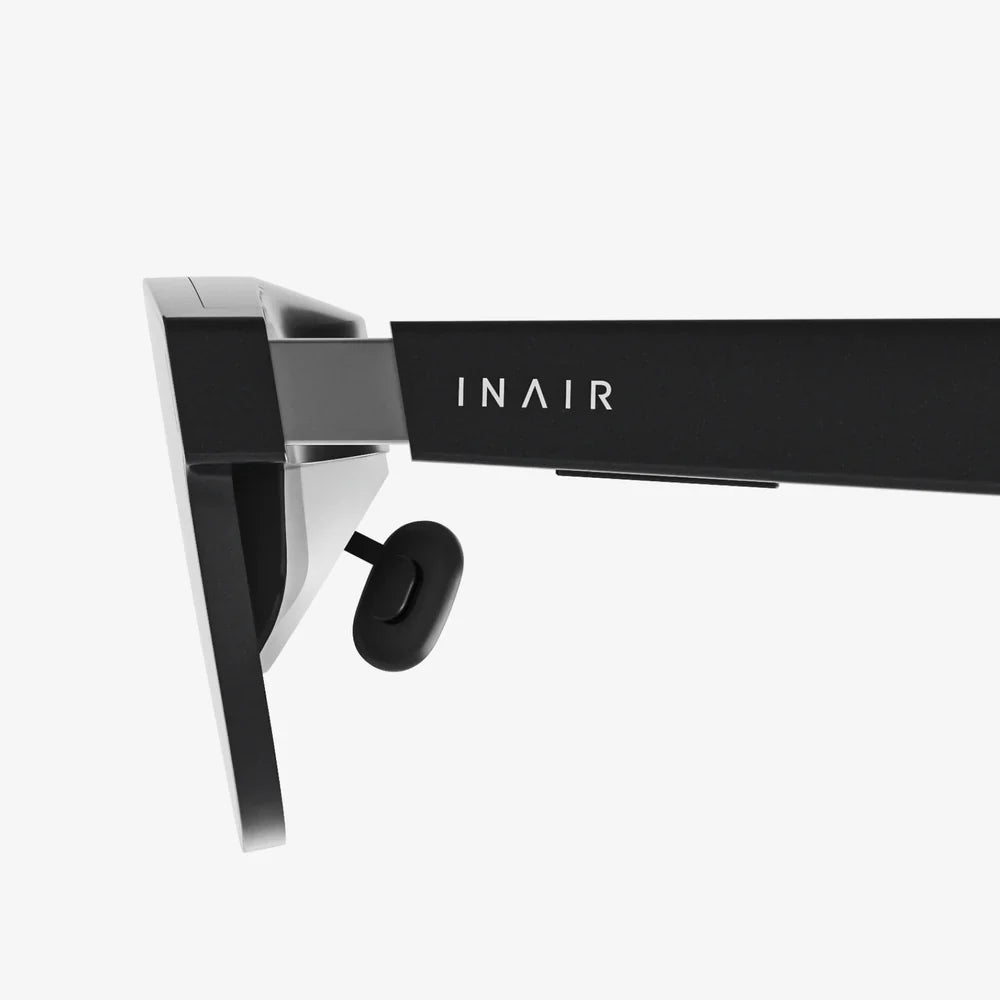
Augmented Reality, by contrast, does not replace the real world. It overlays digital information—images, text, 3D models, and animations—onto your view of the physical environment. The real world remains the foundation, but it is enhanced and augmented with a layer of interactive data. This is most commonly experienced through smartphone cameras, smart glasses, or specialized headsets. The magic of AR is its ability to contextualize information and place it directly into your immediate surroundings, making it incredibly practical for navigation, instruction, and visualization.
The Technological Engine Room
Creating these immersive experiences requires a sophisticated fusion of hardware and software, pushing the boundaries of computing power, display technology, and sensory tracking.
Sensing the World: Tracking and Input
Both AR and VR rely heavily on understanding the user's position and movements. This is achieved through a combination of technologies:
- Inside-Out vs. Outside-In Tracking: VR systems traditionally used external sensors (outside-in) placed around a room to track the headset and controllers. Modern systems increasingly use cameras on the headset itself (inside-out) to map the environment and track movement without external hardware.
- Six Degrees of Freedom (6DoF): This is the holy grail of tracking. It means the system tracks not just your head's rotation (pitch, yaw, roll) but also its positional movement in space (forward/back, up/down, left/right). This allows you to lean, crouch, and walk around within the digital space, which is crucial for a believable sense of presence.
- Hand Tracking and Haptics: Beyond controllers, advanced systems now use cameras to track your bare hands, allowing for more natural interaction. Haptic feedback devices, from controllers to vests and gloves, provide the sense of touch, simulating the feeling of pushing a button or being hit by an object.
Display and Visual Fidelity
The window to these digital worlds is the display. High resolution, fast refresh rates (90Hz and above), and a wide field of view are critical to preventing discomfort and maintaining immersion. A significant challenge is the "screen door effect," where users can perceive the gaps between pixels. Advancements in micro-displays are rapidly eliminating this issue.
Computational Power and Latency
Rendering complex, high-frame-rate 3D environments in real-time demands immense processing power. Any delay, or latency, between a user's movement and the display updating can cause motion sickness. This is why powerful processors and optimized software are non-negotiable for a comfortable experience.
A Universe of Applications: Beyond Gaming
While gaming and entertainment were the initial driving forces, the applications for AR and VR now extend into nearly every professional and educational field.
Revolutionizing Education and Training
Immersive tech offers unparalleled opportunities for experiential learning. Medical students can practice intricate surgical procedures on virtual patients, making mistakes without consequences. Mechanics can learn to repair complex engines by following AR instructions overlaid onto the actual machinery. History students can take a virtual field trip to ancient Rome. This "learning by doing" in a safe, controlled environment dramatically improves retention and understanding.
Transforming Enterprise and Manufacturing
In the industrial sector, AR is a powerful tool for efficiency. Field service technicians can wear AR glasses to see wiring diagrams overlaid on the equipment they are fixing, with remote experts able to see their view and provide guidance. Architects and engineers can walk clients through full-scale 3D models of unbuilt structures. Factory floor workers can use AR to visualize assembly instructions, reducing errors and training time.
Redefining Healthcare and Therapy
VR is proving to be a revolutionary tool in therapy and rehabilitation. It is used for exposure therapy, helping patients with phobias like fear of heights or flying to confront their fears in a safe, controlled virtual environment. It's also used for pain management, distracting burn victims during painful wound care procedures. Surgeons use AR to visualize patient scans, such as MRI data, directly over the surgical site during an operation.
Reshaping Retail and Commerce
AR is changing how we shop. Furniture retailers allow you to use your smartphone to see how a sofa would look in your actual living room. Cosmetic companies offer virtual try-on for makeup. Car buyers can configure a vehicle and then view it in their driveway through their phone screen. This "try before you buy" digital experience reduces purchase uncertainty and returns.
Navigating the Challenges and Ethical Considerations
The path to an immersive future is not without its obstacles. Several significant challenges must be addressed for these technologies to achieve widespread, responsible adoption.
The Hardware Hurdle: Cost, Comfort, and Accessibility
High-end VR systems remain expensive, putting them out of reach for many consumers and smaller businesses. Even when cost is not a factor, hardware can be bulky, uncomfortable for extended wear, and require tethering to a powerful computer. For AR to become ubiquitous, the hardware needs to evolve into a form factor as socially acceptable and comfortable as everyday eyeglasses.
The Social and Psychological Impact
As we spend more time in digital spaces, questions arise about the long-term psychological effects. Could excessive use lead to a disconnection from physical reality? How do social interactions change when they are mediated by avatars? Furthermore, the concept of "presence" is so powerful that experiences in VR can feel real, raising concerns about potential for misuse in propaganda or traumatic experiences.
Data Privacy and Security
Immersive technologies are data collection powerhouses. A VR headset with eye-tracking can know exactly where you look, for how long, and how your pupils react. It can map the precise dimensions of your home. The potential for this deeply personal biometric and spatial data to be harvested, stored, and exploited is a major privacy concern that requires robust regulation and ethical frameworks.
The Digital Divide and Accessibility
There is a risk that these transformative technologies could exacerbate existing social inequalities. If crucial training, education, and healthcare applications become primarily available through expensive hardware, a new "immersive divide" could emerge, leaving behind those who cannot afford access.
The Future is Immersive: What Lies Ahead?
The trajectory of AR and VR points toward a future where the lines between our digital and physical lives are increasingly blurred. We are moving towards the concept of the "Metaverse"—a persistent network of interconnected virtual spaces. In this future, your AR glasses might be your primary computing interface, replacing smartphones, and your VR headset could be your portal to work meetings, concerts, and social gatherings. Advancements in brain-computer interfaces could eventually allow us to interact with these worlds through thought alone. The convergence of AR, VR, AI, and 5G connectivity will unlock experiences we can scarcely imagine today, creating new industries and reshaping existing ones in ways we are only beginning to understand.
The door to these blended realities is now open, offering a canvas limited only by our imagination. The journey from curious novelty to indispensable tool is well underway, promising to redefine not just how we see technology, but how we see our world and our place within it. The question is no longer if these technologies will become mainstream, but how quickly we will adapt to the incredible possibilities—and profound responsibilities—they bring.
Share:
Japan AR Glasses: A Visionary Journey from Concept to Cultural Catalyst
AI Smart Glasses with AR Display: The Invisible Revolution Reshaping Our World