


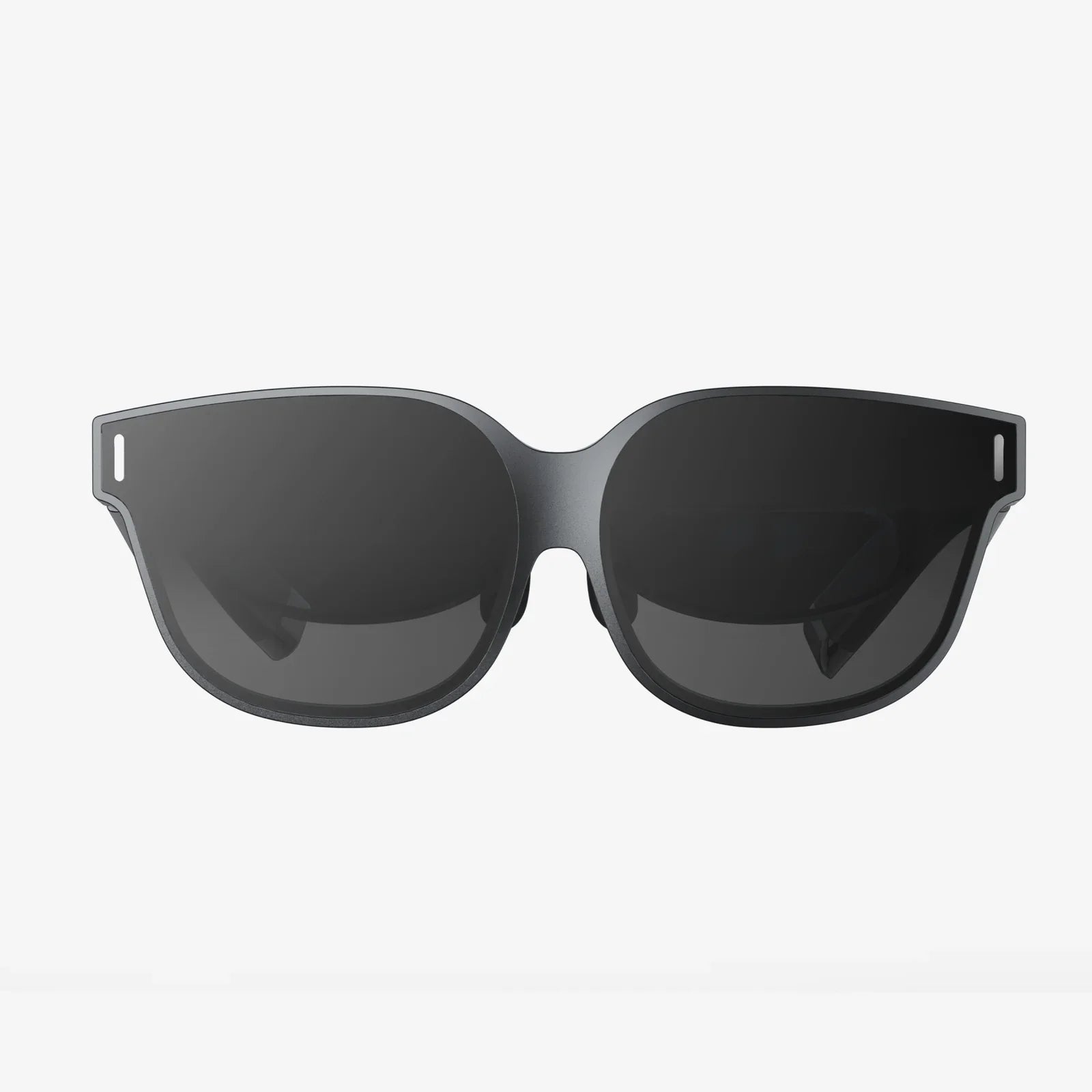
- by wangfred
AI Smart Goggles: The Next Evolutionary Leap in Human-Computer Interaction
- by wangfred
Imagine a world where the line between your thoughts and the vast digital universe begins to blur. Where information doesn't reside on a screen you have to pull out and stare at, but floats effortlessly in your field of vision, contextually aware and instantly accessible. This is not a scene from a science fiction film; it is the imminent reality being ushered in by the advent of AI smart goggles, a technological convergence so potent it promises to redefine our relationship with technology, information, and each other. This wearable revolution represents the next great leap beyond the smartphone, moving computing from our pockets directly into our perception, and it's arriving faster than most of us anticipate.
At their core, AI smart goggles are a symphony of cutting-edge hardware and sophisticated software, all miniaturized into a form factor designed for all-day wear. The magic lies in the seamless integration of these components.
The physical build of these devices is a feat of engineering. High-resolution, micro-display panels project images directly onto specially formulated waveguides or other optical systems that layer digital content over the real world. This creates the augmented reality (AR) effect, making a holographic interface appear to coexist with physical objects. Sophisticated spatial audio speakers provide immersive sound that can be tuned to either blend with the environment or create a private listening sphere.
But the true sensory power comes from an array of outward-facing sensors. High-fidelity cameras capture the world in real-time, while depth sensors (like LiDAR) and inertial measurement units (IMUs) work in concert to map the user's environment and understand their position within it with millimeter precision. This constant, real-time mapping is the canvas upon which the AI paints its digital layer.
The hardware is merely the body; the artificial intelligence is the brain. This is where the transformative potential is unlocked. Powerful, yet efficient, neural processing units (NPUs) embedded within the goggles run complex machine learning models directly on the device. This on-device processing is critical for several reasons:
The potential applications for this technology extend far beyond novelty or entertainment. They promise to augment human capability in professional, personal, and social contexts.
In industrial and technical fields, AI smart goggles are set to become an indispensable tool. A field engineer repairing a complex piece of machinery can have the schematic diagram, torque specifications, and a step-by-step guide overlaid directly onto the equipment they are working on. Their AI assistant could highlight the specific bolt to loosen and warn them if they are about to use the wrong tool. A surgeon could have a patient's vital signs and a 3D model of the organ they are operating on visible without ever looking away from the operating table. For remote collaboration, an expert thousands of miles away can see through the technician's eyes and draw annotations directly into their field of view, guiding them through a procedure as if they were standing side-by-side.
Social interaction stands to be profoundly changed. Imagine attending a meeting where participants from around the globe appear as photorealistic holograms sitting around your actual table. The AI could provide real-time transcription and translation, breaking down language barriers seamlessly. In a more personal context, navigating a foreign city becomes effortless; directional arrows are painted onto the sidewalk, and restaurant reviews and ratings hover above each establishment. You could point at a monument and have its history narrated to you. For individuals with visual or hearing impairments, the assistive potential is staggering—describing scenes, amplifying sounds, reading text aloud, and highlighting obstacles in the environment.
Education will transition from passive observation to active, interactive exploration. A medical student could walk around a life-sized, beating holographic heart, peeling back layers to understand its anatomy. An art student could learn to paint by having the brushstrokes of a master visually guide their hand. Architects and designers will no longer be confined to screens; they will sculpt and manipulate their 3D creations in the center of a room, walking around and through them to perfect their designs.
Such a powerful technology does not arrive without significant challenges and ethical dilemmas. The very feature that makes it incredible—its ability to perceive our world intimately—also makes it potentially perilous if not developed and regulated with extreme care.
This is the single greatest concern. A device with always-on cameras and microphones, worn on your face, represents the ultimate surveillance tool. The potential for misuse by corporations, governments, or malicious actors is a terrifying prospect. Robust, transparent, and user-centric data policies are non-negotiable. Features like physical camera shutters, clear recording indicators, and the aforementioned on-device processing must be standard. The question of who has access to the recordings of our lives—from every conversation to every person we pass on the street—must be addressed before widespread adoption can occur.
As the digital layer becomes richer and more compelling, a new digital divide could emerge—not just in access to technology, but in shared experience. Will we risk retreating into personalized digital bubbles, filtering our reality to such an extent that we no longer share a common baseline of truth with those around us? The technology could be used to erase unwanted visual elements (like graffiti or poverty) or to promote hyper-targeted advertising that feels invasive. Establishing digital etiquette and norms for when it is appropriate to use such devices will be a complex social challenge.
Physical safety is another paramount concern. Users immersed in an AR experience must remain aware of their physical surroundings to avoid accidents. Furthermore, the security of the devices themselves is critical. A hacked device could lead to malicious overlays, misdirection, or the theft of incredibly sensitive biometric and life-logging data.
The current generation of devices are still in their nascent stage, often grappling with limitations in battery life, field of view, and social acceptance. However, the trajectory is clear. Advances in semiconductor technology will make the onboard AI exponentially more powerful while sipping less power. Breakthroughs in optics, like holographic lenses, will make the devices smaller, lighter, and eventually indistinguishable from traditional eyewear.
The ultimate goal is a pair of glasses that you forget you're wearing, powered by an AI that understands your context and needs so completely that it anticipates them. It will be a quiet evolution, not a loud revolution—shifting computing from a task we perform to an ambient layer that enhances our every moment.
The journey towards truly intelligent and ubiquitous AI smart goggles is fraught with technical hurdles and profound philosophical questions. But it is a journey we are already on. The potential to augment human intelligence, to break down barriers of language and distance, and to empower people with new abilities is too great to ignore. The challenge for developers, policymakers, and society as a whole is to steer this powerful technology toward a future that is not only technologically dazzling but also equitable, ethical, and fundamentally human. The goggles themselves are just the lens; it is up to us to decide what world we choose to see through them.
We stand at the precipice of a new sensory dimension, where the digital and physical cease to be separate realms and become a unified field of experience. The promise is a life less cluttered by devices and more enriched by context, a world where knowledge is not sought but presented, and where our human capabilities are extended in ways we are only beginning to imagine. The age of glancing at a screen is ending; the era of looking through a intelligent window onto the world is about to begin.
Share:
Best Cheap Smartphone VR Headset: Your Ultimate Guide to Affordable Virtual Reality
Highest Selling VR Headset: The Uncontested Champion Reshaping Reality