


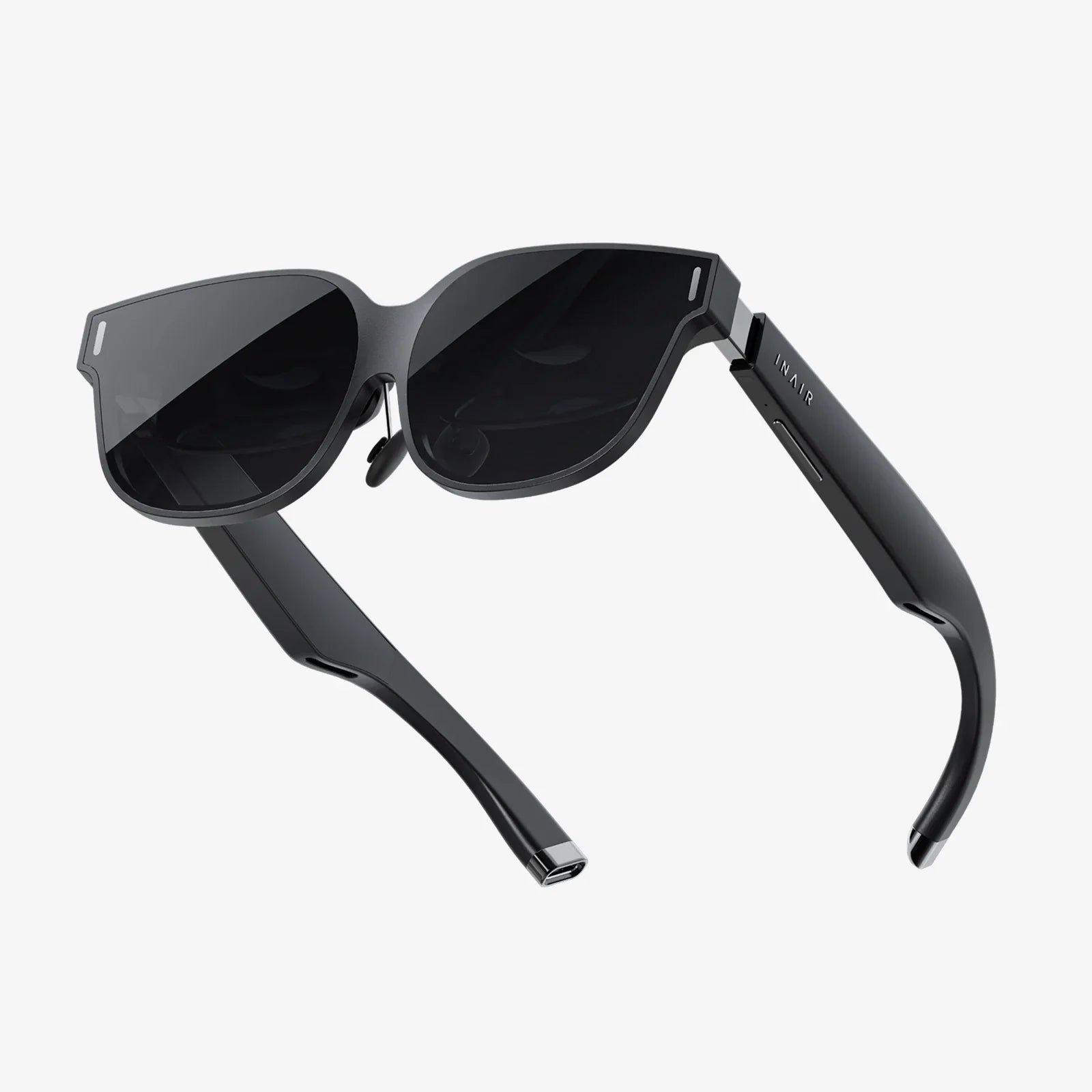
Imagine a digital workshop where the only limit is your imagination, a place where complex algorithms are your brushes, and vast datasets your raw clay. This is the promise of the modern AI studio, a concept rapidly transforming from a niche technical environment into the epicenter of a creative and industrial revolution. It’s not just a tool; it’s a collaborator, an accelerator, and a gateway to possibilities that were, until recently, confined to the realms of science fiction. The emergence of these powerful platforms is democratizing capabilities once reserved for tech giants, inviting artists, entrepreneurs, and researchers to step inside and build the future.
The Architectural Core: What Powers an AI Studio?
At its heart, an AI studio is a comprehensive software environment designed to streamline the entire lifecycle of artificial intelligence and machine learning projects. It is the crucible where ideas are forged into intelligent models. Unlike a simple application with a single function, a studio is an ecosystem, integrating the diverse tools needed for this complex craft.
The Development Environment
This is the digital workbench. It provides a unified space for writing, testing, and debugging code, often supporting popular programming languages like Python and R. Integrated Development Environments (IDEs) within an AI studio offer features like syntax highlighting, code completion, and version control integration, making the developer's workflow efficient and manageable.
Data Management and Preprocessing Tools
Data is the lifeblood of any AI model. AI studios provide robust suites for importing, cleaning, annotating, and transforming massive datasets. This includes tools for handling missing values, normalizing data ranges, and performing feature engineering—the critical process of selecting and modifying variables to improve model performance. Visual data exploration tools allow users to understand the patterns and biases within their data before a single model is trained.
The Model Training Hub
This is where the magic happens. The studio provides access to frameworks and libraries that implement the complex mathematics of machine learning algorithms. Crucially, it manages the computational heavy lifting, connecting to powerful hardware like GPUs and TPUs to accelerate the training process. Users can configure training parameters, launch experiments, and monitor progress in real-time as the model learns from the data.
Evaluation and Visualization Dashboards
How do you know if your model is any good? AI studios offer comprehensive evaluation metrics—like accuracy, precision, recall, and F1 scores—presented through intuitive dashboards. Confusion matrices, loss curves, and other visualizations help developers diagnose problems, such as overfitting or underfitting, and understand the model's strengths and weaknesses.
Deployment and MLOps Integration
A model trapped in the studio is useless. Modern platforms bridge the gap between development and production. They provide tools to package trained models into containers, deploy them as scalable APIs (Application Programming Interfaces), and integrate them into existing business applications. This touches on the field of MLOps (Machine Learning Operations), which uses automation to manage the entire ML lifecycle, including monitoring model performance in the real world and retraining it with new data to prevent model drift.
Beyond Code: The Democratization of AI Power
The most significant evolution in the AI studio space is the move towards democratization. The goal is to lower the barrier to entry, enabling individuals without a PhD in data science to leverage AI power. This is achieved through several key approaches.
No-Code and Low-Code Interfaces
Many platforms now offer visual drag-and-drop interfaces. Users can construct model training pipelines by connecting pre-built components representing data sources, preprocessing steps, algorithms, and outputs. This allows subject matter experts—a marketing analyst, a biologist, a designer—to build AI solutions based on their deep domain knowledge without writing a line of code.
Pre-Built Models and APIs
Why build from scratch if you don't have to? AI studios often provide access to a catalog of pre-trained models for common tasks like sentiment analysis, object detection, language translation, and speech-to-text. Developers can simply call these through an API, fine-tuning them with their own specific data for a custom fit, dramatically reducing development time and cost.
Automated Machine Learning (AutoML)
AutoML features automate the most complex and tedious parts of the model-building process. The system can automatically try hundreds of different algorithms and parameter combinations to find the best-performing model for a given dataset. This not only saves immense time but also often discovers highly optimized models that might elude even experienced practitioners.
A Universe of Applications: Where AI Studios Are Making an Impact
The versatility of the AI studio environment means its applications are limited only by the imagination of its users. Its impact is being felt across every sector of the economy and every field of creative pursuit.
Revolutionizing Creative Arts
In the hands of artists, an AI studio becomes a partner in creation. Musicians are using them to generate novel melodies and harmonies, composing in styles from classical to electronic. Visual artists and filmmakers are prompting models to generate stunning concept art, storyboards, and even entire animated sequences, pushing the boundaries of visual storytelling. Writers are collaborating with AI to overcome writer's block, develop plot ideas, and explore new narrative structures. The studio is not replacing the artist; it is augmenting their palette with an infinite source of inspiration and iteration.
Accelerating Scientific Research
In research labs, AI studios are accelerating the pace of discovery. Biologists use them to analyze genetic sequences, predict protein structures, and identify potential drug candidates from millions of compounds—a process that once took years can now take days. Climate scientists build complex models to simulate weather patterns and predict the effects of climate change with greater accuracy. The ability to process and find patterns in enormous, multidimensional scientific datasets is unlocking new understandings of our world and universe.
Transforming Business and Industry
The business world has been an early and eager adopter. Marketing teams use AI studios to analyze customer sentiment, personalize campaigns, and predict churn. Logistics companies optimize global supply chains, predicting delays and dynamically rerouting shipments. Financial institutions develop fraud detection systems that learn and adapt to new criminal tactics in real-time. In manufacturing, AI-powered visual inspection systems on production lines, built and trained in these studios, can spot microscopic defects with superhuman accuracy, ensuring quality and safety.
Advancing Software Development
Even the process of building software is being transformed by AI studios. Developer tools integrated with AI can suggest code completions, generate entire functions from natural language descriptions, and automatically debug and document code. This is creating a new paradigm of AI-assisted programming, where developers focus more on architecture and problem-solving while the studio handles the boilerplate and routine implementation.
Navigating the Ethical Landscape: Responsibility in the Studio
With great power comes great responsibility. The accessibility of AI studios amplifies critical ethical considerations that every user must confront.
Bias and Fairness
The axiom "garbage in, garbage out" is paramount. If a model is trained on historical data containing human biases, it will perpetuate and even amplify those biases. An AI studio must provide tools to audit datasets and models for bias related to gender, race, age, or other attributes. Ensuring fairness is not a passive activity; it requires active effort and scrutiny from developers to build equitable systems.
Transparency and Explainability
As AI models, especially deep learning networks, become more complex, they often operate as "black boxes." It can be difficult to understand why a specific decision was made. This is a critical issue in high-stakes fields like healthcare, criminal justice, or finance. AI studios are increasingly incorporating techniques for Explainable AI (XAI), which help to interpret model predictions and build trust with end-users.
Intellectual Property and Originality
The creative applications of AI studios raise profound questions about ownership. Who owns the copyright to a piece of art generated by an AI model trained on the copyrighted work of thousands of human artists? The legal and philosophical frameworks are still evolving, forcing a re-examination of the concepts of originality and authorship.
Security and Misuse
The same technology that can create a beautiful poem can also generate sophisticated phishing emails or malicious disinformation campaigns. AI studio providers and users have a shared responsibility to implement safeguards against misuse and to consider the potential dual-use nature of the technology they are building.
The Future Horizon: Where Do We Go From Here?
The AI studio of today is merely a precursor to what is coming. We are moving towards even more intuitive and powerful interfaces. Future studios may leverage brain-computer interfaces or augmented reality, allowing us to manipulate complex models with gestures and thoughts. We will see tighter integration with robotics, enabling the simulation and training of physical AI systems in a digital twin of the real world before they are ever deployed. The line between user and system will continue to blur, evolving into a true collaborative partnership where the AI becomes a proactive co-creator, suggesting ideas and directions based on a deep understanding of the user's goals and style.
The door to the AI studio is now open, inviting a new generation of creators, innovators, and problem-solvers. It offers an unprecedented opportunity to amplify human intellect, accelerate discovery, and express creativity in ways we are only beginning to imagine. The question is no longer about what these tools can do; it's about what you will build with them. The next masterpiece, the next medical breakthrough, the next revolution in your industry—it all starts with an idea and the powerful platform waiting to bring it to life.
Share:
Cheaper Wearable Devices: The Democratization of Health and Connectivity
Good VR Experiences Are Redefining Entertainment, Education, and Human Connection