


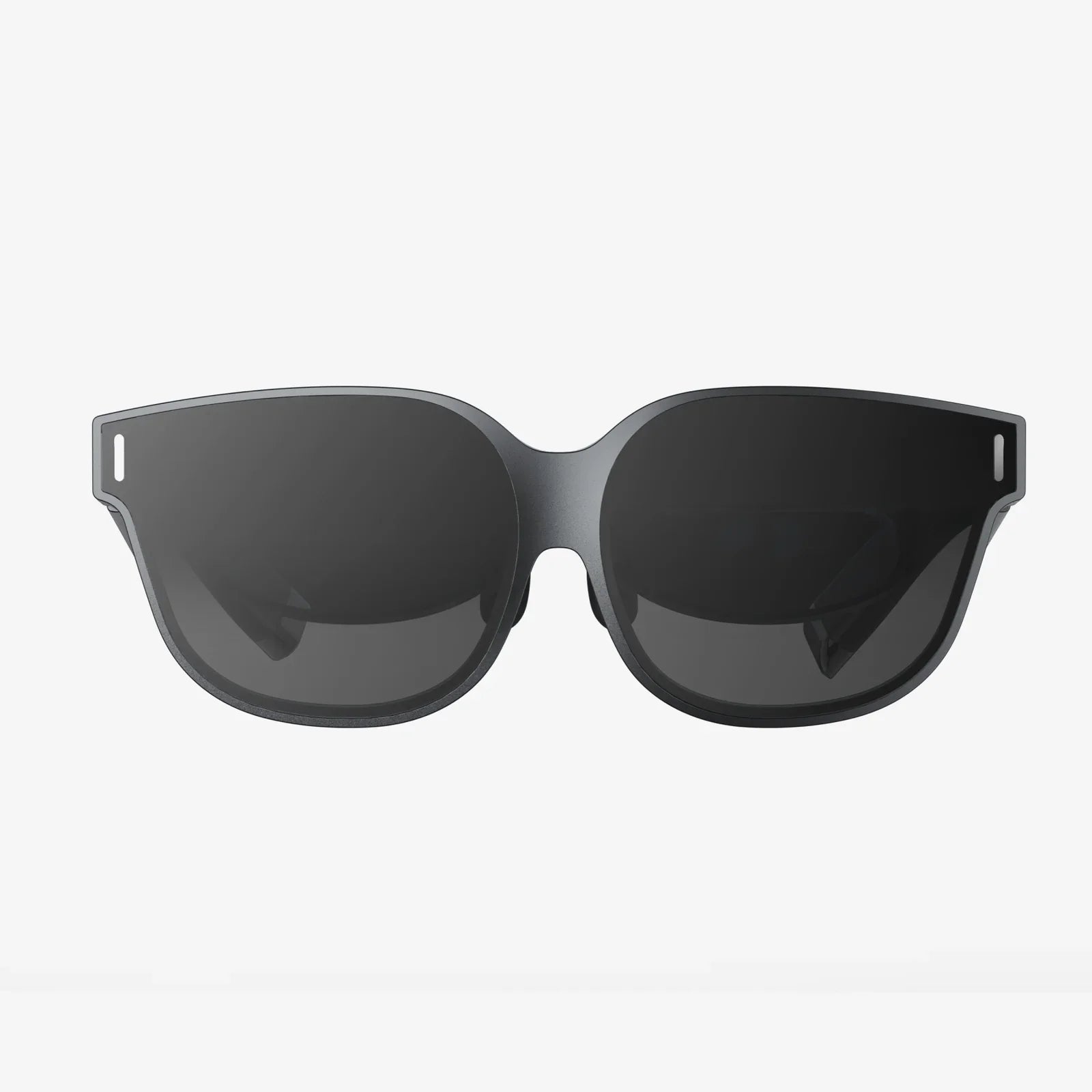
Imagine a world where the line between the digital and the physical blurs into insignificance, where information is not something you search for on a screen but is overlaid directly onto your field of vision, and where your surroundings are not just seen but understood, interpreted, and enhanced by an intelligent companion. This is not a scene from a distant sci-fi future; it is the imminent reality promised by the rapid development of AI vision glasses. This technology, a sophisticated fusion of advanced optics, miniature sensors, and powerful artificial intelligence, is set to redefine the very fabric of human-computer interaction, moving us beyond the tyranny of the screen and into an era of ambient, contextual, and intuitive computing. The journey from clunky prototypes to sleek, socially acceptable wearables is accelerating, and the implications are nothing short of revolutionary, poised to touch every aspect of our lives from how we work and learn to how we connect with the world and with each other.
The Technological Symphony: How AI Vision Glasses Perceive the World
At their core, AI vision glasses are a marvel of miniaturization and integration. They are not merely cameras attached to a frame; they are a complete computational system designed to see, process, and project. The hardware foundation typically consists of several key components working in concert. High-resolution, wide-field cameras act as the eyes, continuously capturing the user's visual field. These are complemented by a suite of sensors—depth sensors, accelerometers, gyroscopes, and magnetometers—that work to understand not just what the user is looking at, but their position, orientation, and movement in three-dimensional space. This spatial awareness is crucial for anchoring digital content convincingly in the real world.
The true magic, however, happens in the software and processing layer. This is where artificial intelligence, particularly computer vision and machine learning, takes the helm. The raw visual data is processed in real-time by sophisticated algorithms trained on vast datasets. These algorithms perform several critical functions. Object recognition allows the glasses to identify and label everything from a specific brand of coffee to a complex piece of machinery. Text recognition can instantly translate foreign languages on a menu or read aloud a document. Scene understanding enables the system to grasp the broader context—distinguishing between a busy street, a quiet office, or a living room—and adjust its interactions accordingly. This seamless fusion of sensor data and AI inference creates a rich, semantic understanding of the environment that is the bedrock of all functionality.
Beyond Novelty: Transformative Applications Reshaping Industries
The potential applications for this technology extend far beyond simple notifications or gaming. They are set to become powerful tools that augment human capability across a vast spectrum of professional and personal domains.
Revolutionizing Accessibility and Navigation
For individuals with visual impairments, AI vision glasses can act as a powerful visual prosthesis. Through detailed audio descriptions of the environment, identification of obstacles and people, recognition of currency, and reading of text aloud, these devices can grant a level of independence and spatial awareness previously unimaginable. For the general population, navigation will be transformed. Instead of looking down at a phone, directions can be overlaid onto the street itself, with arrows pointing to the correct turn, and points of interest highlighted directly on the buildings they belong to, creating an intuitive and heads-up guidance system.
The Augmented Workforce and Industrial Efficiency
In industrial and field service settings, the impact is profound. A technician repairing a complex piece of equipment can see schematics, step-by-step instructions, and torque specifications overlaid directly onto the components they are working on. A warehouse worker can see optimal picking routes and instantly verify items through visual recognition, drastically reducing errors and improving efficiency. For remote experts, the ability to see exactly what a field technician sees and annotate their view in real-time can revolutionize collaboration and training, eliminating the need for costly travel and reducing downtime.
Redefining Learning and Cultural Experiences
Education and tourism stand to be utterly transformed. A student studying anatomy could explore a life-sized, interactive 3D model of the human heart floating in their classroom. A history buff walking through an ancient ruin could see a photorealistic reconstruction of the site in its heyday, superimposed onto the crumbling stones. In a museum, looking at a painting could bring up information about the artist, the historical context, and even an analysis of the techniques used. This contextual, immersive form of learning caters to visual and kinesthetic learners in a way textbooks never could, making information engaging and immediately relevant.
Seamless Social and Linguistic Connection
On a social level, these glasses could offer real-time translation of spoken conversations, displaying subtitles in the user's preferred language as someone speaks, effectively breaking down language barriers in face-to-face communication. They could also provide subtle social cues, like remembering the names and details of people you meet, displayed discreetly to aid in conversation—a potential boon for those with social anxiety or memory issues.
The Inevitable Challenges: Navigating the Ethical and Social Minefield
With such transformative power comes a host of significant ethical, social, and practical challenges that must be addressed proactively. The most pressing concern is privacy. A device that records everything the user sees is a potent surveillance tool, raising alarming questions about consent and data security. The continuous collection of first-person visual data creates a detailed log of a person's life—who they meet, what they read, where they go. Who owns this data? How is it stored, processed, and used? Robust, transparent frameworks for data ownership, consent (especially for non-users who are inadvertently recorded), and encryption are not optional extras; they are fundamental prerequisites for public trust and adoption.
Furthermore, the constant stream of digital information presents a risk of cognitive overload and distraction. The very feature that makes the technology powerful—its always-on, ambient nature—could lead to users becoming disconnected from their immediate physical surroundings, a phenomenon often termed "attention collapse." There is a delicate balance to be struck between augmentation and immersion, ensuring the technology enhances reality rather than replacing it. The social acceptability of wearing such devices is another hurdle. Early versions of head-worn tech were often stigmatized as geeky or intrusive. For mass adoption, the design must evolve to be as fashionable and unobtrusive as conventional eyewear, and social norms around their use in conversations and private spaces will need to be established.
The Road Ahead: From Augmentation to Symbiosis
The future development of AI vision glasses will likely follow a path of increasing miniaturization, battery life, and processing power. We will move from devices that require a tethered processing unit to self-contained systems with onboard AI capable of ever more complex tasks. The user interface will evolve from simple voice commands and touchpads to more intuitive methods like subtle eye-tracking and gesture control. The display technology itself will advance from modest projections in the corner of the eye to full-field, high-dynamic-range displays that can seamlessly blend digital light with natural light.
Longer-term, the convergence of this technology with breakthroughs in neuroscience and brain-computer interfaces could lead to a even more profound level of integration. Instead of perceiving information through our eyes, we might one day receive it directly into our visual cortex, creating a true sensory amalgamation of the real and the digital. The ultimate goal is a state of calm technology, where the device fades into the background, acting as a silent, intelligent partner that enhances our perception and cognition without demanding our conscious attention.
The era of staring down at a small, glowing rectangle is drawing to a close. AI vision glasses represent the next logical step in our relationship with technology—a shift from a tool we hold to a layer we wear, from something we interact with to something that understands the context of our interaction. They promise a future where technology is not a distraction but a enhancement, woven so seamlessly into our perception that it feels like a natural extension of our own minds. The challenges are immense, from safeguarding our privacy to ensuring equitable access, but the potential to empower individuals, revolutionize industries, and deepen our understanding of the world is a vision too compelling to ignore. The world is about to be seen in a whole new light, and it will change everything.
Share:
Use Cases of Augmented Reality: Transforming Industries and Redefining Reality
Augmented Reality and Media: The Invisible Revolution Reshaping Our Digital World