


Imagine a world where the line between your physical surroundings and the digital information you crave dissolves into nothingness. Where the morning newspaper animates on your kitchen table, historical figures step out of museum portraits to tell their stories, and the weather forecast materializes as a swirling, miniature storm system over your breakfast cereal. This is not a distant science fiction fantasy; it is the emerging reality being woven into the fabric of our daily lives by the powerful convergence of augmented reality and media. This fusion represents a paradigm shift so profound it is quietly dismantling centuries-old media consumption habits and building a new, interactive dimension of experience in their place.
The journey of media has been a relentless march towards greater immersion. We evolved from the static, text-heavy broadsheets of the 17th century to the photographic immediacy of the 19th and 20th centuries. Television brought motion and sound into our living rooms, and the internet exploded the very concept of a centralized information source, democratizing content creation and consumption. Each step pulled the audience closer to the story. But all these formats shared a fundamental limitation: they existed on a separate screen, a window into another world that we observed from a distance. Augmented reality smashes that window, projecting the narrative directly into our world and making us active participants within it. It is the logical, and perhaps ultimate, culmination of this centuries-long trend.
Demystifying the Magic: How AR Media Works
At its core, augmented reality is a technology that superimposes computer-generated perceptual information—images, sounds, text, haptic feedback—onto the user's view of the real world. Unlike Virtual Reality (VR), which seeks to replace reality with a fully digital environment, AR aims to augment and enhance it. This is achieved through a sophisticated dance of hardware and software.
Consumer-grade AR primarily leverages the cameras and sensors in smartphones and tablets, or through dedicated eyewear. The process begins with scene capture, where the device's camera feeds a live video stream of the user's environment. This is followed by scene processing, where computer vision algorithms and Simultaneous Localization and Mapping (SLAM) technology analyze the video feed to understand the environment. They identify flat surfaces (like a table or floor), track objects, and map the physical space in real-time. This digital understanding allows for precise registration and tracking, ensuring that a virtual character can convincingly walk across a real table without sliding off or jittering. Finally, the rendering engine seamlessly composites the digital assets into the live video feed, creating the final, cohesive augmented experience that users see on their screen or through their lenses.
The New Storytellers: AR's Transformative Impact on Journalism
Perhaps the most significant impact of AR in media is its potential to revolutionize journalism, moving it from telling the news to showing the news in an unprecedented way. Traditional reporting often struggles to convey the scale, emotion, and context of complex events. AR solves this by building a bridge of empathy and understanding.
Imagine reading an article about climate change and rising sea levels. Instead of a static graph, an AR experience could use your living room floor as a canvas to project a visualization of your city, showing the encroaching waterlines predicted for 2050. The abstract threat becomes a tangible, visceral reality. Investigative journalists can use AR to reconstruct crime scenes or architectural plans for public projects, allowing citizens to literally walk through a 3D model and understand the implications in a way text never could. For historical reporting, AR can bring archives to life. Pointing a device at a historical photograph of a city street could overlay the present-day view, allowing for a direct, powerful comparison across time. This contextual storytelling empowers audiences to grasp complex data and spatial relationships intuitively, fostering a deeper and more informed citizenry.
Beyond the Page: The Interactive Print Revolution
The humble print magazine, once declared a dying medium, is finding a vibrant new lease on life through AR. By using printed images or codes as triggers, publishers can unlock a hidden digital layer of content. A fashion spread can transform into a catwalk show on your coffee table, with models strutting out from the page. A recipe in a food magazine can be accompanied by a virtual chef demonstrating a tricky technique right over the page. Automotive reviews can let readers place a full-scale, photorealistic 3D model of a new car in their driveway to inspect from every angle.
This interactive print hybrid model offers the best of both worlds: the tactile, focused pleasure of print and the dynamic, rich engagement of digital video. It adds value for the reader and creates new, premium advertising inventory for publishers. An advertisement for furniture, for example, ceases to be a mere picture and becomes a functional tool, allowing users to see how a new sofa would look and fit in their actual living room before making a purchase. This transforms advertising from an interruption into a utility.
The Personalization Paradigm: Curating Your Reality
Data is the lifeblood of the digital media economy, and AR represents its most expressive form of visualization. The concept of personalized news feeds and content recommendations is evolving into the personalized augmentation of reality itself. Location-based AR experiences can overlay your surroundings with information that is uniquely relevant to you.
Walking through a foreign city, your AR device could highlight restaurants that match your dietary preferences, translate street signs in real-time, and pop up historical facts about the buildings you pass. At a conference, it could display the name and professional background of the person you're speaking to. Sports fans watching a live game could access real-time player stats and visualizations overlaid on the field. This shift turns the entire world into a personalized interface, where media is no longer something you seek out but something that seamlessly integrates into your environment based on your preferences, location, and behavior. It is the ultimate form of contextual and ambient media.
Navigating the Uncharted: Ethical and Societal Challenges
With great power comes great responsibility, and the power to alter our perception of reality is perhaps the greatest of all. The integration of AR into media raises a host of profound ethical questions that society is only beginning to grapple with.
Privacy is a paramount concern. For AR to function, devices must constantly capture and analyze their environment, which inevitably includes vast amounts of data about our private spaces and lives. The potential for misuse, surveillance, and data exploitation is enormous. Who owns the data collected by your AR glasses as they map your home? Furthermore, the ability to seamlessly blend the real and the virtual opens a Pandora's box of potential for misinformation and manipulation. Malicious actors could create "deepfake" AR experiences, overlaying false information or defamatory content onto specific locations or people. Imagine pointing your phone at a political opponent's headquarters and seeing fabricated scandals displayed on its facade.
There is also the risk of a new digital divide. As AR becomes a primary medium for information and interaction, a socio-economic chasm could emerge between those who can afford the latest AR hardware and those who cannot, potentially excluding entire demographics from this new layer of reality. Finally, the long-term psychological effects of perpetually augmenting our world are unknown. Will it enhance our understanding or lead to a collective detachment from an un-augmented reality that seems increasingly bland by comparison?
The Future is Augmented: What Lies Ahead
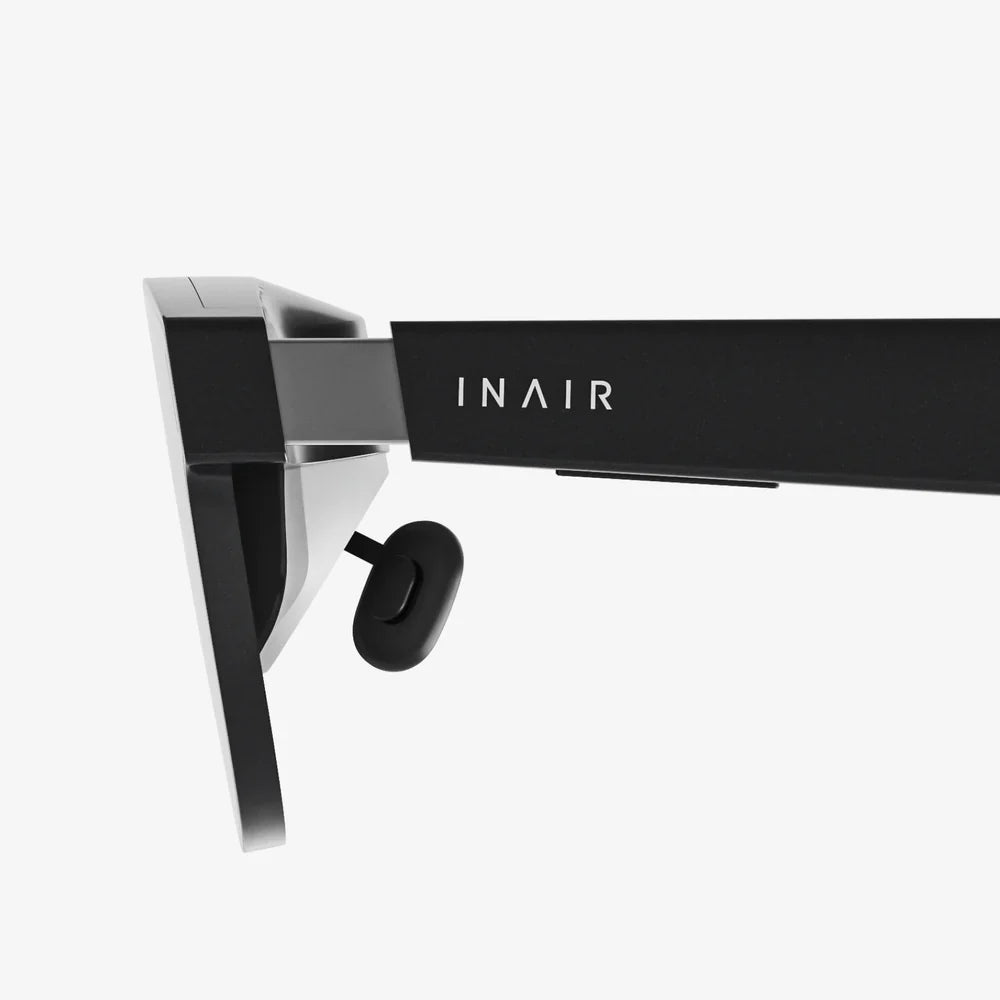
The current state of AR in media, largely reliant on handheld screens, is merely the larval stage. The future points toward the widespread adoption of wearable AR glasses that are as socially acceptable and functionally robust as a pair of everyday eyewear. This will mark the true tipping point, where augmented information becomes a constant, hands-free companion.
We are moving toward a world where the internet will not be a place we go, but a layer we experience. The concept of the "metaverse"—a persistent, shared network of virtual spaces—is intrinsically linked to AR, as it will be the primary portal through which we access it. Media will become less about consuming content and more about inhabiting it. Live concerts could be experienced from a virtual front-row seat in your home, and breaking news could unfold around you as a 3D data narrative. The very definition of a "media company" will expand to include architects of experiential worlds and creators of contextual digital objects.
The silent partnership between augmented reality and media is already rewriting the rules of engagement between content and consumer. It is transforming passive audiences into active explorers, flat narratives into living worlds, and our physical environment into a dynamic canvas for information and imagination. This invisible revolution is not just changing how we see the media; it is changing how we see everything.
Share:
AI Vision Glasses: The Next Frontier in Human-Computer Interaction
Augmented Reality at Entertainment Events: The Invisible Revolution Reshaping Live Experiences